Back · Barbell
Landmine One Arm Bent Over Row
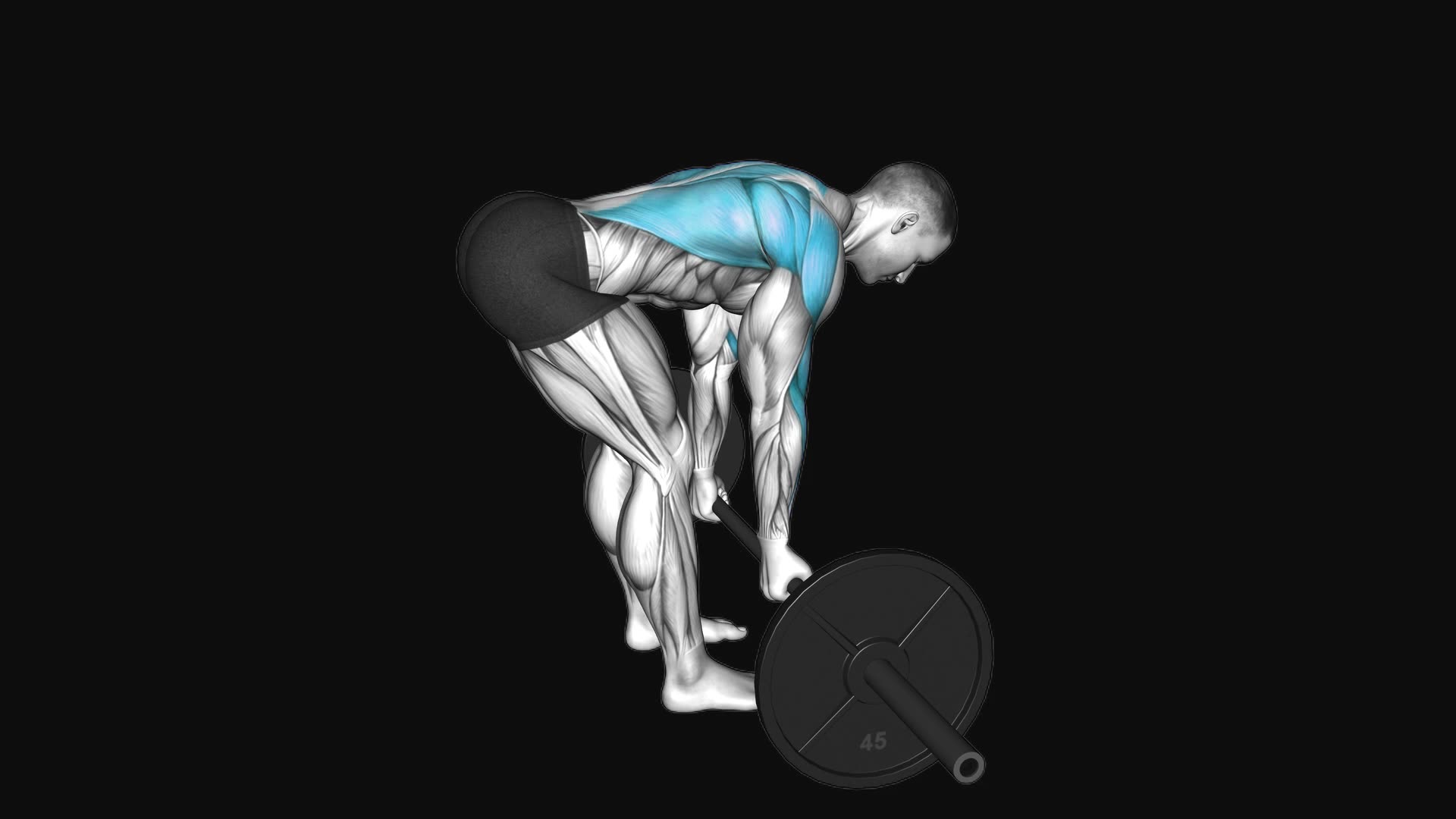
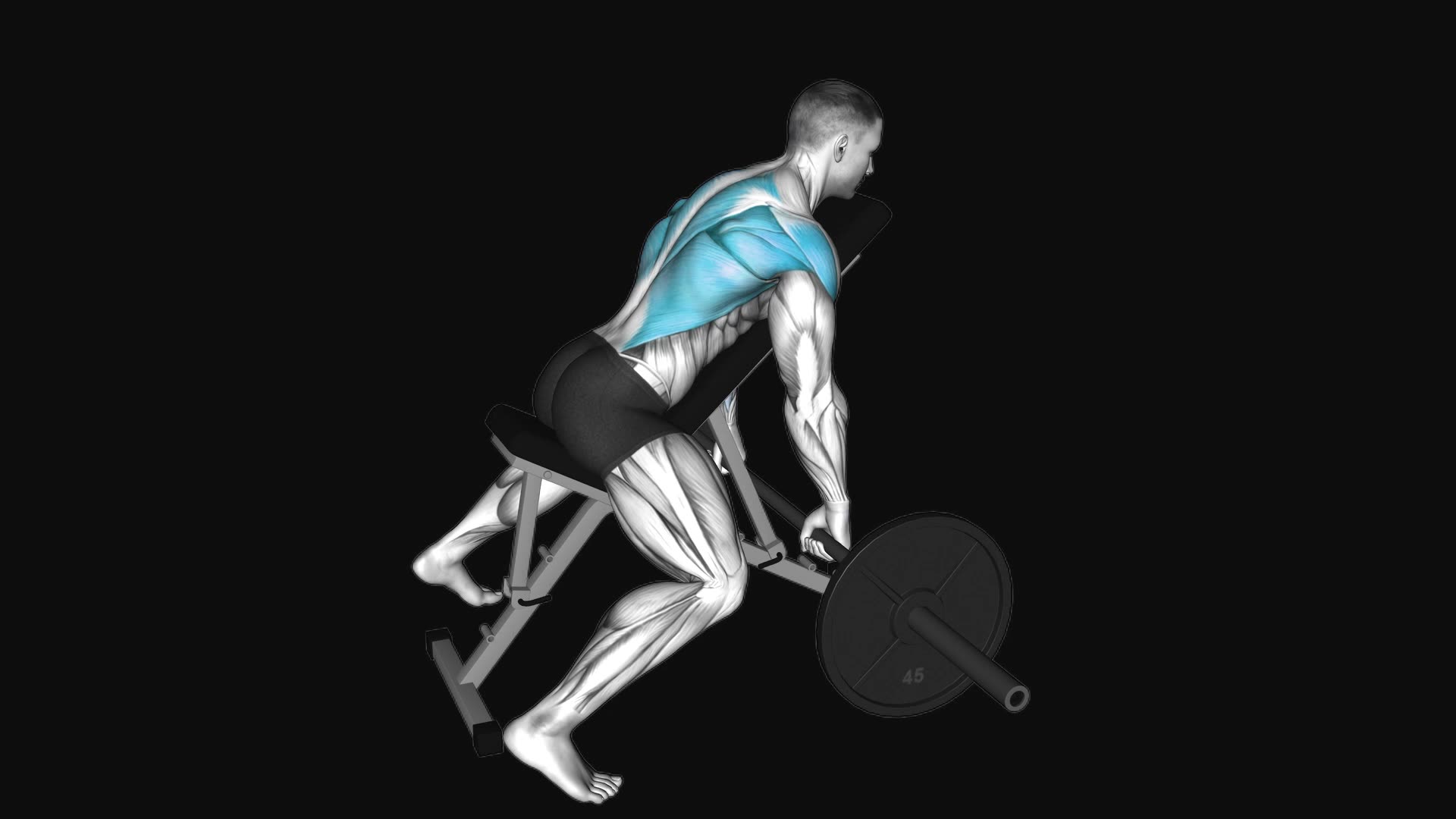
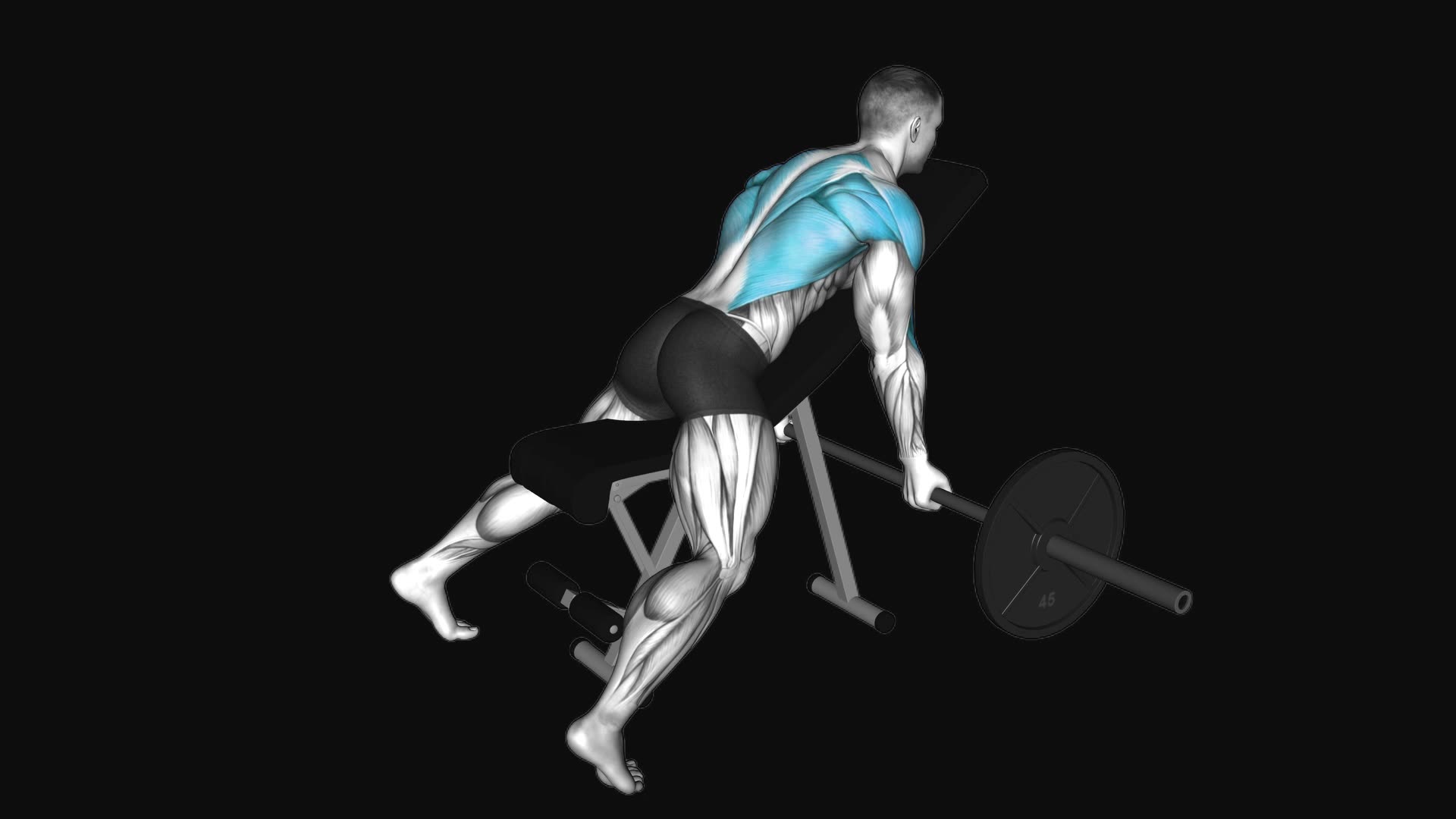
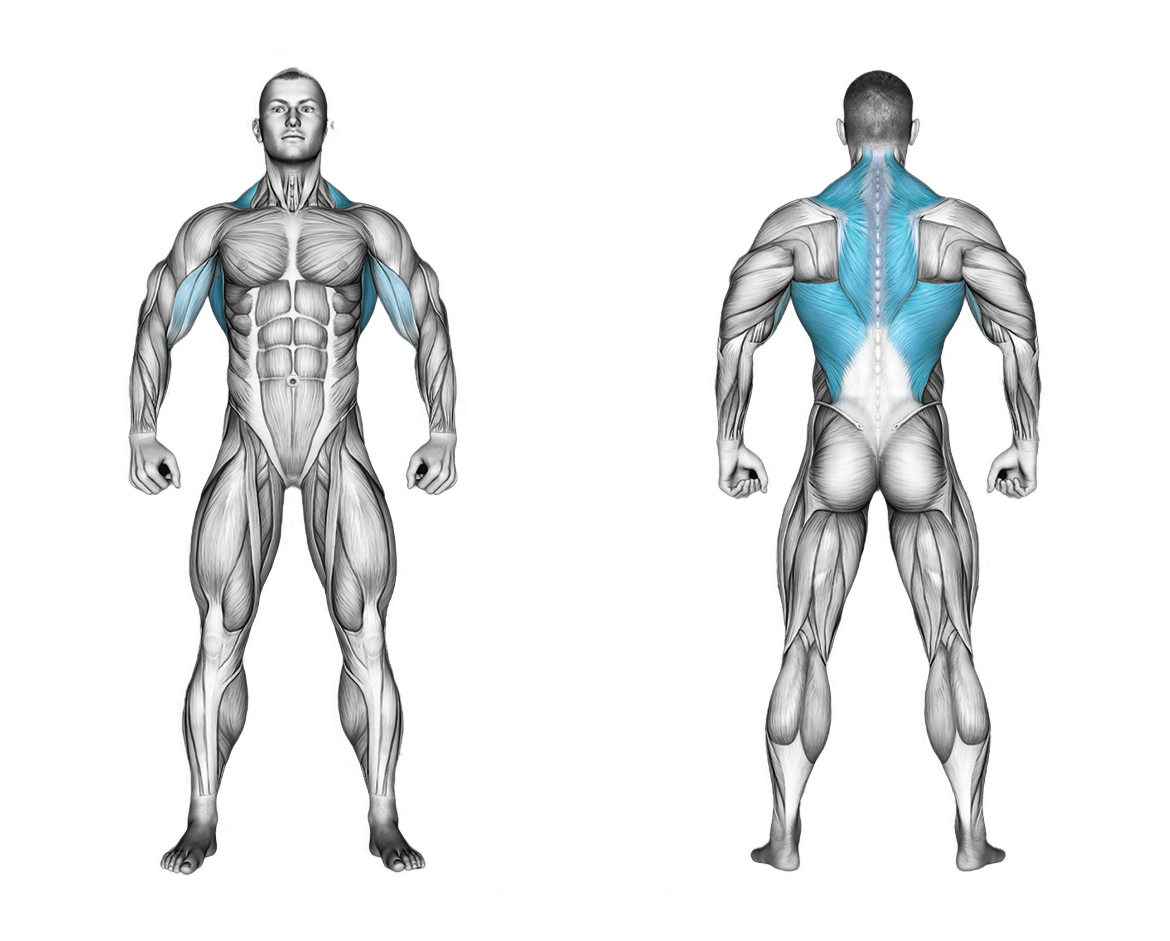
The landmine one arm bent over row is a unilateral horizontal pull that targets the latissimus dorsi, rhomboids, and rear deltoids using an angled barbell pivot. The guided arcing path reduces lumbar shear forces while balancing strength discrepancies between sides, making it an excellent main or secondary back movement.
How to do it
- Position a barbell in a landmine attachment or corner.
- Stand beside the barbell and bend at the hips and knees, keeping your back straight.
- Grip the end of the barbell with one hand.
- Pull the barbell up towards your hip by driving your elbow back.
- Squeeze your back muscles at the top.
- Lower with control.
- Complete all reps on one side before switching.
Common mistakes
- Excessive torso rotation at the top of the lift shifts tension away from the lats and places torsional stress on the spine.
- Pulling the barbell straight up toward the chest rather than back toward the hip overloads the biceps and anterior shoulder.
- Rounding the lower back during the setup increases spinal shear forces and limits core engagement.
Tips
- Hinge deeply at the hips and brace your abdominal wall before initiating the pull to maintain a rigid base.
- Drive the movement through your elbow rather than pulling with your forearm to maximize lat recruitment.
- Load the barbell with smaller diameter plates to achieve a greater range of motion without the plate hitting your ribs prematurely.
Sets and reps
Perform 3–4 sets of 8–12 reps per side for muscle growth, or 4 sets of 6–8 reps for strength development. Rest 60–90 seconds between arms.
Muscles worked
Your coach guides every set
Turn on the coach in Gloox: it asks how you feel, picks the weight from your history and cues technique and rest. Rate each set and the next one is tuned to you.

On a computer? Point your phone's camera here to get the app.
Questions
How does this exercise compare to a traditional single-arm dumbbell row?
The fixed pivot point creates an arcing motion that naturally matches the mechanics of the lats while offering more inherent stability than a free dumbbell.
What should be done if there is no landmine attachment available?
Wedge the empty end of the barbell into a sturdy corner, wrapping it in a towel or bracing it with a heavy weight plate to protect the wall and keep it from sliding.