Back · Barbell
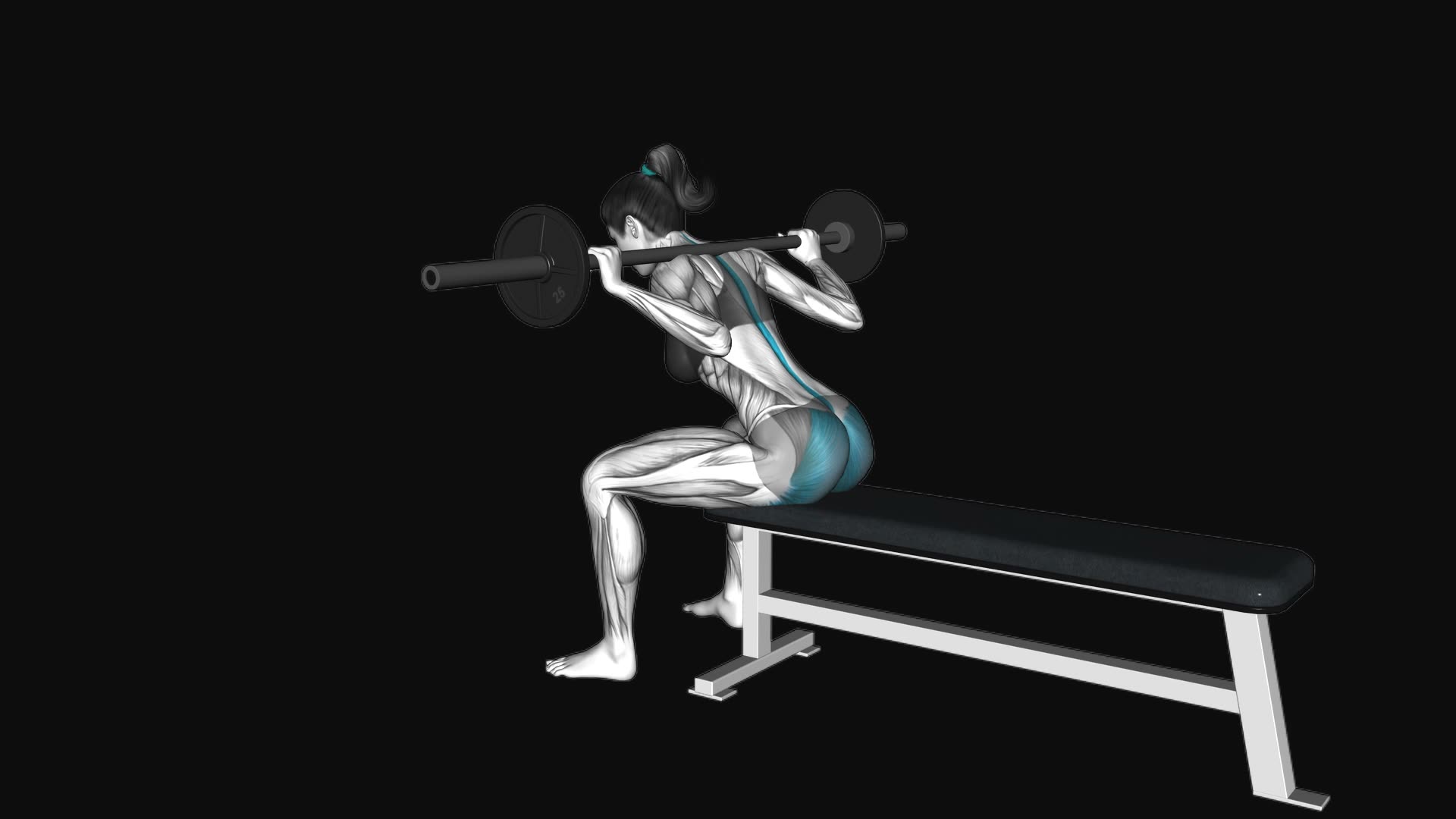
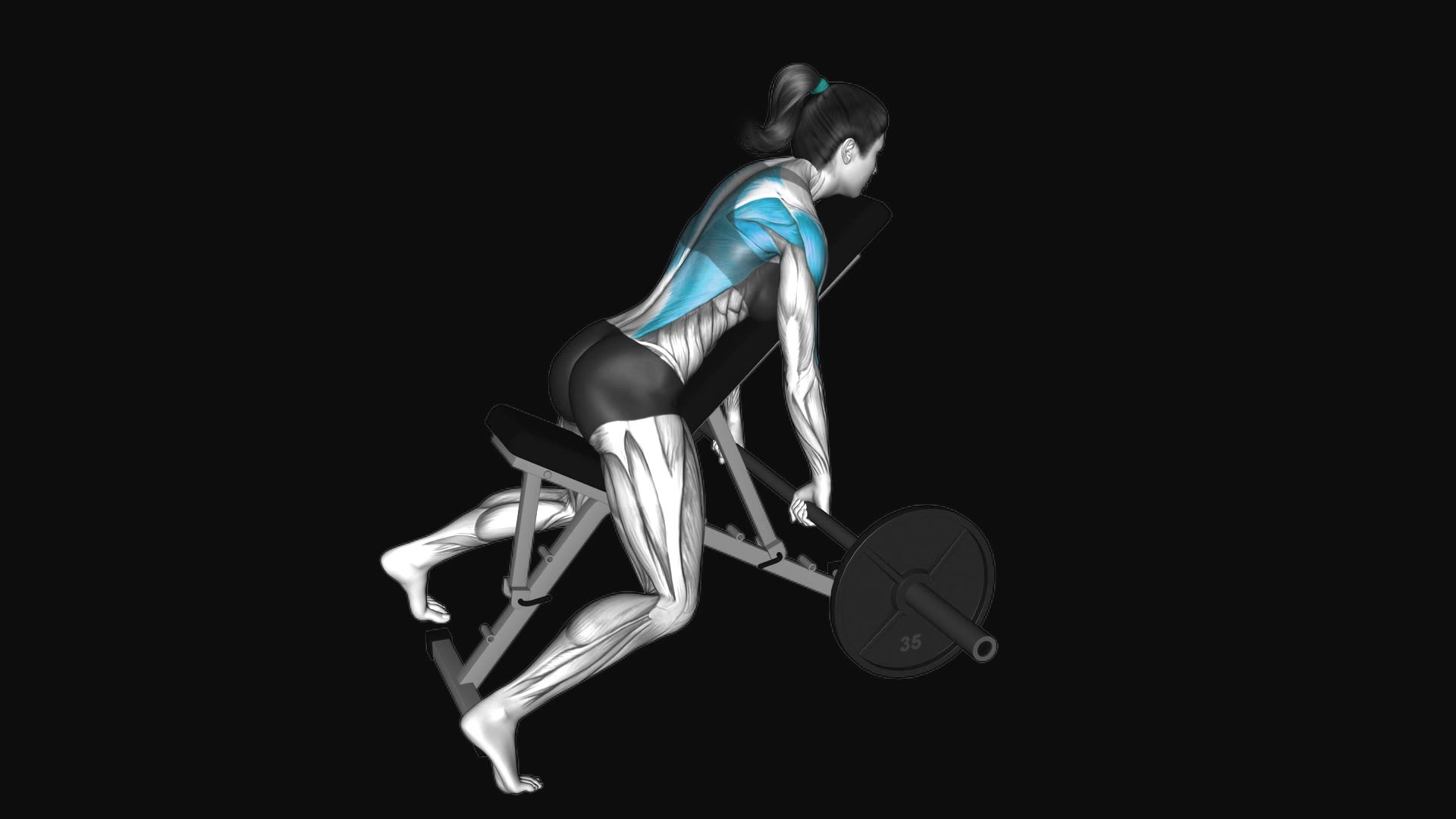
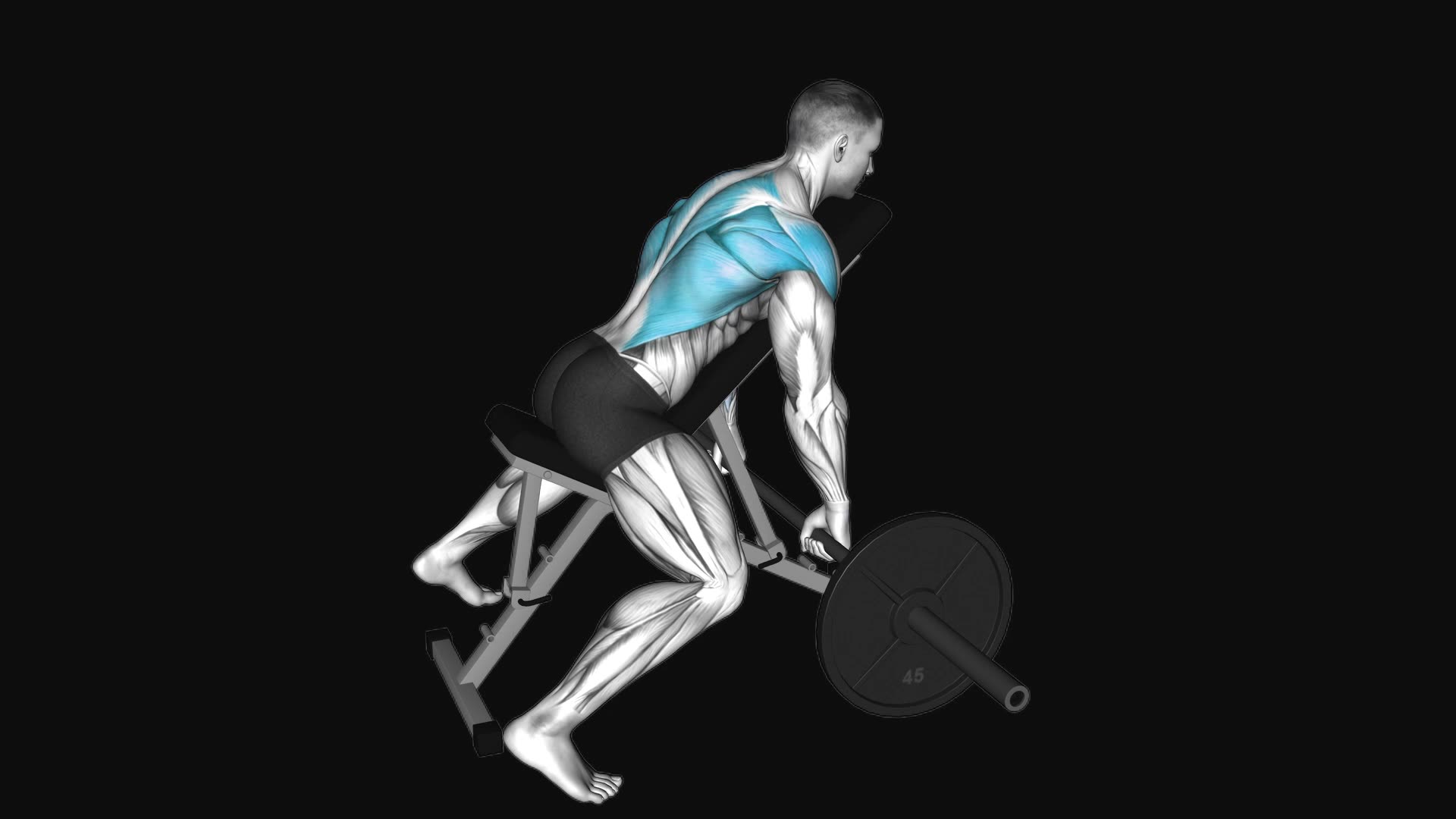
Barbell Seated Good morning
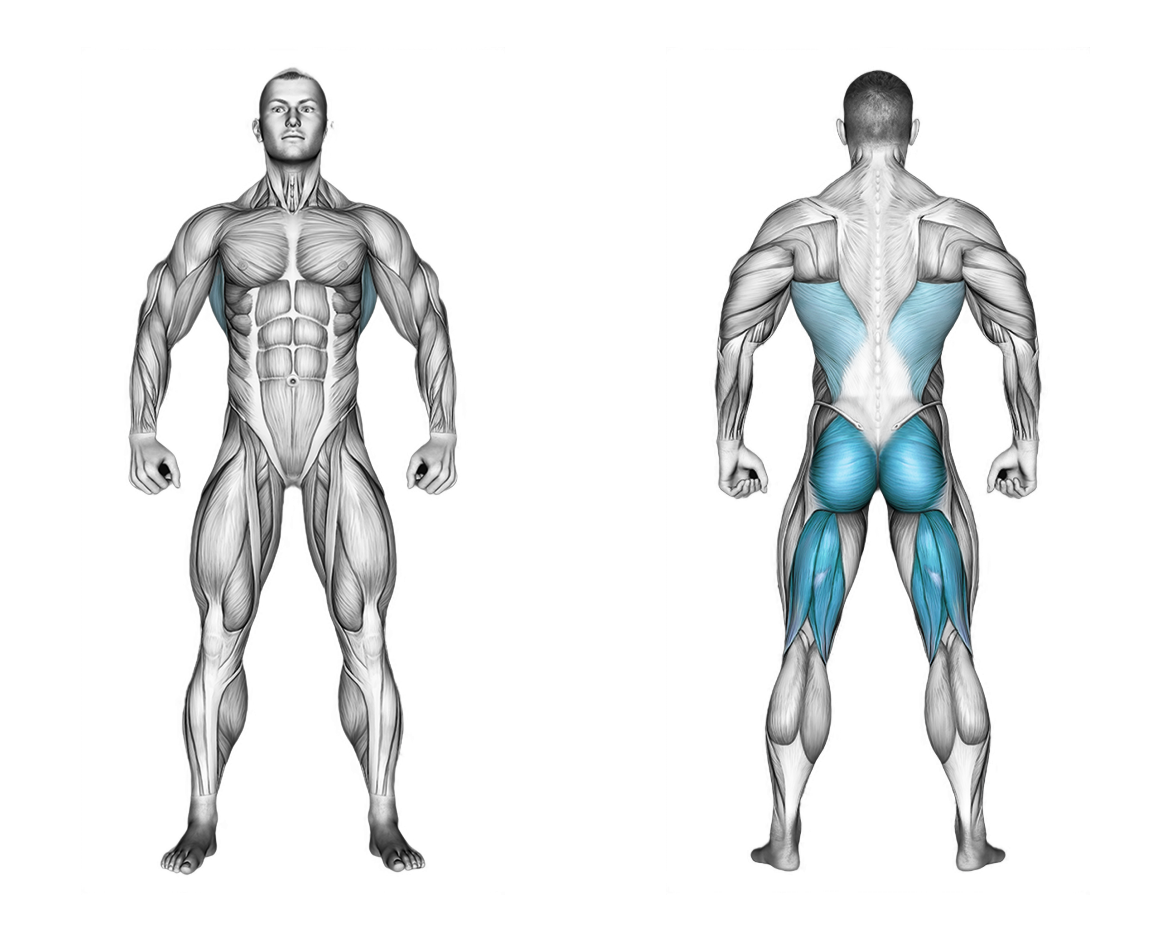
The barbell seated good morning is a targeted strength movement that strengthens the spinal erectors and glutes by taking the hamstrings largely out of the equation. It fits well into lower body or back sessions as an accessory exercise to build a resilient posterior chain.
- Equipment
- Barbell
- Type
- Strength
- Animation
- Men
How to do it
- Sit on a bench with your feet flat on the floor.
- Position the barbell across your upper back/shoulders.
- Keep your back straight and core engaged.
- Hinge forward at the hips, lowering your torso towards parallel with the floor.
- Keep your head neutral and chest up.
- Return to the upright position by contracting your lower back and glutes.
Common mistakes
- Rounding the lower back places dangerous shear stress on the lumbar spine and increases the risk of injury.
- Lifting the hips or feet off the bench destabilizes your base and reduces target muscle engagement.
- Using excessive weight forces you to cut the range of motion short and jerk out of the bottom position.
Tips
- Plant your feet firmly into the floor at roughly shoulder width to create a solid and stable foundation.
- Keep your core braced and chest proud throughout the entire movement to maintain a neutral spine.
- Hinge strictly at the hips rather than bending through the waist or thoracic region.
Sets and reps
Perform 3 to 4 sets of 8 to 12 controlled reps using light to moderate weight, resting 90 to 120 seconds between sets.
Muscles worked
Your coach guides every set
Turn on the coach in Gloox: it asks how you feel, picks the weight from your history and cues technique and rest. Rate each set and the next one is tuned to you.

On a computer? Point your phone's camera here to get the app.
Questions
Why do good mornings seated instead of standing?
The seated position minimizes hamstring involvement and knee movement, placing direct emphasis on your erector spinae and hip extension mechanics.
What should you do if you feel lower back pain during the exercise?
Stop the movement immediately, reduce the load, and consult a qualified healthcare professional if the pain persists.