Back · Barbell
Barbell Reverse Grip Incline Bench Row
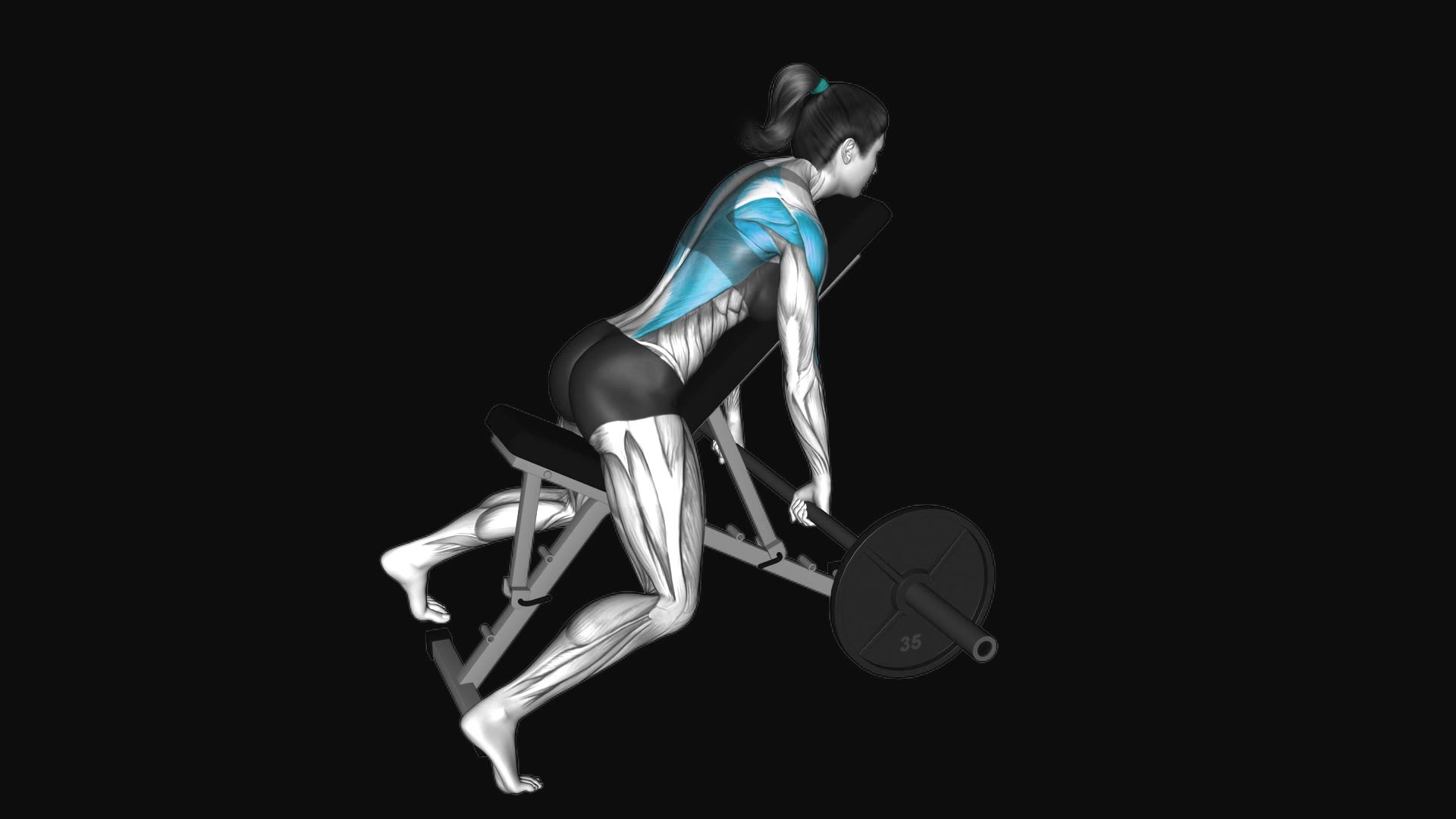
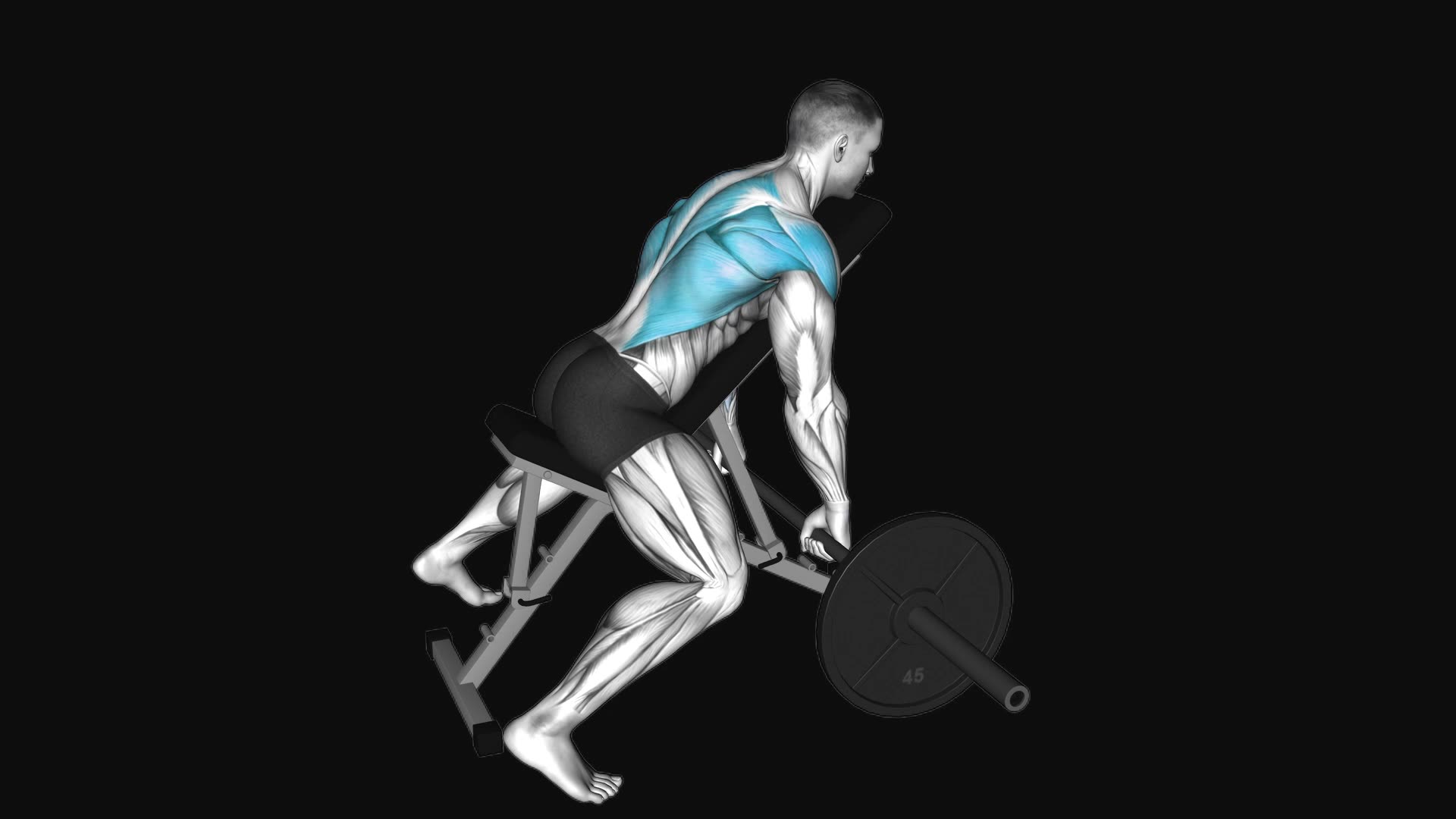
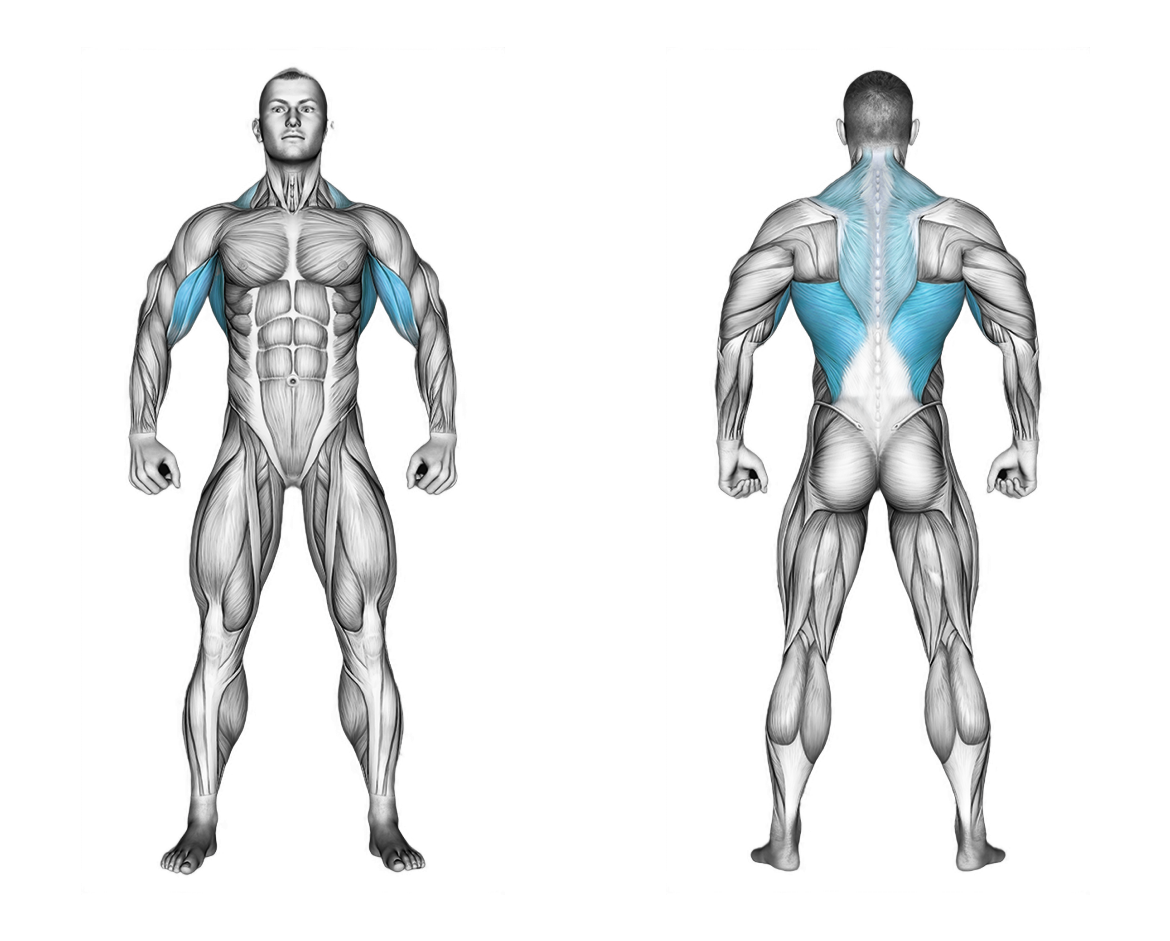
The barbell reverse grip incline bench row is a chest-supported pulling exercise targeting the lower lats, rhomboids, and biceps while completely unloading the lumbar spine. It is suitable for lifters looking to build upper-back thickness without fatiguing the lower back, typically serving as a primary accessory movement in a pulling session.
How to do it
- Lie chest-down on an incline bench set at 30-45 degrees.
- Grip the barbell with an underhand (supinated) grip, hands shoulder-width apart.
- Let the barbell hang at arm's length below you.
- Pull the barbell up towards your lower chest, keeping elbows close to your body.
- Squeeze your back muscles at the top.
- Lower with control.
Common mistakes
- Flaring the elbows away from the body shifts tension away from the lats onto the rear deltoids and strains the shoulders.
- Lifting the chest off the pad uses torso momentum instead of back muscle contraction to move the bar.
- Using too much weight shortens the range of motion and prevents a full contraction at the top.
- Pulling primarily through the hands and forearms exhausts the arm flexors before the back muscles are properly stimulated.
Tips
- Drive your elbows back and up toward your hips while keeping them tucked close to your ribs.
- Hold the contraction at the peak of the movement for a second before lowering the barbell with control.
- Adjust the bench to a 30 to 45-degree angle so your arms can reach full extension without the plates hitting the floor.
Sets and reps
Perform 3 to 4 sets of 8 to 12 repetitions with 60 to 90 seconds of rest for muscle growth. For strength development, aim for 3 to 4 sets of 6 to 8 repetitions with around 2 minutes of rest.
Muscles worked
Your coach guides every set
Turn on the coach in Gloox: it asks how you feel, picks the weight from your history and cues technique and rest. Rate each set and the next one is tuned to you.

On a computer? Point your phone's camera here to get the app.
Questions
Why use an underhand grip instead of an overhand grip?
A supinated grip keeps the elbows tight to the torso, shifting more load to the lower lats and increasing biceps involvement.
Is this exercise safe if I have lower back issues?
Yes, the chest support stabilizes the torso and eliminates axial loading on the spine; if you experience any discomfort, stop and consult a healthcare professional.