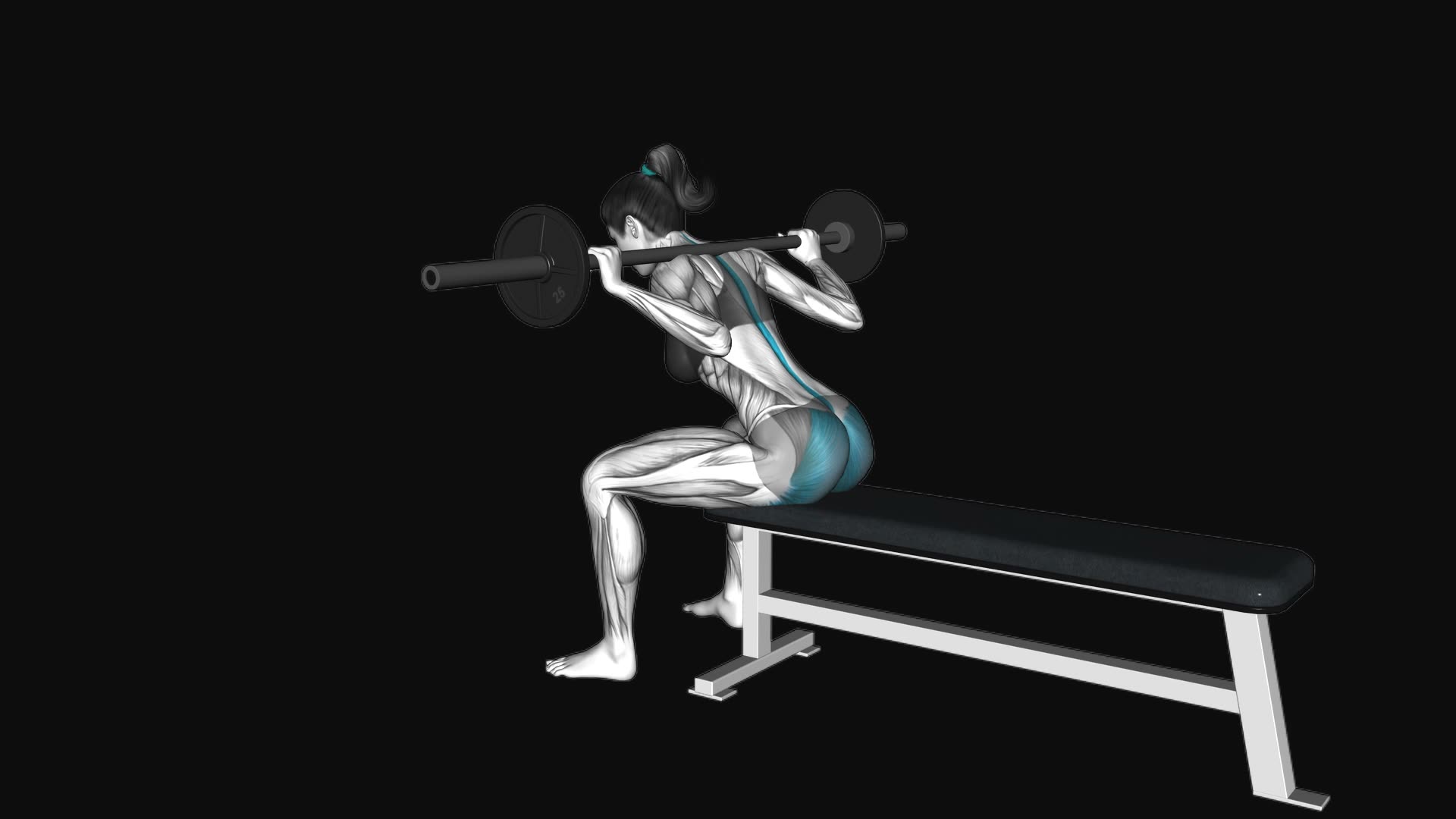
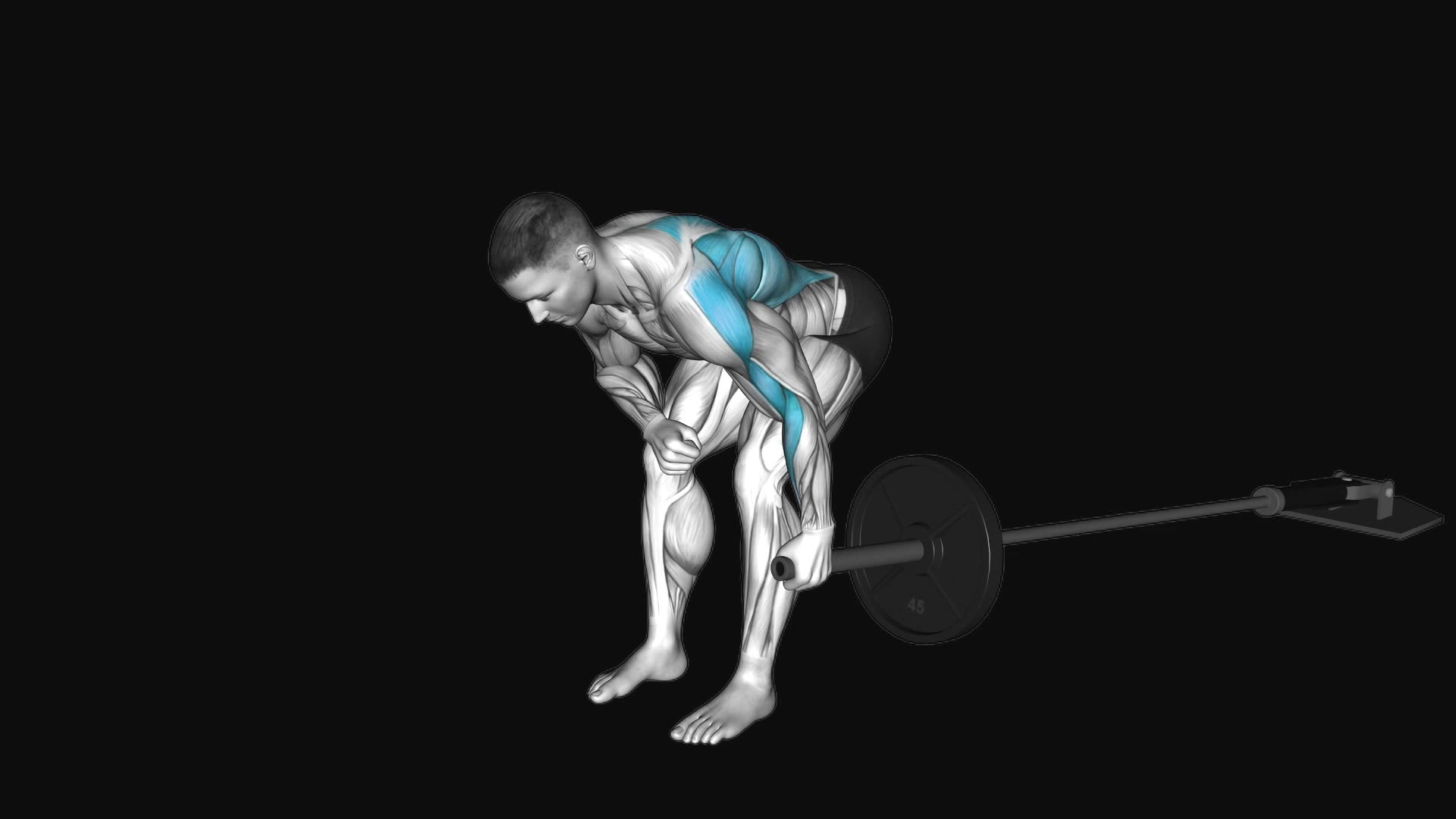
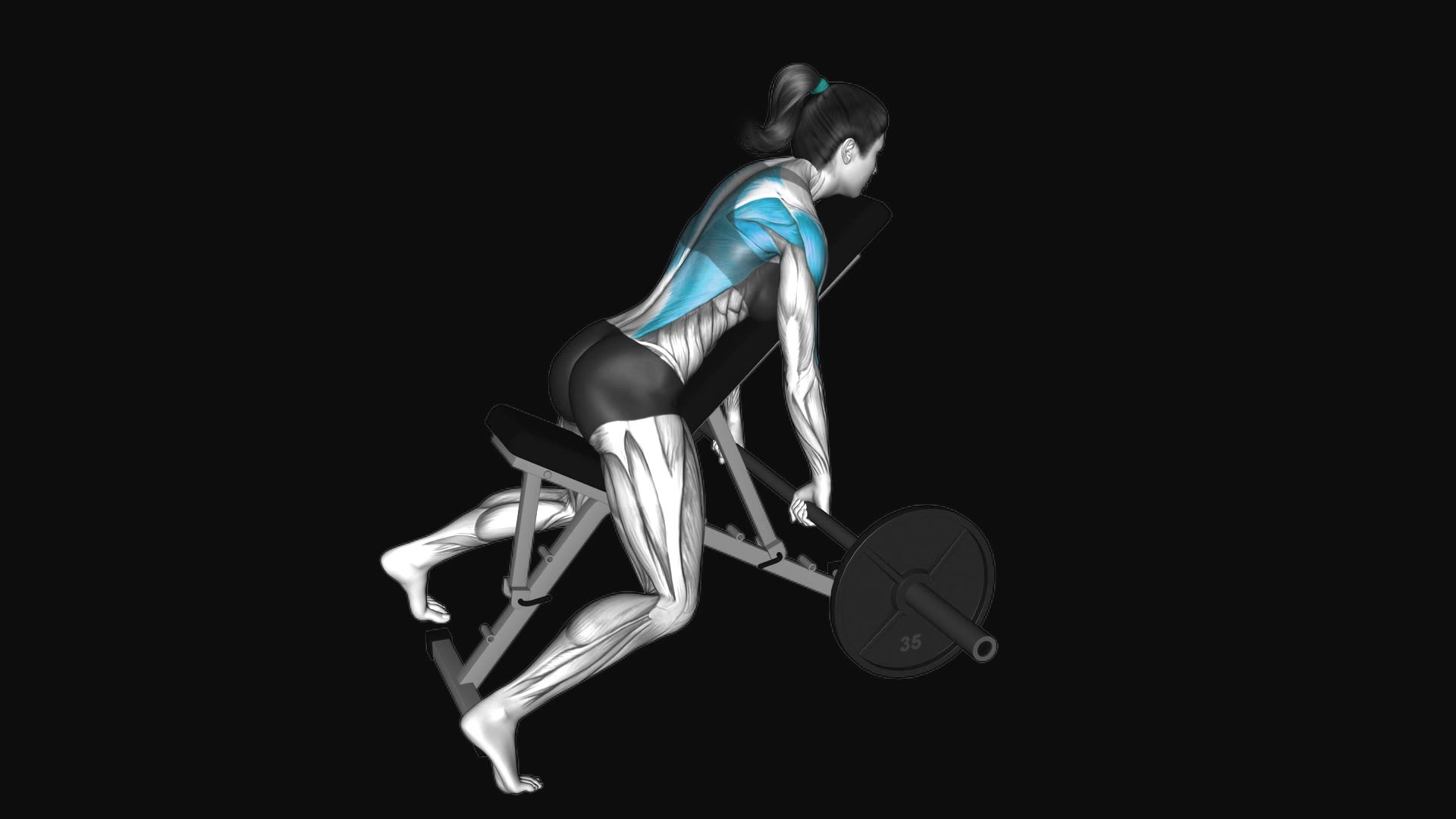
Back · Barbell
Barbell Lying Row on Rack
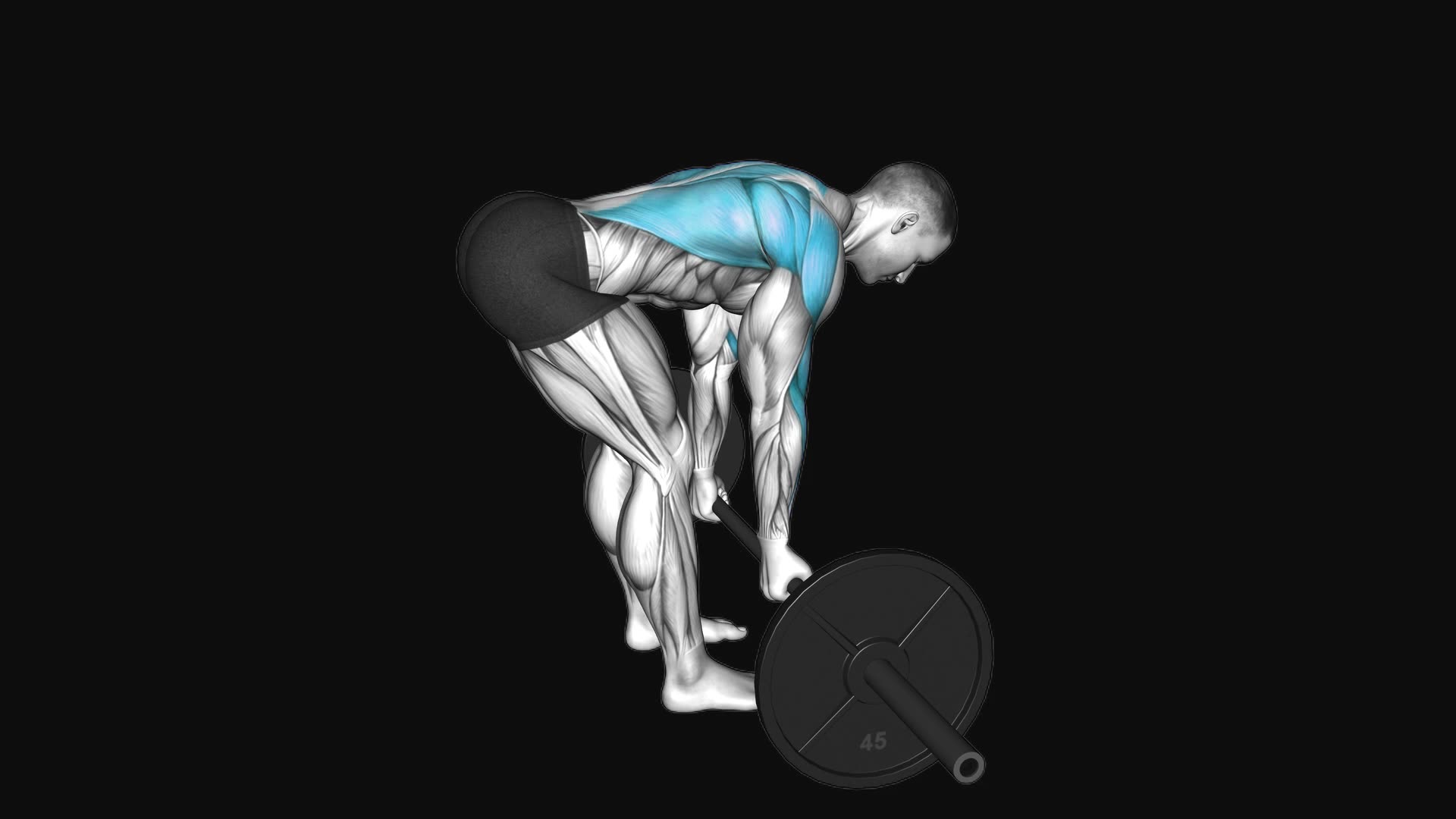
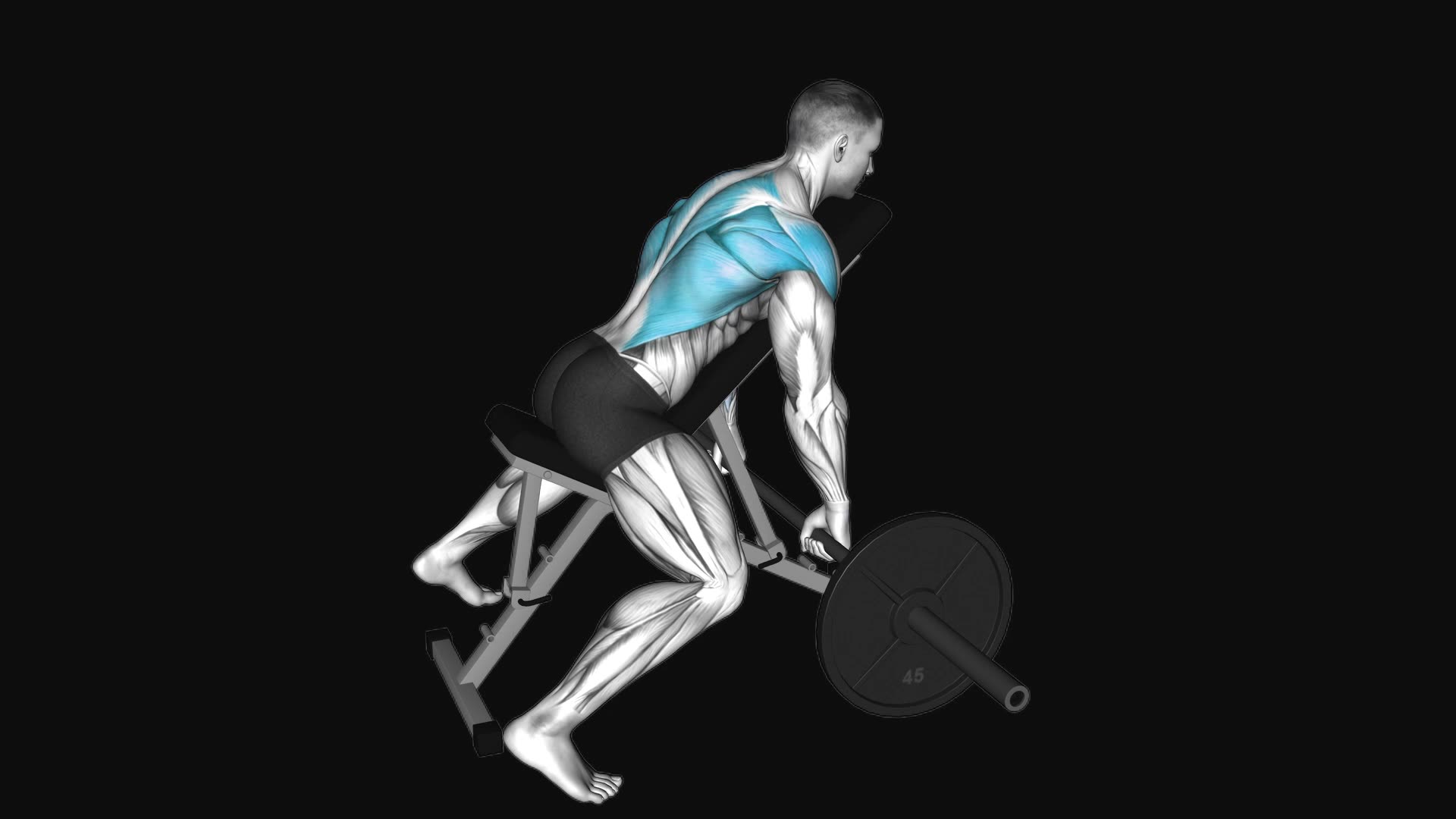
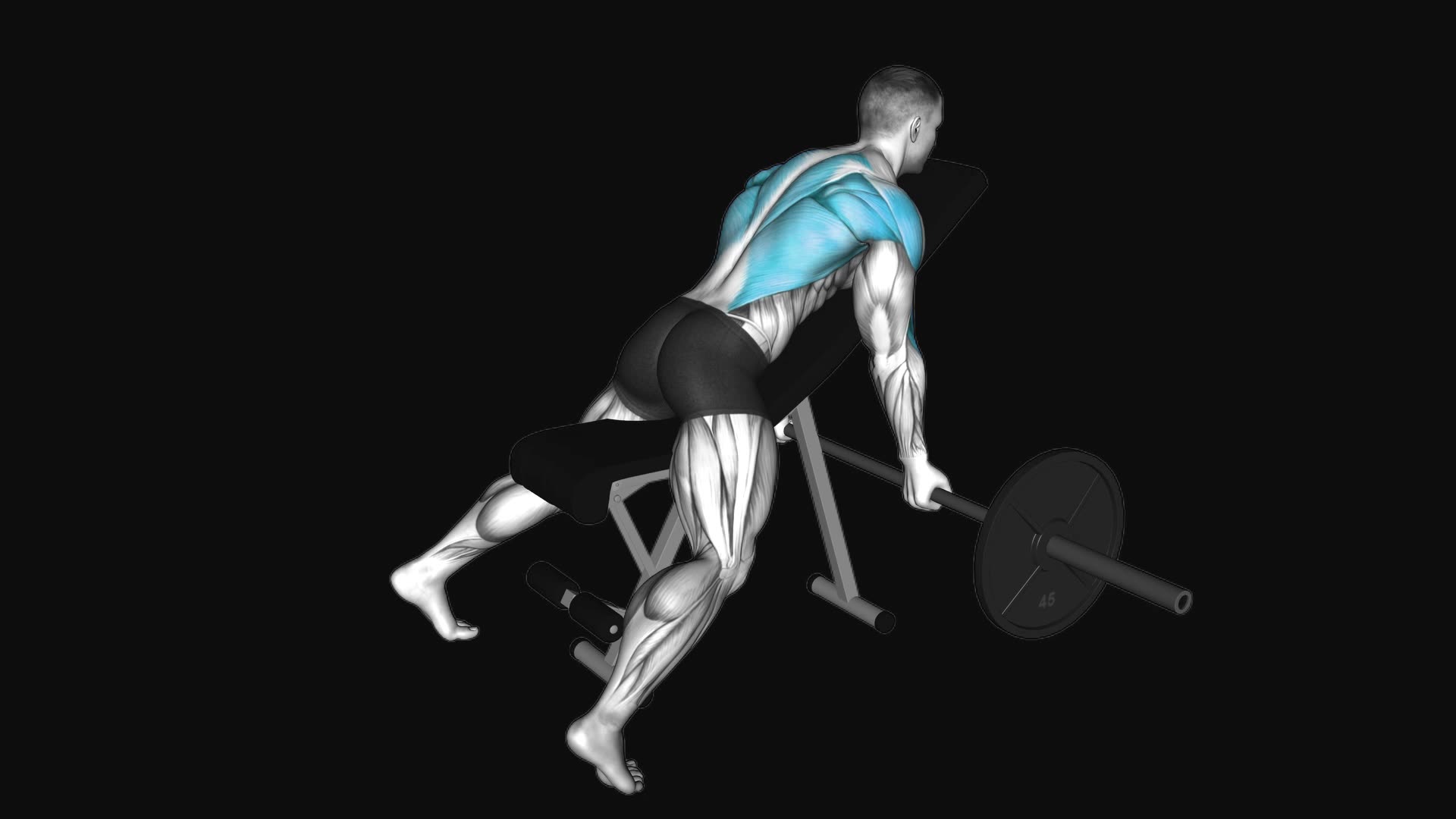
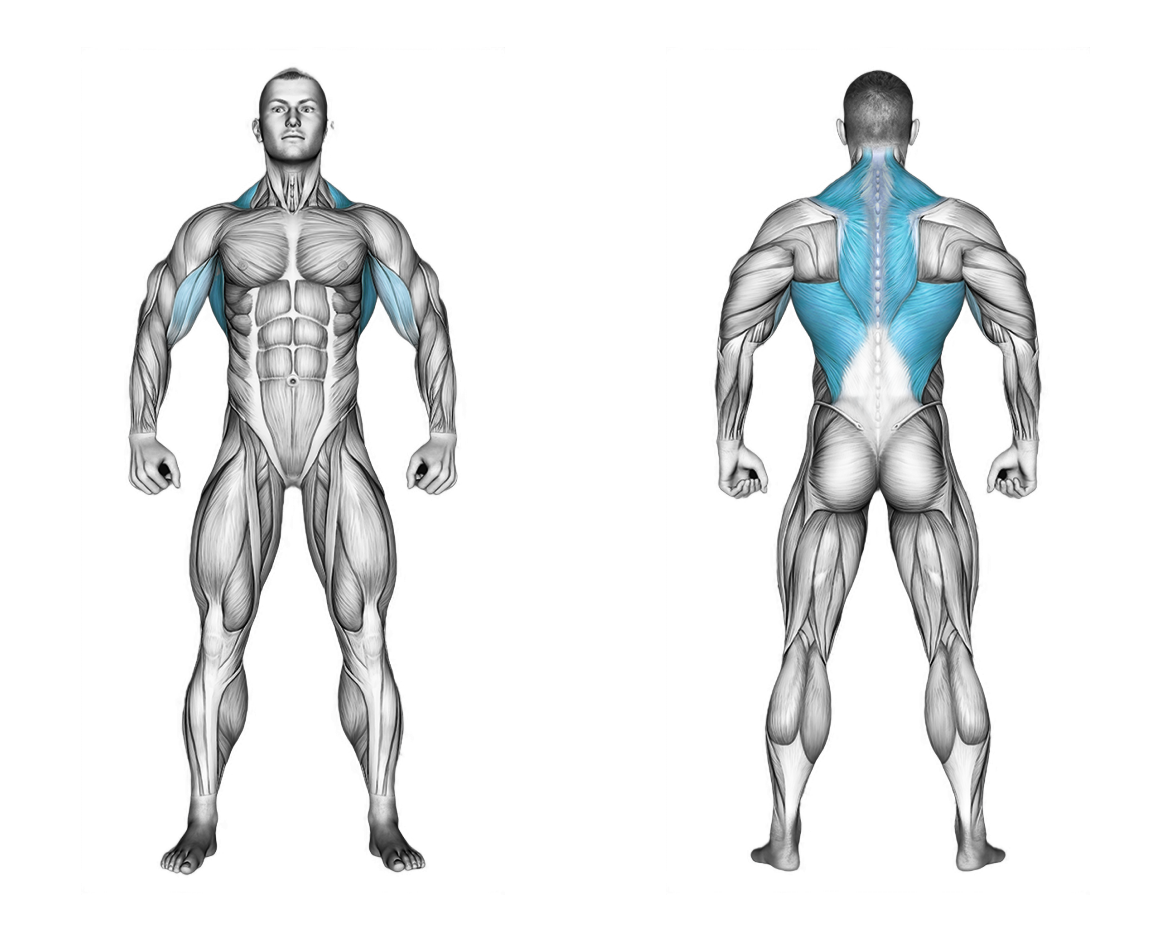
The barbell lying row on a rack is a horizontal bodyweight pull that targets the latissimus dorsi, rhomboids, rear deltoids, and core stabilizers. It serves as an accessible foundation for upper-body pulling strength and fits well into any back-focused or upper-body training session.
How to do it
- Set a barbell on a rack at about hip height.
- Lie face-up underneath the bar and grip it with an overhand grip, hands shoulder-width apart.
- Hang with your body in a straight line from head to heels, only your heels touching the ground.
- Pull your chest up to the bar by driving your elbows back.
- Lower back down with control.
Common mistakes
- Sagging at the hips breaks core tension and takes the load off the upper back musculature.
- Using momentum or thrusting the hips upward reduces the training stimulus on the lats and rhomboids.
- Flaring the elbows out past 90 degrees places unnecessary stress on the anterior shoulder capsule.
- Failing to bring the chest fully to the bar prevents complete scapular retraction at the peak of the movement.
Tips
- Adjust the difficulty by changing the rack height, as setting the bar higher makes the leverage significantly easier.
- Keep your core and glutes firmly braced so your body moves as a single, rigid plank from heels to neck.
- Pause for a full second with your chest touching the bar to maximize back muscle engagement.
Sets and reps
Perform 3 to 4 sets of 8 to 15 reps, resting 60 to 90 seconds between sets. To progress once the movement feels too easy, elevate your feet on a bench or wear a weighted vest.
Muscles worked
Your coach guides every set
Turn on the coach in Gloox: it asks how you feel, picks the weight from your history and cues technique and rest. Rate each set and the next one is tuned to you.

On a computer? Point your phone's camera here to get the app.
Questions
Is this exercise safe for individuals with lower back pain?
Because it eliminates axial spinal compression, it is generally much gentler on the lumbar spine than bent-over free-weight rows. If sharp pain occurs, stop immediately and seek medical advice.
How does this exercise differ from standard pull-ups?
This row is a horizontal pulling movement emphasizing mid-back thickness and scapular control, whereas a pull-up is a vertical pull requiring you to move your entire body weight.