Back · Barbell
Barbell Incline Row
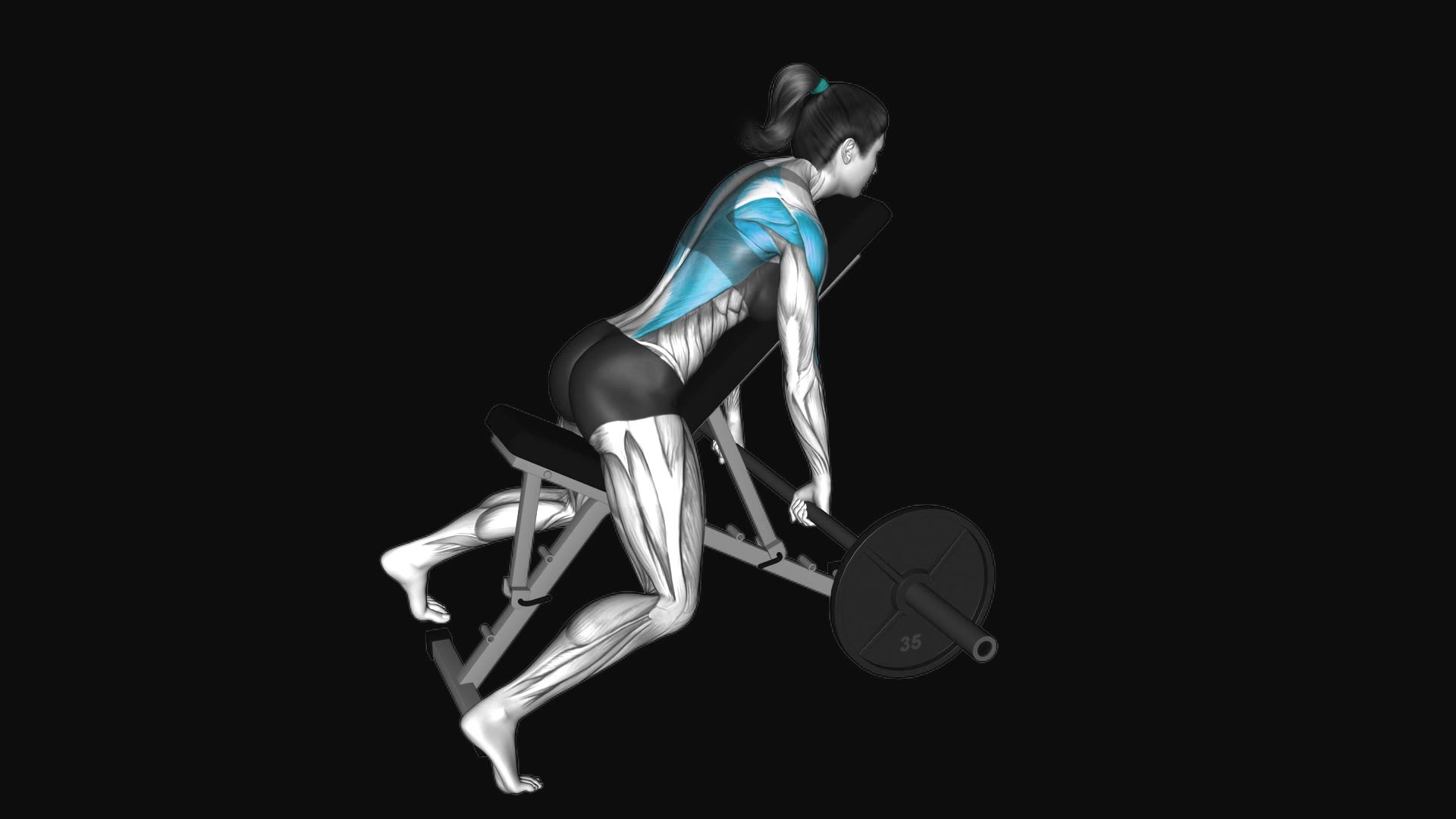
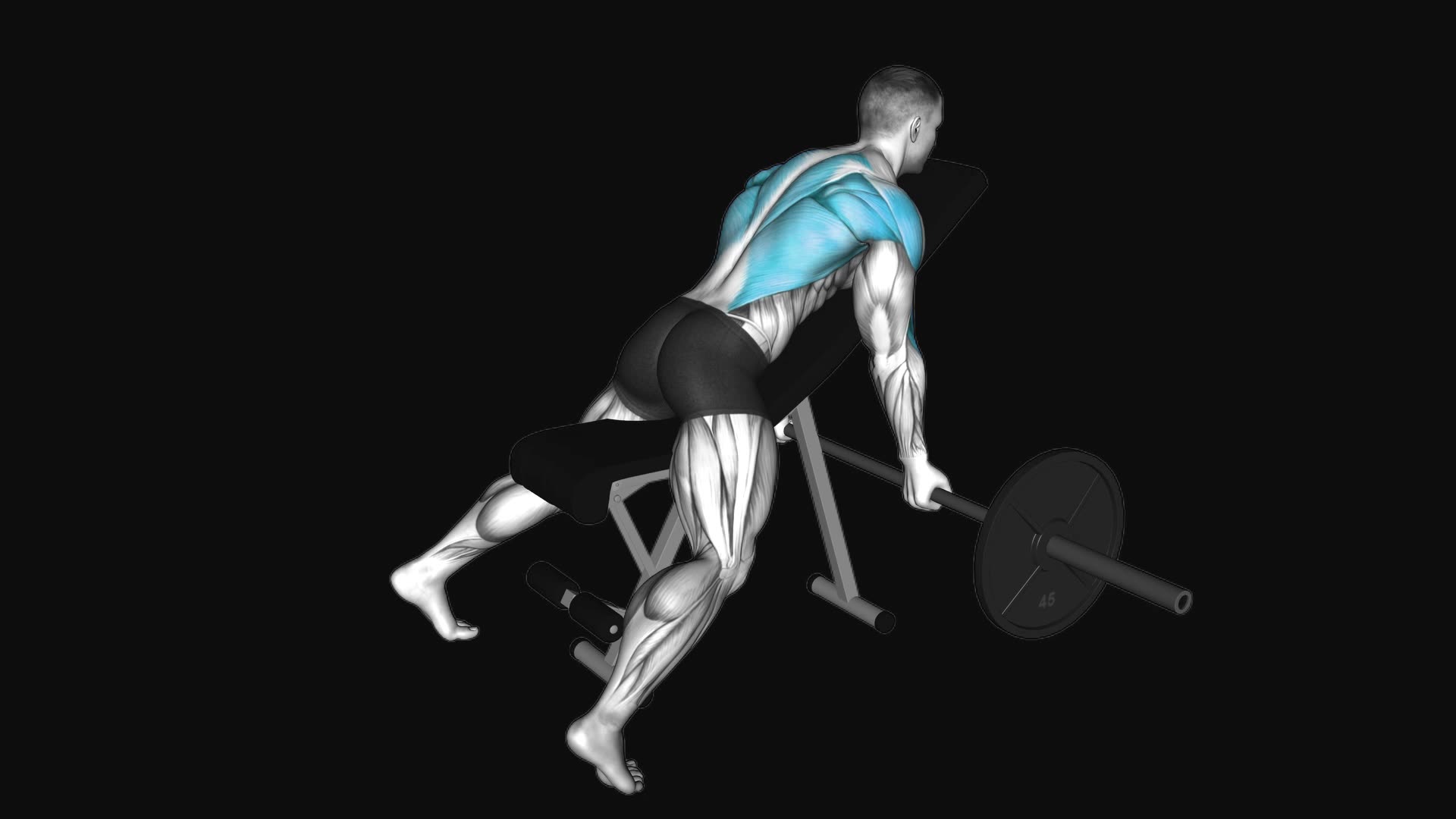
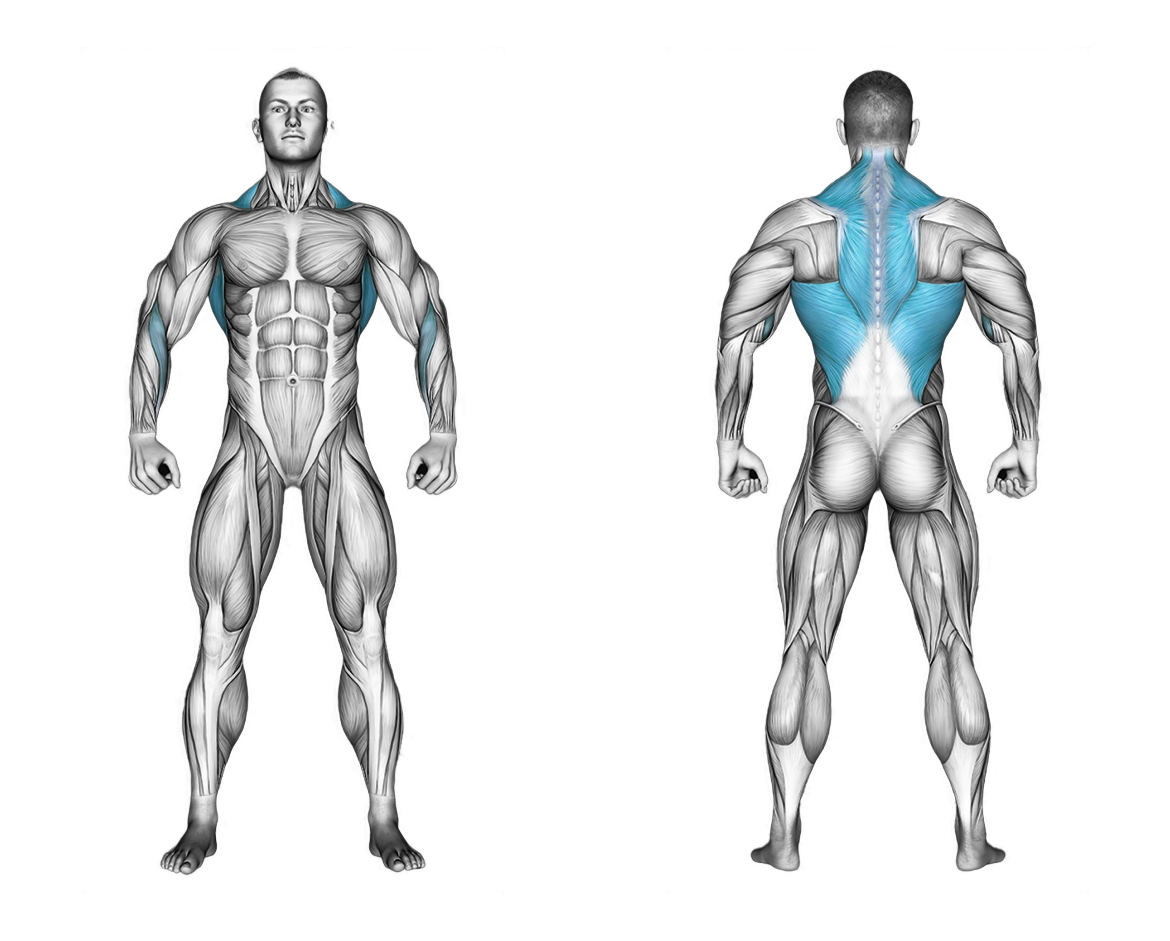
The barbell incline row is a chest-supported compound pulling exercise that builds the upper back, latissimus dorsi, and rear deltoids without straining the lower back. It fits well into the middle of a pull or back workout as an effective builder of mid-back thickness.
How to do it
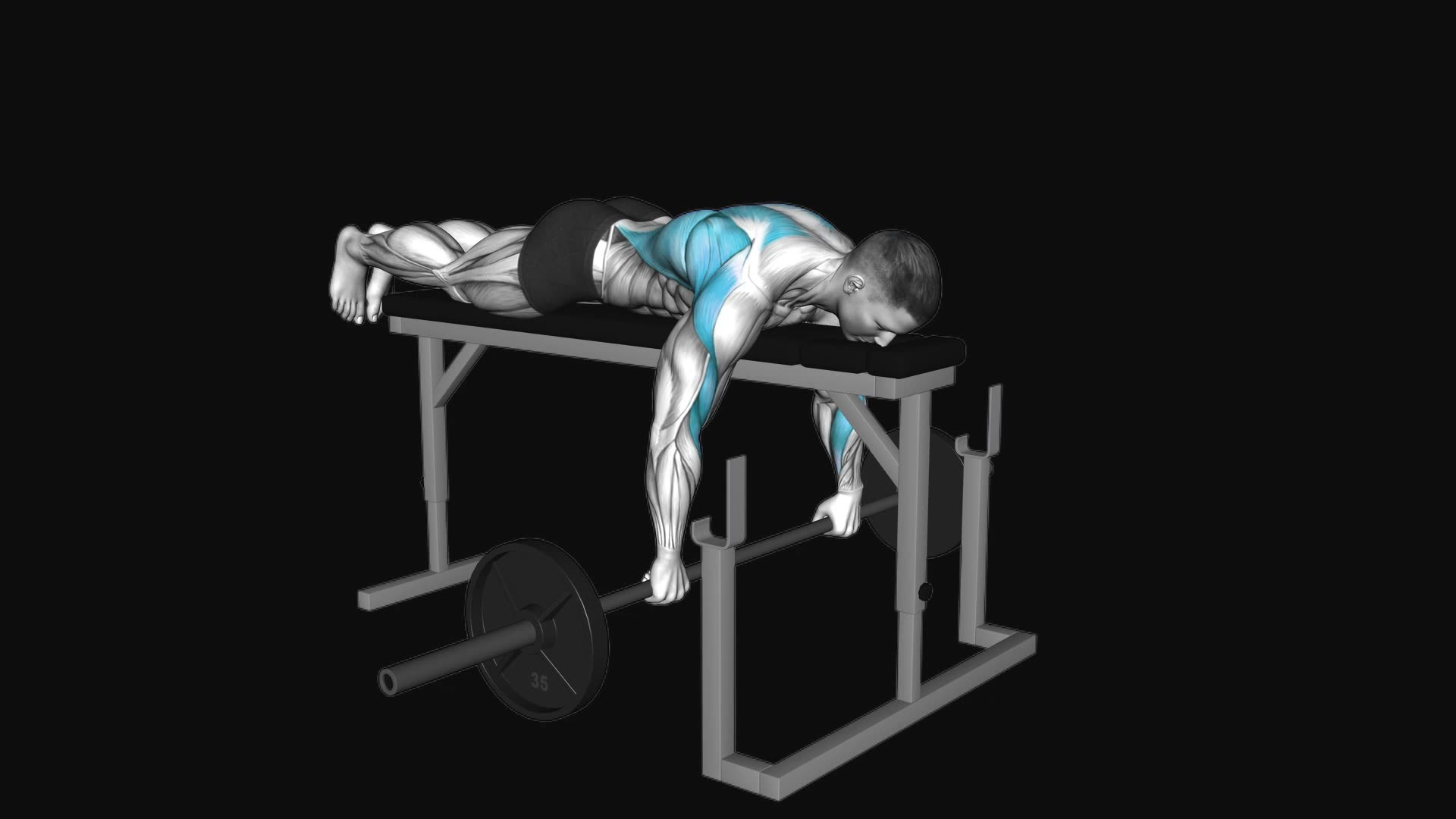
- Set an incline bench at 30-45 degrees and lie chest-down on it.
- Grip the barbell with an overhand grip, hands shoulder-width apart.
- Let the barbell hang at arm's length below you.
- Pull the barbell up towards your lower chest by driving your elbows back.
- Squeeze your shoulder blades together at the top.
- Lower the barbell back down with control.
Common mistakes
- Lifting your chest off the bench introduces momentum and defeats the stabilizing purpose of the chest support.
- Bouncing the bar off the bench frame truncates the range of motion and risks damaging equipment.
- Flaring your elbows completely outward shifts stress to the shoulder joints rather than keeping tension on the back musculature.
Tips
- Elevate the barbell on blocks or rack pins beneath the bench to make setting up and unracking effortless.
- Initiate each pull by driving your elbows backward rather than curling the weight up with your biceps.
- Hold the peak contraction for a brief pause at the top to fully engage the rhomboids and middle trapezius.
Sets and reps
For hypertrophy, perform 3 to 4 sets of 8 to 12 repetitions with controlled eccentrics. Rest 90 to 120 seconds between sets.
Muscles worked
Your coach guides every set
Turn on the coach in Gloox: it asks how you feel, picks the weight from your history and cues technique and rest. Rate each set and the next one is tuned to you.

On a computer? Point your phone's camera here to get the app.
Questions
Why do an incline row instead of a standard bent-over barbell row?
The bench support removes axial loading from your lumbar spine, allowing you to train your upper back to fatigue without lower-back limitations.
What bench angle works best for this exercise?
A 30 to 45-degree angle provides the optimal clearance for full arm extension while keeping the tension squarely on the mid- and upper-back muscles.