
Abs · Bodyweight
Twisted Leg Raise
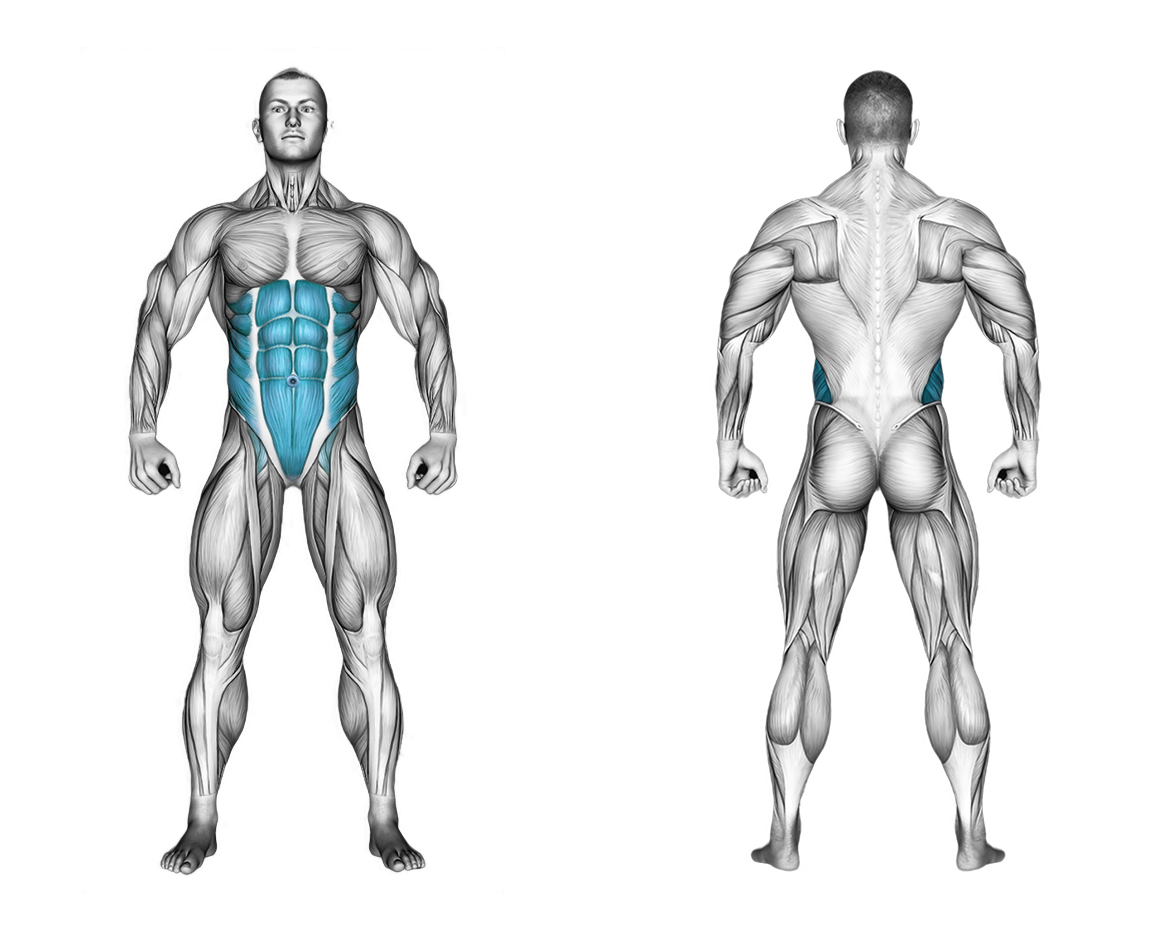
The twisted leg raise is a bodyweight core movement that combines a traditional leg lift with rotational hip control. It targets the rectus abdominis and obliques, making it a demanding addition to the end of a core or full-body session.
- Muscles
- Abs
- Equipment
- Bodyweight
- Type
- Strength
- Animation
- Men and women
How to do it
- Lie flat on your back with your hands under your glutes for support.
- Lift your legs straight up towards the ceiling.
- Lower your legs to one side in a controlled manner, keeping them together.
- Raise them back to center, then lower to the opposite side.
- Keep your shoulders on the ground throughout.
Common mistakes
- Allowing the shoulders or upper back to lift off the floor shifts tension away from the obliques and destabilizes the torso.
- Dropping the legs quickly using momentum reduces time under tension and strains the lower back.
- Bending the knees or letting the feet separate decreases the lever arm and compromises core engagement.
Tips
- Press your hands firmly into the floor to maintain upper-body stability throughout the entire movement.
- Only lower your legs as far to the side as you can while keeping both shoulder blades in full contact with the mat.
- Exhale forcefully as you bring your legs back to the vertical center position.
Sets and reps
Perform 3 to 4 sets of 10 to 16 total repetitions (5 to 8 per side) with 45 to 60 seconds of rest between sets to build core endurance and control.
Muscles worked
Your coach guides every set
Turn on the coach in Gloox: it asks how you feel, picks the weight from your history and cues technique and rest. Rate each set and the next one is tuned to you.

On a computer? Point your phone's camera here to get the app.
Questions
What muscles does the twisted leg raise work?
It primarily targets the lower portion of the rectus abdominis and the internal and external obliques, with secondary involvement of the hip flexors.
Is the twisted leg raise safe for lower back pain?
The rotational load can irritate sensitive lower backs, so reduce the range of motion or stop and consult a professional if pain occurs.







