
Abs · Bodyweight
Alternate Leg Raise with Head-up
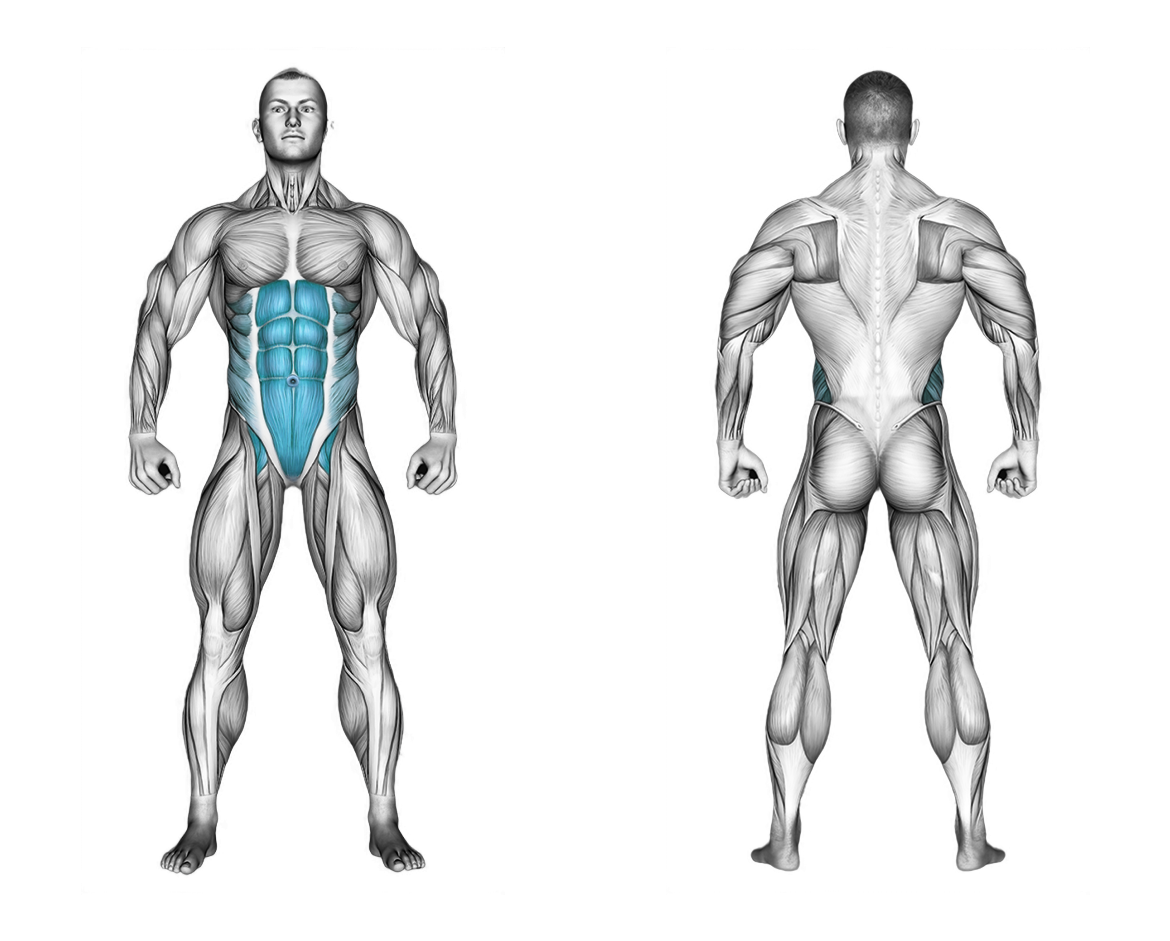
The alternate leg raise with head-up is a bodyweight core exercise that strengthens the rectus abdominis and deep abdominal stabilizers. It is suitable for all fitness levels and typically fits into the middle or end of a workout as dedicated core work.
- Muscles
- Abs
- Equipment
- Bodyweight
- Type
- Strength
- Animation
- Men
How to do it
- Lie flat on your back with your hands under your glutes for support.
- Lift your head and shoulders slightly off the ground.
- Keeping your legs straight, raise one leg up towards the ceiling while keeping the other leg hovering just above the ground.
- Lower the raised leg while simultaneously raising the other leg.
- Continue alternating.
Common mistakes
- Arching the lower back off the floor places unnecessary strain on the lumbar spine and reduces abdominal engagement.
- Yanking the neck forward toward the chest strains the cervical spine instead of supporting the posture with the core.
- Allowing the hovering heel to rest on the ground releases constant muscular tension from the abs.
- Swinging the legs with momentum transfers the workload to the hip flexors rather than the abdominal wall.
Tips
- Keep your lower back firmly pressed against your hands or the floor throughout the entire movement.
- Fix your gaze diagonally upward, maintaining roughly a fist-sized gap between your chin and chest.
- Alternate your legs in a slow, controlled rhythm rather than rushing the repetitions.
Sets and reps
Perform 3 to 4 sets of 20 to 30 total repetitions (10 to 15 per leg) to build abdominal endurance. Rest for 45 to 60 seconds between sets.
Muscles worked
Your coach guides every set
Turn on the coach in Gloox: it asks how you feel, picks the weight from your history and cues technique and rest. Rate each set and the next one is tuned to you.

On a computer? Point your phone's camera here to get the app.
Questions
Why should the head and shoulders stay lifted off the ground?
Elevating the head and upper back keeps the upper abdominals actively engaged and helps maintain a flat lower back against the floor.
What should you do if your lower back starts hurting during the set?
If you experience lower back discomfort, stop the exercise immediately and consult a healthcare professional.







