
Abs · Bodyweight
Alternate Leg Raise with Head up
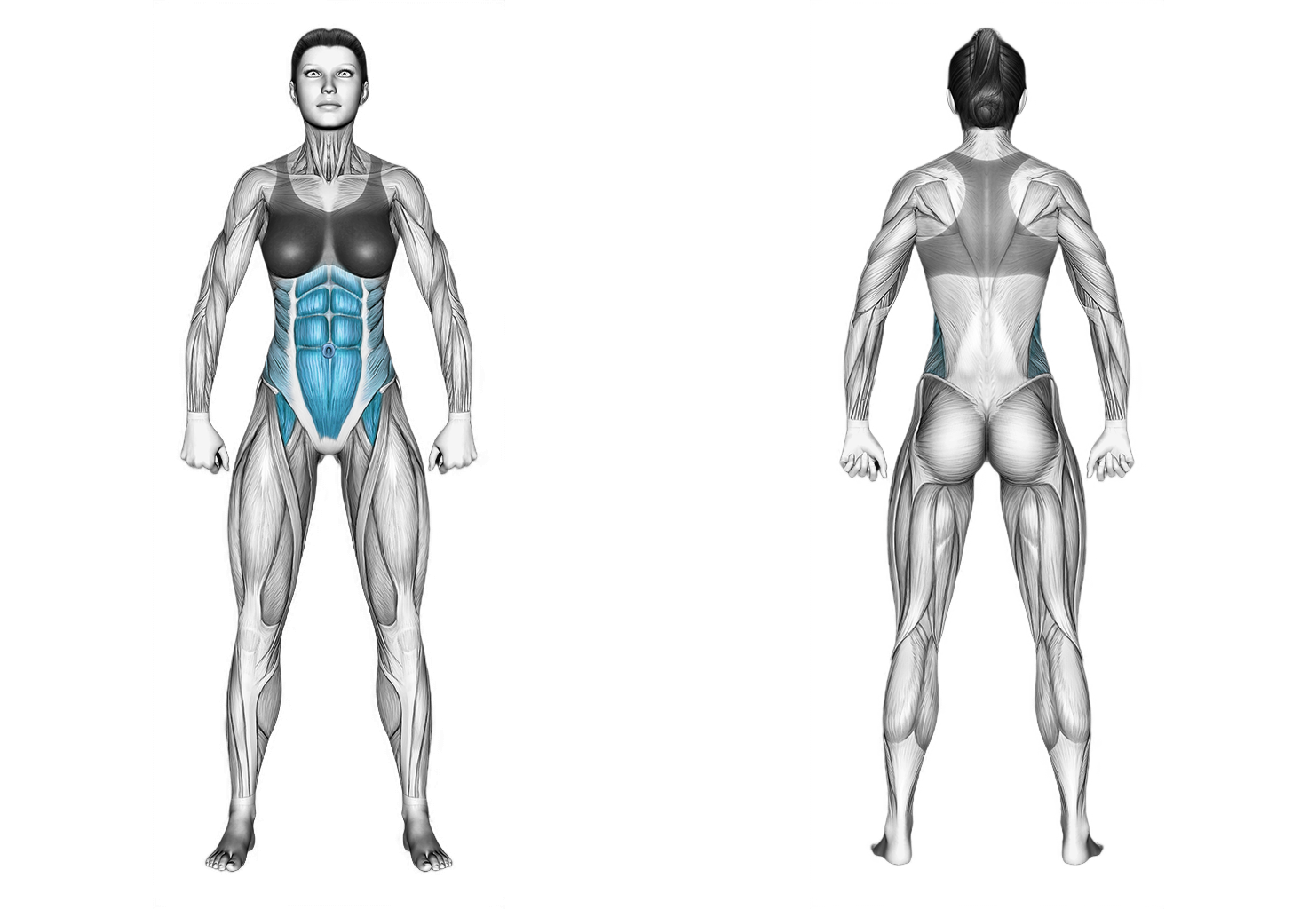
The alternate leg raise with head up is a bodyweight exercise that builds strength and endurance in the rectus abdominis and hip flexors. It is well-suited for all fitness levels and typically fits into the core-finishing block of a workout or within a circuit routine.
- Muscles
- Abs
- Equipment
- Bodyweight
- Type
- Strength
- Animation
- Women
How to do it
- Lie on your back with hands under your glutes for support.
- Lift your head and shoulders slightly off the ground and hold this position.
- Keeping your legs straight, raise one leg up to about 45 degrees.
- Lower it down as you simultaneously raise the other leg.
- Continue alternating legs while keeping your head elevated throughout.
Common mistakes
- Arching the lower back off the floor places unnecessary strain on the lumbar spine and disengages the abdominal wall.
- Pulling the chin aggressively into the chest strains the neck flexors instead of keeping tension in the core.
- Swinging the legs rapidly relies on momentum rather than controlled muscle recruitment.
- Holding the breath raises intra-abdominal pressure unnecessarily and limits the duration of the set.
Tips
- Press the lower back firmly against the floor or your hands before beginning the movement.
- Direct the gaze slightly upward toward the ceiling to keep the cervical spine aligned while the shoulders stay elevated.
- Lower each leg slowly without letting the heels rest on the floor between reps.
Sets and reps
Perform 3 to 4 sets of 20 to 30 total reps (10 to 15 per leg) or timed intervals of 30 to 45 seconds, resting 45 to 60 seconds between sets.
Muscles worked
Your coach guides every set
Turn on the coach in Gloox: it asks how you feel, picks the weight from your history and cues technique and rest. Rate each set and the next one is tuned to you.

On a computer? Point your phone's camera here to get the app.
Questions
Why does my neck hurt during this movement?
The neck flexors work statically to keep the head elevated, which causes strain if they fatigue or if the chin is tucked too hard; lower the head if fatigue sets in, and see a specialist if pain persists.
How can this exercise be made more challenging without weights?
You can slow down the tempo to a two-second lowering phase, pause briefly at the bottom of each rep, or remove your hands from beneath your glutes.







