
Abs · Bodyweight
Seated Leg Raise
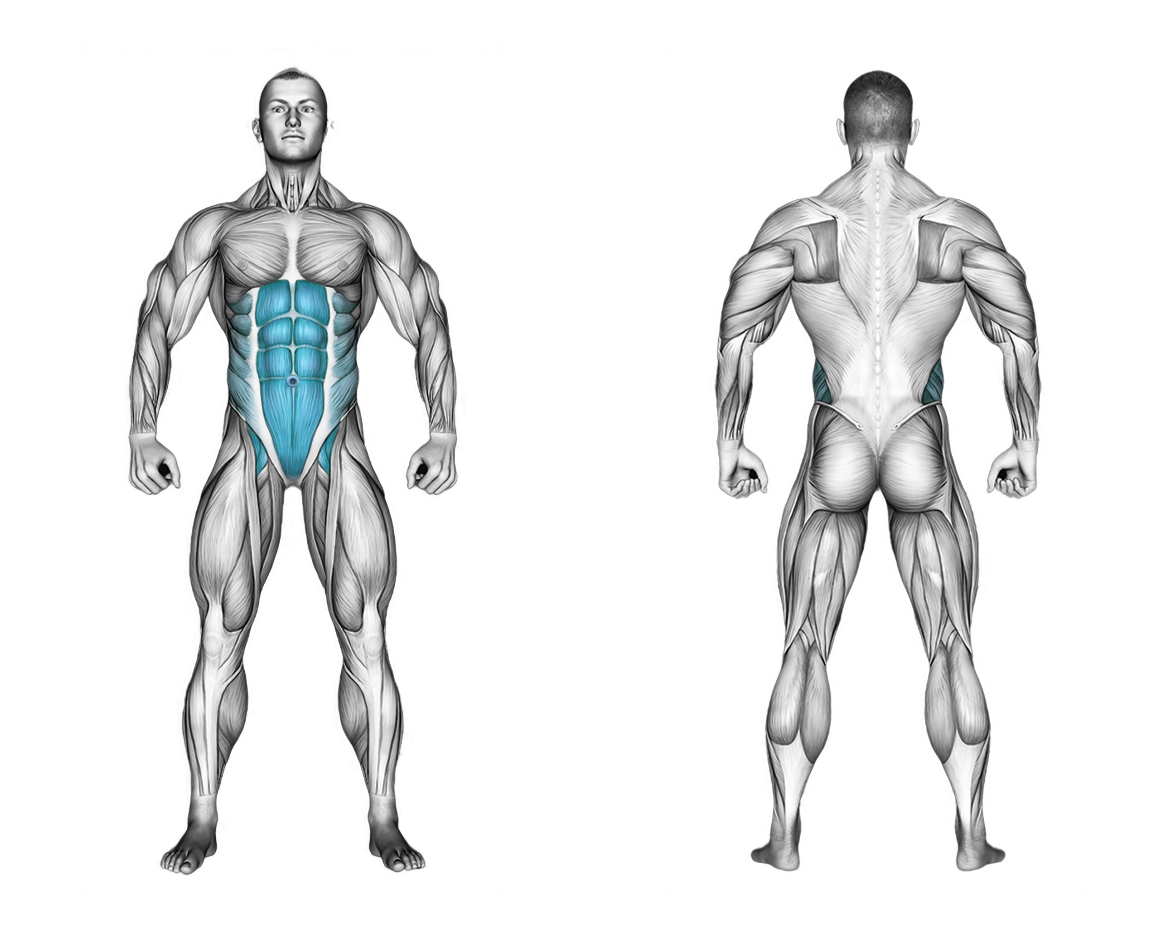
The seated leg raise is a bodyweight core exercise that targets the rectus abdominis and hip flexors. It is suitable for lifters of all experience levels and works well at the end of a core workout or in an at-home routine.
- Muscles
- Abs
- Equipment
- Bodyweight
- Type
- Strength
- Animation
- Men
How to do it
- Sit on the edge of a bench or chair with your hands gripping the sides for support.
- Extend your legs straight out in front of you.
- Keeping your legs straight, raise them up towards your chest by contracting your abs.
- Lower your legs back down with control, stopping just before they touch the ground.
Common mistakes
- Using momentum: Swinging the legs up relieves tension from the abdominals and places undue stress on the hip flexors.
- Excessive spinal rounding: Slouching backwards disengages the core and creates unwanted shear stress on the lower back.
- Resting feet on the floor between reps: Touching the ground releases the continuous tension required to fatigue the abdominal wall.
- Bending the knees significantly: Shortening the lever arm turns the movement into a knee tuck and substantially reduces the difficulty.
Tips
- Lean the torso back slightly while maintaining a flat back to allow a full abdominal contraction.
- Exhale forcefully at the top of the lift to maximize peak tension in the abs.
- Grip the edges of the seat firmly to anchor your pelvis and prevent rocking back and forth.
Sets and reps
Perform 3 to 4 sets of 12 to 20 controlled repetitions to build core endurance and muscle definition. Keep rest intervals between 45 and 60 seconds.
Muscles worked
Your coach guides every set
Turn on the coach in Gloox: it asks how you feel, picks the weight from your history and cues technique and rest. Rate each set and the next one is tuned to you.

On a computer? Point your phone's camera here to get the app.
Questions
How does this movement compare to seated knee tucks?
Keeping the legs straight extends the lever arm, making the seated leg raise noticeably more challenging for the rectus abdominis.
Is this exercise safe if you have lower back discomfort?
Stop the exercise immediately if lower back discomfort occurs, and consult a qualified specialist if the issue persists.







