
Abs · Bodyweight
Long-Arm Crunch
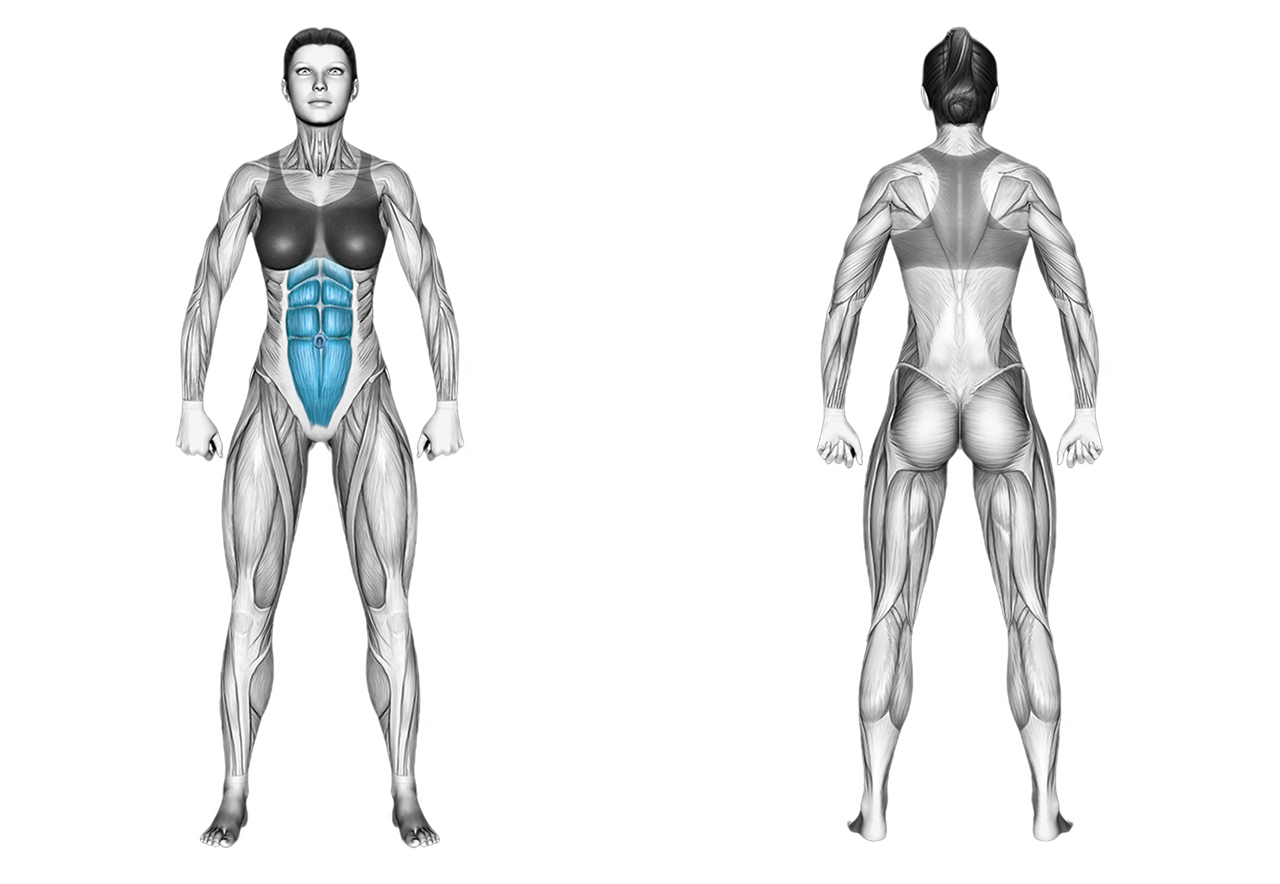
The long-arm crunch is an effective bodyweight core movement that uses an extended lever to place greater mechanical tension on the rectus abdominis. It is best suited for intermediate to advanced lifters looking to intensify their ab training near the end of a workout without added weights.
- Muscles
- Abs
- Equipment
- Bodyweight
- Type
- Strength
- Animation
- Women
How to do it
- Lie on your back with knees bent and feet flat on the floor.
- Extend your arms straight above your head, keeping them in line with your torso.
- Engage your core and lift your shoulder blades off the ground.
- Reach your extended arms toward the ceiling while crunching up.
- Slowly lower back to the starting position with control.
Common mistakes
- Swinging the arms forward to generate momentum removes tension from the abdominal wall.
- Tucking the chin aggressively into the chest strains the cervical spine.
- Lifting the lower back completely off the floor shifts the work onto the hip flexors.
Tips
- Keep your arms locked straight and aligned with your ears throughout the entire range of motion.
- Exhale fully and pause for one second at the top of the movement to maximize peak contraction.
- Focus on rolling your ribcage toward your hips rather than trying to pull your whole torso up.
Sets and reps
Perform 3 to 4 sets of 12 to 20 controlled repetitions, resting 45 to 60 seconds between sets.
Muscles worked
Your coach guides every set
Turn on the coach in Gloox: it asks how you feel, picks the weight from your history and cues technique and rest. Rate each set and the next one is tuned to you.

On a computer? Point your phone's camera here to get the app.
Questions
Why are long-arm crunches harder than regular crunches?
Keeping the arms extended overhead creates a longer lever arm, which significantly increases torque and forces the abs to work harder against gravity.
Is this exercise safe for the lower back?
Because the lumbar spine stays pressed into the floor, it is generally gentler on the lower back than full sit-ups; stop immediately and consult a professional if you feel pain.







