Legs · Dumbbells
Dumbbell Rear Lunge
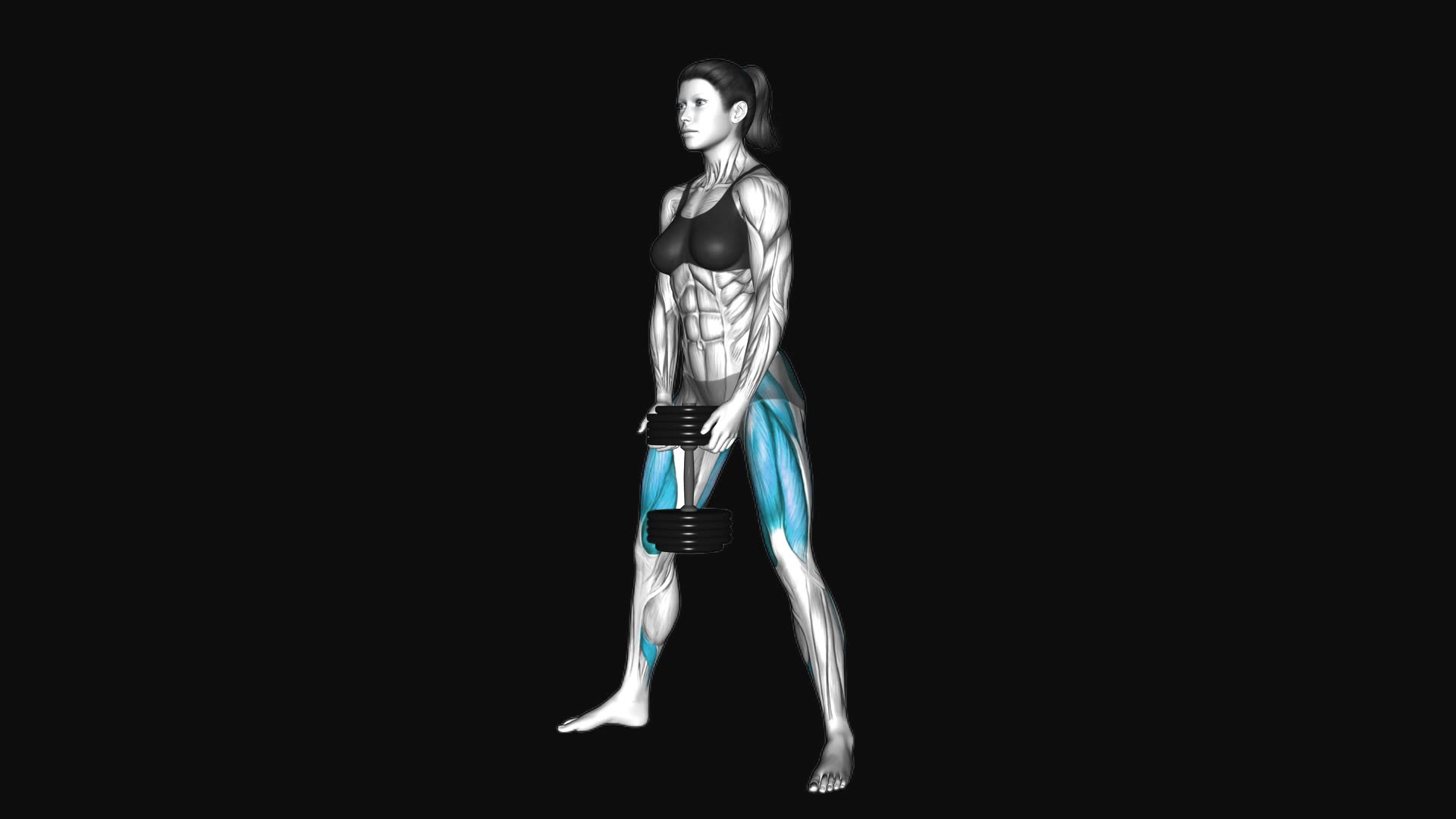
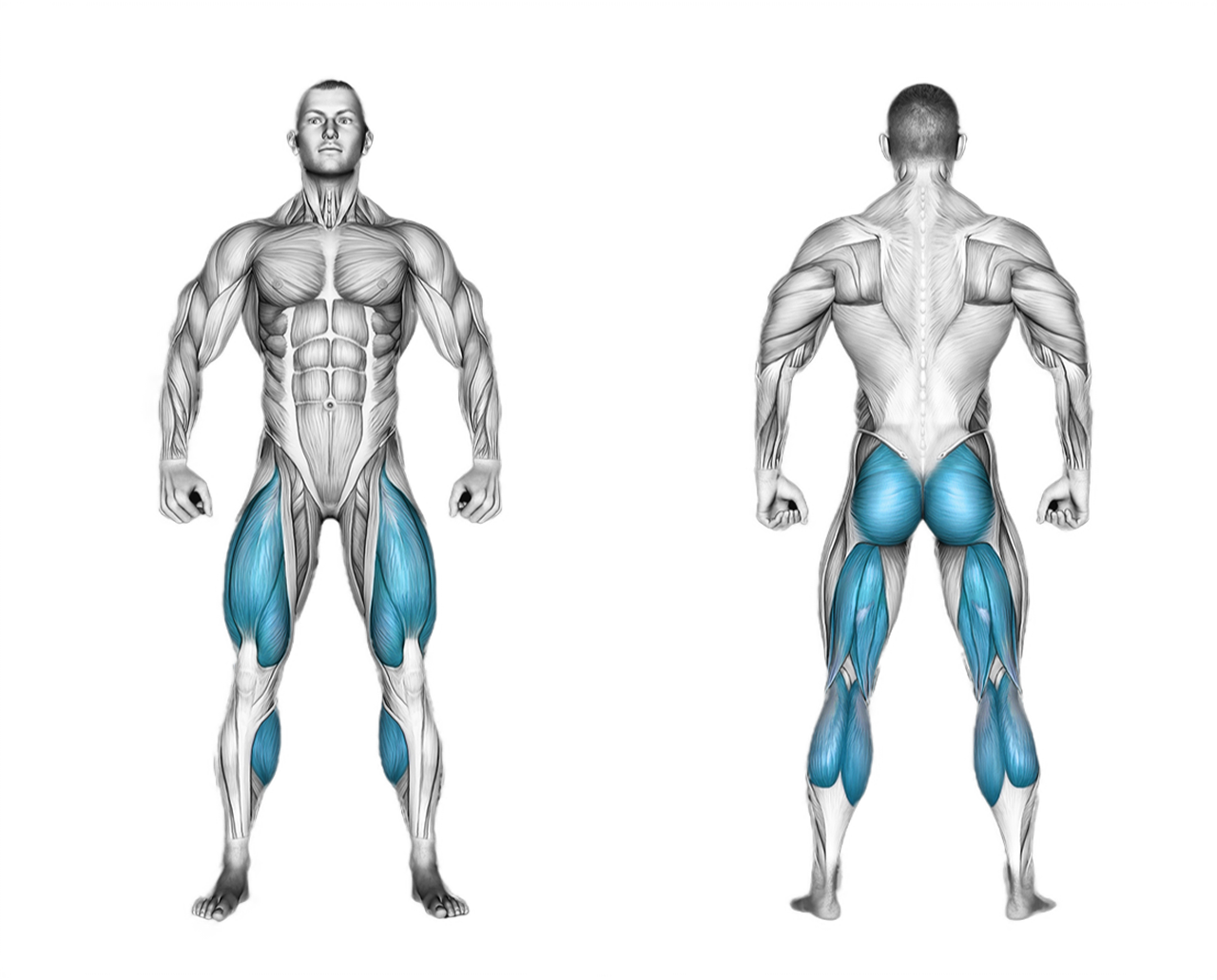
The dumbbell rear lunge is a unilateral lower-body exercise that targets the quadriceps, glutes, and hamstrings while challenging balance and hip stability. It places less shear stress on the front knee than forward lunges and fits well as a primary accessory movement in any leg workout.
How to do it
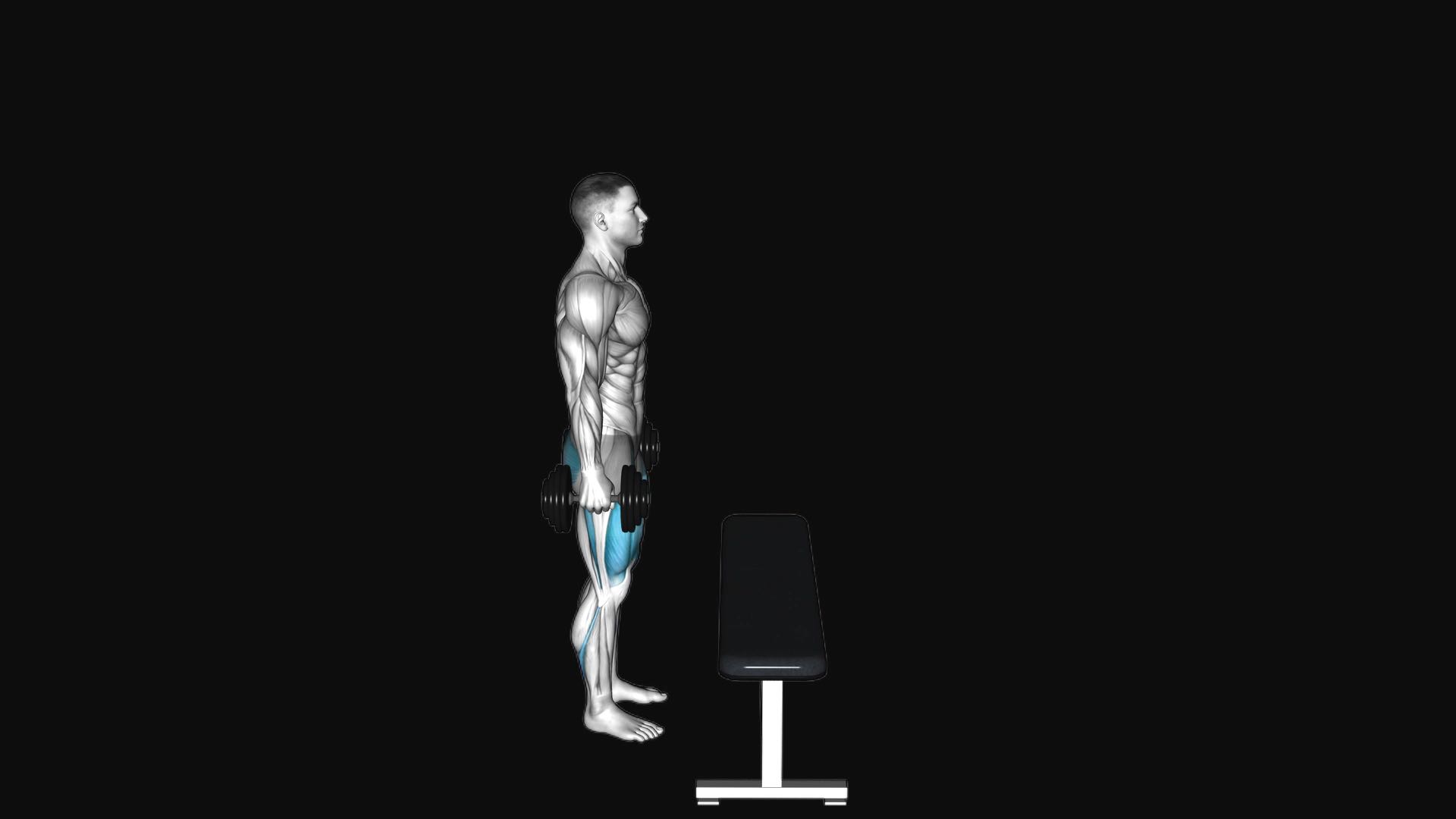
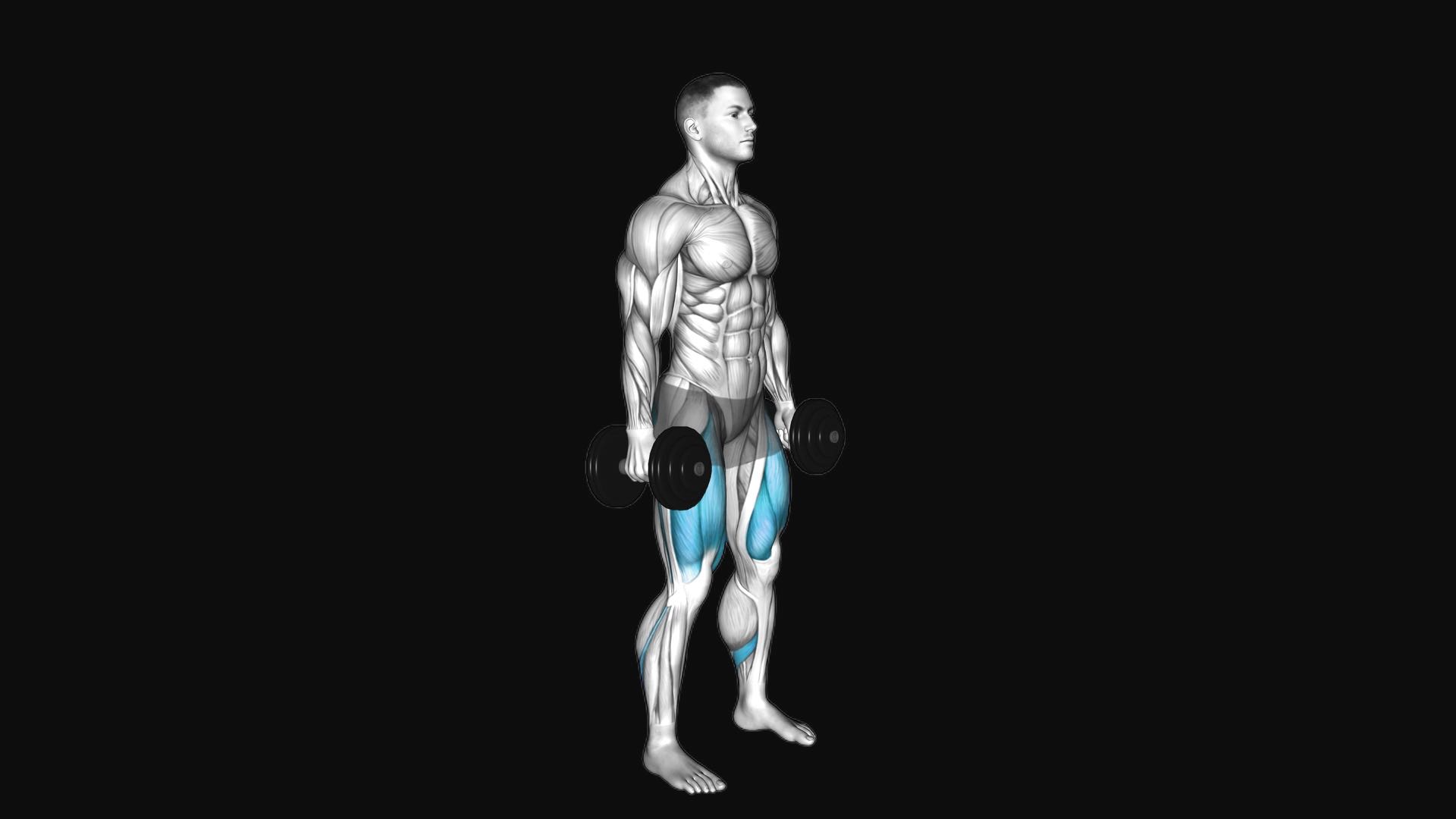
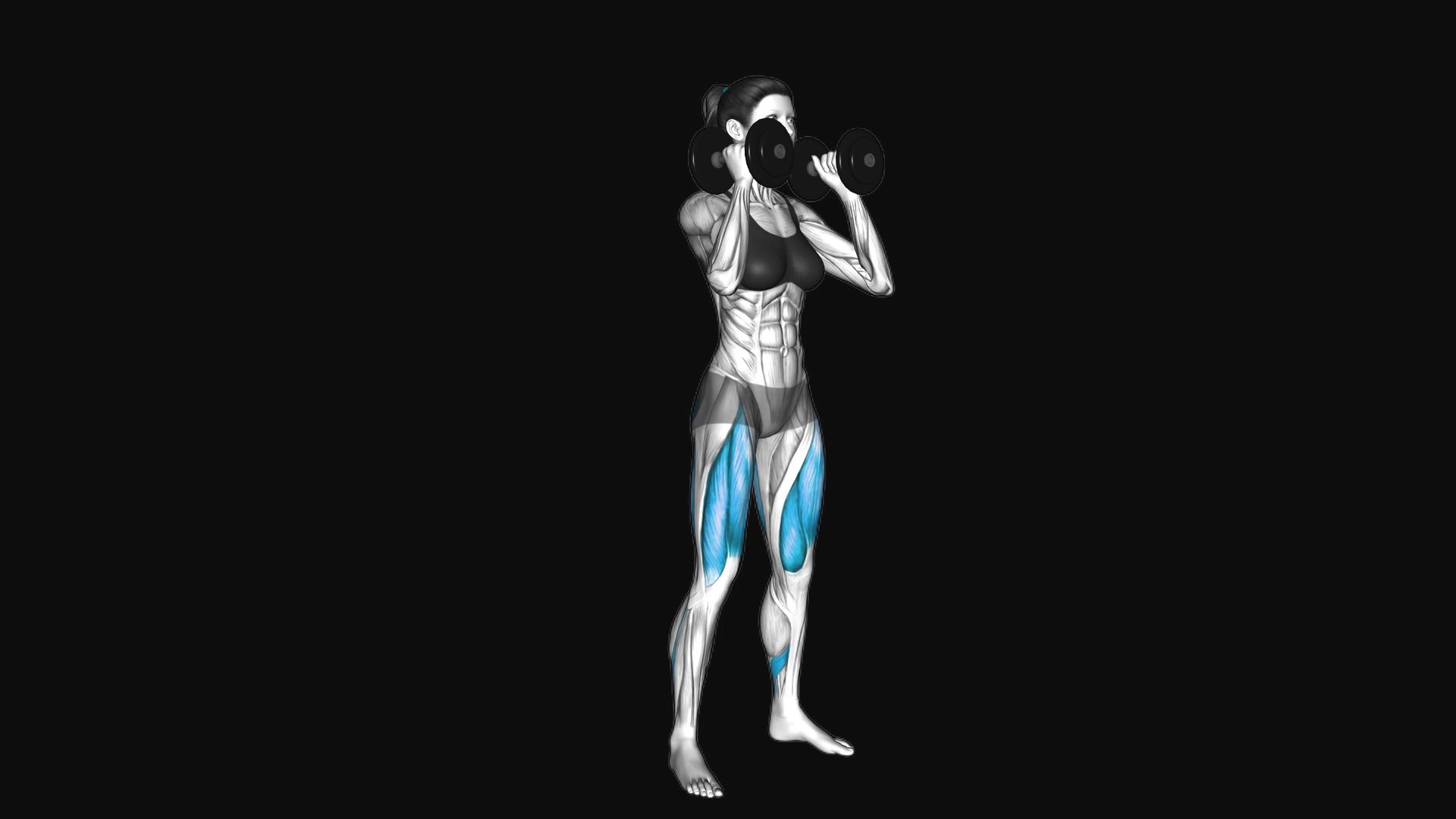
- Stand with your feet shoulder-width apart, holding a dumbbell in each hand at your sides.
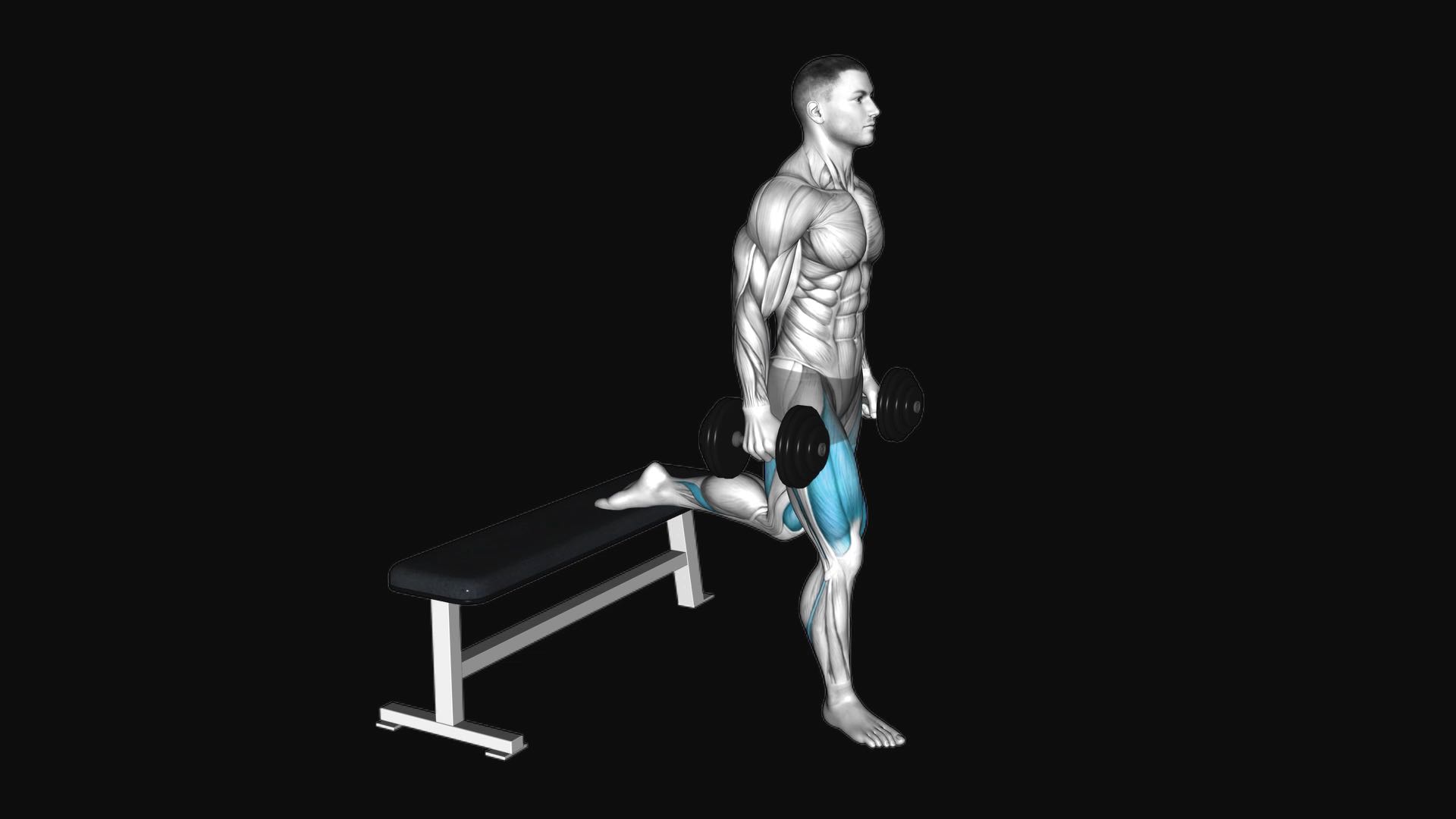
- Take a step backward with one leg, lowering your hips until both knees are bent at about a 90-degree angle.
- Make sure your front knee is directly above your ankle and your back knee is hovering just above the floor.
- Keep your upper body straight, with your shoulders back and relaxed.
- Drive through the heel of your front foot to return to the starting position.
- Alternate legs with each repetition.
Common mistakes
- Allowing the front heel to rise off the floor places unnecessary strain directly onto the patellar tendon.
- Dropping the back knee hard onto the floor risks bruising or injuring the joint.
- Collapsing the front knee inward during the ascent creates harmful torsional stress on the knee ligaments.
- Rounding the spine while holding the dumbbells shifts the load away from the legs and strains the lower back.
Tips
- Step backward along hip-width tracks rather than onto a single tightrope line to maintain balance.
- Drive predominantly through the heel and midfoot of your front leg to return to the starting position.
- Hinge slightly forward at the hips with a flat back to increase glute recruitment without overloading the spine.
Sets and reps
Perform 3 to 4 sets of 8 to 12 repetitions per leg for hypertrophy and muscular endurance. Rest 60 to 90 seconds between sets.
Muscles worked
Your coach guides every set
Turn on the coach in Gloox: it asks how you feel, picks the weight from your history and cues technique and rest. Rate each set and the next one is tuned to you.

On a computer? Point your phone's camera here to get the app.
Questions
Why choose reverse lunges over forward lunges?
Stepping backward keeps the front shin more vertical and reduces forward momentum, creating a safer angle for the knee joint.
What should you do if you experience knee pain during the movement?
Stop the exercise immediately and consult a sports physician or physical therapist to identify any underlying joint issues.