Legs · Dumbbells
Dumbbell Plyo Squat
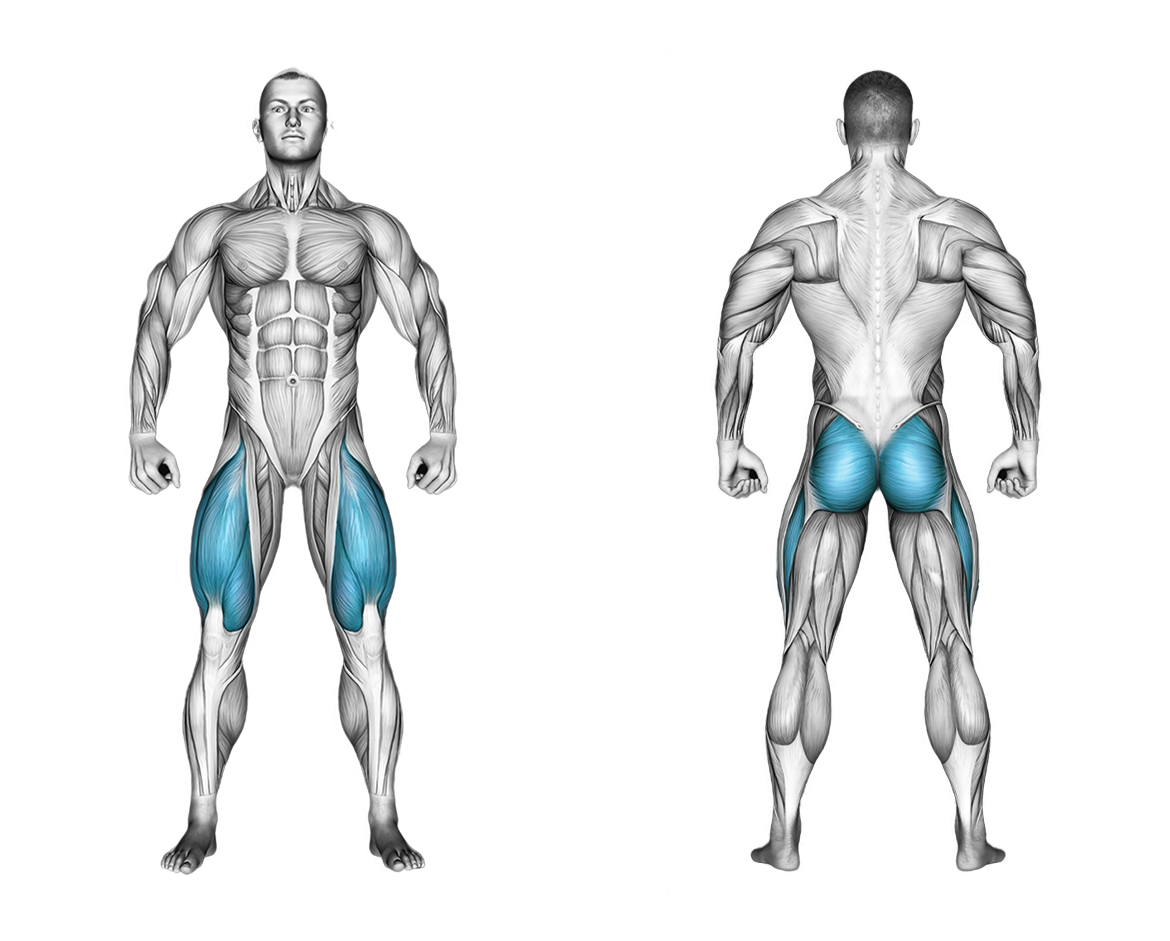
The dumbbell plyo squat is an explosive lower-body exercise that combines a loaded squat with a vertical jump. It develops power and strength in the quadriceps and glutes, making it ideal for the early phase of athletic or functional workouts.
- Equipment
- Dumbbells
- Type
- Strength
- Animation
- Men and women
How to do it
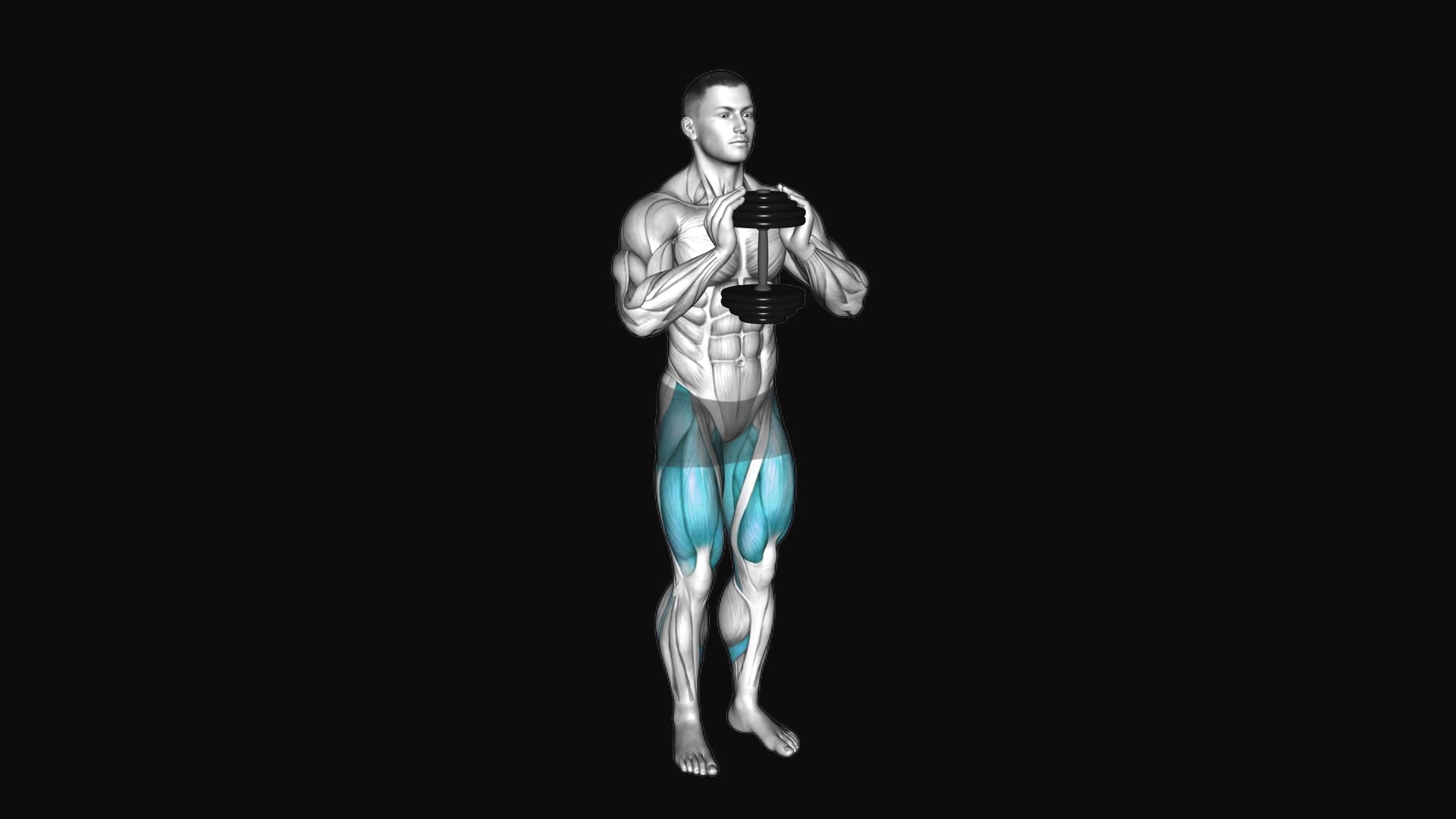
- Hold a dumbbell at chest level with both hands.
- Stand with feet shoulder-width apart.
- Lower into a squat position, keeping your chest up and weight in your heels.
- Explosively drive through your heels to jump up off the ground.
- Land softly and immediately lower into the next rep.
Common mistakes
- Landing with locked knees transfers extreme impact directly to your knee joints and spine.
- Using an overly heavy dumbbell reduces jump height and compromises landing mechanics.
- Allowing the knees to cave inward during the jump or landing stresses the knee ligaments.
- Letting the dumbbell drift away from your chest disrupts balance and strains your shoulders.
Tips
- Land softly by rolling from the balls of your feet to your heels, transitioning directly into the next squat.
- Keep the dumbbell firmly pinned against your chest through both the jump and landing phases.
- Prioritize maximum jump height and landing absorption rather than heavy resistance.
Sets and reps
For explosive power, perform 3 to 4 sets of 5 to 8 reps with 90 to 120 seconds of rest. For conditioning and muscular endurance, aim for 3 to 4 sets of 10 to 12 reps with 60 to 90 seconds of rest.
Muscles worked
Your coach guides every set
Turn on the coach in Gloox: it asks how you feel, picks the weight from your history and cues technique and rest. Rate each set and the next one is tuned to you.

On a computer? Point your phone's camera here to get the app.
Questions
Is the dumbbell plyo squat safe for your knees?
It is safe when performed with controlled, shock-absorbing landings, but you should stop immediately and consult a specialist if you feel joint pain.
How heavy should the dumbbell be?
Choose a light weight (around 5 to 15 lbs / 2 to 7 kg) so you can maintain jump speed and proper mechanics.