Legs · Dumbbells
Dumbbell Step-Up
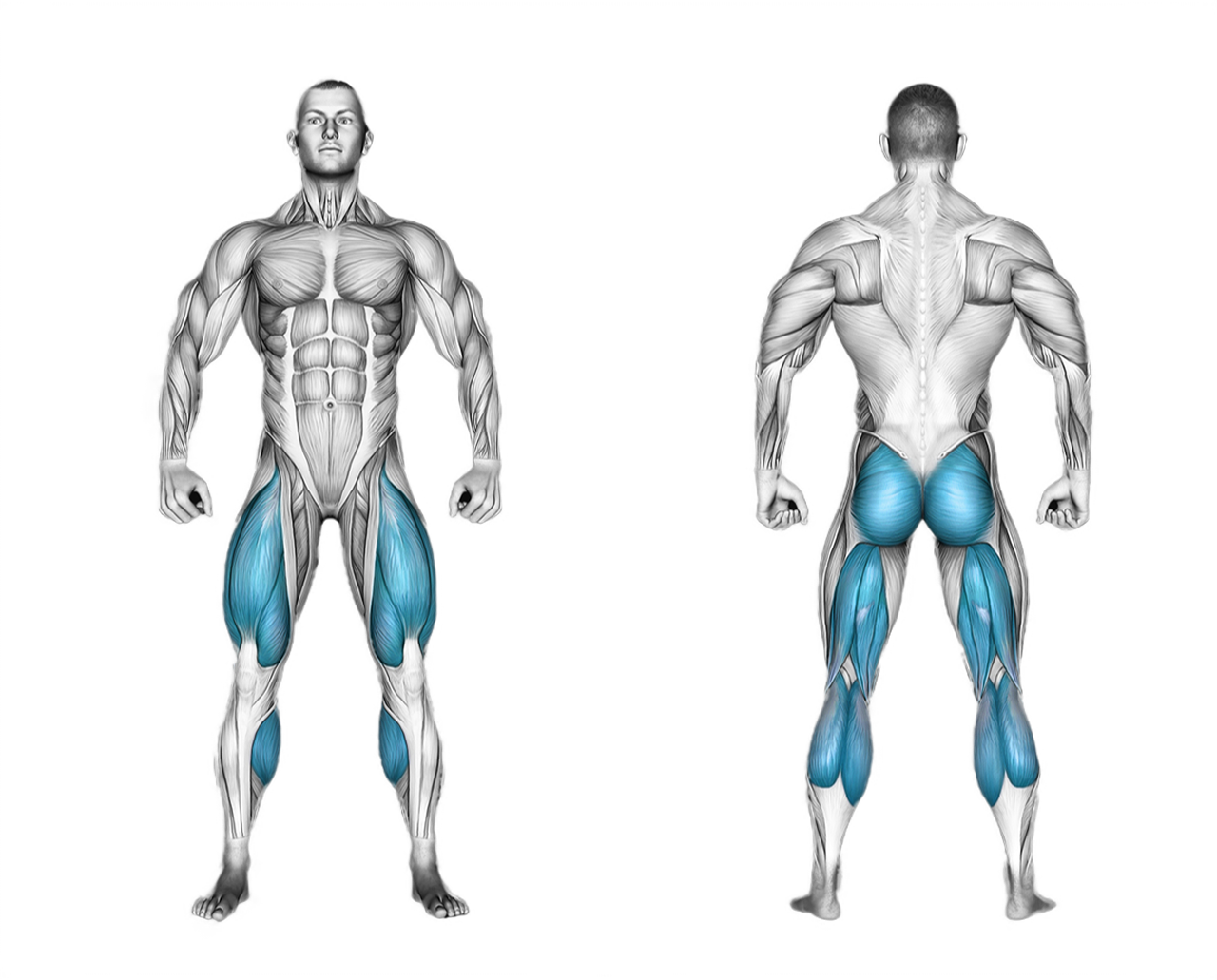
The dumbbell step-up is a unilateral lower-body exercise that targets the quadriceps, glutes, and hamstrings while building functional balance. It suits lifters of all experience levels and fits well in the middle of a leg session after primary compound lifts.
How to do it
- Stand in front of a bench or a sturdy raised platform, holding a dumbbell in each hand at your sides.
- Step up onto the bench with one foot, pressing through your heel to lift your body up.
- Bring your other foot up to stand on the bench.
- Keep your back straight and your core engaged throughout the movement.
- Step back down to the starting position, starting with the lead foot.
- Alternate the leading foot with each repetition.
Common mistakes
- Pushing off forcefully with the trailing foot, which turns the movement into a calf raise and unloads the working leg.
- Allowing the lead knee to cave inward during the ascent, placing unnecessary stress on the knee joint.
- Using a platform that is too high, forcing the pelvis to tilt and the lower back to round.
- Dropping down rapidly on the eccentric phase instead of lowering the body with control.
Tips
- Choose a box or bench height that keeps your working thigh roughly parallel to the floor when your foot is placed.
- Drive through the heel and midfoot of the lead leg to power the ascent rather than springing off the floor.
- Maintain an upright torso with a braced core throughout both the ascent and the descent.
Sets and reps
Perform 3 to 4 sets of 8 to 12 reps per leg, taking 60 to 90 seconds of rest between sets to balance strength and muscular endurance.
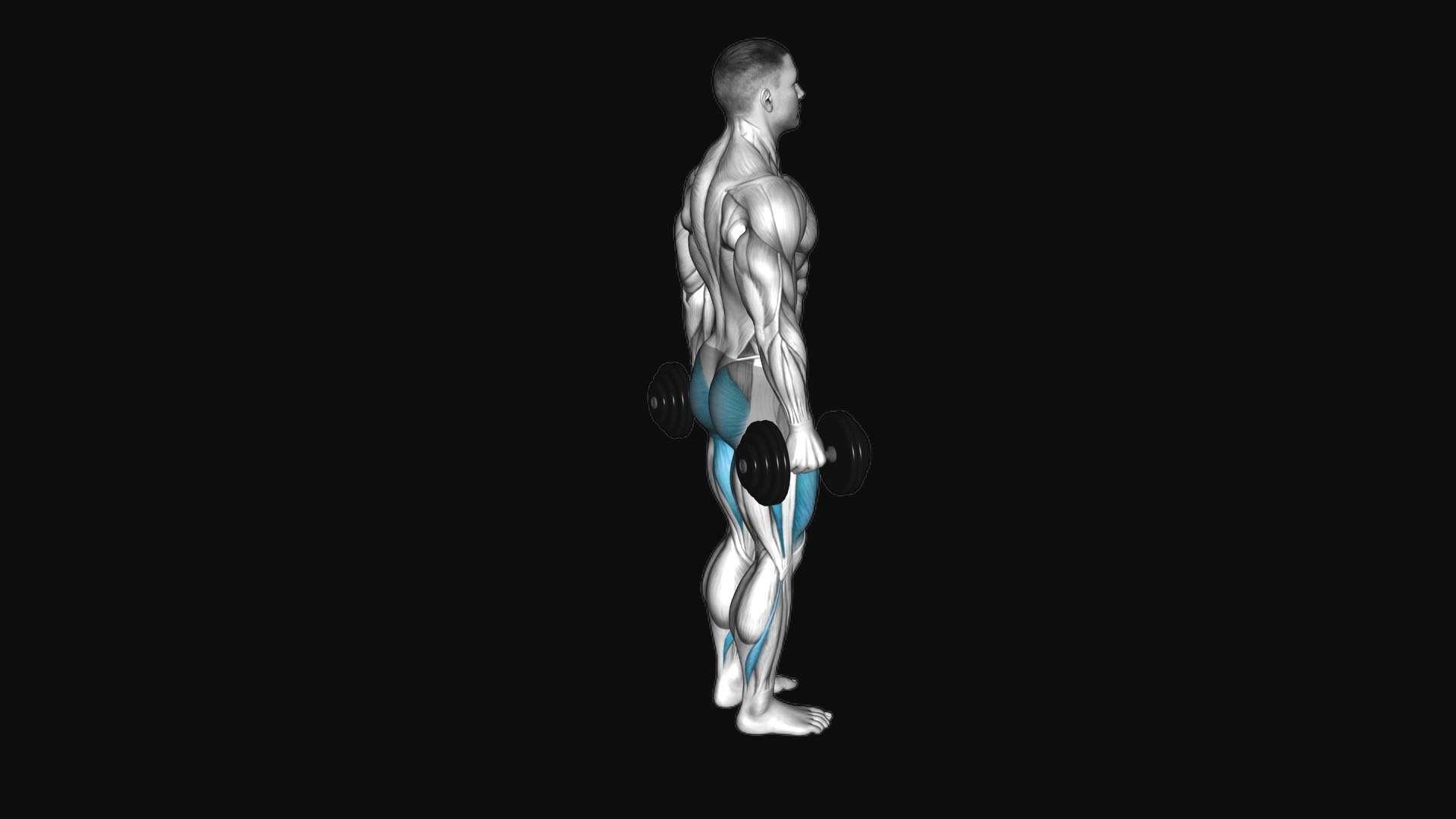
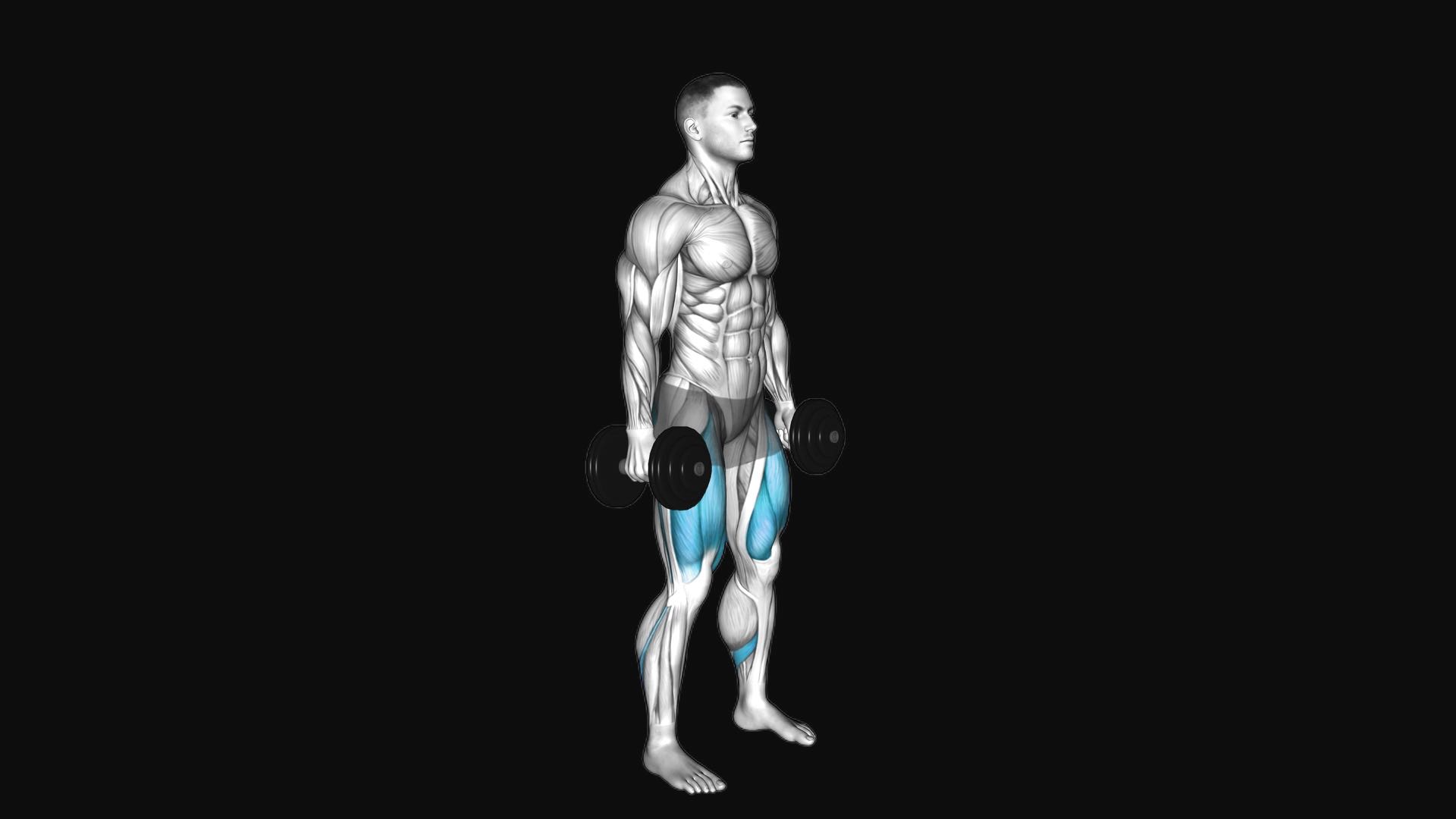
Muscles worked
Your coach guides every set
Turn on the coach in Gloox: it asks how you feel, picks the weight from your history and cues technique and rest. Rate each set and the next one is tuned to you.

On a computer? Point your phone's camera here to get the app.
Questions
Is the dumbbell step-up safer for the lower back than a barbell squat?
Holding dumbbells at your sides eliminates direct axial loading on the spine, making it generally friendlier on the lower back. If you experience pain, stop the exercise and consult a medical professional.
Can dumbbell step-ups help fix leg strength imbalances?
Yes, training one leg at a time ensures that the dominant side cannot compensate for the weaker one. It is best to start each set with the weaker leg to match effort across both sides.