Back · Barbell
Barbell Shrug
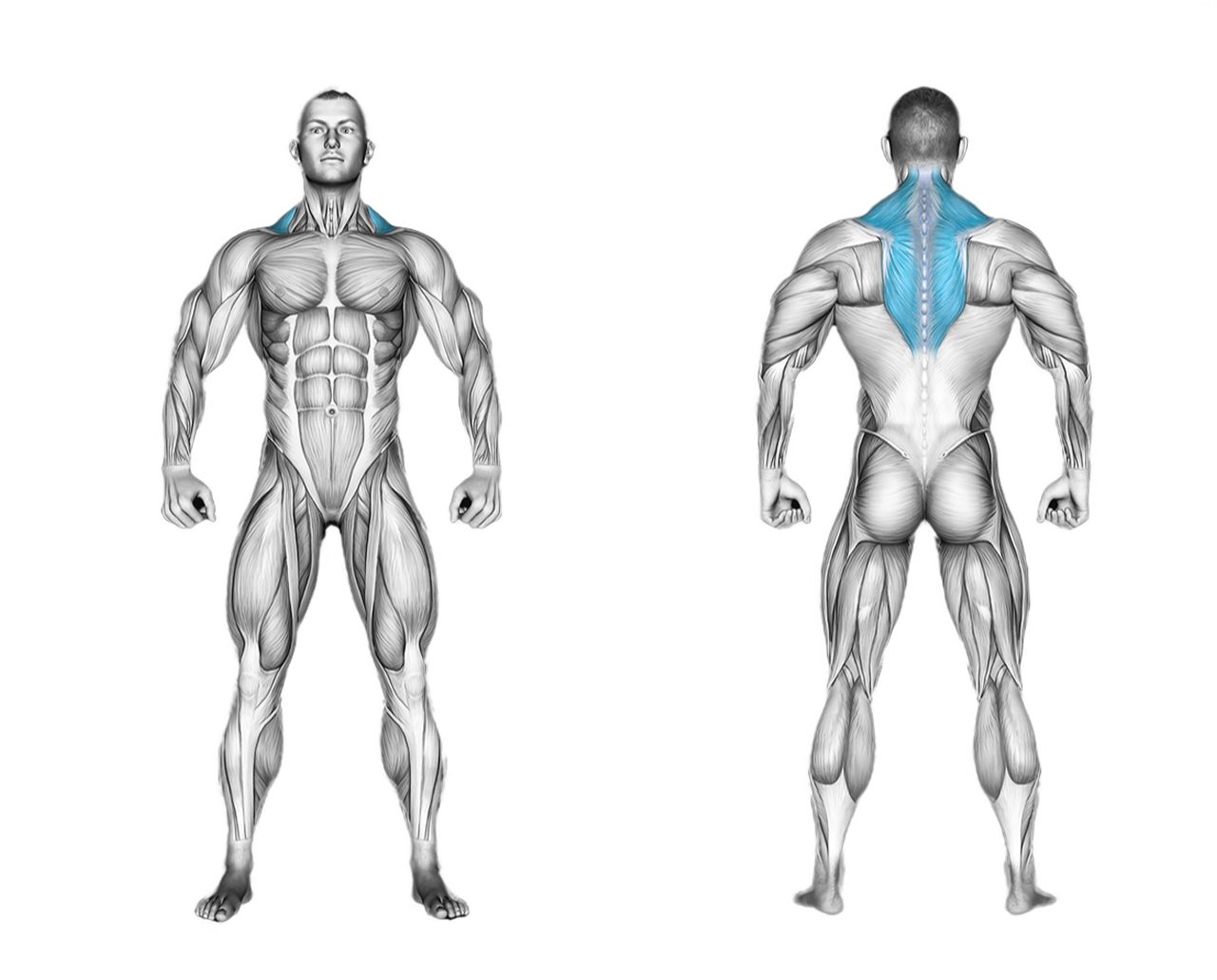
The barbell shrug is an isolation strength exercise designed to overload the upper trapezius and levator scapulae muscles. It is suitable for lifters looking to build upper back thickness and typically fits near the end of a pull workout or shoulder routine.
- Equipment
- Barbell
- Type
- Strength
- Animation
- Men and women
How to do it
- Stand with your feet shoulder-width apart, holding a barbell in front of you with an overhand grip, hands just outside your thighs.
- Keep your arms straight, back straight, and shoulders relaxed.
- Inhale and brace your core. Lift your shoulders straight up towards your ears, contracting your trapezius muscles.
- Keep your neck relaxed and avoid rolling your shoulders.
- Hold the contraction at the top for a moment.
- Exhale as you slowly lower your shoulders back to the starting position.
Common mistakes
- Rolling the shoulders in circles places unnecessary stress on the rotator cuff without providing extra benefit to the trapezius.
- Bending the elbows shifts mechanical tension away from the traps and onto the biceps.
- Using excessive weight forces the head to jut forward, creating dangerous strain on the cervical spine.
Tips
- Hold the peak contraction at the top for one to two seconds to fully engage the trapezius fibers.
- Use lifting straps if your grip gives out before your traps reach fatigue.
- Keep the bar lightly brushing the thighs throughout the movement to prevent unwanted forward torso lean.
Sets and reps
Perform 3 to 4 sets of 8 to 15 controlled reps with 60 to 90 seconds of rest between sets. Focus on a deliberate pause at the top rather than moving maximal poundages.
Muscles worked
Your coach guides every set
Turn on the coach in Gloox: it asks how you feel, picks the weight from your history and cues technique and rest. Rate each set and the next one is tuned to you.

On a computer? Point your phone's camera here to get the app.
Questions
Is it better to hold the bar in front or behind the body?
Holding the bar in front allows for heavier loads and simpler setup, while behind-the-back shrugs provide a slightly different angle of scapular retraction with lighter weight.
What should be done if neck pain occurs during barbell shrugs?
Stop the set immediately, as sharp neck pain may indicate cervical spine strain or nerve compression; consult a qualified medical specialist before resuming.