
Shoulders · Resistance bands
Resistance Band Standing 90 Degrees Shoulder External Rotation
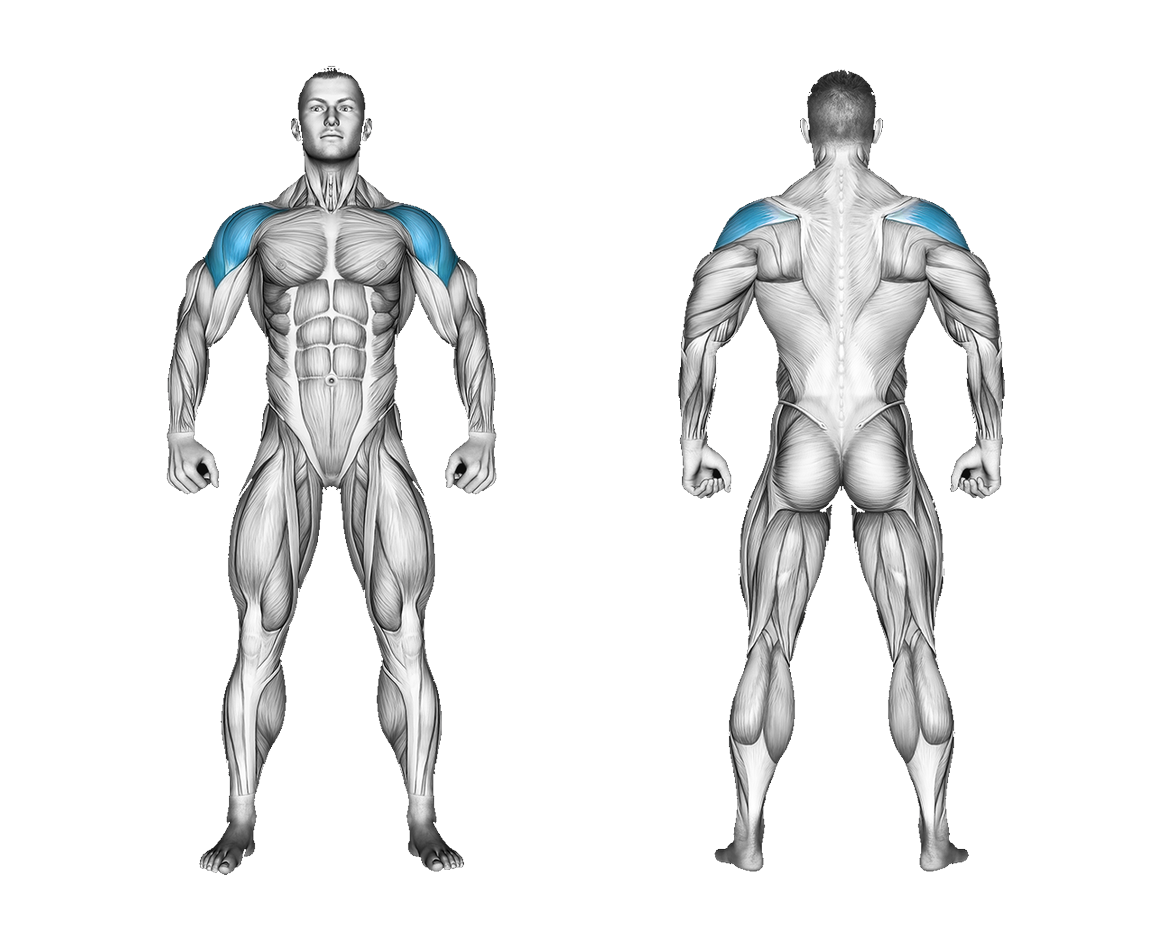
The resistance band standing 90 degrees shoulder external rotation is an isolation exercise designed to strengthen the rotator cuff and enhance overall shoulder stability. It specifically targets the infraspinatus, teres minor, and rear deltoid, making it ideal as a warm-up drill or prehab accessory before heavy upper-body pressing.
- Muscles
- Shoulders
- Equipment
- Resistance bands
- Type
- Strength
- Animation
- Men
How to do it
- Stand with your feet shoulder-width apart and loop the resistance band around both wrists.
- Raise your arms out to the sides until your upper arms are parallel to the floor, elbows bent at 90 degrees with your forearms pointing forward.
- Inhale and brace your core. As you exhale, rotate your forearms upward against the band's resistance until they point toward the ceiling, keeping your elbows in place.
- Hold the top position briefly, keeping tension in the band.
- Inhale and slowly rotate your forearms back to the starting position.
Common mistakes
- Dropping the elbows below shoulder level removes tension from the external rotators and shifts it to the anterior deltoids.
- Arching the lower back during the rotation compensates for tight shoulders and places unnecessary stress on the lumbar spine.
- Using a band that is too heavy causes the upper traps to shrug up toward the ears and breaks strict rotational mechanics.
Tips
- Maintain a 90-degree bend at the elbows and keep them pinned at shoulder height throughout the entire set.
- Keep your shoulder blades pulled down and back to provide a stable base for the rotational movement.
- Pause for a brief second at the top of the rotation to maximize tension in the rotator cuff.
Sets and reps
Perform 2 to 3 sets of 12 to 15 slow, controlled repetitions using a light resistance band. Rest for 45 to 60 seconds between sets.
Muscles worked
Your coach guides every set
Turn on the coach in Gloox: it asks how you feel, picks the weight from your history and cues technique and rest. Rate each set and the next one is tuned to you.

On a computer? Point your phone's camera here to get the app.
Questions
Which muscles are targeted by this movement?
The primary movers are the infraspinatus and teres minor of the rotator cuff, assisted by the posterior deltoid. The middle deltoid and scapular stabilizers work statically to keep your arms elevated.
What should you do if you experience pain or clicking in the shoulder joint?
Stop the exercise immediately and try reducing the band tension or range of motion. If the joint pain persists, consult a qualified healthcare professional before resuming shoulder work.
Similar exercises
Resistance Band 90 Degrees External RotationResistance bands
Resistance Band Standing Shoulder External RotationResistance bands
Resistance Band Standing Around the WorldResistance bands
Band Bent Over Rear Deltoid KickbackResistance bands
Resistance Band Lying Shoulder AbductionResistance bands
Resistance Band Single Arm Lateral RaiseResistance bands
Resistance Band Standing Single Arm Lateral Shoulder RaiseResistance bands
Resistance Band Standing Single Arm Shoulder FlexionResistance bands