
Shoulders · Resistance bands
Resistance Band Single Arm Lateral Raise
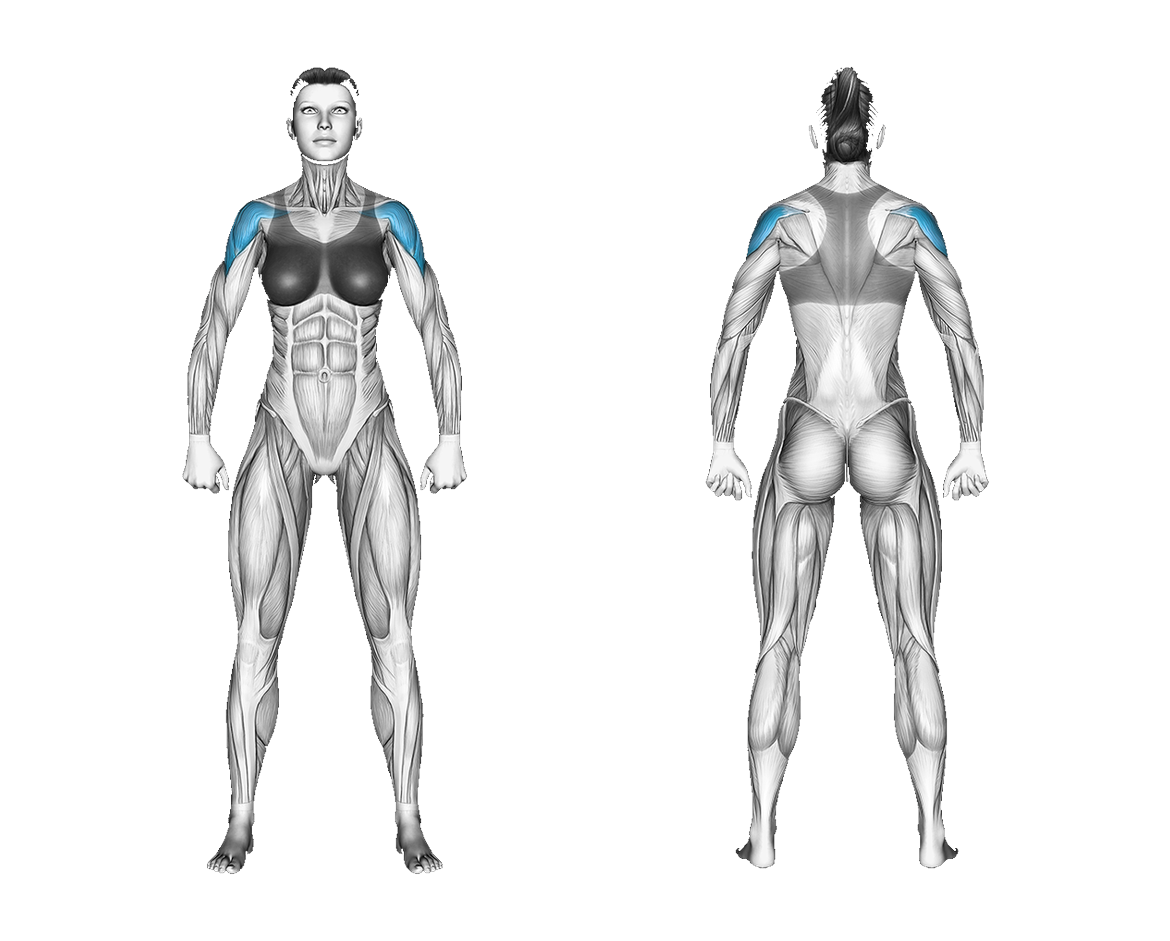
The resistance band single arm lateral raise is an isolation movement targeting the lateral head of the deltoid. Working one side at a time helps correct muscle imbalances and fits well into the middle or end of an upper-body workout.
- Muscles
- Shoulders
- Equipment
- Resistance bands
- Type
- Strength
- Animation
- Women
How to do it
- Stand with one foot on the end of the band and grasp the other end of the loop with the hand on the same side.
- Stand tall with your feet hip-width apart, arm at your side and a slight bend in the elbow.
- Inhale and brace your core. As you exhale, raise your arm out to the side until your hand reaches shoulder height.
- Keep your torso still and avoid shrugging your shoulder.
- Inhale and slowly lower your arm back to your side.
- Complete all repetitions, then switch arms.
Common mistakes
- Shrugging the shoulder toward the ear, which transfers tension to the upper traps instead of the lateral delt.
- Swinging the torso to generate momentum, which compromises shoulder isolation and strains the lower back.
- Letting the band snap the arm back down rapidly, removing tension during the eccentric phase.
- Excessively bending the elbow during the raise, which shortens the lever arm and reduces target muscle recruitment.
Tips
- Adjust the resistance by stepping closer to the working handle or changing your foot placement.
- Lead the movement with your elbow rather than your wrist to ensure optimal middle deltoid activation.
- Pause for a brief second at the top of the rep to maximize peak tension against the stretched band.
Sets and reps
Perform 3–4 sets of 12–15 controlled repetitions per arm, resting 45–60 seconds between sides.
Muscles worked
Your coach guides every set
Turn on the coach in Gloox: it asks how you feel, picks the weight from your history and cues technique and rest. Rate each set and the next one is tuned to you.

On a computer? Point your phone's camera here to get the app.
Questions
How does using a resistance band compare to a dumbbell for this exercise?
A resistance band provides accommodating resistance, meaning the tension peaks at the top where the muscle is fully contracted, while maintaining continuous tension throughout the range of motion.
What should you do if you feel shoulder pain during the raise?
Stop the exercise immediately, try raising the arm slightly forward in the scapular plane, and consult a medical professional if discomfort persists.
Similar exercises
Resistance Band 90 Degrees External RotationResistance bands
Resistance Band Standing 90 Degrees Shoulder External RotationResistance bands
Resistance Band Standing Shoulder External RotationResistance bands
Resistance Band Standing Around the WorldResistance bands
Band Bent Over Rear Deltoid KickbackResistance bands
Resistance Band Lying Shoulder AbductionResistance bands
Resistance Band Standing Single Arm Lateral Shoulder RaiseResistance bands
Resistance Band Standing Single Arm Shoulder FlexionResistance bands