Chest · Bodyweight
Push-up
The push-up is a fundamental upper-body exercise that develops the chest, anterior shoulders, and triceps while demanding total-body core stability. It fits lifters of all experience levels and functions well as a primary pressing movement, a warm-up drill, or a conditioning finisher.
- Equipment
- Bodyweight
- Type
- Strength
- Animation
- Men and women
How to do it
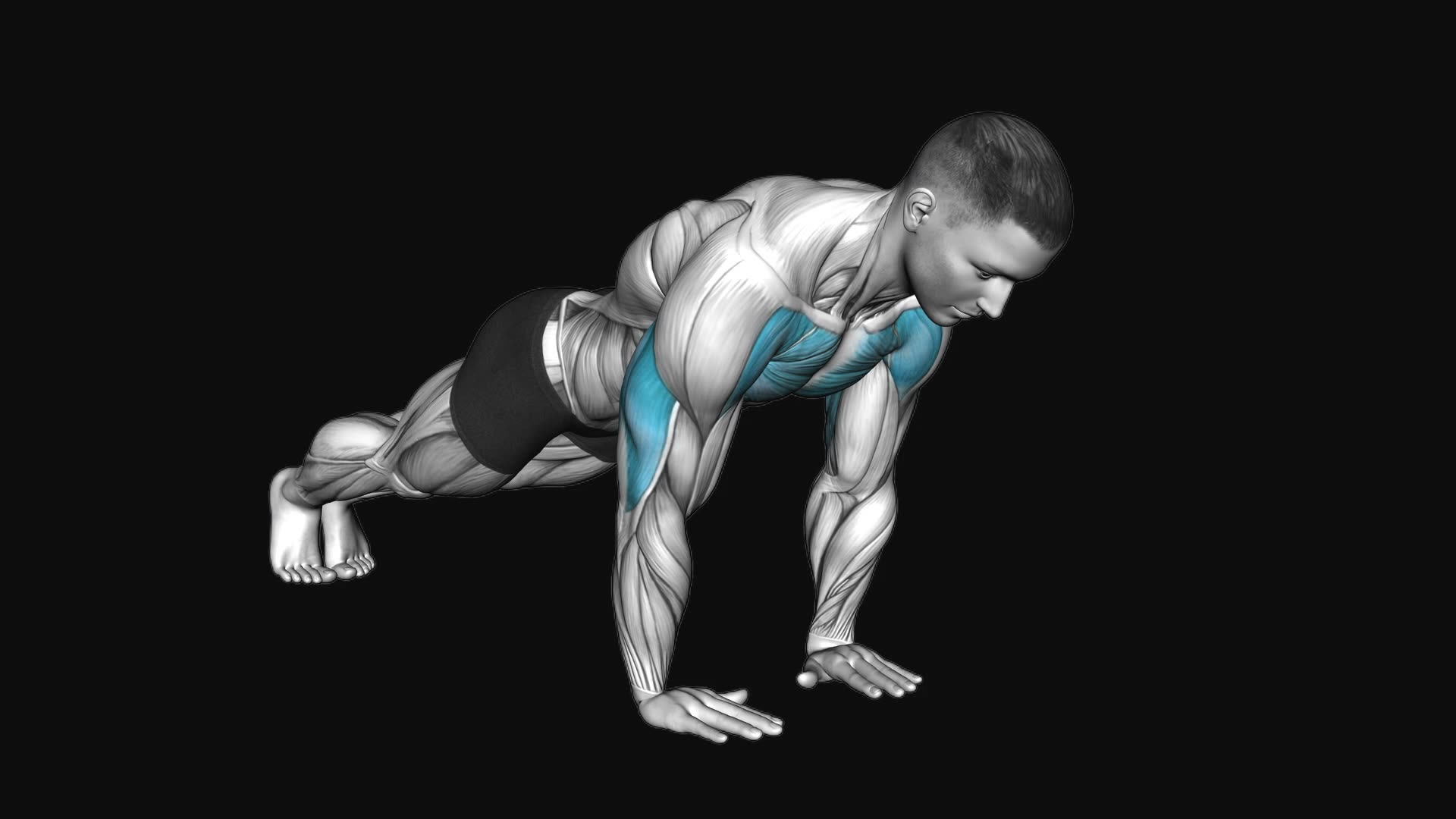
- Start in a plank position with your hands shoulder-width apart on the ground.
- Keep your feet together or slightly apart for balance.
- Your body should form a straight line from your heels to your head.
- Inhale and brace your core. As you exhale, lower your body towards the ground by bending your elbows, keeping them close to your body.
- Go down until your chest or chin nearly touches the ground.
- Focus on keeping your body straight and engaging your chest, arms, and core muscles.
- Push back up to the starting position, extending your arms fully.
Common mistakes
- Sagging the hips or overarching the lower back dumps stress into the lumbar spine and disengages the core.
- Flaring the elbows straight out at a 90-degree angle increases shear force on the shoulder joints.
- Cutting the range of motion short prevents the chest muscles from achieving a full stretch and optimal contraction.
- Craning the neck downward or upward disrupts spinal alignment and leads to neck strain.
Tips
- Brace the abs and squeeze the glutes firmly before each repetition to maintain a rigid plank position.
- Keep the elbows tucked at roughly a 45-degree angle to the torso to protect the rotator cuff and maximize chest activation.
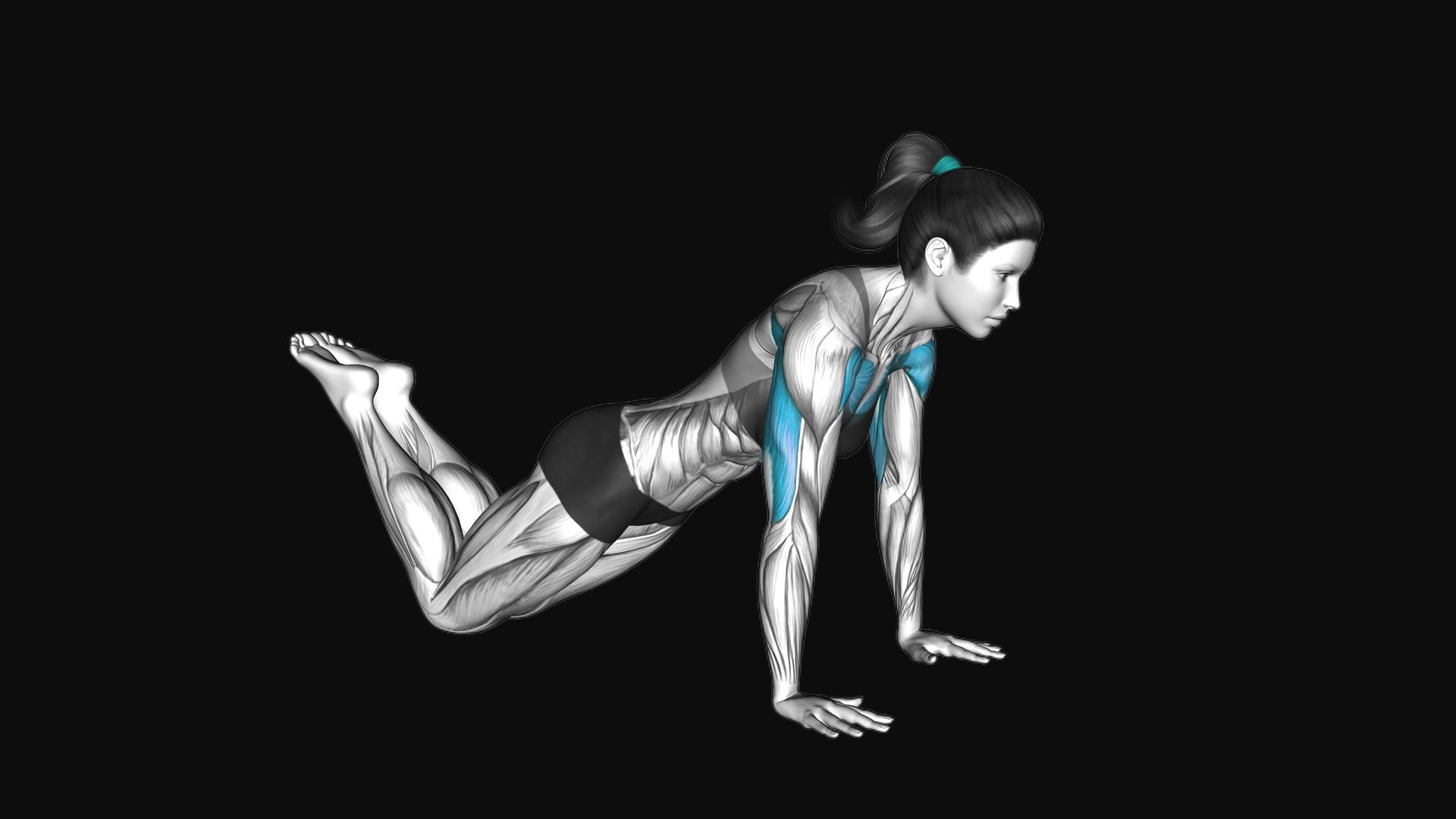
- Regress the movement by elevating the hands on an incline rather than dropping to the knees to better preserve core mechanics.
Sets and reps
Perform 3 to 4 sets of 8 to 20 repetitions with 60 to 90 seconds of rest to target muscle growth and endurance. For maximal strength, use weighted vests or advanced variations in the 5 to 8 rep range with 2 to 3 minutes of rest.
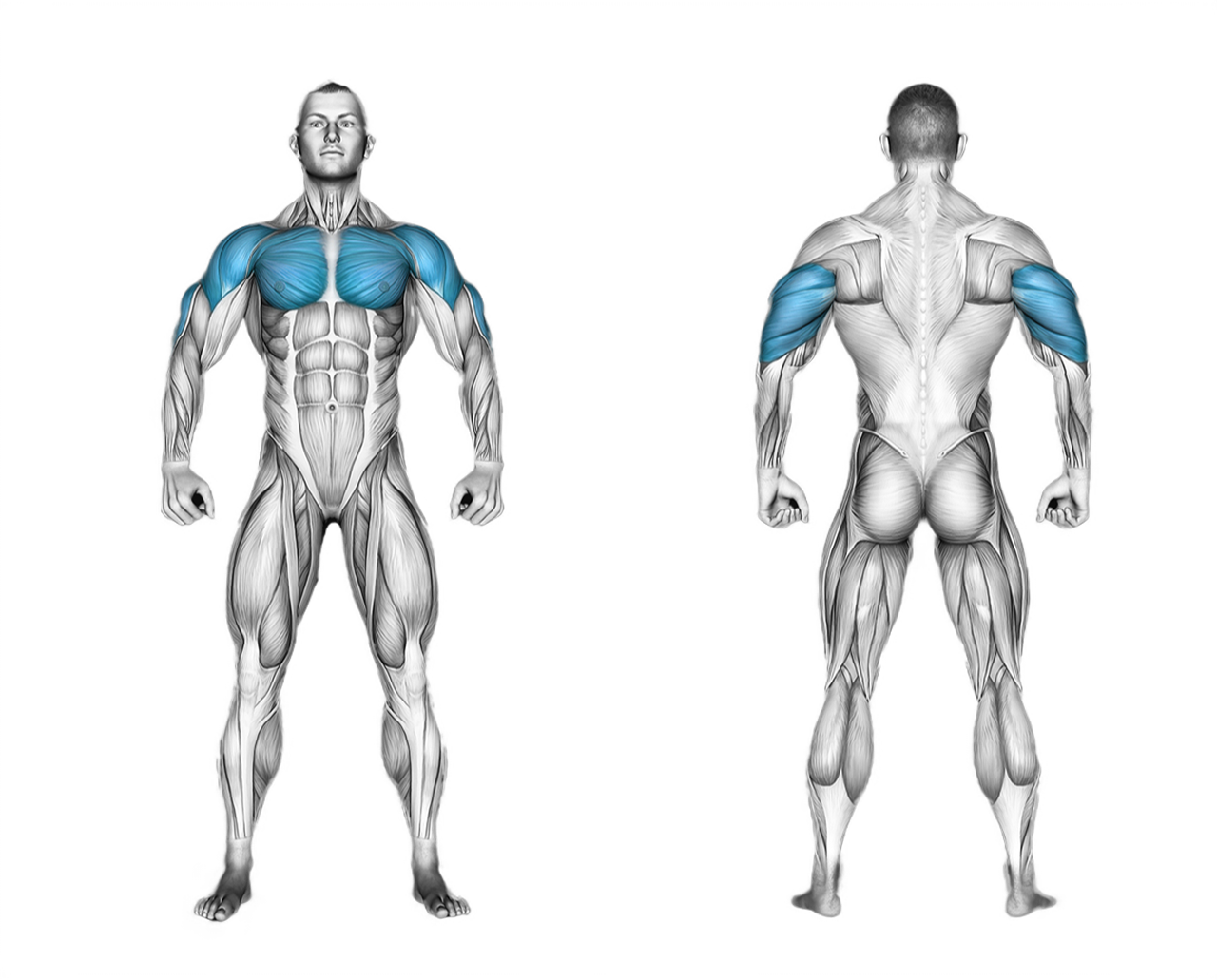
Muscles worked
Your coach guides every set
Turn on the coach in Gloox: it asks how you feel, picks the weight from your history and cues technique and rest. Rate each set and the next one is tuned to you.

On a computer? Point your phone's camera here to get the app.
Questions
Can push-ups build significant chest muscle without weights?
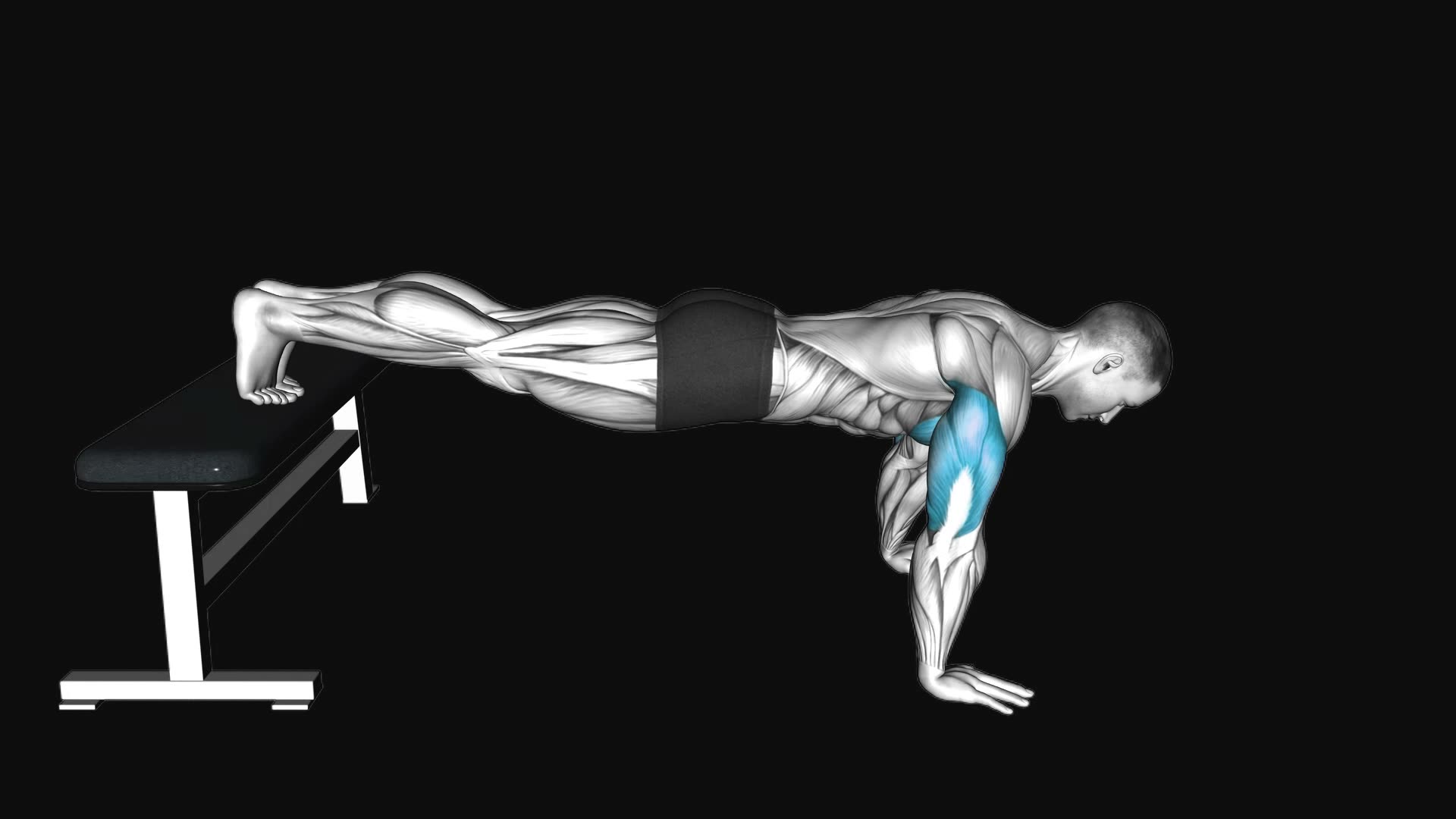
Yes, progressive overload can be achieved by elevating the feet, slowing the tempo, or increasing training volume over time.
What should be done if push-ups cause wrist pain?
Try doing them on your fists, using push-up bars, or gripping dumbbells to keep the wrists neutral; if discomfort persists, stop and consult a medical professional.