Chest · Cable machine
Cable Middle Chest Press
The cable middle chest press is a multi-joint accessory exercise that provides constant mechanical tension on the pectoral muscles throughout the full range of motion. It is suitable for lifters of any experience level and works best in the middle or toward the end of a chest workout.
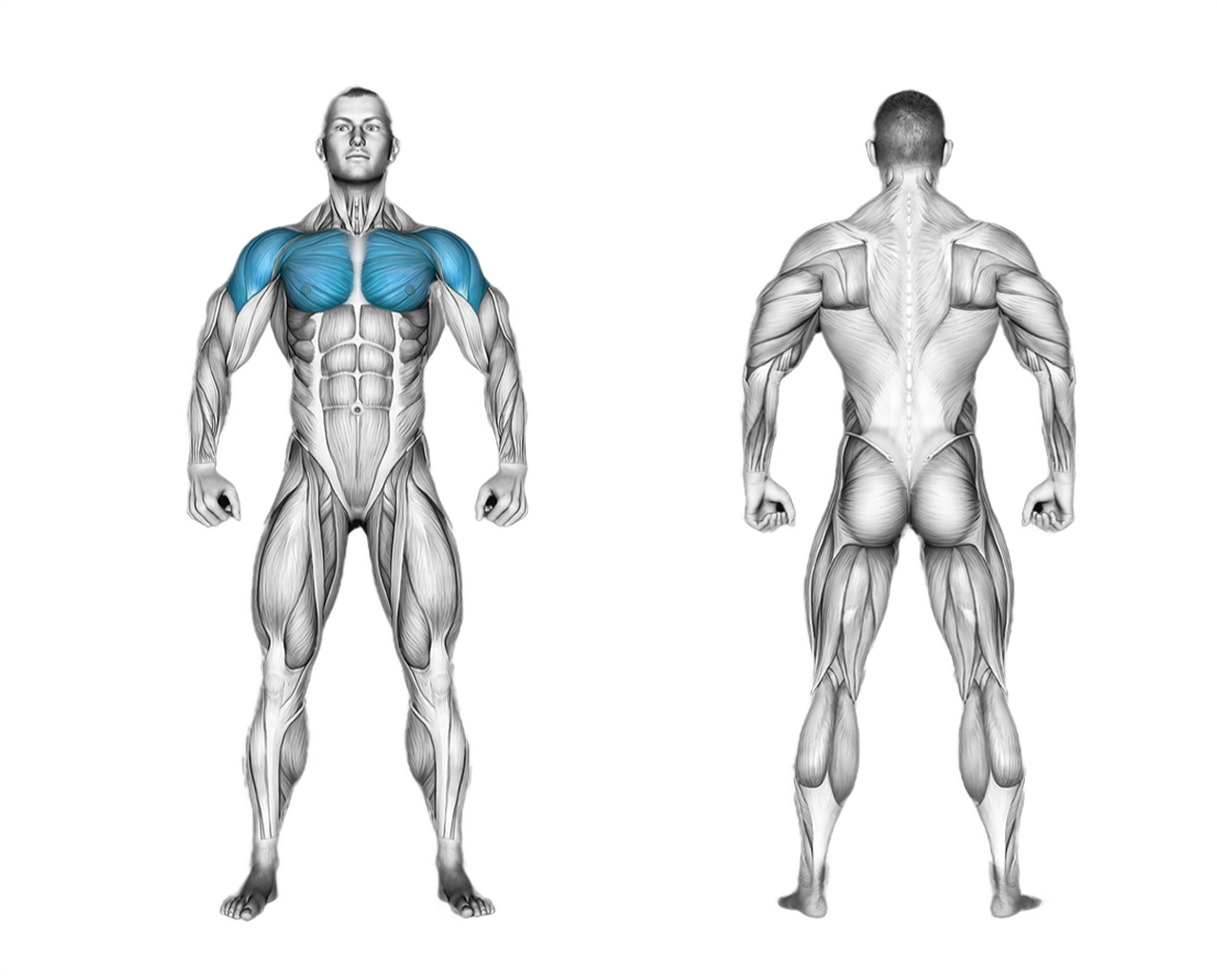
- Muscles
- Chest
- Equipment
- Cable machine
- Type
- Strength
- Animation
- Men
How to do it
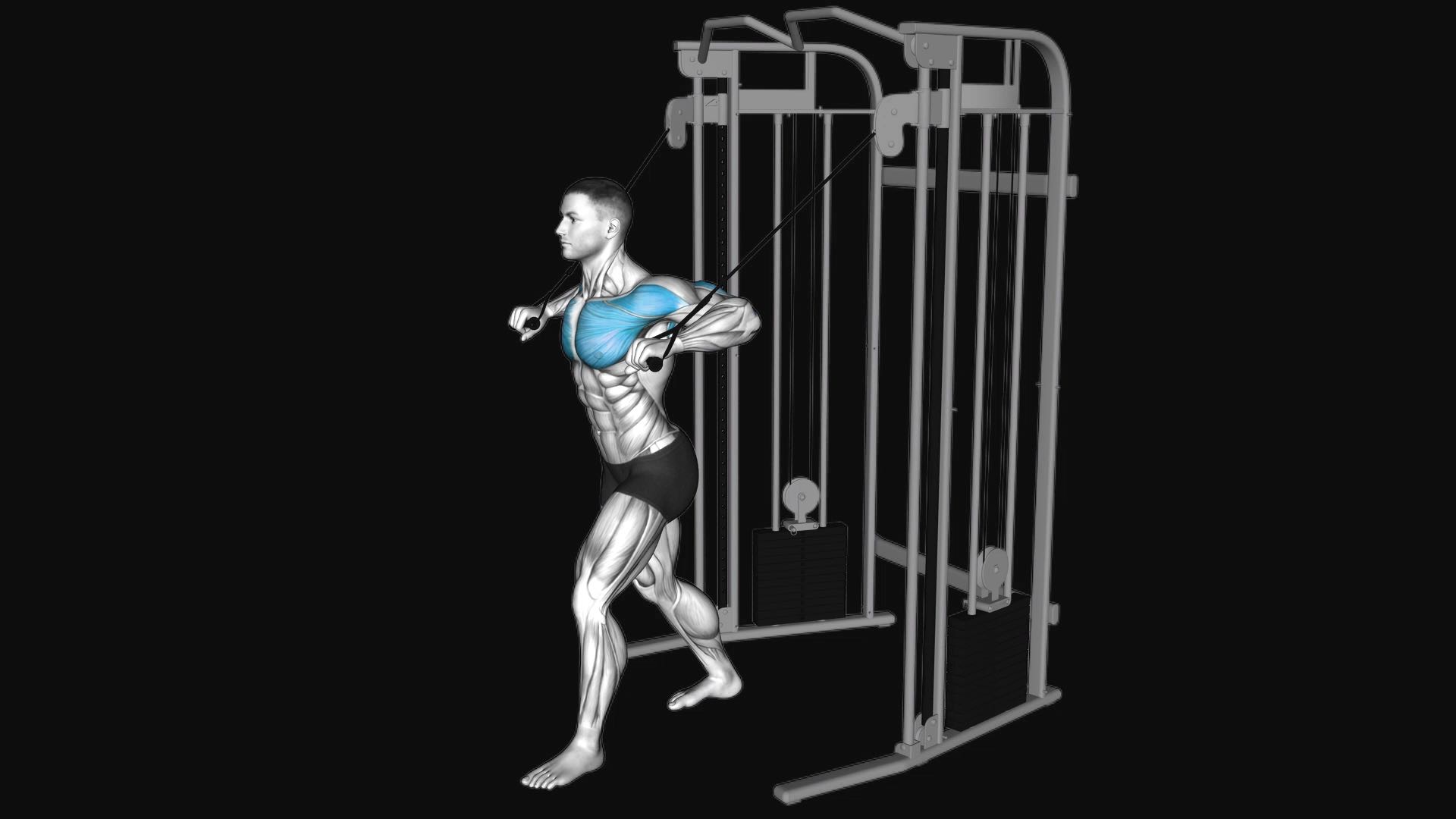
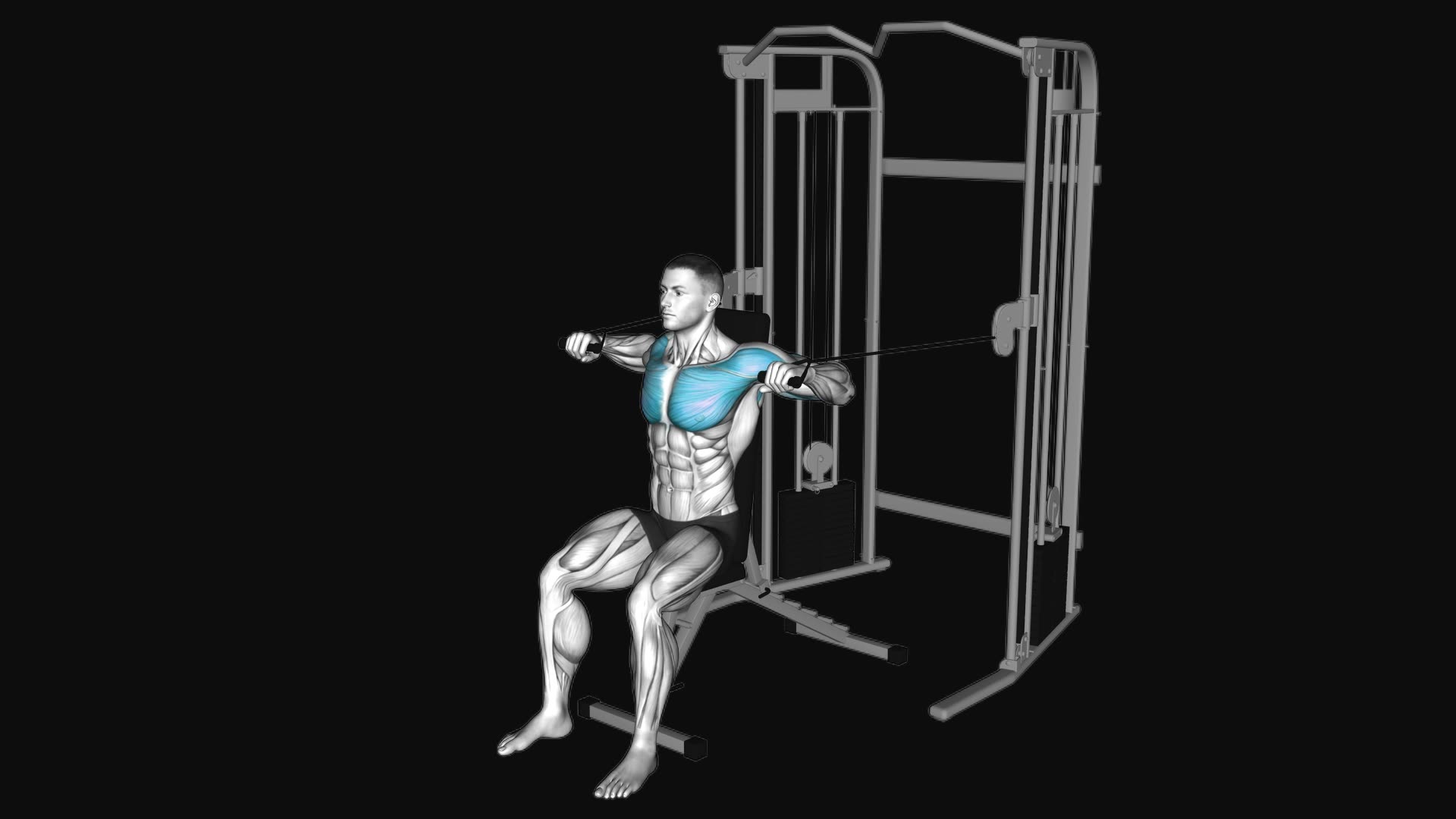
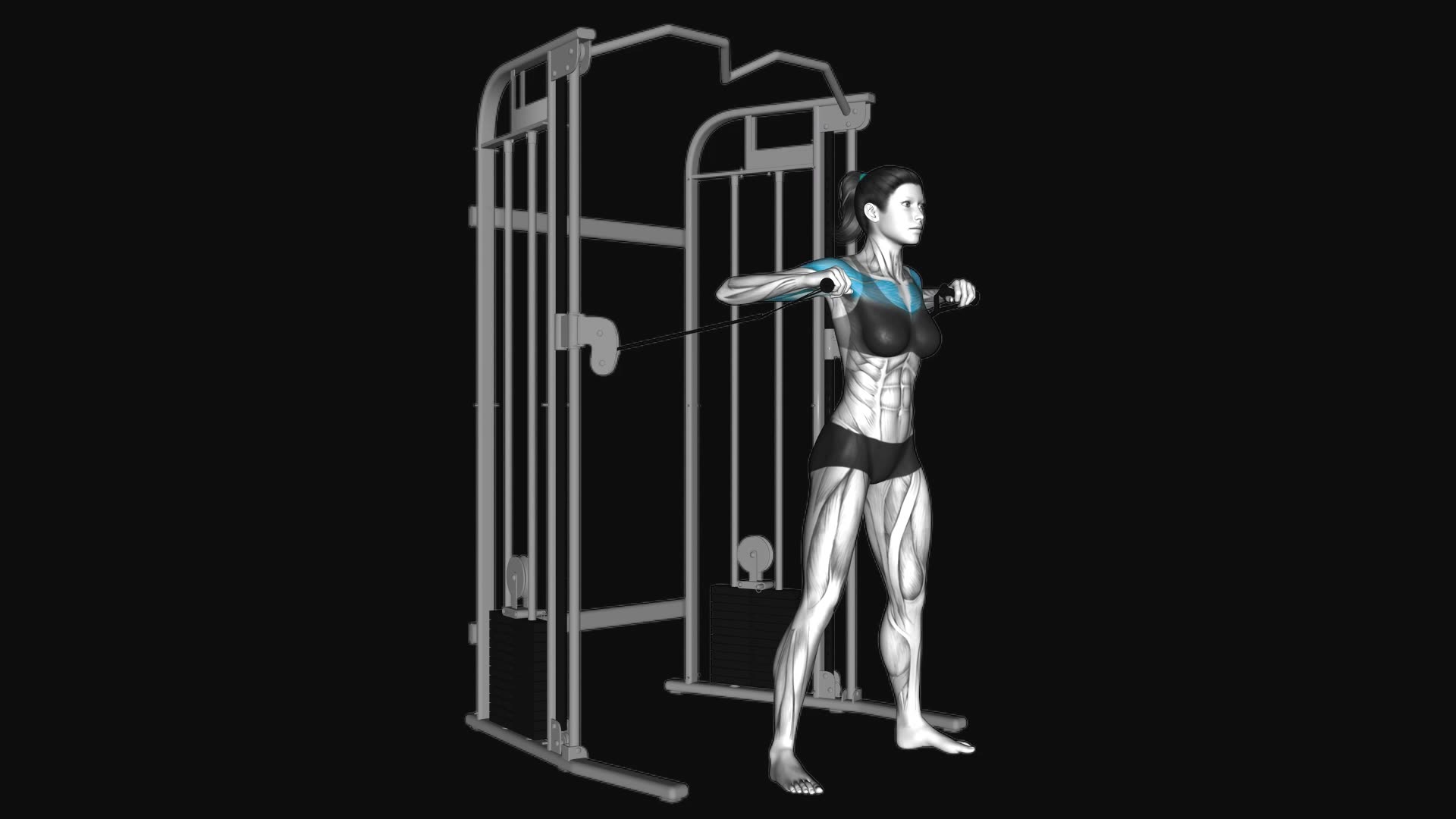
- Stand in the middle of a cable crossover machine, with both pulleys set at chest height.
- Attach a single handle to each pulley and grab them with your hands.
- Step forward slightly from the center, keeping your feet shoulder-width apart and a slight bend in your knees.
- Start with your arms extended to the sides at chest level, elbows slightly bent, palms facing down.
- Inhale and brace your core. Exhale as you press your hands together in front of you at chest level.
- Focus on using your chest muscles to perform the pressing motion.
- Slowly return your arms back to the starting position, maintaining a constant tension on the cables.
Common mistakes
- Allowing the elbows to travel too far behind the torso at the start strains the anterior shoulder joint.
- Using torso momentum to drive the handles forward takes tension away from the chest and reduces core stability.
- Shrugging the shoulders upward shifts the workload into the upper trapezius and front deltoids.
Tips
- Brace the core firmly and maintain a stable stance to resist being pulled backward by the cables.
- Keep your elbows and wrists aligned with the direction of the cable throughout the pressing path.
- Pause briefly at full extension to maximize peak contraction in the chest muscles before controlling the return.
Sets and reps
Perform 3–4 sets of 8–12 reps with 60–90 seconds of rest for muscle growth. For higher metabolic fatigue and endurance, aim for 3 sets of 12–15 reps with 45–60 seconds of rest.
Muscles worked
Your coach guides every set
Turn on the coach in Gloox: it asks how you feel, picks the weight from your history and cues technique and rest. Rate each set and the next one is tuned to you.

On a computer? Point your phone's camera here to get the app.
Questions
How does this exercise differ from a cable chest fly?
The press incorporates bending at the elbows, which engages the triceps and permits the use of heavier loads than a straight-arm fly.
Is the cable chest press safer for the shoulders than a barbell bench press?
Because the handles move freely rather than along a fixed barbell path, it allows for a more natural joint alignment; if pain occurs, stop and consult a professional.