Chest · Bodyweight
Decline Push-Up
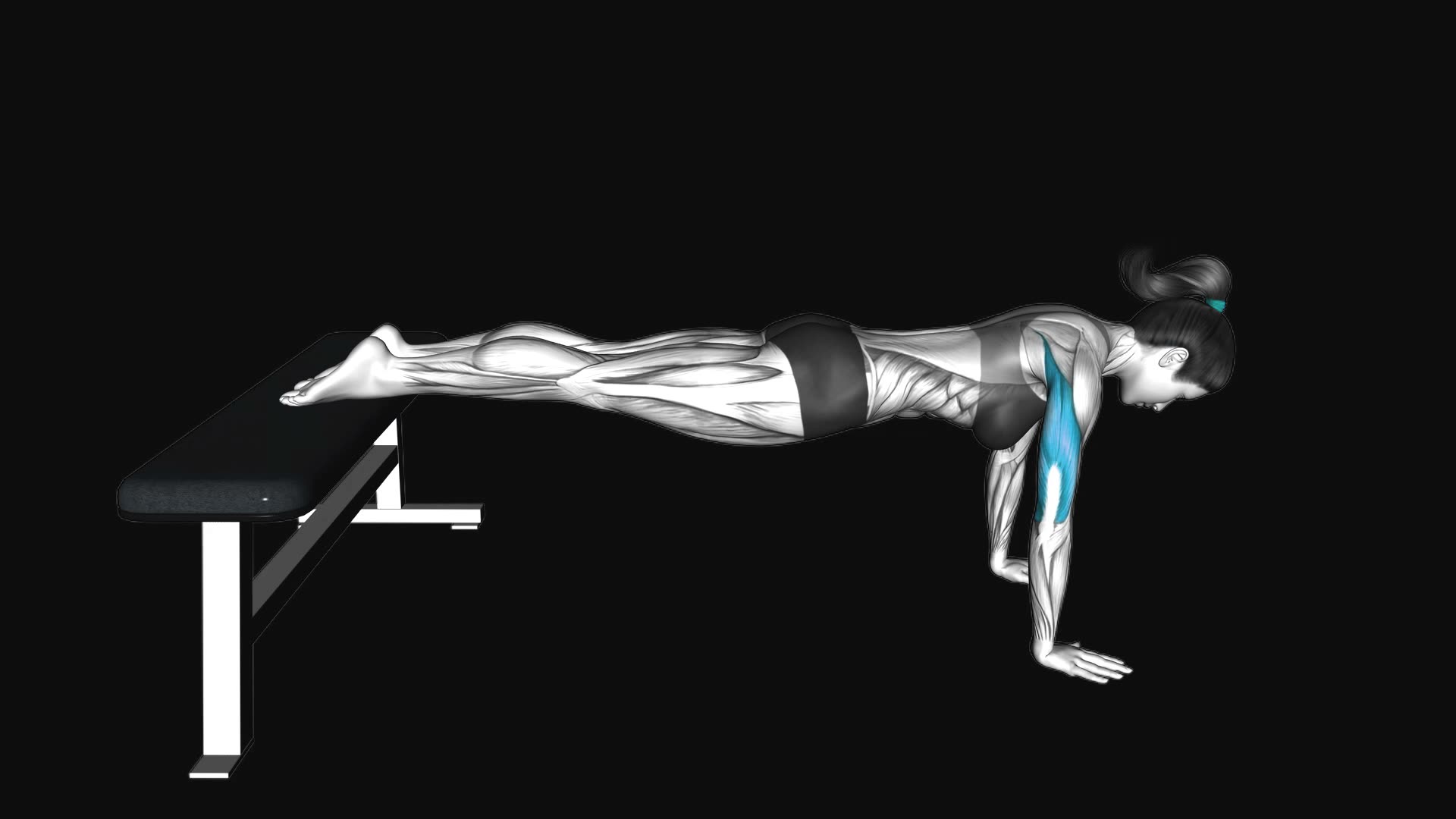
The decline push-up is an advanced bodyweight pressing variation performed with the feet elevated above the hands. It places greater emphasis on the upper chest and anterior shoulders, making it a great compound movement for upper-body strength and hypertrophy.
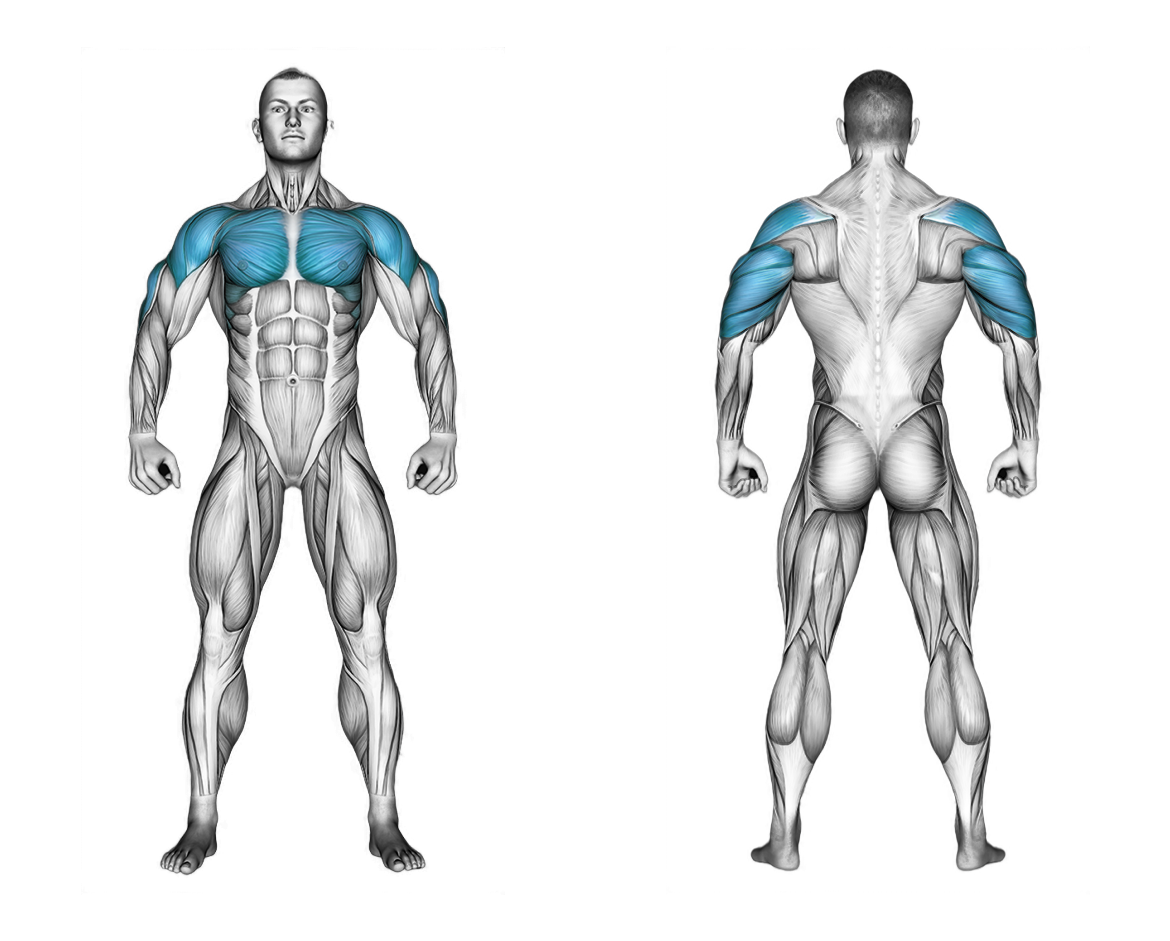
- Muscles
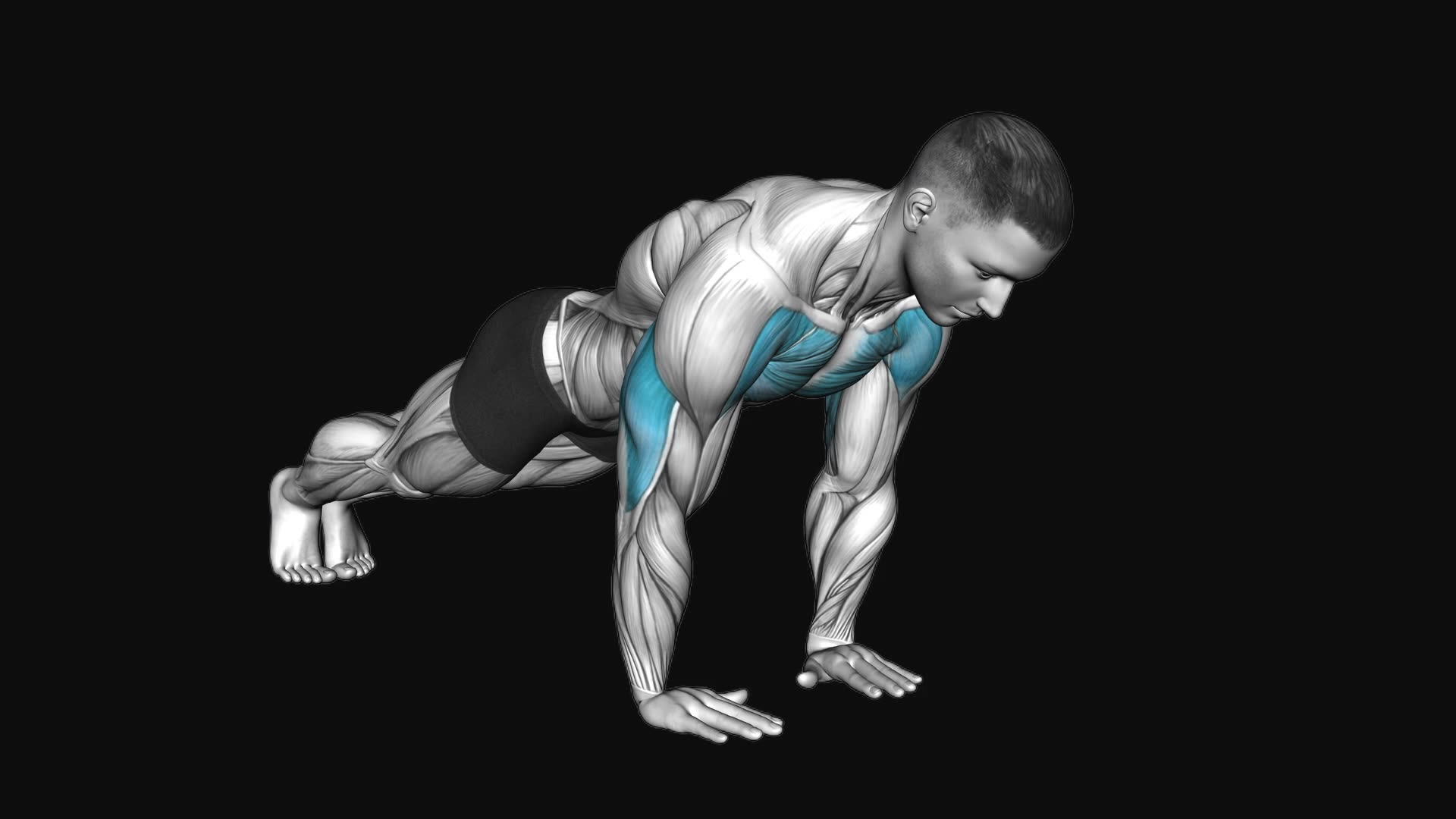
- Chest
- Equipment
- Bodyweight
- Type
- Strength
- Animation
- Men
How to do it
- Place your feet on an elevated surface (bench or box) and your hands on the floor, shoulder-width apart.
- Keep your body in a straight line from head to heels.
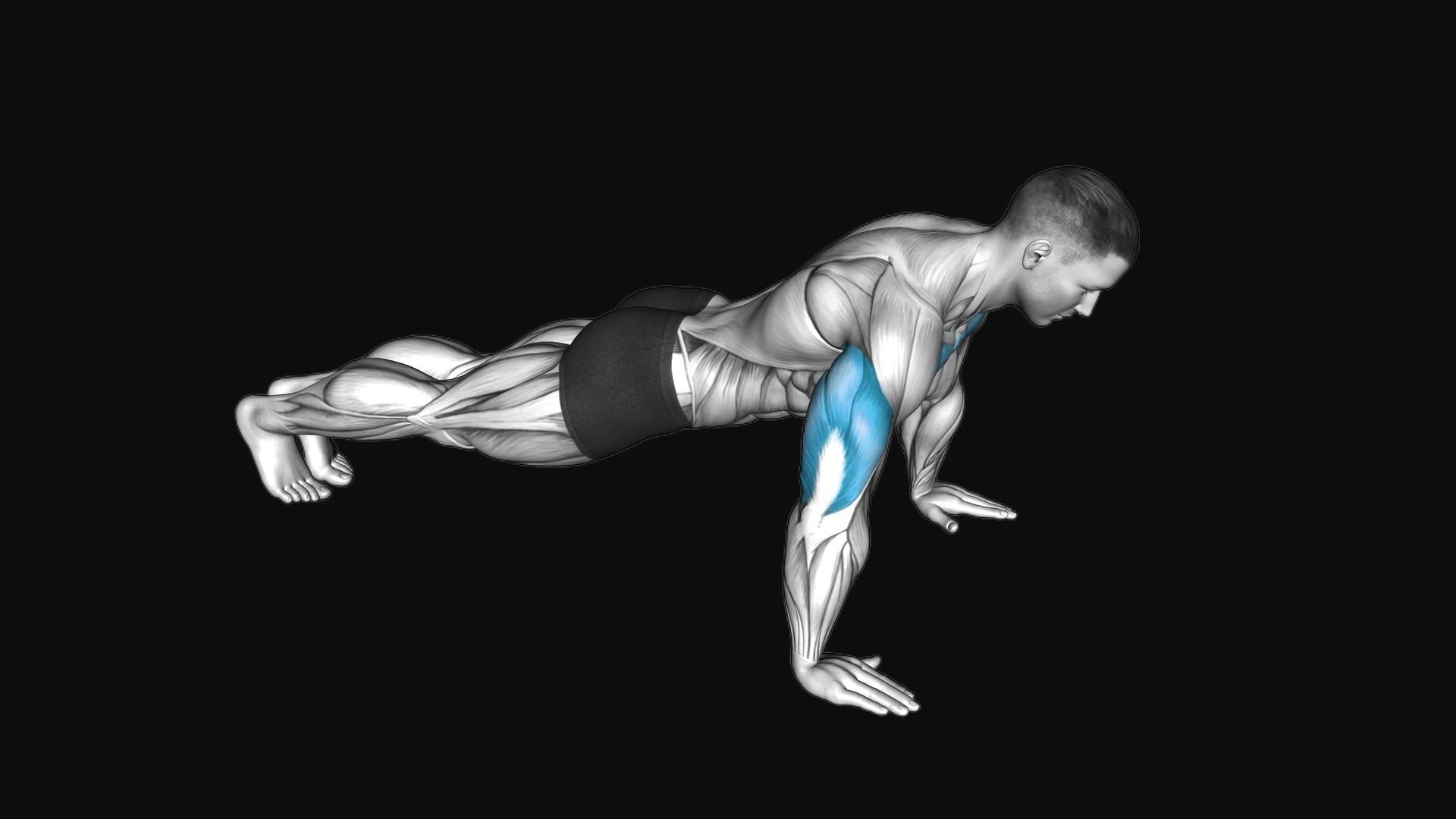
- Lower your chest towards the floor by bending your elbows.
- Push back up to the starting position, fully extending your arms.
Common mistakes
- Sagging at the hips, which puts unnecessary stress on the lumbar spine and reduces core tension.
- Flaring the elbows out at a 90-degree angle, which places excessive shearing forces on the shoulder joints.
- Using an elevation that is too high, which turns the movement into an overhead shoulder press rather than a chest exercise.
- Cutting the range of motion short, which diminishes the stretch and activation of the pectoral muscles.
Tips
- Keep your elbows tucked at roughly a 45-degree angle relative to your torso throughout the descent.
- Brace your core and squeeze your glutes continuously to maintain a rigid plank from head to heels.
- Aim for a platform height of 12 to 18 inches to effectively target the upper chest without overworking the shoulders.
Sets and reps
For muscle growth and strength, perform 3–4 sets of 8–15 repetitions with 60–90 seconds of rest. For muscular endurance, aim for 2–3 sets of 15–25 repetitions with 45–60 seconds of recovery.
Muscles worked
Your coach guides every set
Turn on the coach in Gloox: it asks how you feel, picks the weight from your history and cues technique and rest. Rate each set and the next one is tuned to you.

On a computer? Point your phone's camera here to get the app.
Questions
Which muscles do decline push-ups target compared to standard push-ups?
The elevated foot position shifts the primary workload toward the upper (clavicular) head of the chest, anterior deltoids, and upper triceps.
Is the decline push-up safe if you have shoulder discomfort?
It places more shear force on the shoulders than flat push-ups, so if you experience joint pain, stop the exercise and consult a specialist.