Chest · Cable machine
Cable Low Chest Press
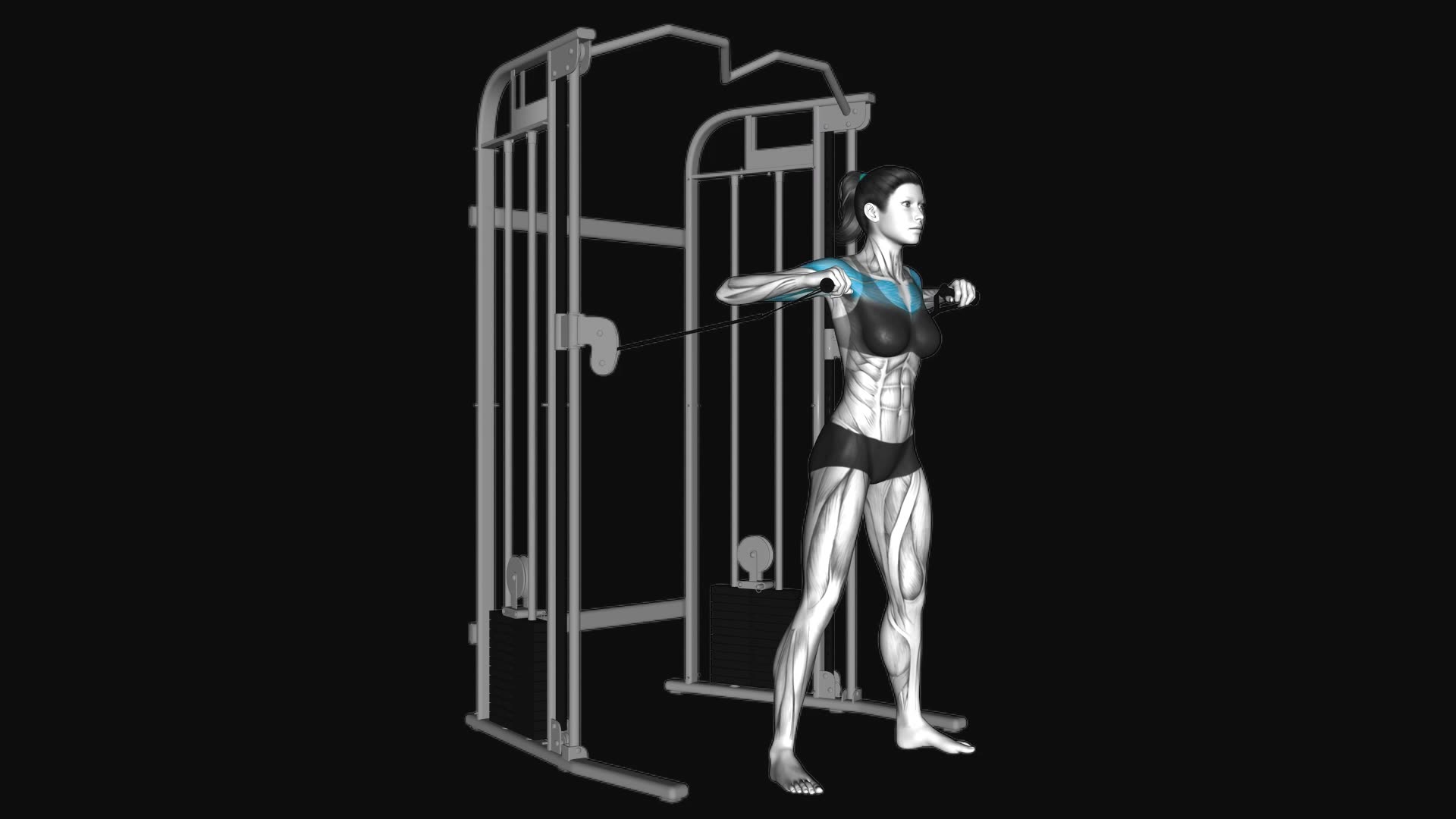
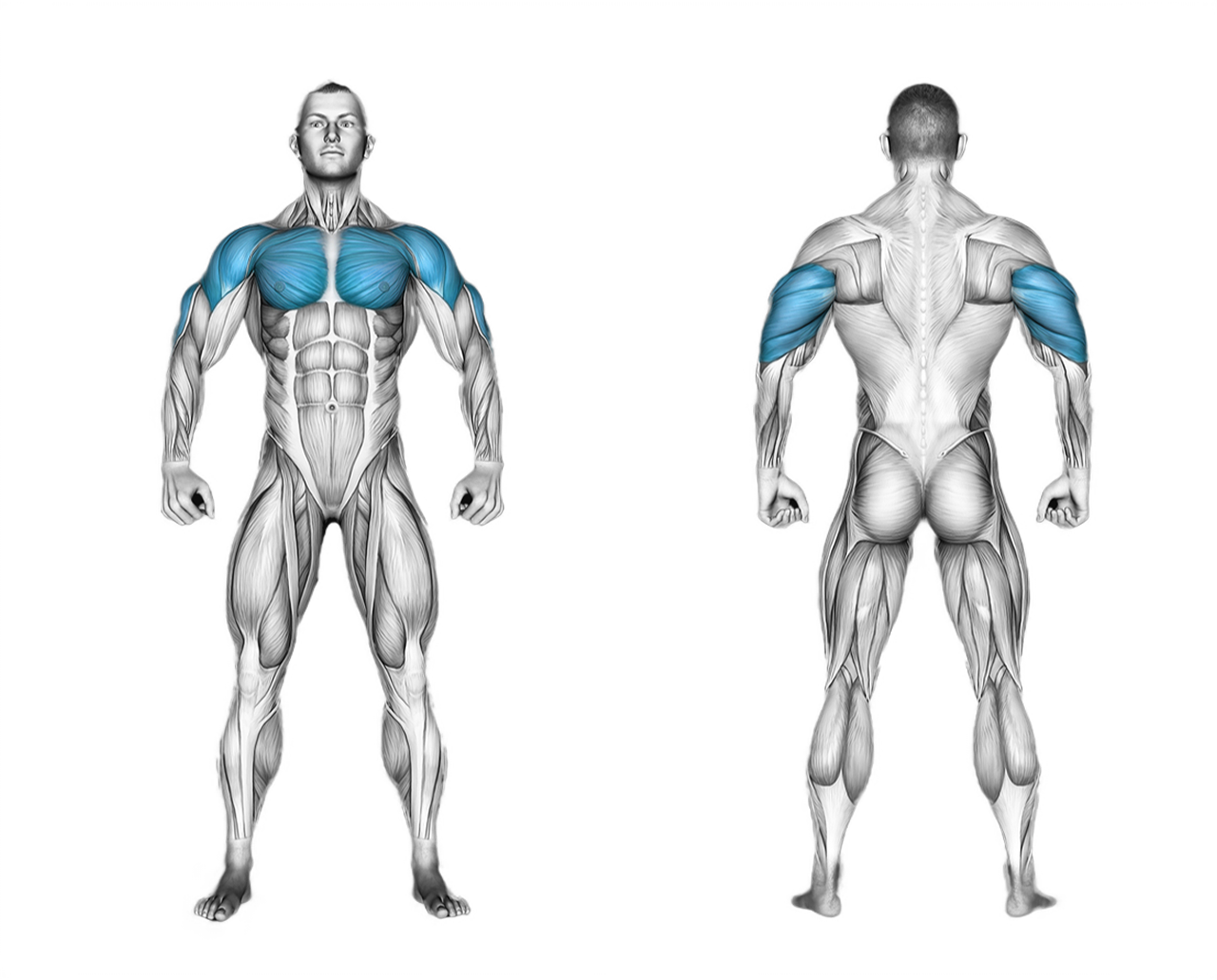
The cable low chest press is a cable-machine exercise that delivers constant muscular tension across the entire range of motion. It primarily targets the upper (clavicular) head of the pectorals along with the anterior deltoids, making it an effective accessory movement mid- to late-workout.
- Muscles
- Chest
- Equipment
- Cable machine
- Type
- Strength
- Animation
- Men
How to do it
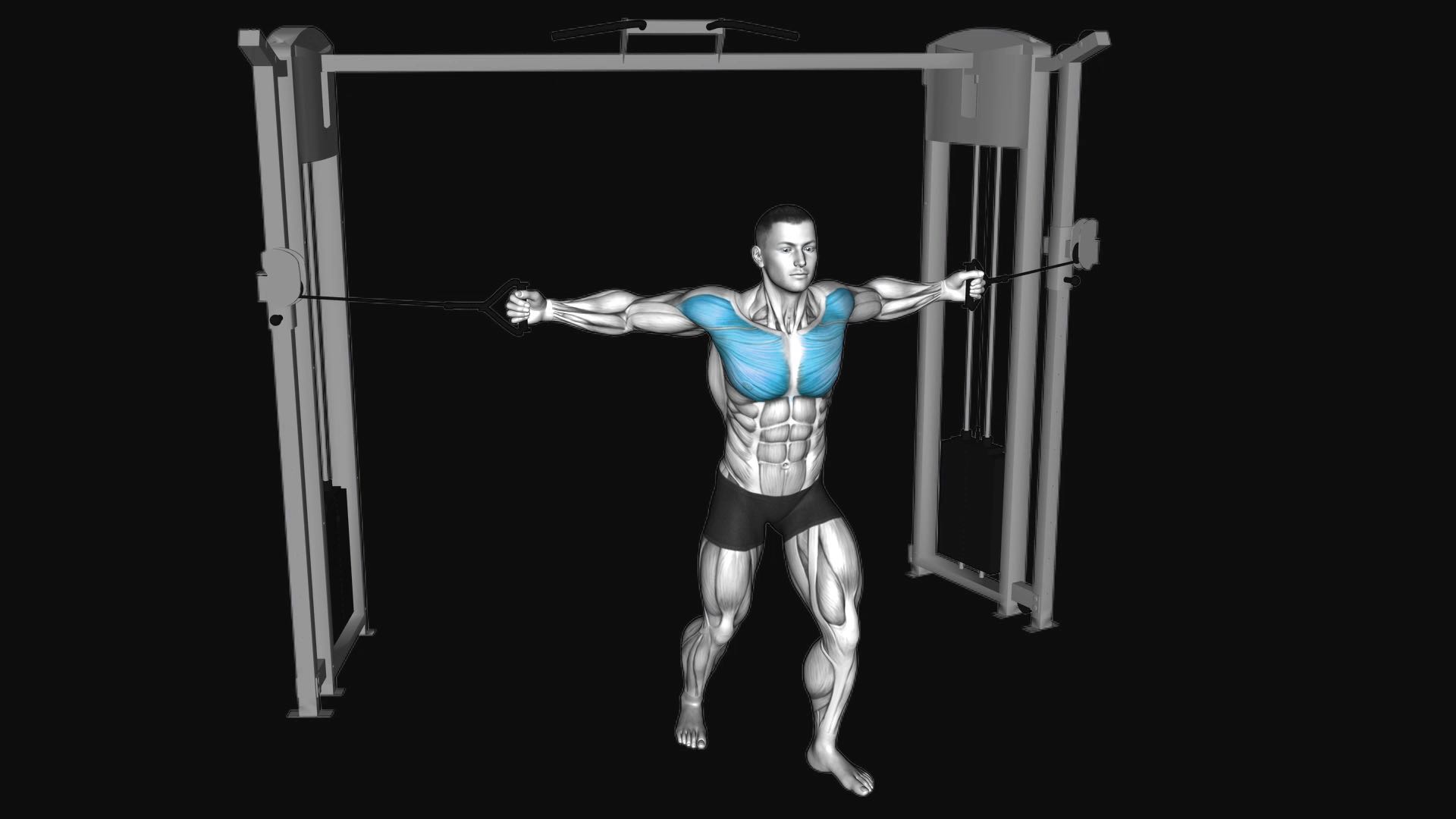
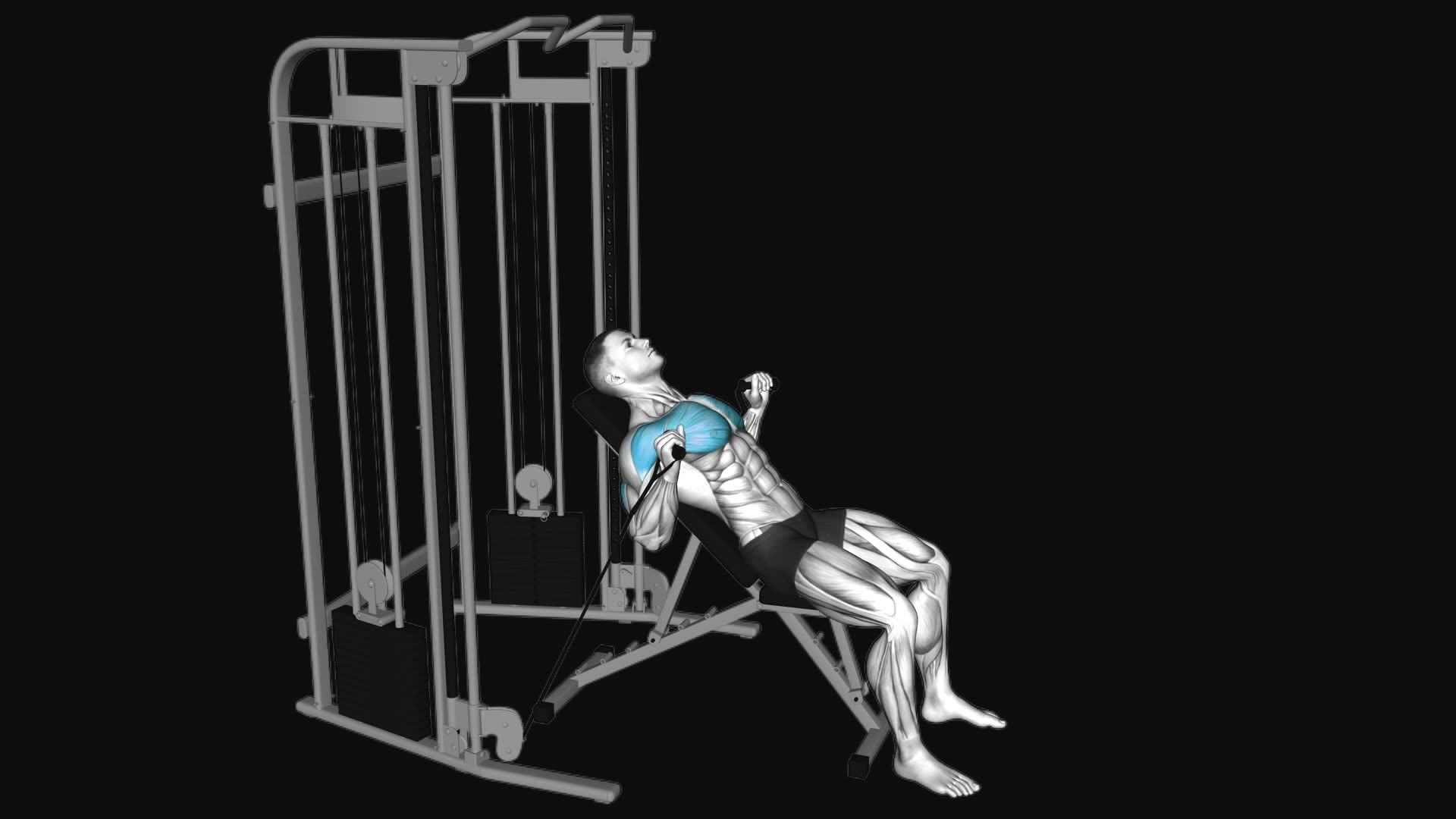
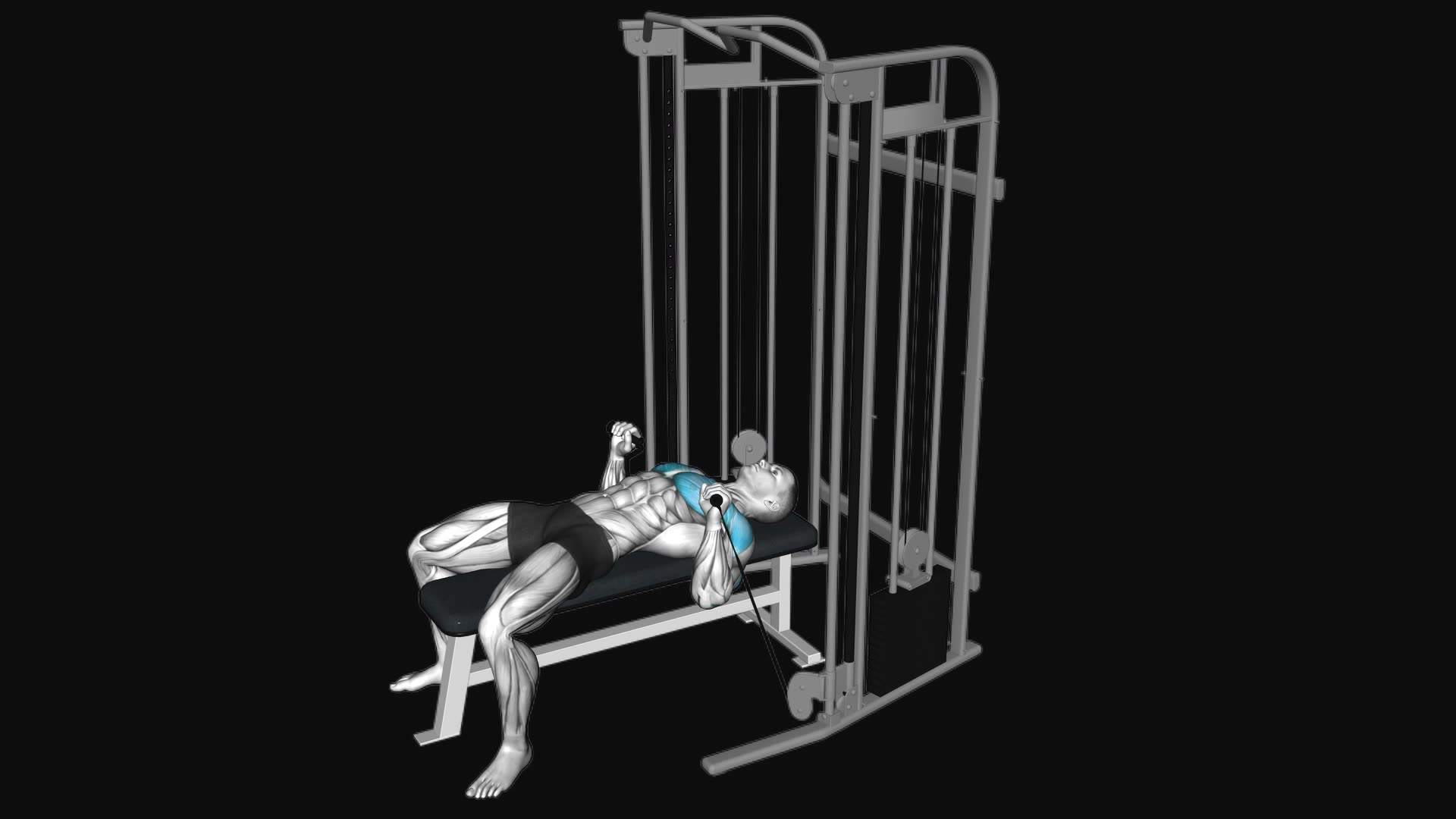
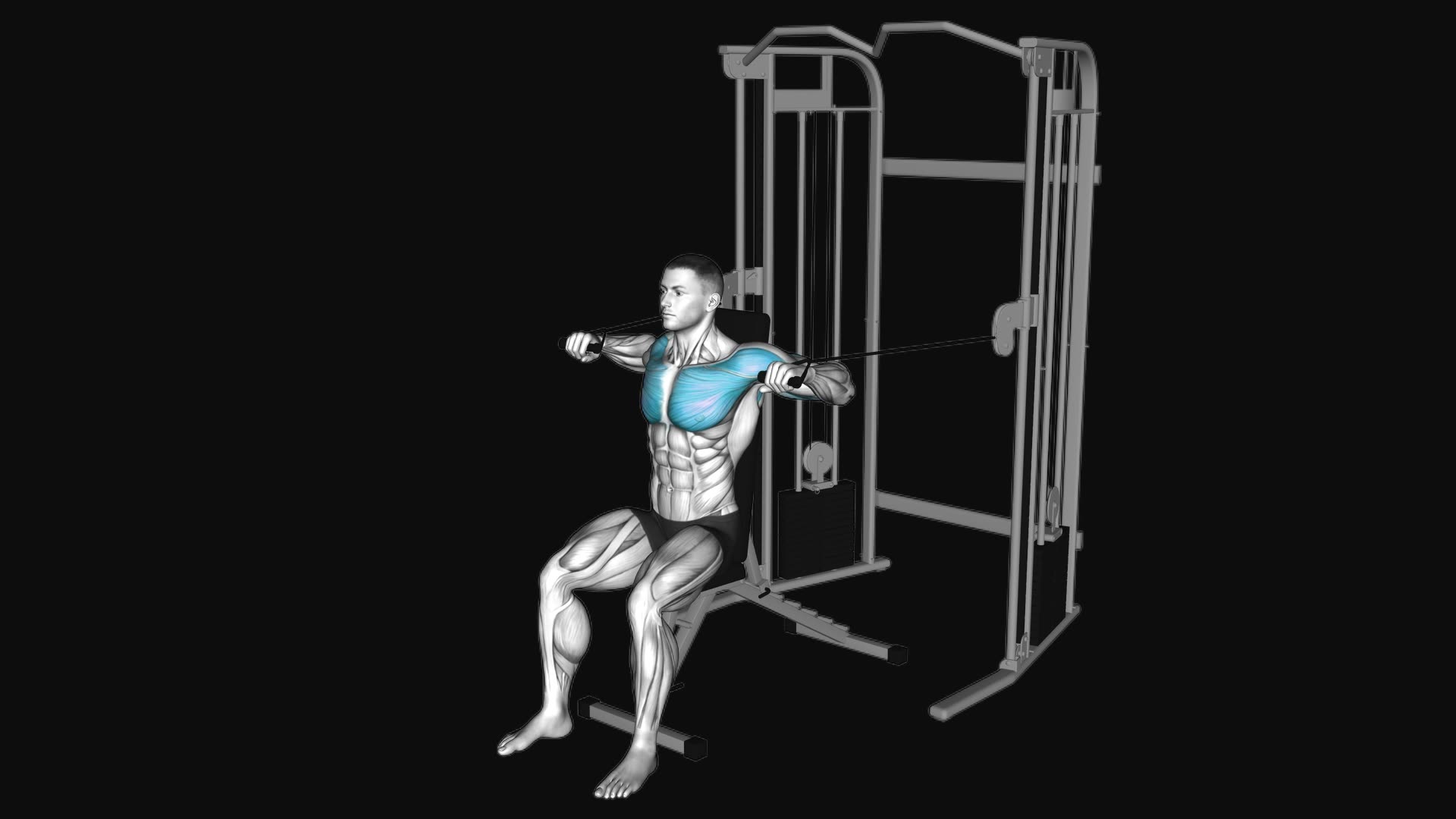
- Attach handles to the low pulleys on a cable crossover machine.
- Stand in the center of the machine with your feet shoulder-width apart.
- Grasp the handles with your palms facing down and your arms extended at chest level.
- Lean forward slightly at the waist, keeping your back straight.
- Inhale and brace your core. As you exhale, press the handles forward and together, extending your arms fully.
- Focus on using your chest muscles to drive the movement, keeping your elbows slightly bent.
- Squeeze your chest at the end of the movement.
- Slowly return the handles to the starting position, controlling the movement and maintaining tension in your chest muscles.
Common mistakes
- Leaning too far forward shifts the pressing angle toward a flat plane, taking focus away from the upper chest.
- Flaring your elbows excessively wide strains the shoulder joints and increases rotator cuff risk.
- Using body momentum to swing the weight forward robs the chest muscles of tension and compromises joint safety.
- Locking out your elbows completely at the top transfers the load from the pectorals straight into the joints.
Tips
- Use a staggered stance with one foot forward to stabilize your pelvis and maintain a rigid core.
- Pause for a full second at peak contraction while actively squeezing your chest before reversing the movement.
- Control the eccentric phase by lowering the handles over two to three seconds to maximize time under tension.
Sets and reps
Perform 3 to 4 sets of 10 to 15 controlled repetitions to target hypertrophy and muscular endurance. Rest 60 to 90 seconds between sets to maintain steady tension throughout the workout.
Muscles worked
Your coach guides every set
Turn on the coach in Gloox: it asks how you feel, picks the weight from your history and cues technique and rest. Rate each set and the next one is tuned to you.

On a computer? Point your phone's camera here to get the app.
Questions
Which muscles are primarily targeted in a low cable press?
Because you are pressing upward and forward from a low anchor, the upper portion of the pectoral muscles and the front deltoids take on the bulk of the work.
What should you do if you feel pain in the front of your shoulders?
Reduce the load, tuck your elbows slightly closer to your sides, and stop immediately if sharp pain continues so a specialist can evaluate it.