
Abs · Bodyweight
Overhead Crunch
The overhead crunch is a challenging bodyweight variation that extends the lever arm to significantly increase tension on the rectus abdominis. It is best suited for intermediate to advanced trainees and fits well toward the end of an abdominal or full-body session.
- Muscles
- Abs
- Equipment
- Bodyweight
- Type
- Strength
- Animation
- Men
How to do it
- Lie on your back with your arms extended overhead, holding a weight or medicine ball.
- Keep your knees bent and feet flat on the floor.
- Engage your core and lift your shoulders off the ground.
- Bring the weight toward your knees while crunching your abs.
- Slowly return to the starting position, keeping tension in your core.
Common mistakes
- Swinging your arms forward during the crunch creates momentum that takes tension off the abs.
- Arching the lower back off the mat transfers stress to the lumbar spine instead of the core.
- Pulling the chin down tightly against the chest creates unnecessary strain in the neck.
- Dropping down rapidly without control skips the eccentric phase and reduces training stimulus.
Tips
- Keep your arms locked straight and in line with your ears throughout the entire range of motion.
- Press your lower back firmly into the floor before lifting your shoulder blades.
- Exhale fully and hold a brief one-second pause at the peak of the contraction.
Sets and reps
Perform 3 to 4 sets of 12 to 20 controlled repetitions to build core strength and muscular endurance. Rest 45 to 60 seconds between sets.
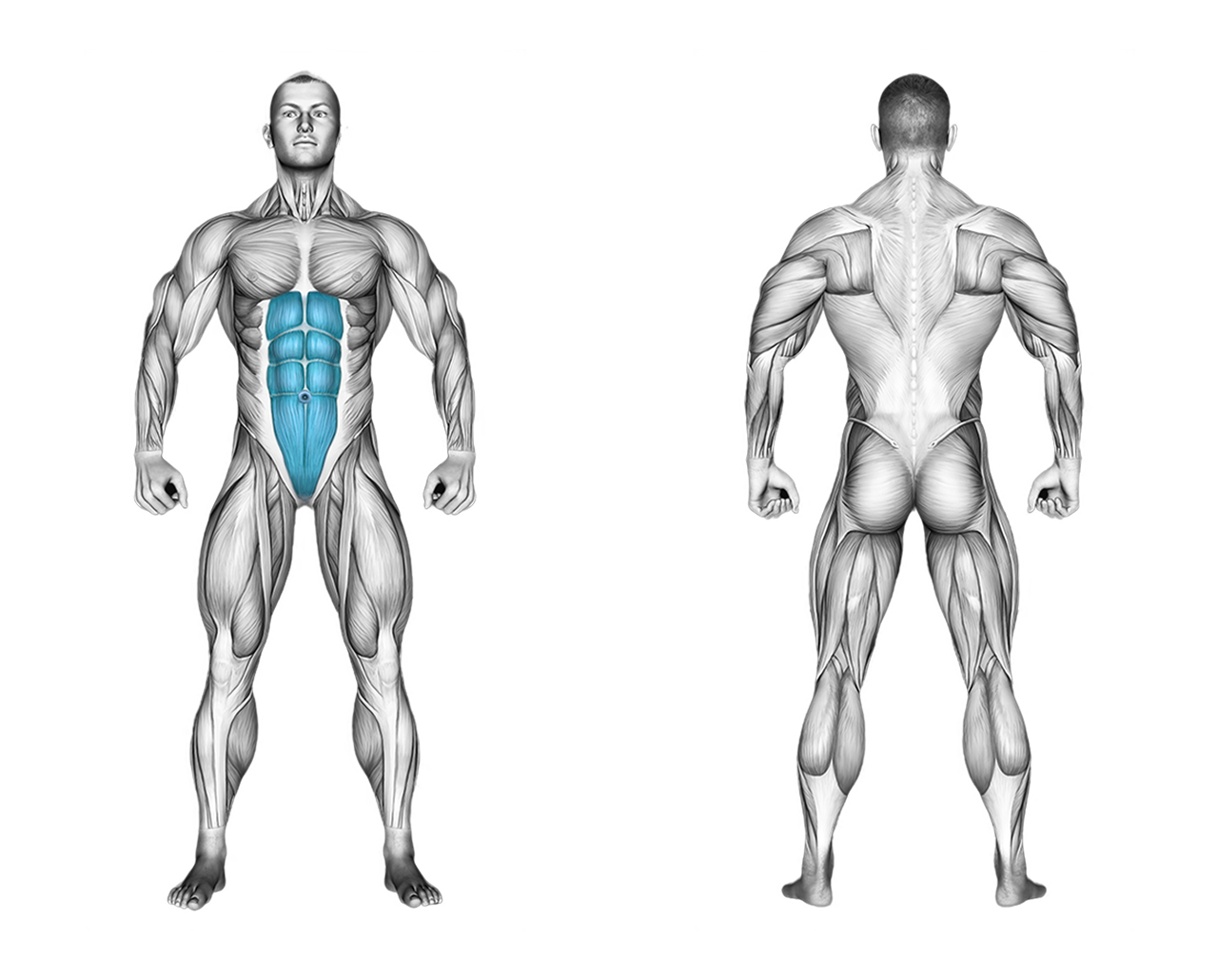
Muscles worked
Your coach guides every set
Turn on the coach in Gloox: it asks how you feel, picks the weight from your history and cues technique and rest. Rate each set and the next one is tuned to you.

On a computer? Point your phone's camera here to get the app.
Questions
Why is the overhead crunch harder than a standard crunch?
Extending your arms overhead shifts your center of gravity higher, dramatically increasing the resistance your abdominal muscles must overcome to lift your shoulders.
Is this exercise safe if you experience lower back discomfort?
Because the lumbar spine remains anchored to the floor, it avoids significant spinal flexion under load; however, if you experience sharp pain, stop and consult a healthcare professional.







