
Abs · Bodyweight
Bodyweight Rainbow Leg Raise
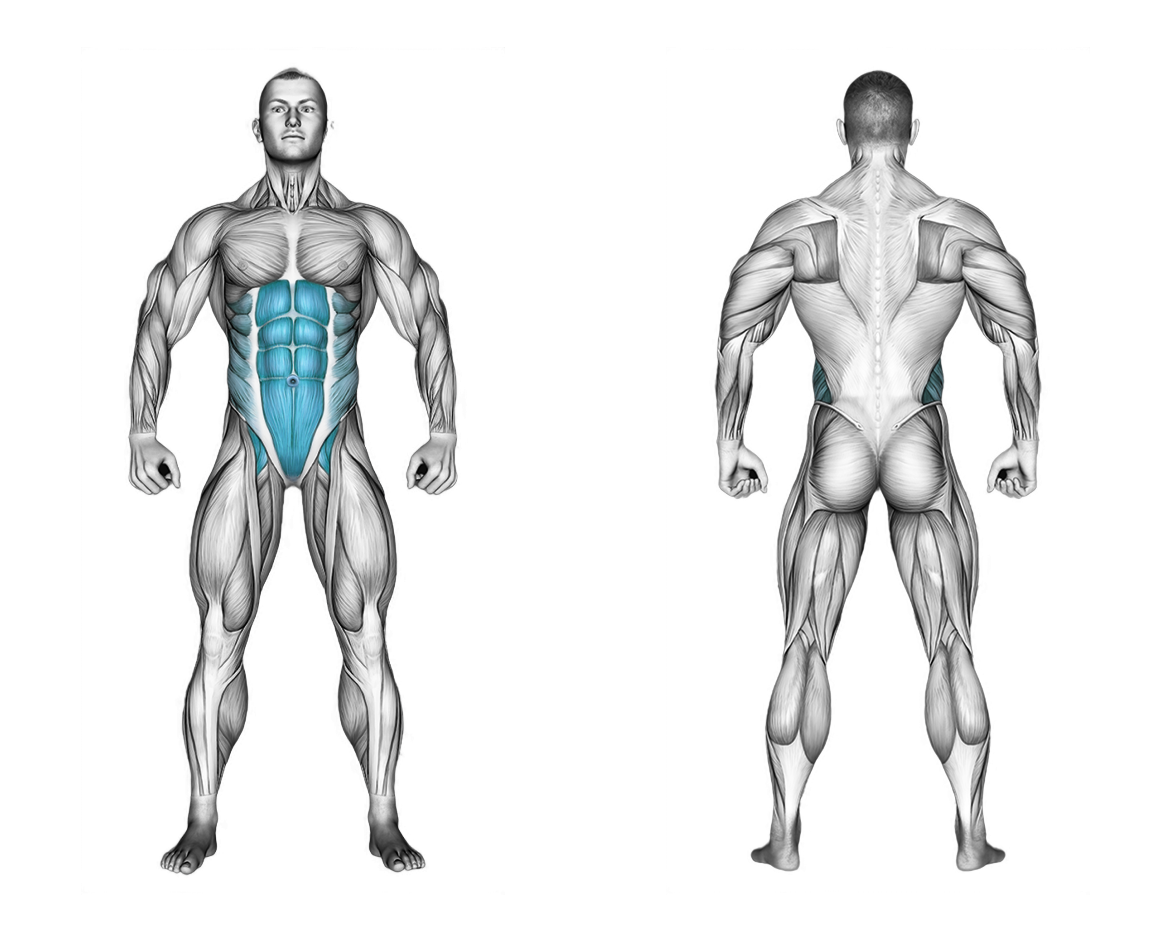
The bodyweight rainbow leg raise is a side-lying core exercise that targets the obliques, lateral hip stabilizers, and lower back muscles. It serves well as an accessory movement at the end of a core or lower-body session to build lateral stability.
- Muscles
- Abs
- Equipment
- Bodyweight
- Type
- Strength
- Animation
- Men
How to do it
- Lie on your side with your legs stacked and your body in a straight line.
- Support your head with your lower arm.
- Keeping your legs together and straight, raise both legs up towards the ceiling in an arc motion.
- Lower your legs back down with control.
- Complete all reps on one side before switching.
Common mistakes
- Rolling the hips backward during the lift shifts tension away from the obliques onto the lower back.
- Bending the knees shortens the lever arm and significantly reduces the difficulty of the movement.
- Swinging the legs up with momentum rather than controlled muscular effort decreases core engagement and risks hip irritation.
Tips
- Press your bottom arm firmly into the floor to maintain a solid, stable base throughout the movement.
- Squeeze your thighs and ankles tightly together so your legs move as a single continuous unit.
- Exhale as you lift your legs in an arc and pause for a brief moment at the peak contraction.
Sets and reps
Perform 2 to 4 sets of 12 to 20 controlled repetitions per side. Rest for 45 to 60 seconds between sides or sets.
Muscles worked
Your coach guides every set
Turn on the coach in Gloox: it asks how you feel, picks the weight from your history and cues technique and rest. Rate each set and the next one is tuned to you.

On a computer? Point your phone's camera here to get the app.
Questions
Which muscles does the bodyweight rainbow leg raise target?
The movement primarily targets the internal and external obliques, supported by the hip abductors and the quadratus lumborum.
Is this exercise safe for someone with lower back discomfort?
It is generally low impact, but if you feel sharp pain or pinching in your lower back, stop immediately and consult a healthcare specialist.







