
Abs · Bodyweight
Alternate Lying Floor Leg Raise
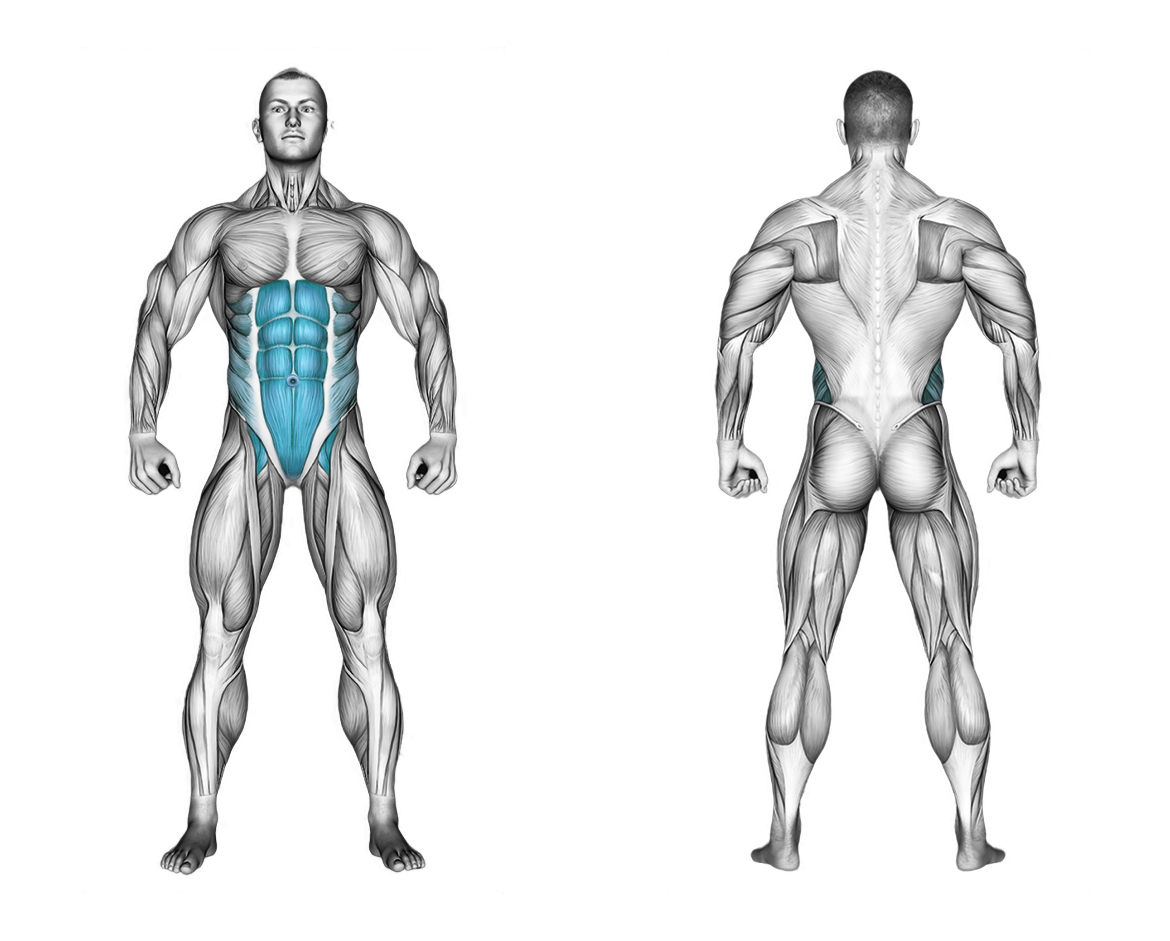
The alternate lying floor leg raise is a bodyweight exercise that targets the rectus abdominis, hip flexors, and deep core stabilizers. It fits well into the core or accessory portion of any strength routine and suits lifters of all fitness levels.
- Muscles
- Abs
- Equipment
- Bodyweight
- Type
- Strength
- Animation
- Men
How to do it
- Lie flat on your back with your hands under your glutes for support.
- Keep your legs straight.
- Raise one leg up towards the ceiling while keeping the other leg hovering just above the ground.
- Lower the raised leg while simultaneously raising the other leg.
- Continue alternating in a controlled manner.
Common mistakes
- Arching the lower back off the floor places unnecessary strain on the lumbar spine and disengages the abs.
- Resting the hovering leg on the ground releases constant tension from the abdominal muscles.
- Kicking the legs too fast with momentum reduces muscle activation and compromises pelvic control.
Tips
- Actively brace your core and press your lower back into the floor before initiating the movement.
- Keep a soft bend in the knees if tight hamstrings cause your lower back to lift off the floor.
- Exhale with each leg raise and inhale during the alternating transition to maintain intra-abdominal pressure.
Sets and reps
Perform 3 to 4 sets of 15 to 25 repetitions per leg with 45 to 60 seconds of rest between sets to build core endurance and pelvic stability.
Muscles worked
Your coach guides every set
Turn on the coach in Gloox: it asks how you feel, picks the weight from your history and cues technique and rest. Rate each set and the next one is tuned to you.

On a computer? Point your phone's camera here to get the app.
Questions
What should I do if this exercise causes lower back pain?
Stop the exercise immediately if you feel pain, and try bending your knees to reduce the lever arm, or consult a specialist if the issue persists.
How does alternating legs compare to raising both legs together?
The alternating variation places significantly less shear stress on the lumbar spine and requires continuous asymmetrical core stabilization.







