
Glutes · Bodyweight
Single Leg Thrusts
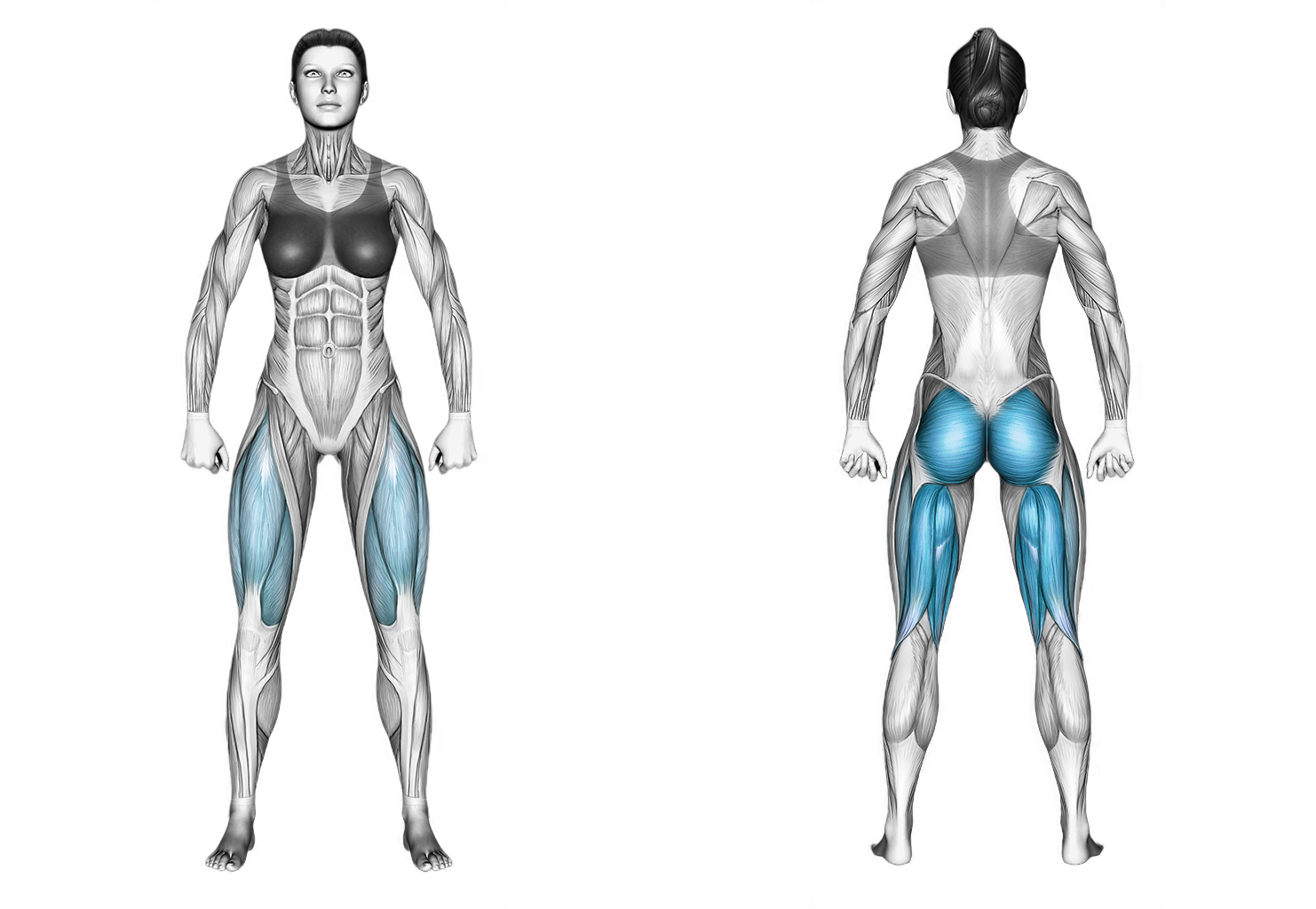
Single Leg Thrusts are an effective unilateral bodyweight exercise targeting the gluteus maximus and hamstrings while engaging the core for stability. They help correct strength imbalances between sides and work well as a glute activation drill before heavier lifts or as a finisher in lower-body sessions.
- Muscles
- Glutes
- Equipment
- Bodyweight
- Type
- Strength
- Animation
- Women
How to do it
- Lie on your back with one foot flat on the floor, knee bent.
- Extend the other leg straight up toward the ceiling.
- Push through your planted heel to lift your hips up, squeezing your glute at the top.
- Your body should form a straight line from shoulders to the knee of your planted leg.
- Lower back down with control.
- Complete all reps on one side before switching.
Common mistakes
- Hyperextending the lower back at the top shifts the workload away from the glute onto the lumbar spine.
- Pushing through the ball of the foot or toes reduces glute engagement and overworks the quadriceps.
- Swinging the elevated leg relies on momentum rather than muscular effort to lift the hips.
- Allowing the pelvis to tilt or rotate leads to poor glute activation and compromises hip alignment.
Tips
- Pause and squeeze the glute of the working leg for one to two seconds at the top of each rep.
- Keep your ribs drawn down and your core braced to prevent your lower back from arching.
- Position your planted foot so that your shin is roughly vertical at the peak of the movement.
Sets and reps
Perform 3 to 4 sets of 12 to 20 reps per leg, resting 45 to 60 seconds between sides, to build muscular endurance and glute hypertrophy.
Muscles worked
Your coach guides every set
Turn on the coach in Gloox: it asks how you feel, picks the weight from your history and cues technique and rest. Rate each set and the next one is tuned to you.

On a computer? Point your phone's camera here to get the app.
Questions
What muscles do single leg thrusts work?
The primary mover is the gluteus maximus on the planted side, with secondary assistance from the hamstrings and core stabilizers.
Is this exercise safe if you have lower back issues?
It is generally spine-friendly when hip extension comes strictly from the glutes; stop immediately and consult a healthcare professional if any sharp pain occurs.
Similar exercises
Basic to Cross Donkey KickBodyweight
Bridge Alternate Leg LiftBodyweight
Alternate Donkey KickBodyweight
Table Top Bridge PulseBodyweight
Glute Bridge Two Legs on FloorBodyweight
Glute Bridge Two Legs on BenchBodyweight
Single Leg Hip Thrusts on BenchBodyweight
Bodyweight Single Leg Kas Glute BridgeBodyweight