
Abs · Bodyweight
High Plank Shoulder Tap
The high plank shoulder tap is a dynamic core exercise that challenges anti-rotational stability and shoulder endurance using body weight. It suits exercisers of all levels and fits well into warm-ups, functional circuits, or focused abdominal training sessions.
- Muscles
- Abs
- Equipment
- Bodyweight
- Type
- Cardio / timed
- Animation
- Men
How to do it
- Start in a high plank position with your hands directly under your shoulders and body in a straight line.
- Keeping your hips stable and minimizing rotation, lift one hand off the ground and tap the opposite shoulder.
- Return your hand to the ground.
- Alternate sides, tapping each shoulder.
Common mistakes
- Swaying the hips side to side reduces the anti-rotational demand on the core and compromises movement control.
- Sagging the lower back shifts stress directly onto the lumbar spine instead of challenging the abdominal wall.
- Placing the feet too close together impairs balance and causes uncontrollable hip twisting.
- Positioning the hands too far forward relative to the shoulders places unnecessary strain on the shoulder joints.
Tips
- Keep your feet set at shoulder width or wider to build a stable base and prevent hip movement.
- Actively brace your core and squeeze your glutes before lifting each hand off the floor.
- Move each hand slowly with a brief pause at the opposite shoulder rather than rushing through repetitions.
Sets and reps
Perform 3 to 4 sets of 20 to 40 seconds of continuous work or 16 to 24 total alternating taps, resting 45 to 60 seconds between rounds to build endurance.
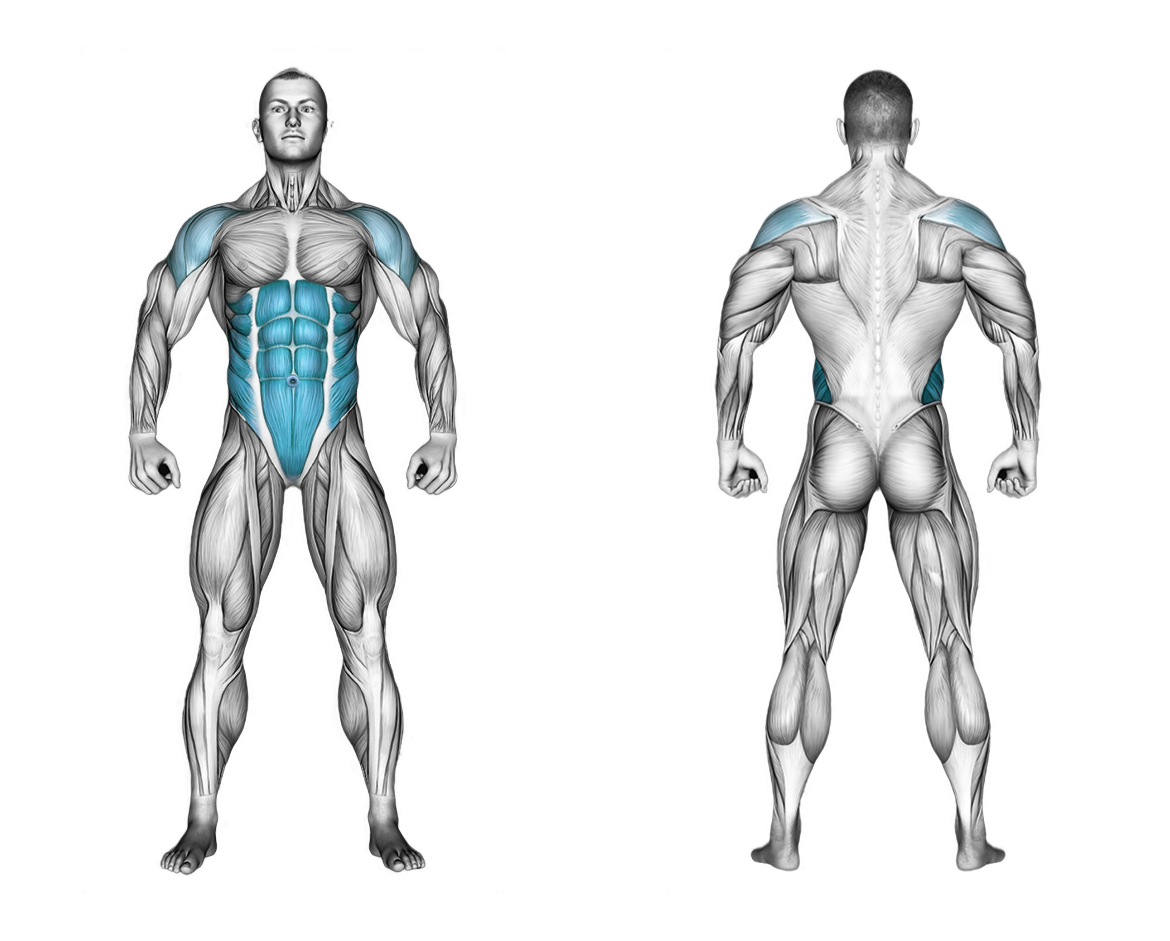
Muscles worked
Your coach guides every set
Turn on the coach in Gloox: it asks how you feel, picks the weight from your history and cues technique and rest. Rate each set and the next one is tuned to you.

On a computer? Point your phone's camera here to get the app.
Questions
What muscles do high plank shoulder taps target?
The movement primarily targets the rectus abdominis, obliques, and transverse abdominis, while heavily engaging the anterior deltoids and scapular stabilizers.
What should you do if your lower back hurts during the exercise?
Stop immediately, as pain often signals that your core has disengaged and your pelvis is sagging; if the pain persists, consult a qualified healthcare professional.







