
Abs · Bodyweight
High Plank Hip Tap
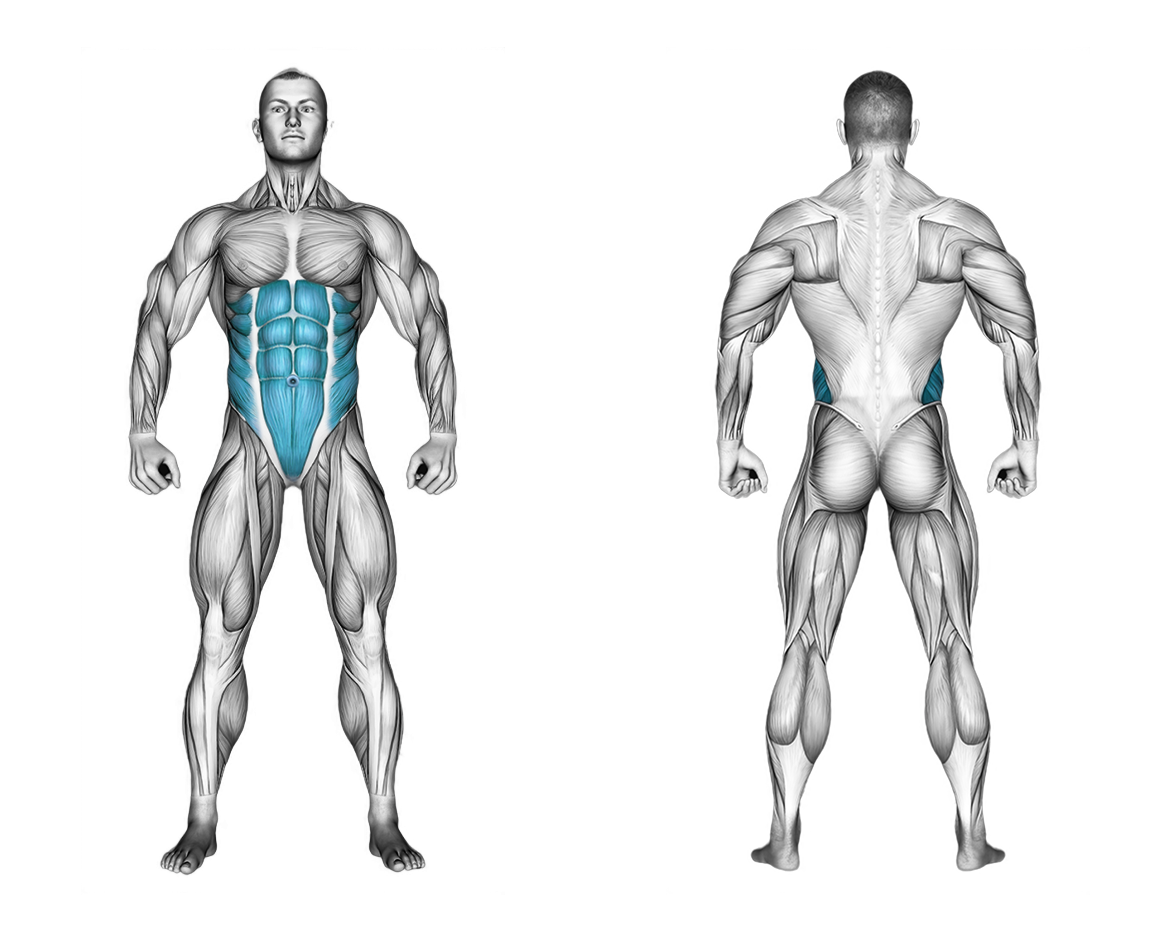
The high plank hip tap is a dynamic core exercise that involves rotating the pelvis from side to side from a straight-arm plank position. It targets the obliques and deep spinal stabilizers, making it a great addition to warm-up routines or abdominal circuits.
- Muscles
- Abs
- Equipment
- Bodyweight
- Type
- Cardio / timed
- Animation
- Men
How to do it
- Start in a high plank position with your hands directly under your shoulders.
- Rotate your hips to one side, lowering that hip towards the ground.
- Return to the center plank position.
- Rotate your hips to the opposite side.
- Continue alternating sides while maintaining a strong plank position.
Common mistakes
- Sagging through the lower back shifts tension away from the abdominals and strains the lumbar spine.
- Positioning your hands ahead of your shoulders places unnecessary shear stress on the shoulder joints.
- Dropping the hips quickly to the floor eliminates muscular control and increases the risk of joint jarring.
- Holding your breath limits endurance and raises intra-abdominal pressure unnecessarily.
Tips
- Keep your glutes and core braced to control the descent of each hip.
- Keep your chest and shoulders squared to the floor while only rotating through the hips.
- Push actively through your palms to maintain strong shoulder protraction and upper-back stability.
Sets and reps
Perform 3 to 4 sets of 30 to 60 seconds, or 10 to 16 controlled rotations per side for muscular endurance. Rest for 30 to 60 seconds between sets.
Muscles worked
Your coach guides every set
Turn on the coach in Gloox: it asks how you feel, picks the weight from your history and cues technique and rest. Rate each set and the next one is tuned to you.

On a computer? Point your phone's camera here to get the app.
Questions
Is this exercise safe for individuals with lower back issues?
Loaded rotational movements can irritate lower back conditions, so stop immediately and consult a healthcare professional if you feel any pain.
What muscles are primarily worked during this movement?
The exercise primarily targets the internal and external obliques, alongside the rectus abdominis, while the shoulders and serratus anterior act as stabilizers.







