
Abs · Bodyweight
Front Plank
The front plank is a foundational bodyweight isometric exercise designed to build endurance and stability throughout the core, glutes, and shoulders. It is suitable for lifters of any experience level and works well during a warm-up for core activation or as a finisher at the end of a workout.
- Muscles
- Abs
- Equipment
- Bodyweight
- Type
- Cardio / timed
- Animation
- Men
How to do it
- Start in a push-up position, then lower onto your forearms.
- Keep your body in a straight line from head to heels.
- Engage your core, glutes, and leg muscles.
- Hold this position while breathing normally.
- Avoid letting your hips sag or pike up.
Common mistakes
- Sagging the hips shifts tension directly into the lumbar spine and disengages the abdominal wall.
- Piking the hips toward the ceiling removes tension from the core and turns the movement into a resting pose.
- Craning the neck up or letting the head hang places unnecessary strain on the cervical spine.
- Holding the breath restricts oxygen flow and causes an unproductive spike in blood pressure.
Tips
- Press your forearms firmly into the floor to keep your upper back and shoulder blades stable.
- Squeeze your glutes and quads tightly to keep your pelvis locked in a safe, neutral alignment.
- Keep your gaze focused on the floor slightly in front of your hands to maintain a straight neck.
Sets and reps
Perform 3 to 4 sets holding the position for 20 to 60 seconds, resting 45 to 60 seconds between efforts. Focus on rigid technical execution rather than chasing arbitrary long hold times.
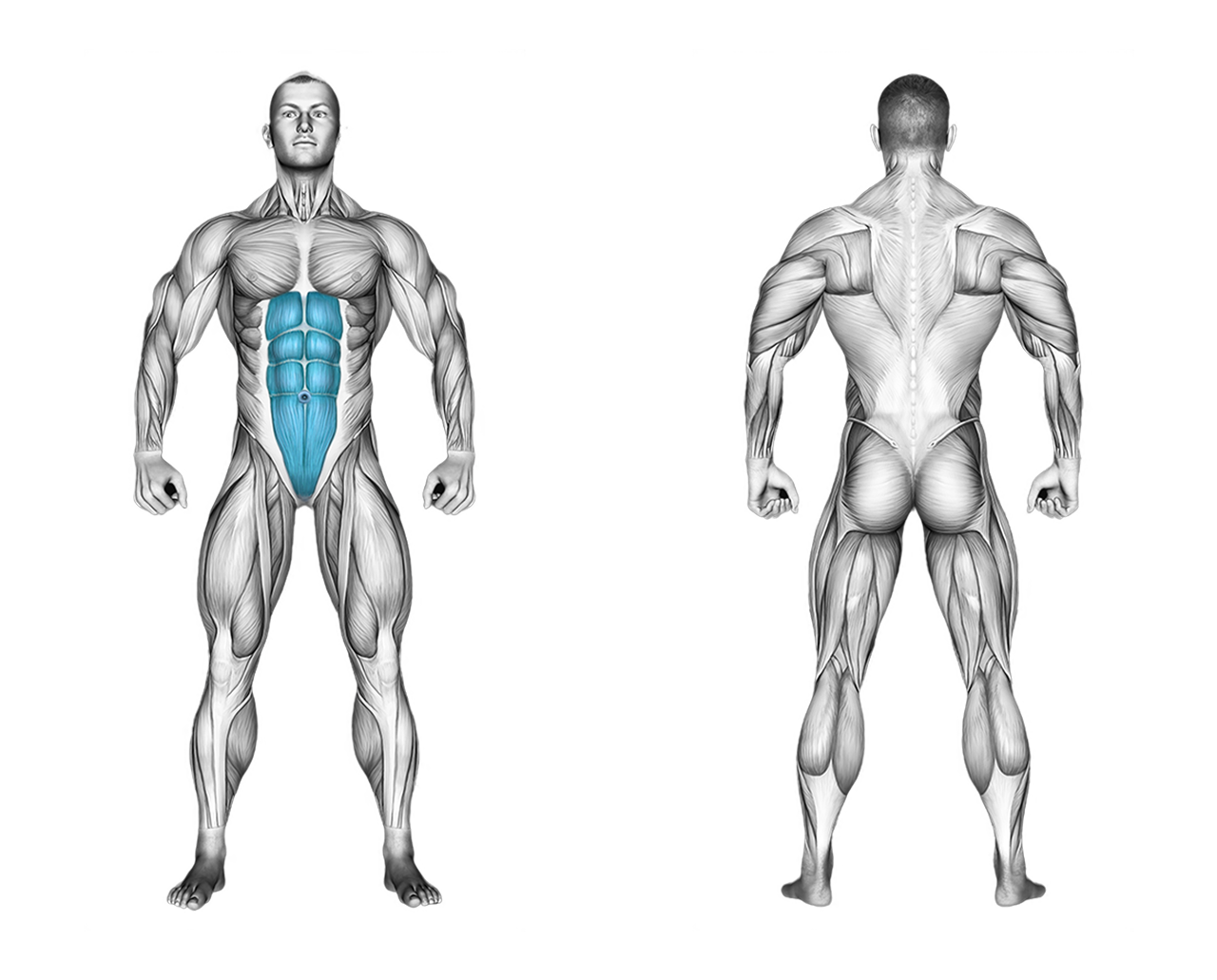
Muscles worked
Your coach guides every set
Turn on the coach in Gloox: it asks how you feel, picks the weight from your history and cues technique and rest. Rate each set and the next one is tuned to you.

On a computer? Point your phone's camera here to get the app.
Questions
Why does my lower back hurt during a front plank?
Lower back pain typically occurs when tired abs allow the hips to sag, transferring load into the lumbar joints; end the set immediately if this happens, and consult a specialist if pain persists.
How can you make the front plank more challenging?
You can increase difficulty without adding external weight by elevating your feet, lifting one arm or leg, or placing your elbows further forward.







