
Abs · Bodyweight
Flutter Kicks
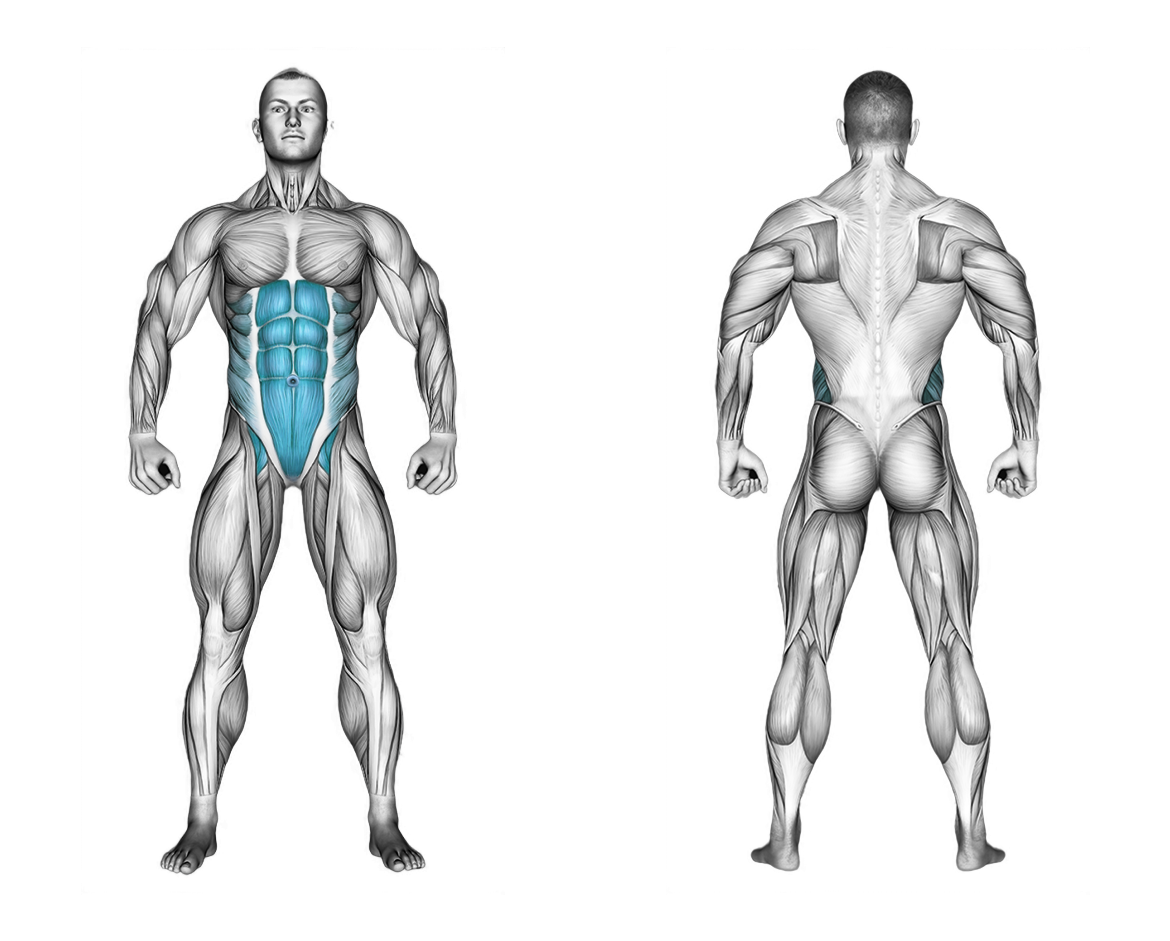
Flutter kicks are a dynamic bodyweight core exercise that targets the rectus abdominis, transverse abdominis, and hip flexors. They build muscular endurance and work well as a finisher in a strength session or as part of a high-intensity core circuit.
- Muscles
- Abs
- Equipment
- Bodyweight
- Type
- Cardio / timed
- Animation
- Men and women
How to do it
- Lie flat on your back with your hands under your glutes for support.
- Lift your legs slightly off the ground, keeping them straight.
- Alternately raise and lower your legs in a quick, scissor-like motion.
- Keep your core engaged and lower back pressed to the ground throughout.
Common mistakes
- Arching the lower back off the floor shifts tension away from the abdominals and places undue stress on the lumbar spine.
- Kicking the legs too high reduces continuous tension on the working core muscles.
- Bending the knees shortens the lever arm and lessens the overall demand on the abdominal wall.
- Holding the breath restricts oxygen delivery and causes premature fatigue during the set.
Tips
- Press your lower back firmly into the floor by slightly tilting your pelvis before starting the kicks.
- Keep the kicking amplitude small, roughly 6 to 12 inches off the ground, to maintain constant core tension.
- Point your toes and keep your knees locked out to maximize engagement through the entire lower body.
Sets and reps
Perform 3 to 4 timed sets of 20 to 45 seconds, resting 30 to 60 seconds between rounds to build core endurance.
Muscles worked
Your coach guides every set
Turn on the coach in Gloox: it asks how you feel, picks the weight from your history and cues technique and rest. Rate each set and the next one is tuned to you.

On a computer? Point your phone's camera here to get the app.
Questions
Are flutter kicks safe for the lower back?
They can strain the lower back if the abdominals fatigue and allow the spine to arch; stop immediately and consult a specialist if pain develops.
Which muscles do flutter kicks work the most?
The exercise primarily taxes the deep lower region of the rectus abdominis and the hip flexors while engaging the transverse abdominis for stabilization.







