Legs · Barbell
Barbell Sumo Squat
The barbell sumo squat is a compound lower-body movement with a wide stance that places increased tension on the adductors and glutes. It fits well near the beginning of a leg session for lifters aiming to build lower-body strength and muscular development.
- Equipment
- Barbell
- Type
- Strength
- Animation
- Men and women
How to do it
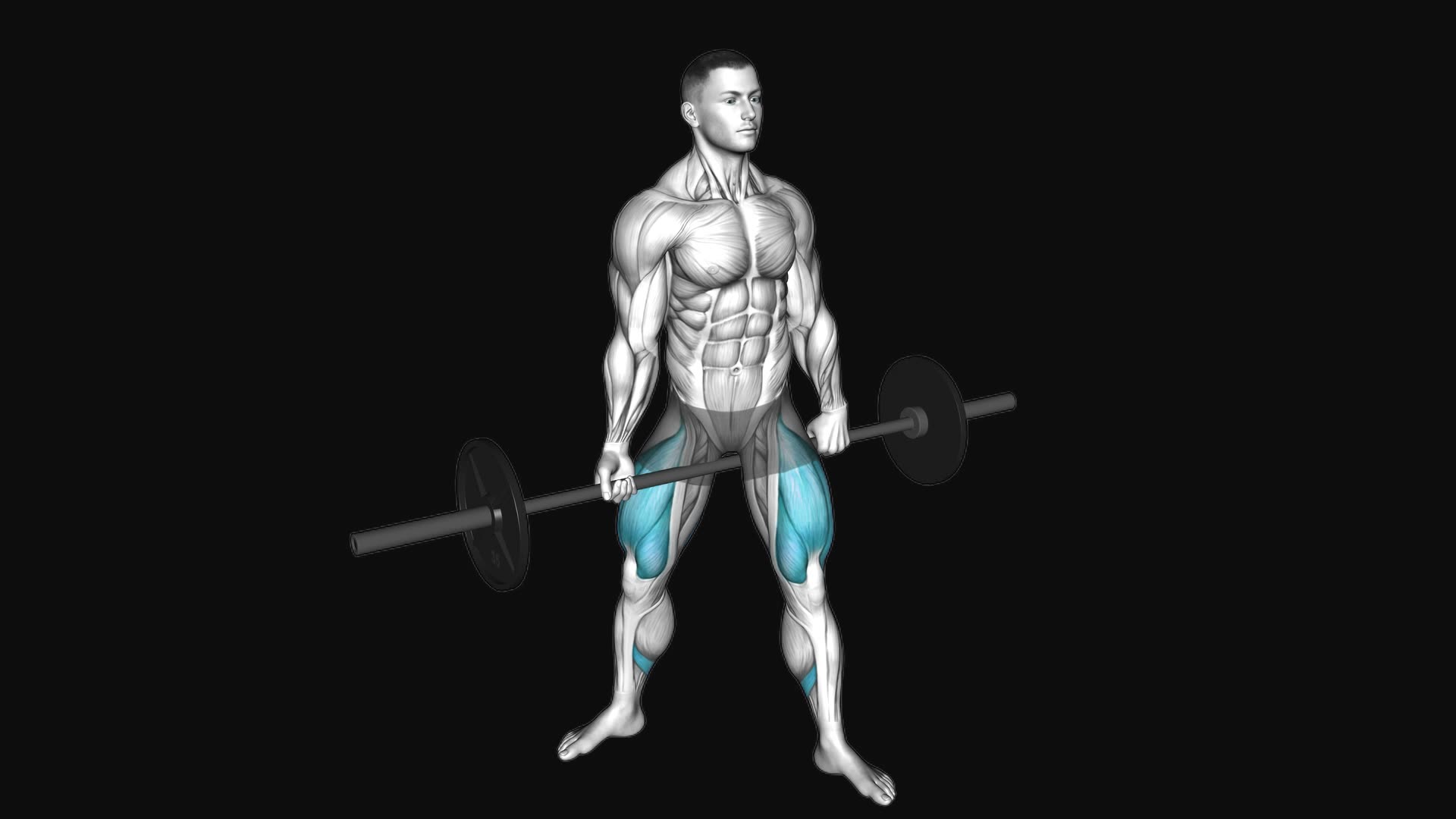
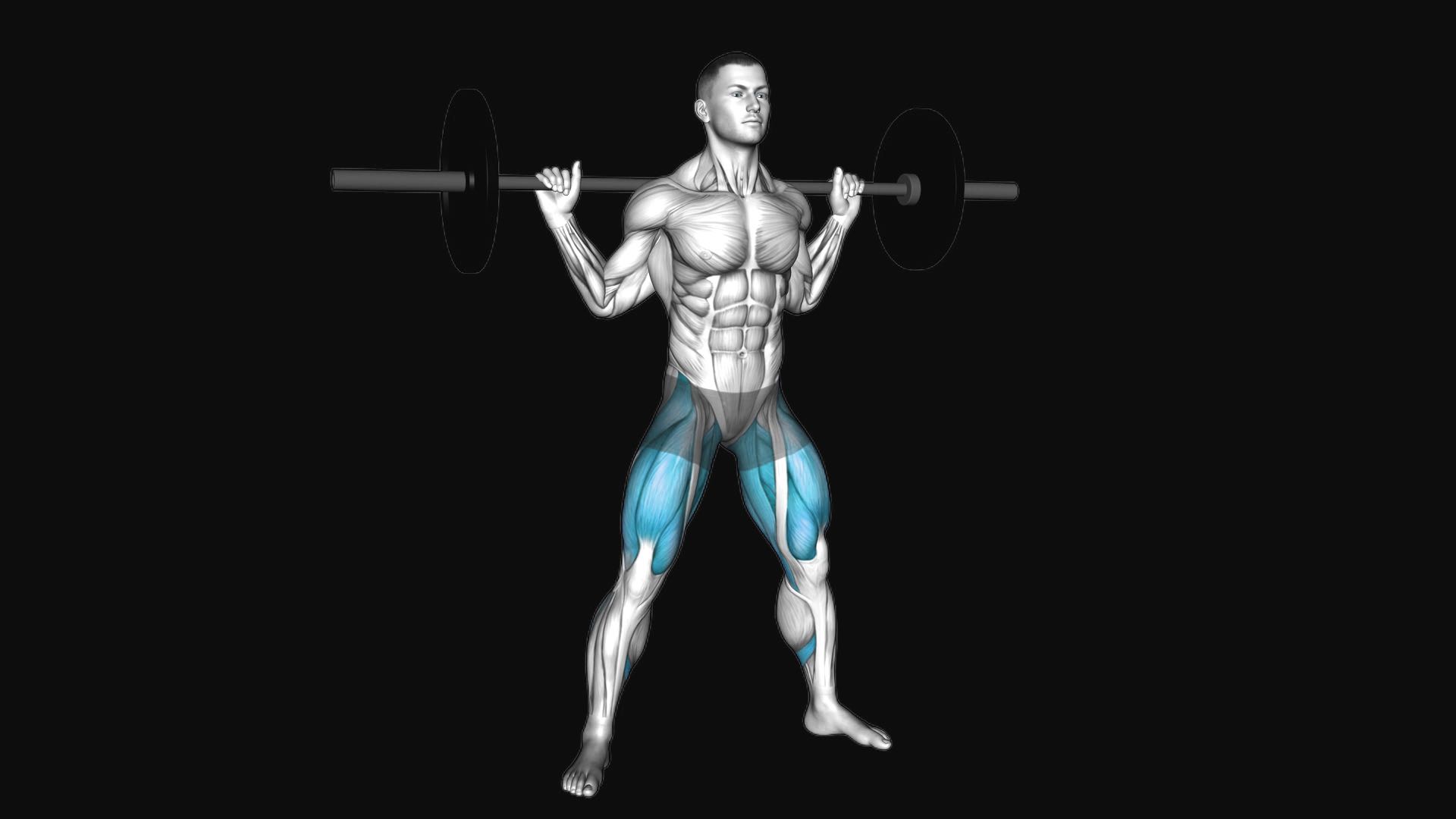
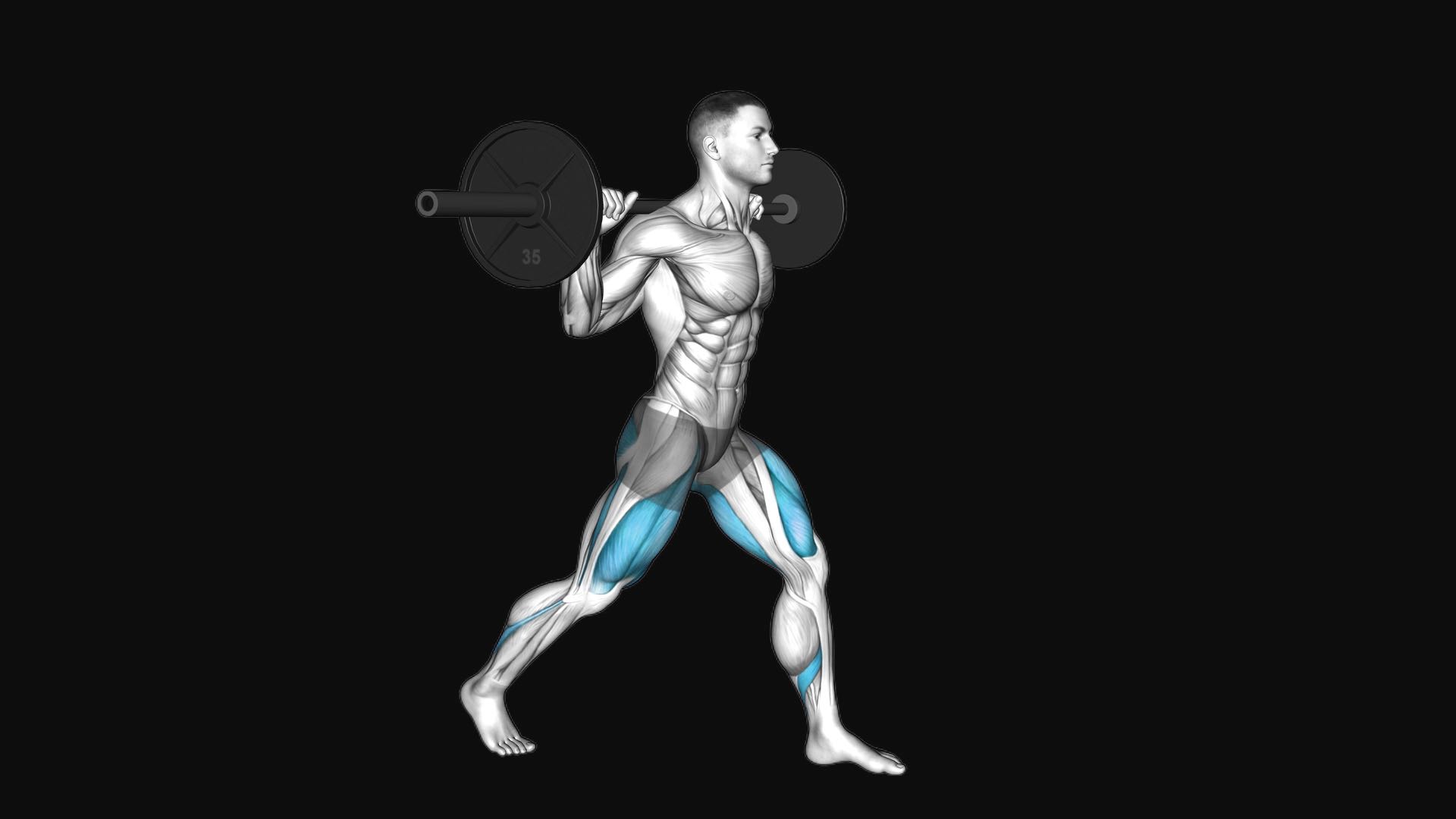
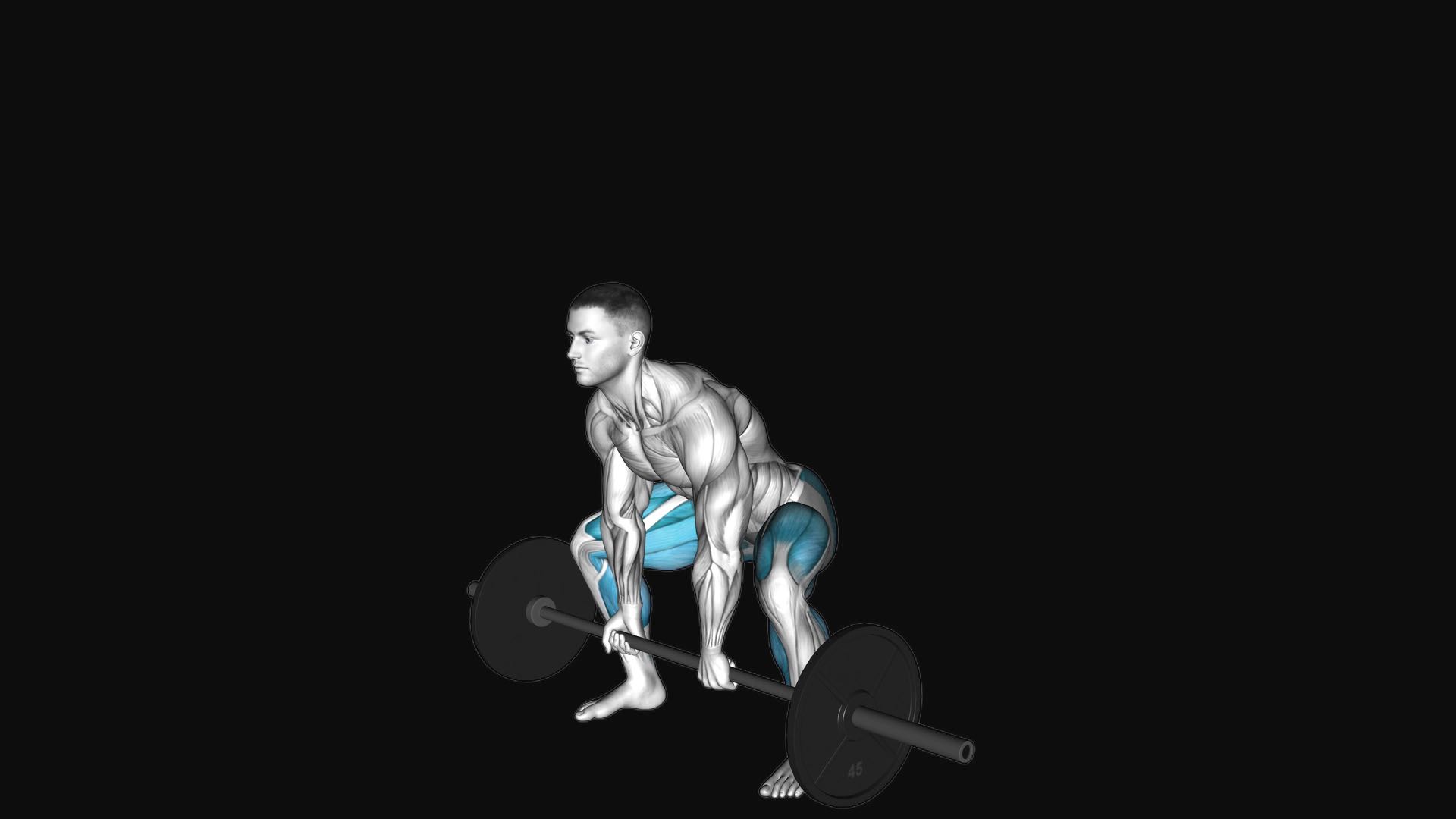
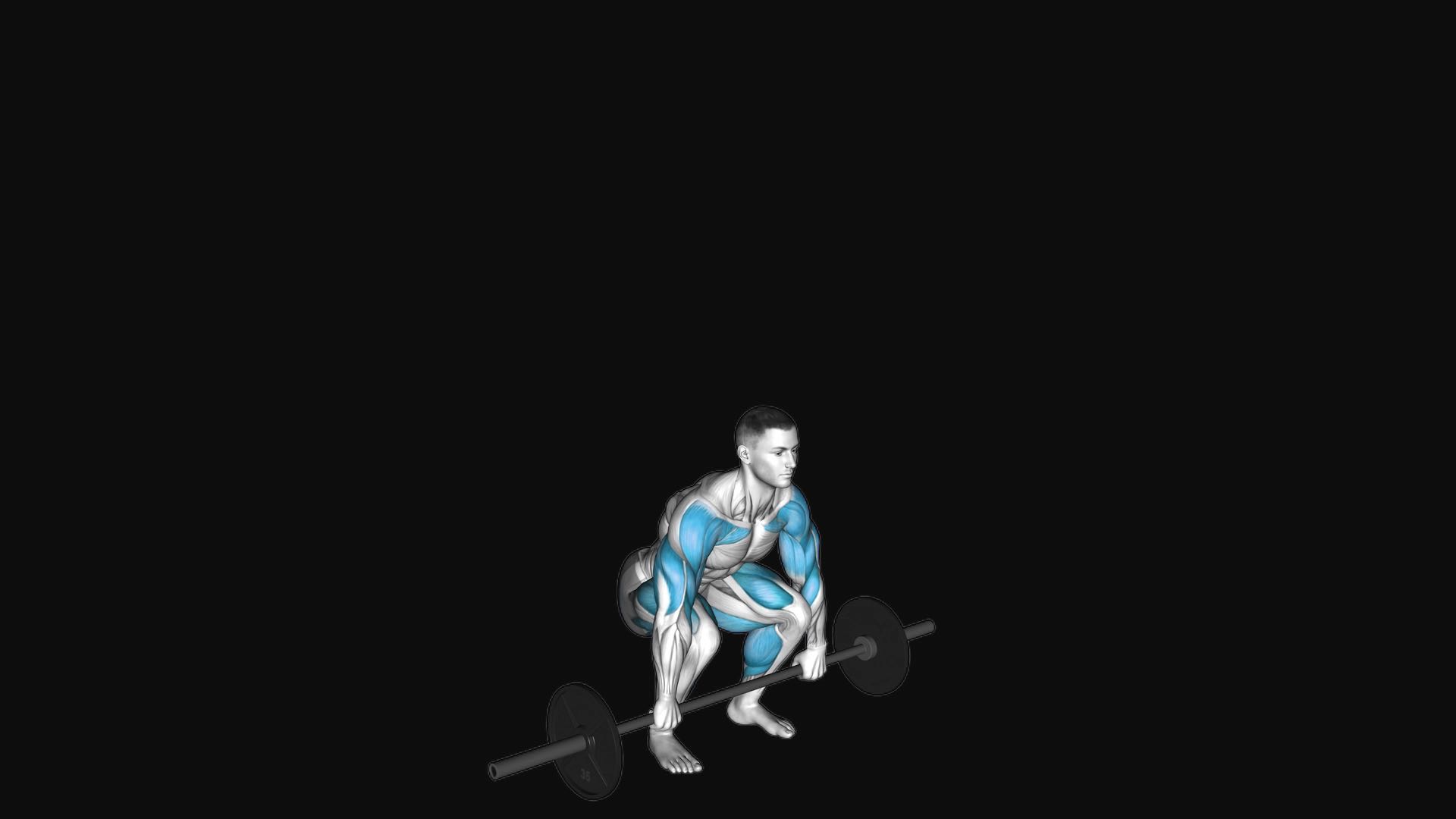
- Stand with your feet wider than shoulder-width apart, toes pointing outward.
- Hold a barbell in front of you, resting it on your thighs.
- Keep your back straight, chest up, and shoulders back.
- Inhale and brace your core. Bend your knees and hips to lower your body down.
- Go down until your thighs are parallel to the floor or as low as you can comfortably go.
- Focus on keeping your knees in line with your toes and pushing through your heels to rise back up.
- Exhale as you return to the starting position, straightening your legs and hips.
Common mistakes
- Allowing the knees to cave inward during the ascent places excessive shearing force on the knee joints.
- Leaning the torso too far forward turns the movement into a good morning and strains the lower back.
- Adopting a stance that is too wide restricts range of motion and prevents reaching parallel safely.
Tips
- Ensure your knees track continuously in the same direction as your pointed toes.
- Drive through your heels and the outer edges of your feet to engage your glutes out of the bottom.
- Brace your core tightly before each descent to keep your spine neutral and torso upright.
Sets and reps
For raw strength, perform 3 to 5 sets of 4 to 6 repetitions with 2 to 3 minutes of rest between sets. For muscle hypertrophy, aim for 3 to 4 sets of 8 to 12 repetitions with 90 to 120 seconds of rest.
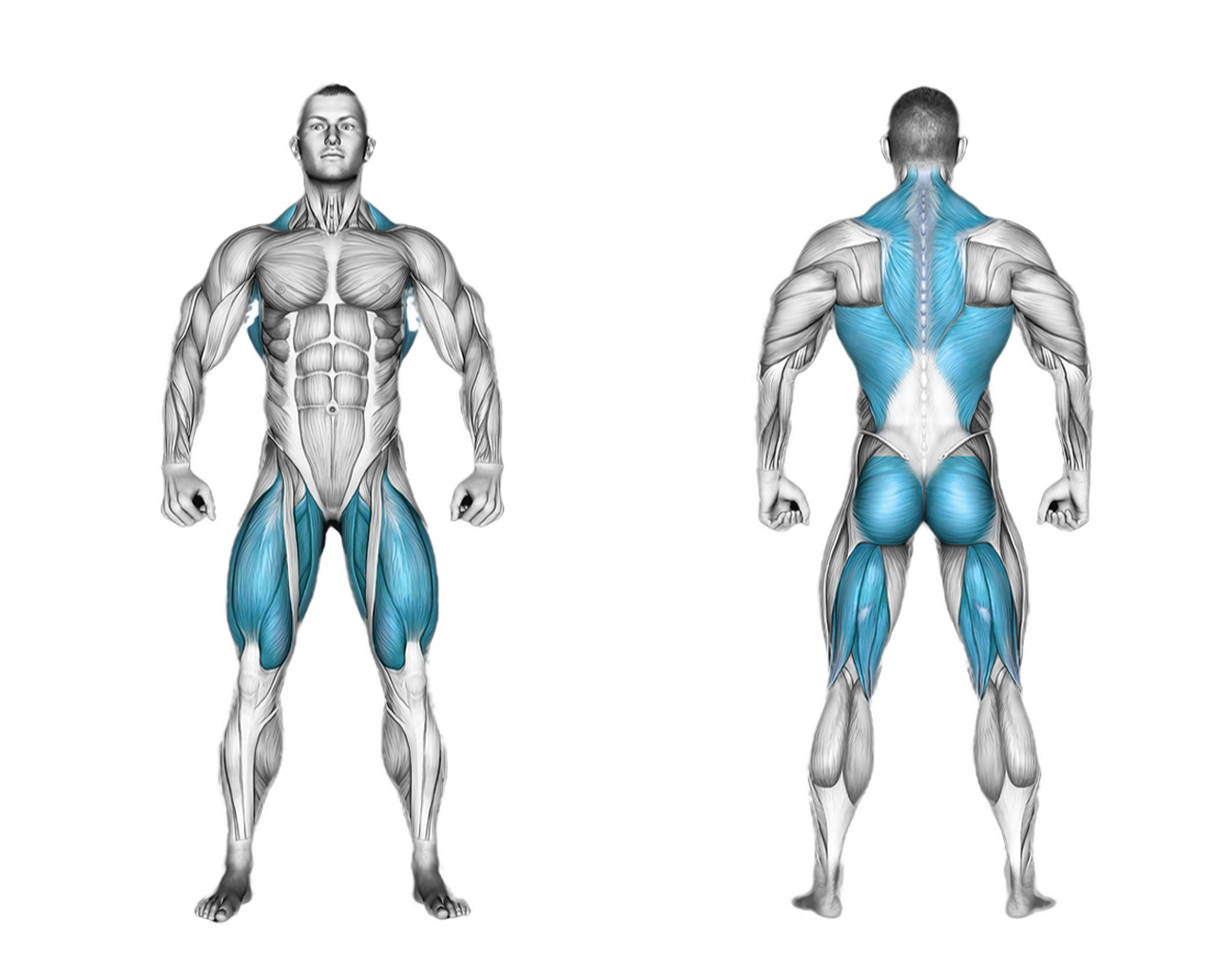
Muscles worked
Your coach guides every set
Turn on the coach in Gloox: it asks how you feel, picks the weight from your history and cues technique and rest. Rate each set and the next one is tuned to you.

On a computer? Point your phone's camera here to get the app.
Questions
Which muscles work the most in a barbell sumo squat?
The primary drivers are the gluteus maximus, quadriceps, and hip adductors, supported by the hamstrings and core stabilizers.
What should you do if you experience hip pain during the exercise?
Adjust your stance width and toe angle slightly to better match your hip structure. If the pain persists, stop performing the exercise and consult a specialist.