Legs · Barbell
Barbell Sumo Deadlift
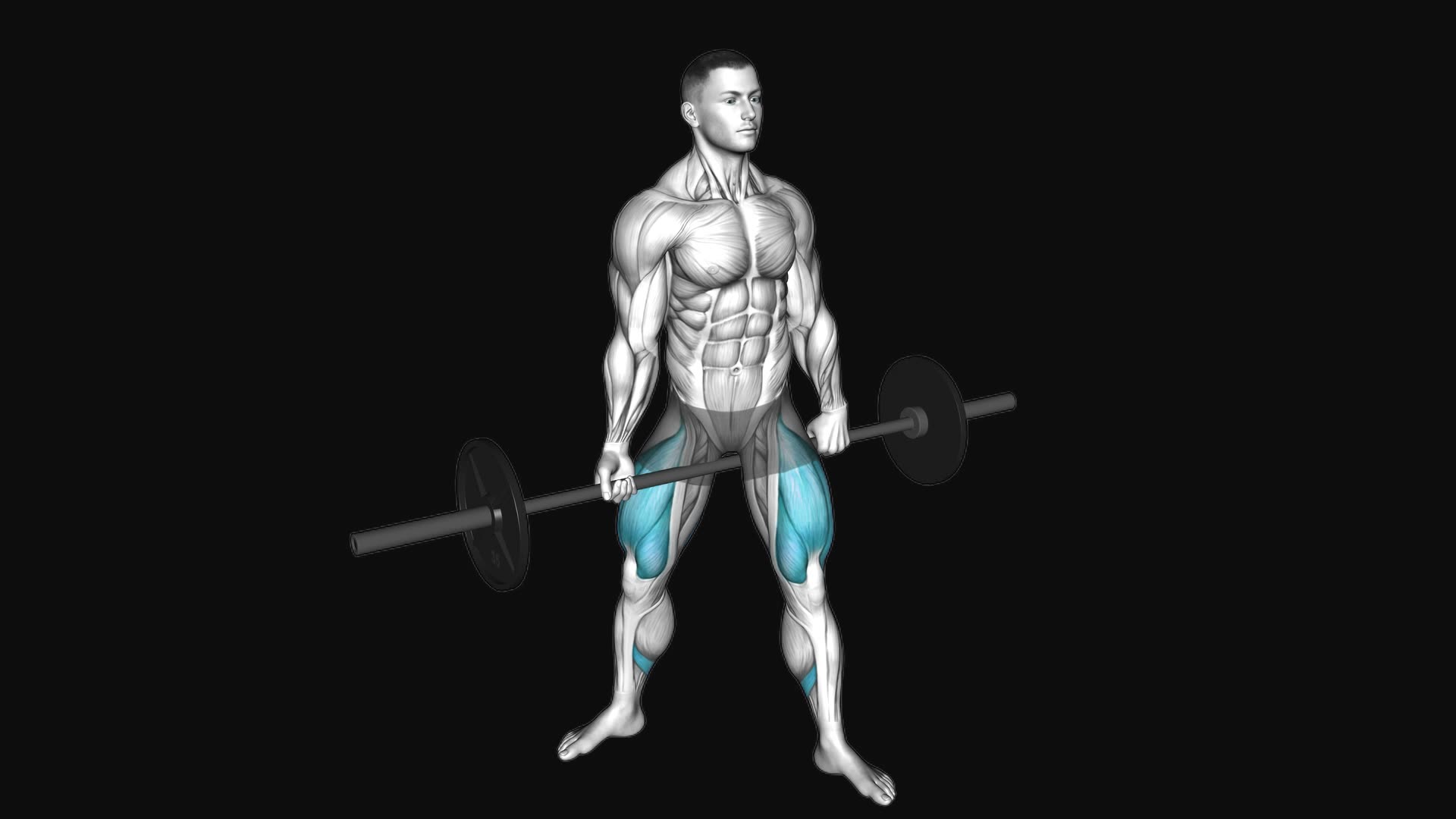
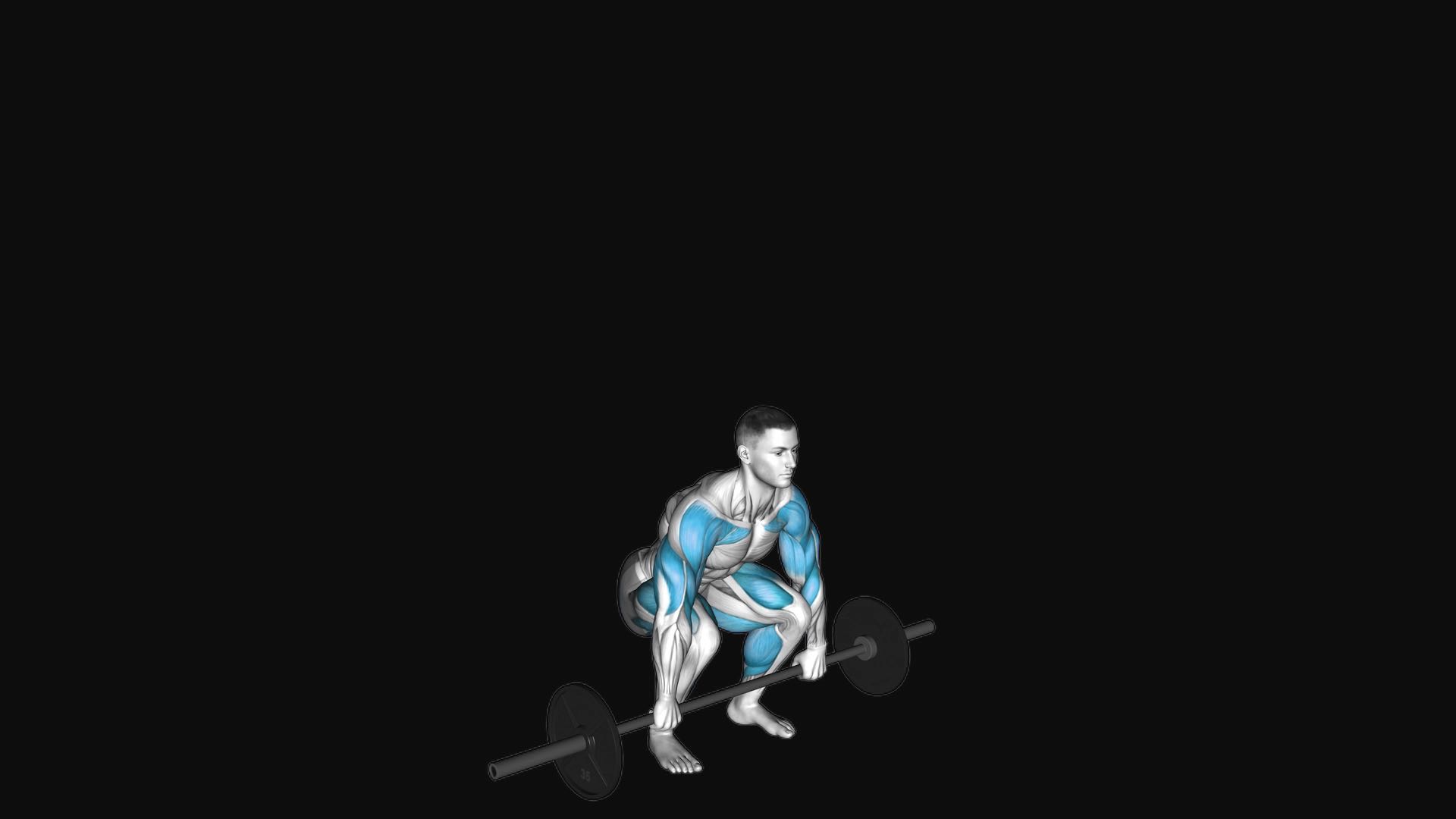
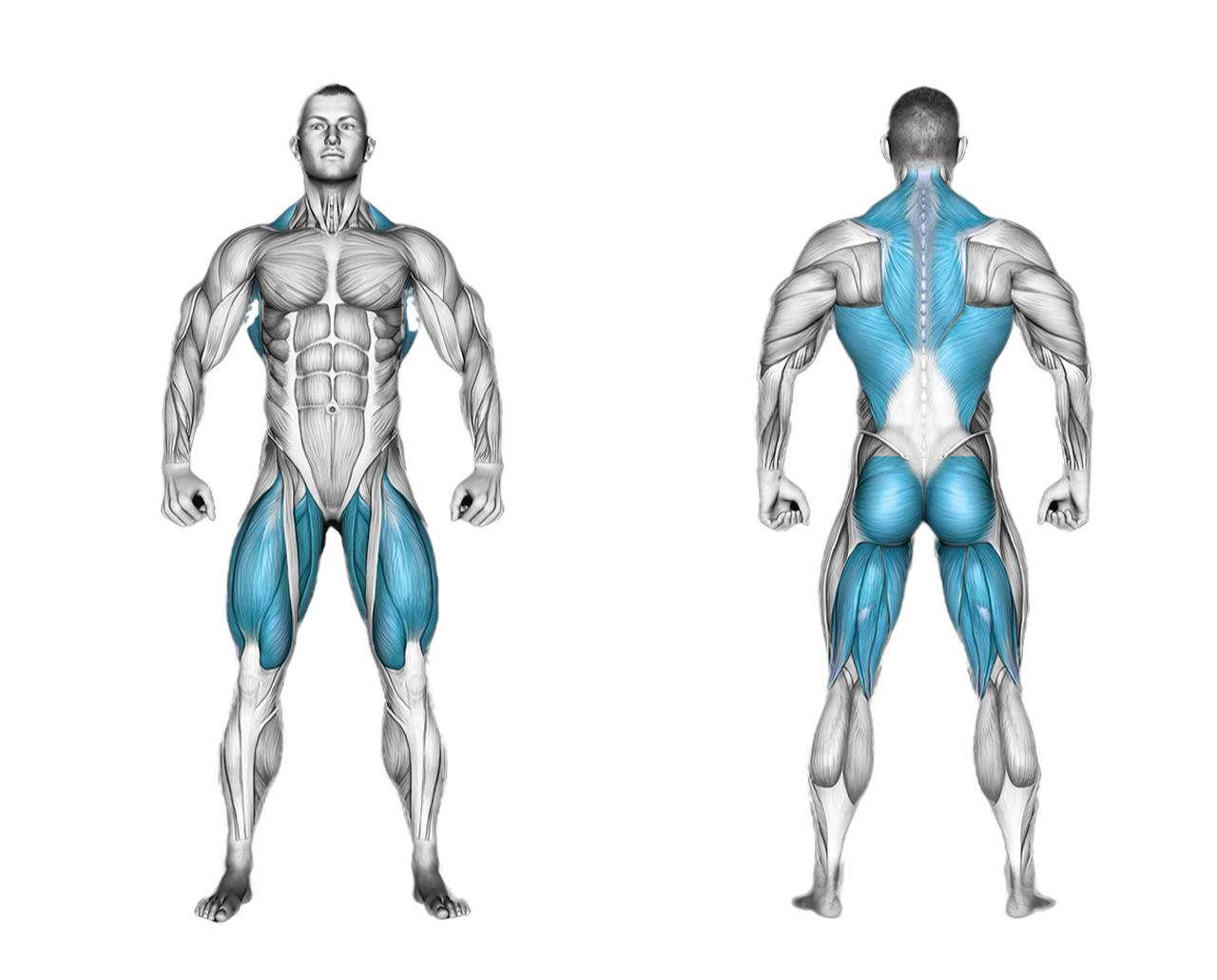
The barbell sumo deadlift is a compound lower-body exercise that targets the glutes, adductors, and quadriceps using a wide-stance setup. It allows a more upright torso angle than the conventional deadlift, reducing shear stress on the lower back and fitting well at the start of a leg or pull session.
- Equipment
- Barbell
- Type
- Strength
- Animation
- Men and women
How to do it
- Stand with your feet wider than shoulder-width apart, toes pointed outwards, and a barbell in front of you.
- Bend at the hips and knees, and grip the barbell with an overhand grip, hands inside your legs.
- Keep your back straight, chest up, and shoulders back.
- Inhale and brace your core. Lift the barbell by straightening your hips and knees, driving through your heels.
- Keep the barbell close to your body as you lift.
- Lock your hips and knees at the top of the movement.
- Exhale as you slowly lower the barbell back to the ground, controlling the movement.
Common mistakes
- Allowing the knees to cave inward during the pull places excessive stress on the knee joints and reduces leverage.
- Shooting the hips up before the bar leaves the floor shifts the load onto the lower back and eliminates leg drive.
- Rounding the lumbar spine under heavy loads compromises spinal stability and increases injury risk.
- Letting the barbell drift away from the shins creates an inefficient bar path and strains the back.
Tips
- Keep your knees pushed out in line with your toes throughout the entire lift.
- Pull the slack out of the barbell before initiating the pull to engage your lats and build full-body tension.
- Focus on spreading the floor apart with your feet rather than simply pulling upward.
Sets and reps
For strength, perform 3 to 5 sets of 3 to 5 reps with 2 to 3 minutes of rest between sets. For muscle growth, aim for 3 to 4 sets of 6 to 8 reps with 90 to 120 seconds of rest.
Muscles worked
Your coach guides every set
Turn on the coach in Gloox: it asks how you feel, picks the weight from your history and cues technique and rest. Rate each set and the next one is tuned to you.

On a computer? Point your phone's camera here to get the app.
Questions
Is the sumo deadlift safer for the lower back than the conventional deadlift?
Yes, the wider stance keeps the torso more upright, which significantly reduces shear stress on the lumbar spine.
What should you do if you feel hip pain during the movement?
Stop immediately and consult a healthcare specialist if pain persists. Hip anatomy varies between individuals, and some lifters require a slightly narrower foot position.