Legs · Barbell
Barbell Jefferson Squat
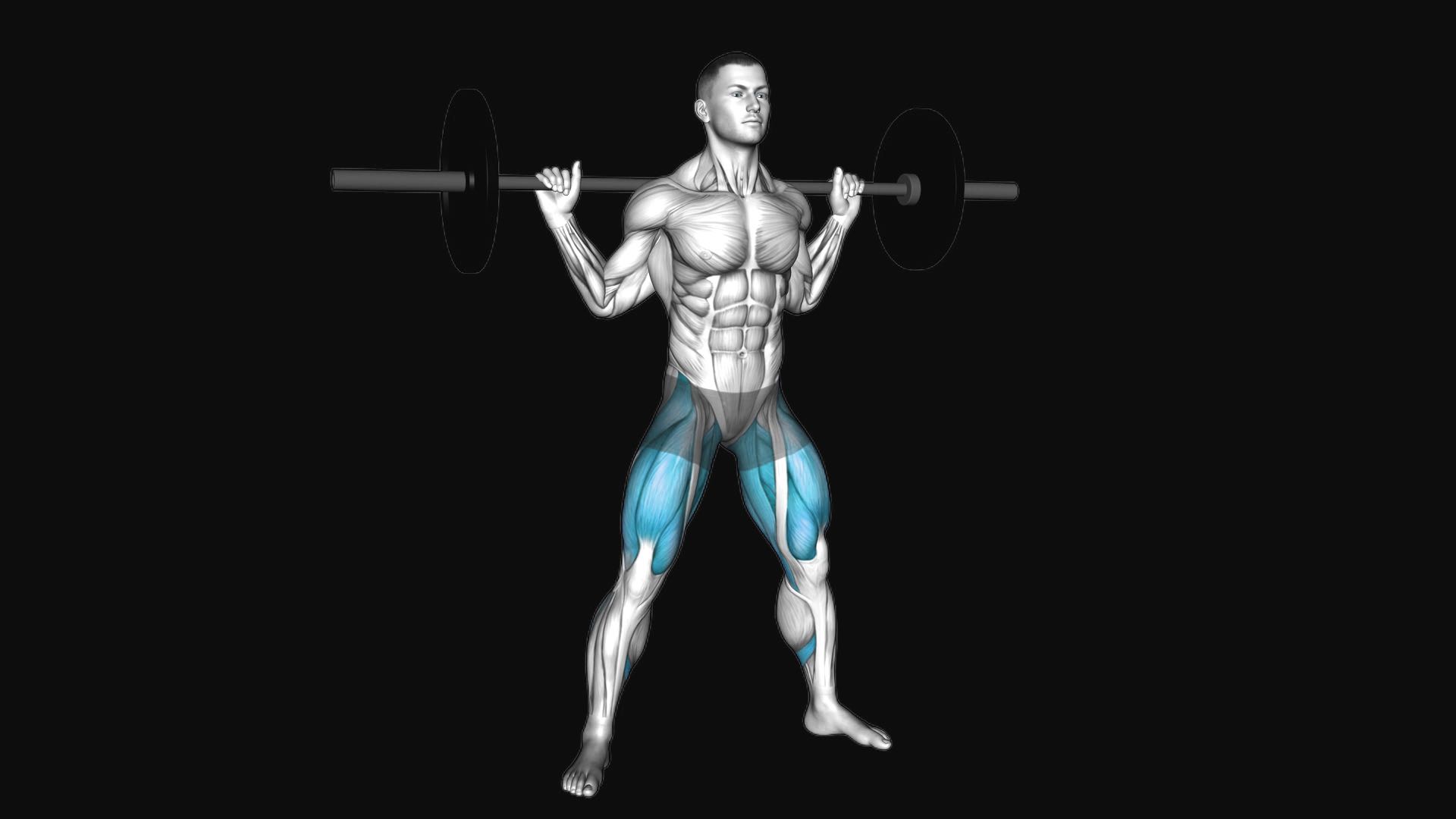
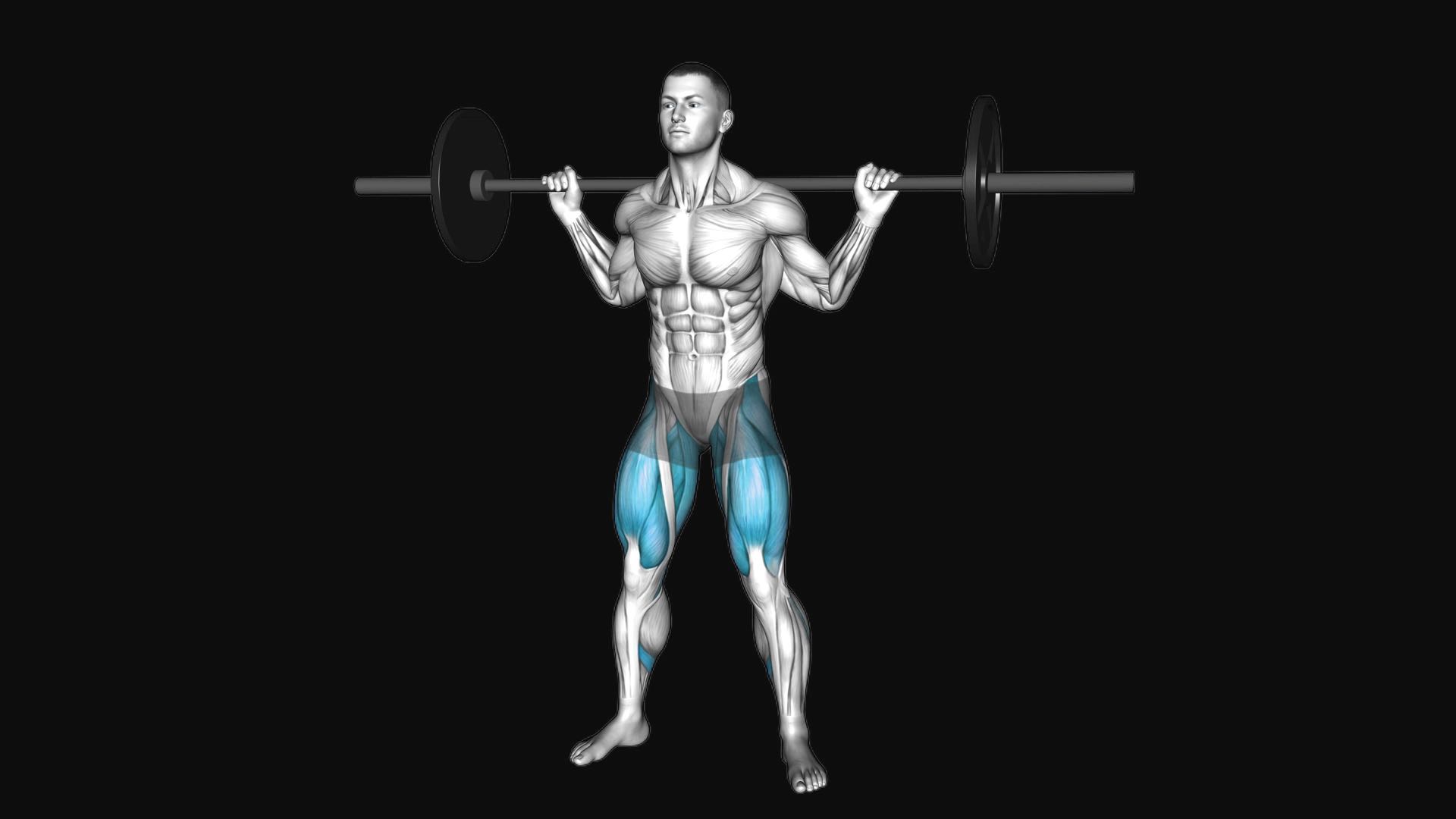
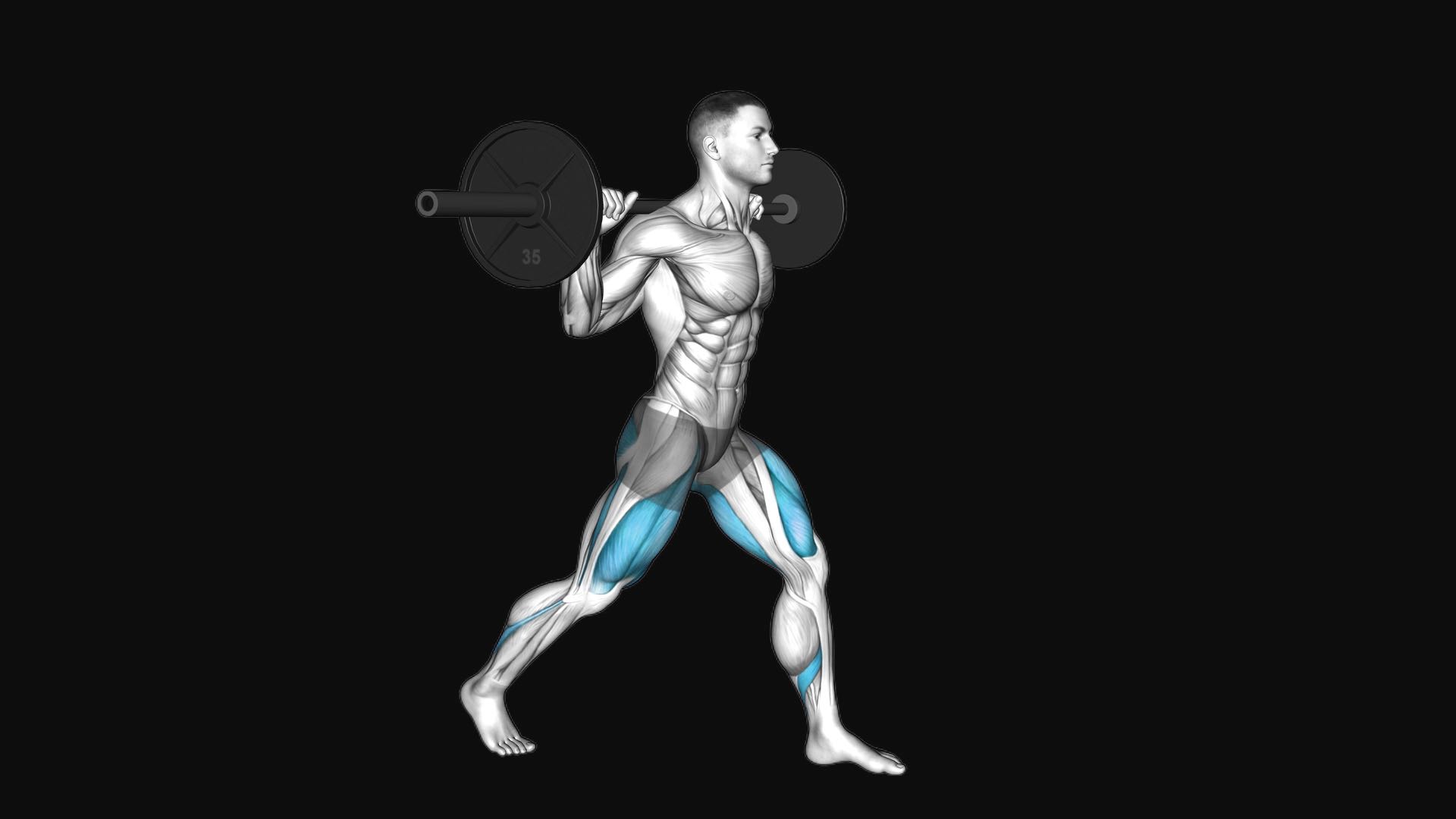
The barbell Jefferson squat is a multi-joint lower-body movement where the lifter straddles the bar, targeting the quadriceps, glutes, and adductors while challenging anti-rotational core stability. It is best suited for intermediate to advanced lifters looking to build functional leg strength, typically programmed as a secondary compound lift after main squat variations.
- Equipment
- Barbell
- Type
- Strength
- Animation
- Men
How to do it
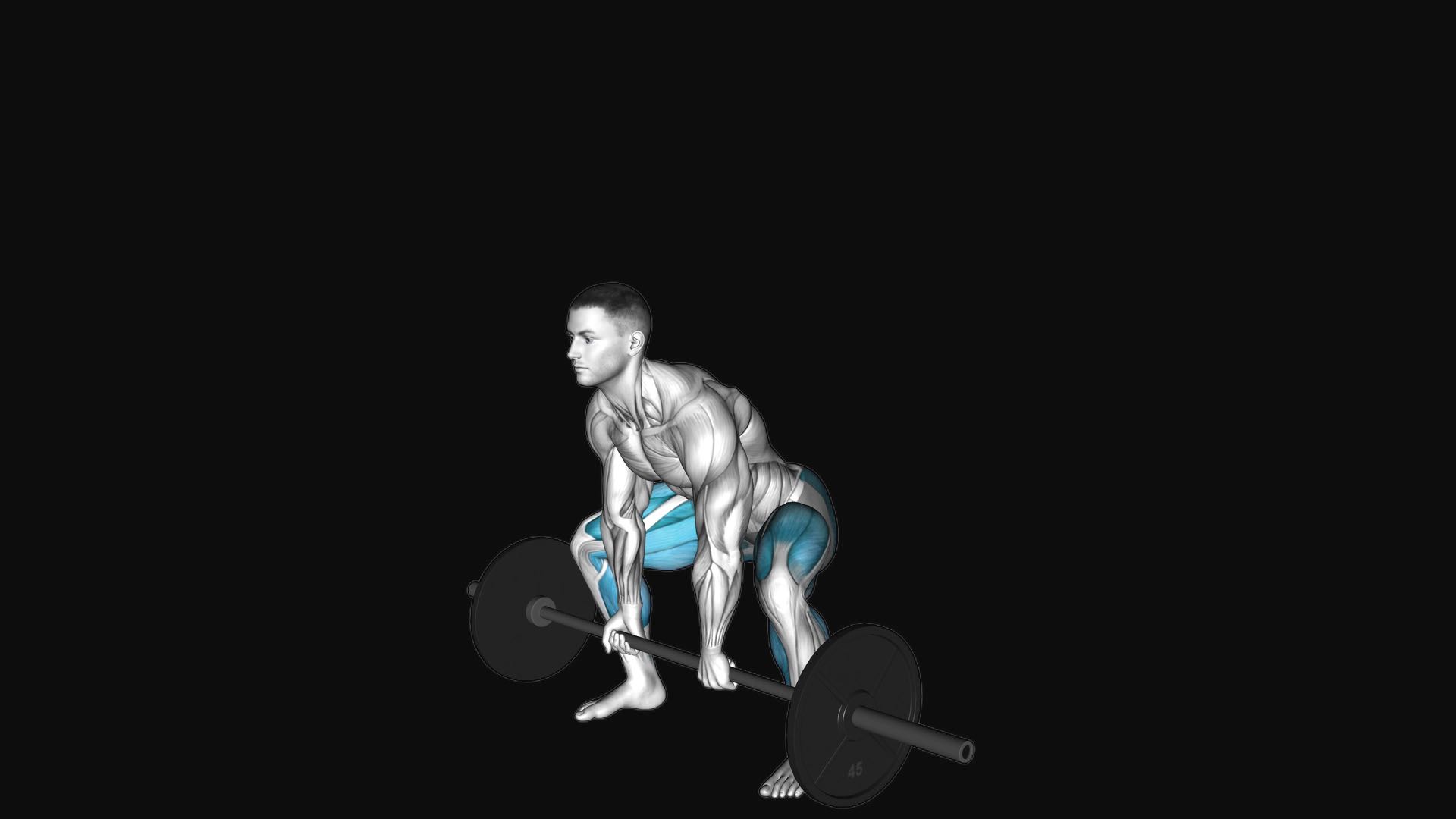
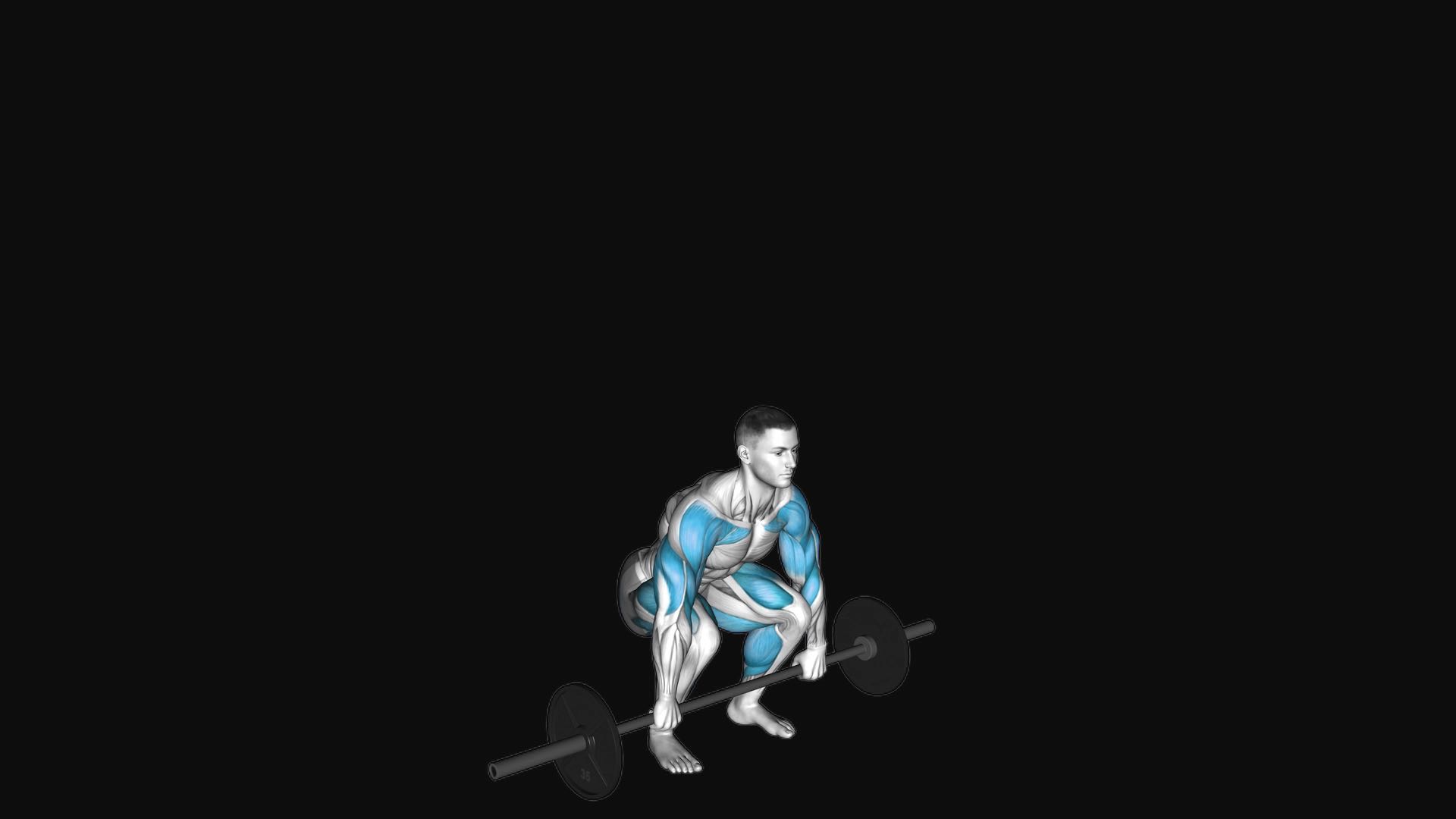
- Stand with the barbell positioned between your legs, perpendicular to your body.
- Squat down and grip the bar with one hand in front and one hand behind your body.
- Keep your chest up and core engaged.
- Drive through your heels to stand up, lifting the barbell.
- Lower back down with control.
- Switch hand positions between sets.
Common mistakes
- Twisting the torso during the ascent shifts the load unevenly across the spine and hip joints.
- Allowing the knees to cave inward diminishes glute activation and places unnecessary stress on the knee ligaments.
- Failing to alternate hand and foot placement between sets causes asymmetric strength and muscle development over time.
- Rounding the lower back at the bottom of the movement compromises spinal alignment and increases injury risk.
Tips
- Maintain a relatively upright torso throughout the lift and keep your weight distributed evenly across both feet.
- Alternate your front hand and front foot on every set to ensure balanced muscular development.
- Drive straight through the heels while keeping your knees pushed out in line with your toes.
Sets and reps
Perform 3 to 4 sets of 6 to 10 repetitions per side for hypertrophy and strength, resting 90 to 120 seconds between sets.
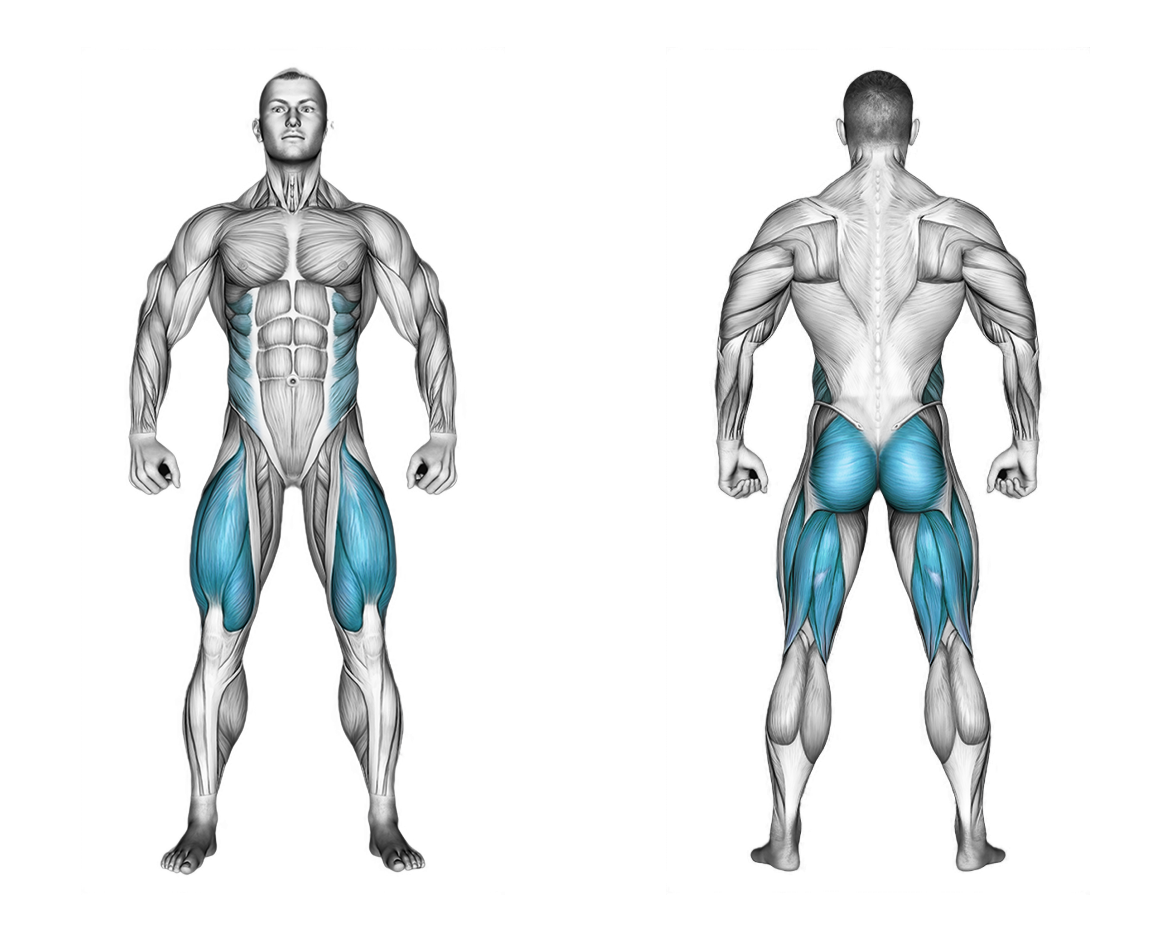
Muscles worked
Your coach guides every set
Turn on the coach in Gloox: it asks how you feel, picks the weight from your history and cues technique and rest. Rate each set and the next one is tuned to you.

On a computer? Point your phone's camera here to get the app.
Questions
Is the Jefferson squat safer for the lower back than a back squat?
Because the barbell sits directly beneath your center of mass rather than on your shoulders, compressive shear forces on the lumbar spine are substantially reduced. If you experience sharp pain, stop immediately and consult a medical professional.
What muscles work the most in a Jefferson squat?
The movement heavily targets the quadriceps, gluteus maximus, and hip adductors, with significant recruitment of the core musculature to resist rotational torque.