
Abs · Bodyweight
3/4 Sit-up
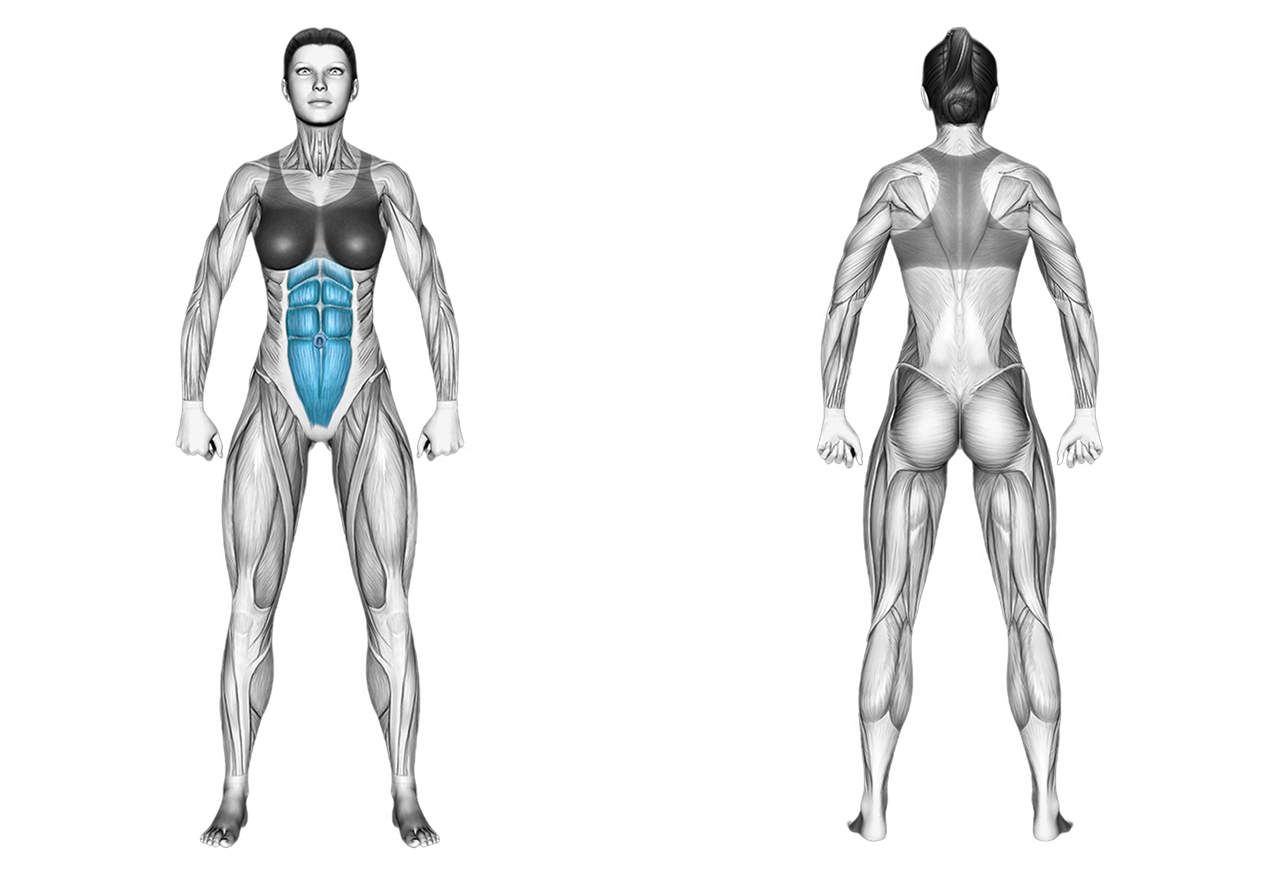
The 3/4 sit-up is a bodyweight core movement that shortens the traditional sit-up range of motion. It specifically targets the rectus abdominis by maintaining constant muscular tension and fits well into the core-finishing segment of any training routine.
- Muscles
- Abs
- Equipment
- Bodyweight
- Type
- Strength
- Animation
- Women
How to do it
- Lie on your back with knees bent and feet flat on the floor.
- Place your hands behind your head or cross them over your chest.
- Engage your core and lift your torso up about three-quarters of the way to your knees.
- Stop before reaching full sit-up position to maintain tension on your abs.
- Slowly lower back to the starting position with control.
Common mistakes
- Yanking on the neck strains the cervical spine and takes tension off the abdominal muscles.
- Rising to a fully upright seated position removes the mechanical tension from the abs at the top of the rep.
- Using momentum to swing the torso upward decreases core activation and places unnecessary stress on the lower back.
Tips
- Keep your gaze directed diagonally upward to ensure your neck remains in a neutral position throughout the movement.
- Hold the contraction for a full second at the three-quarter mark to maximize muscle fiber recruitment.
- Lower your torso back down over two to three seconds to capitalize on the eccentric phase of the rep.
Sets and reps
Perform 3 to 4 sets of 15 to 25 repetitions with 45 to 60 seconds of rest between sets to build core endurance and hypertrophy.
Muscles worked
Your coach guides every set
Turn on the coach in Gloox: it asks how you feel, picks the weight from your history and cues technique and rest. Rate each set and the next one is tuned to you.

On a computer? Point your phone's camera here to get the app.
Questions
Why stop at three-quarters instead of performing a full sit-up?
Stopping before reaching full vertical keeps the rectus abdominis under constant tension and minimizes hip flexor dominance.
Is the 3/4 sit-up safe for the lower back?
It places less shear stress on the lumbar spine than a full sit-up, but if you experience any back pain, stop the exercise and consult a specialist.







