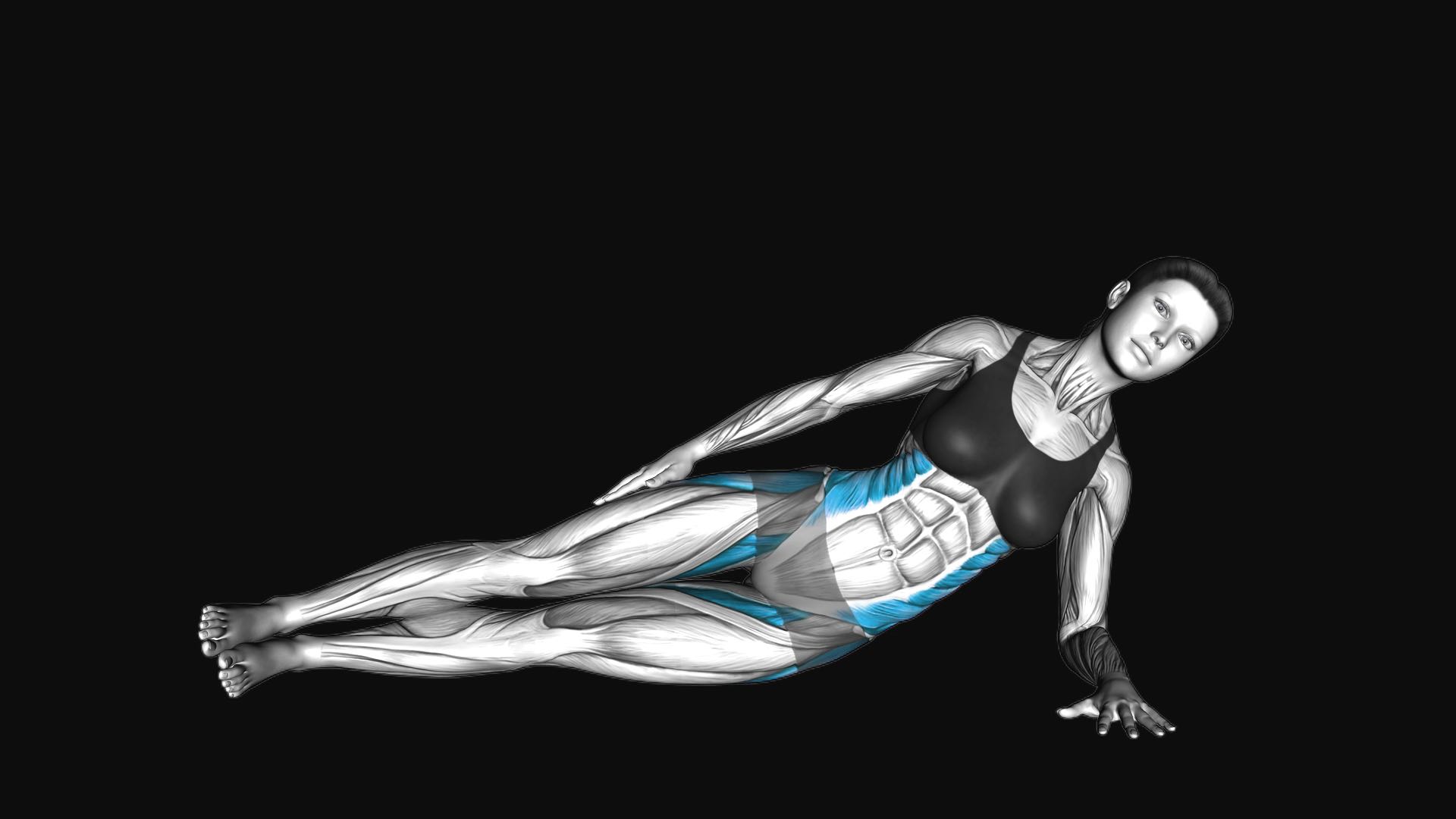
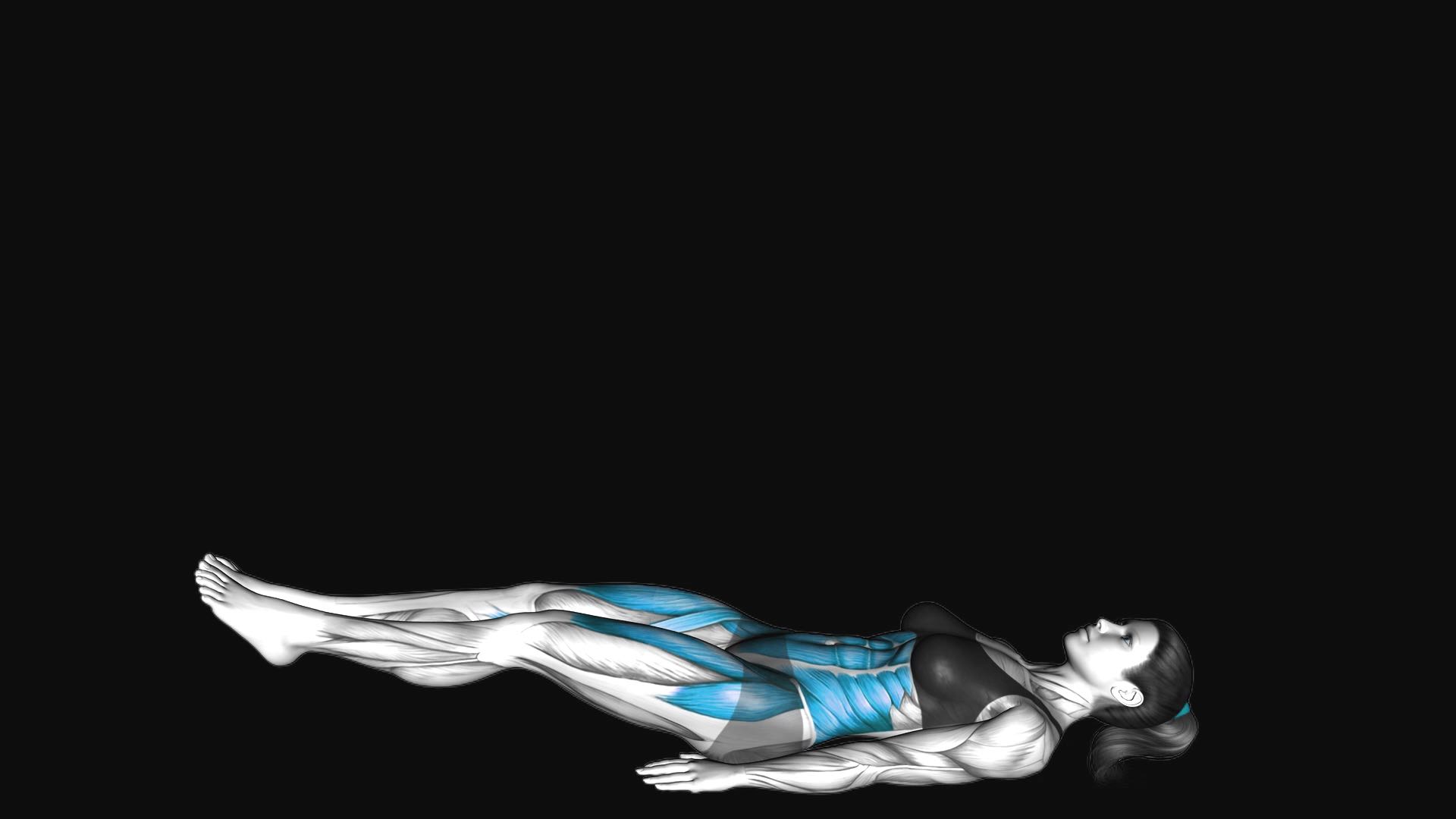
Abs · Bodyweight
Front Plank with Leg Lift
The front plank with leg lift is a dynamic core exercise that combines an isometric forearm plank with alternating hip extensions. It challenges the abdominals, glutes, and anti-rotational stability, making it a great addition to core sessions or movement prep.
- Equipment
- Bodyweight
- Type
- Cardio / timed
- Animation
- Women
How to do it
- Start in a standard plank position with your forearms on the ground and body in a straight line.
- Engage your core and maintain proper plank form.
- Slowly lift one leg off the ground, keeping it straight and in line with your body.
- Hold for a moment, then lower the leg back to the starting position.
- Alternate legs while maintaining proper plank form throughout.
Common mistakes
- Lifting the leg too high arches the lower back and shifts tension away from the glutes to the lumbar spine.
- Rotating the hips to the side compromises core stability and reduces the anti-rotational demand of the movement.
- Allowing the pelvis to sag toward the floor disengages the abdominal wall and strains the lumbar region.
- Holding your breath restricts oxygen delivery and creates unnecessary intra-abdominal pressure.
Tips
- Focus on squeezing the working glute at the top rather than driving the foot as high as possible.
- Keep the pelvis parallel to the floor by actively pressing both forearms firmly into the ground.
- Move the leg in a slow, controlled tempo to maximize time under tension and prevent momentum.
Sets and reps
Perform 3 to 4 sets of 30 to 60 seconds (or 10 to 15 lifts per leg), resting 45 to 60 seconds between sets to build core endurance and hip stability.
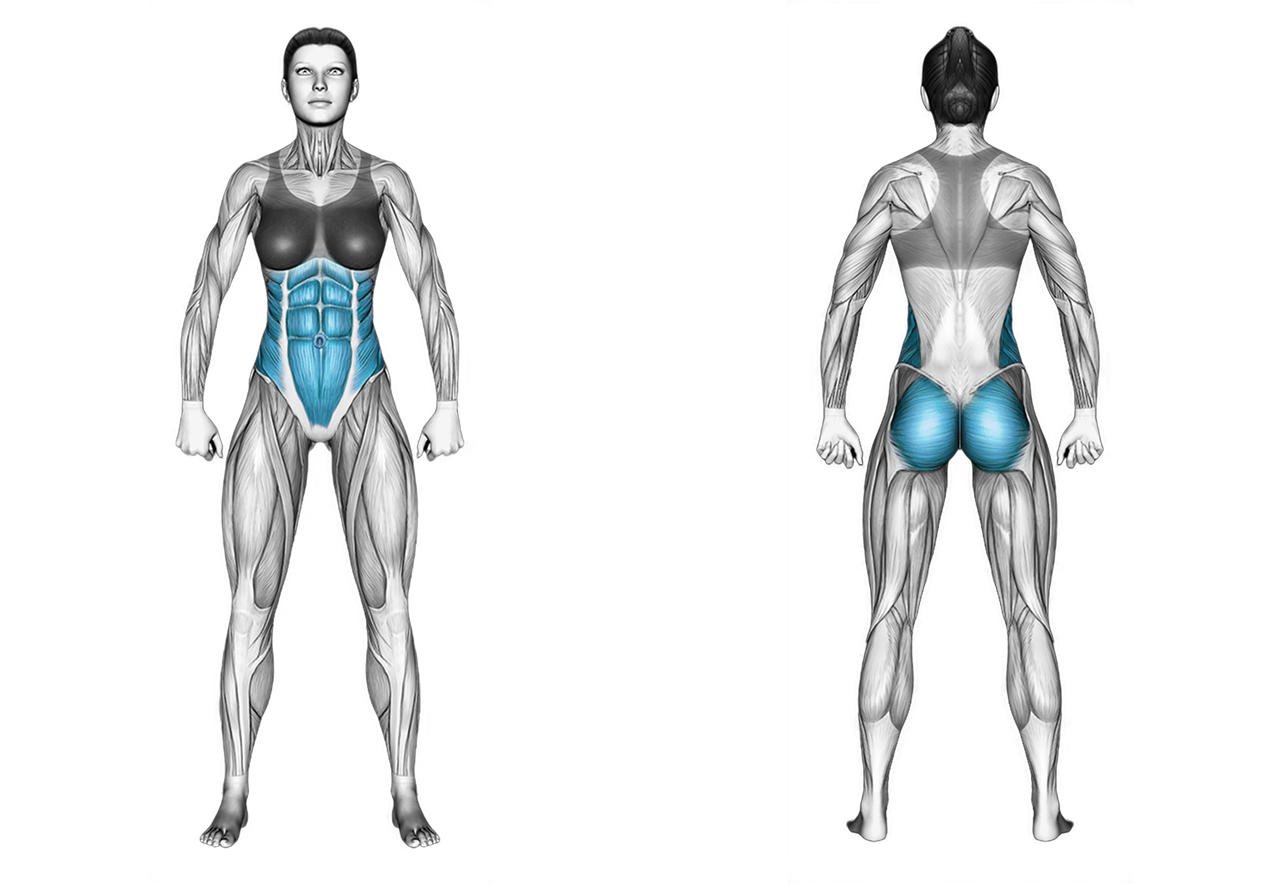
Muscles worked
Your coach guides every set
Turn on the coach in Gloox: it asks how you feel, picks the weight from your history and cues technique and rest. Rate each set and the next one is tuned to you.

On a computer? Point your phone's camera here to get the app.
Questions
Is the front plank with leg lift safe for the lower back?
It is safe when maintaining a neutral spine throughout, but if you feel lower back discomfort or pain, stop immediately and consult a healthcare professional.
Can this exercise help build glute muscle?
It effectively activates and strengthens the glutes as stabilizers, though heavier loaded movements are necessary for significant muscle hypertrophy.