Shoulders · Dumbbells
Dumbbell Seated Shoulder Press
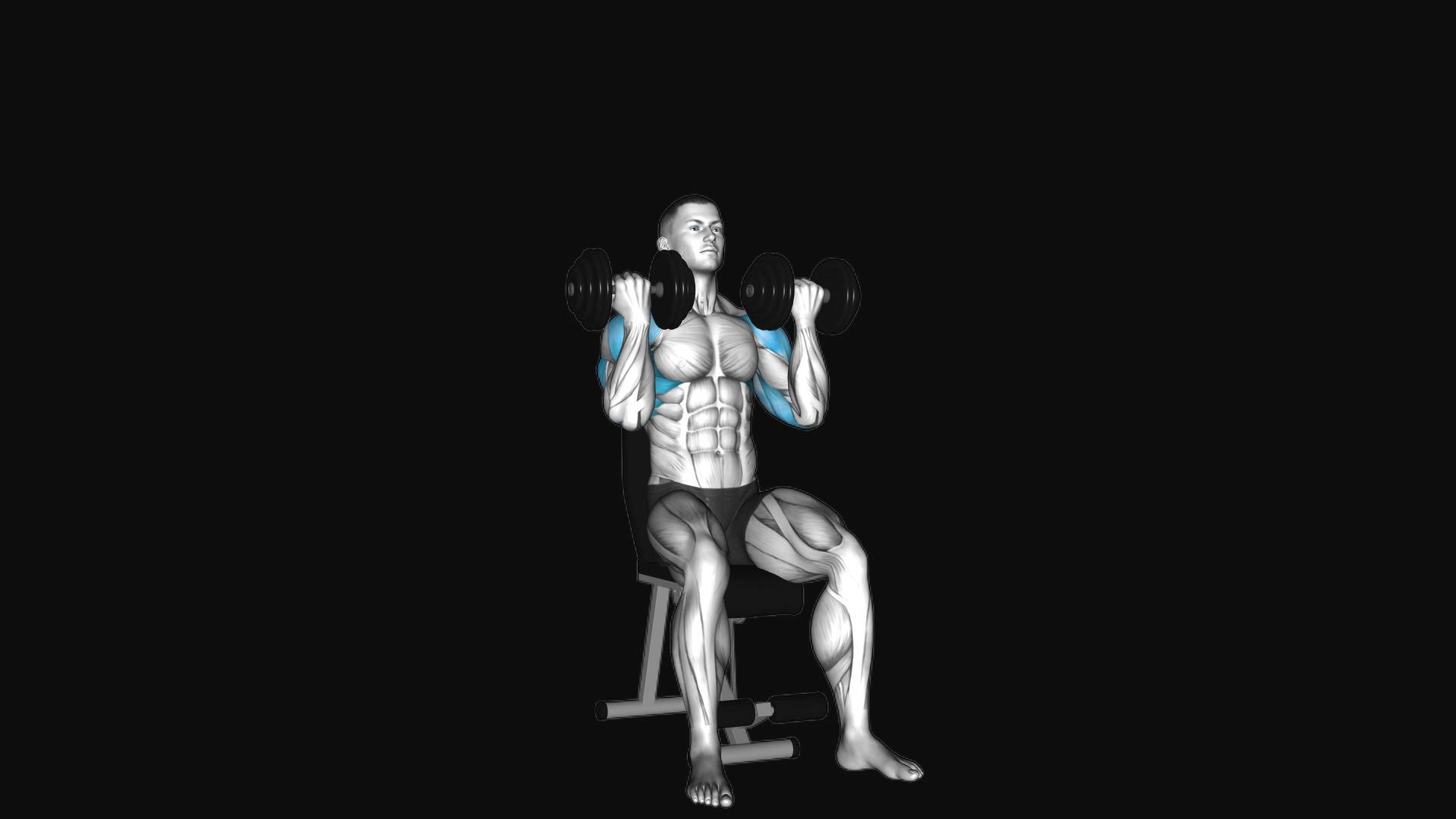
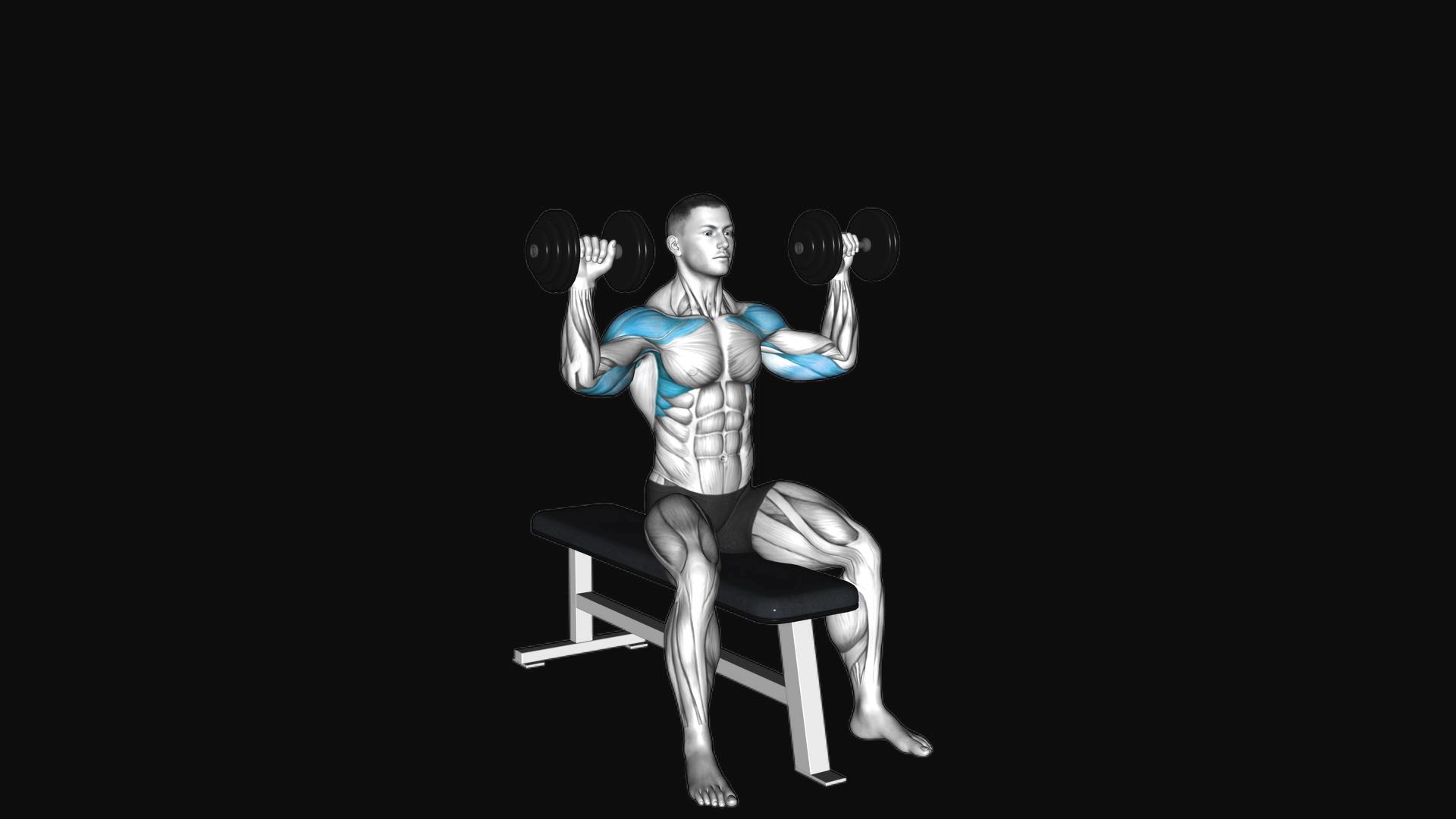
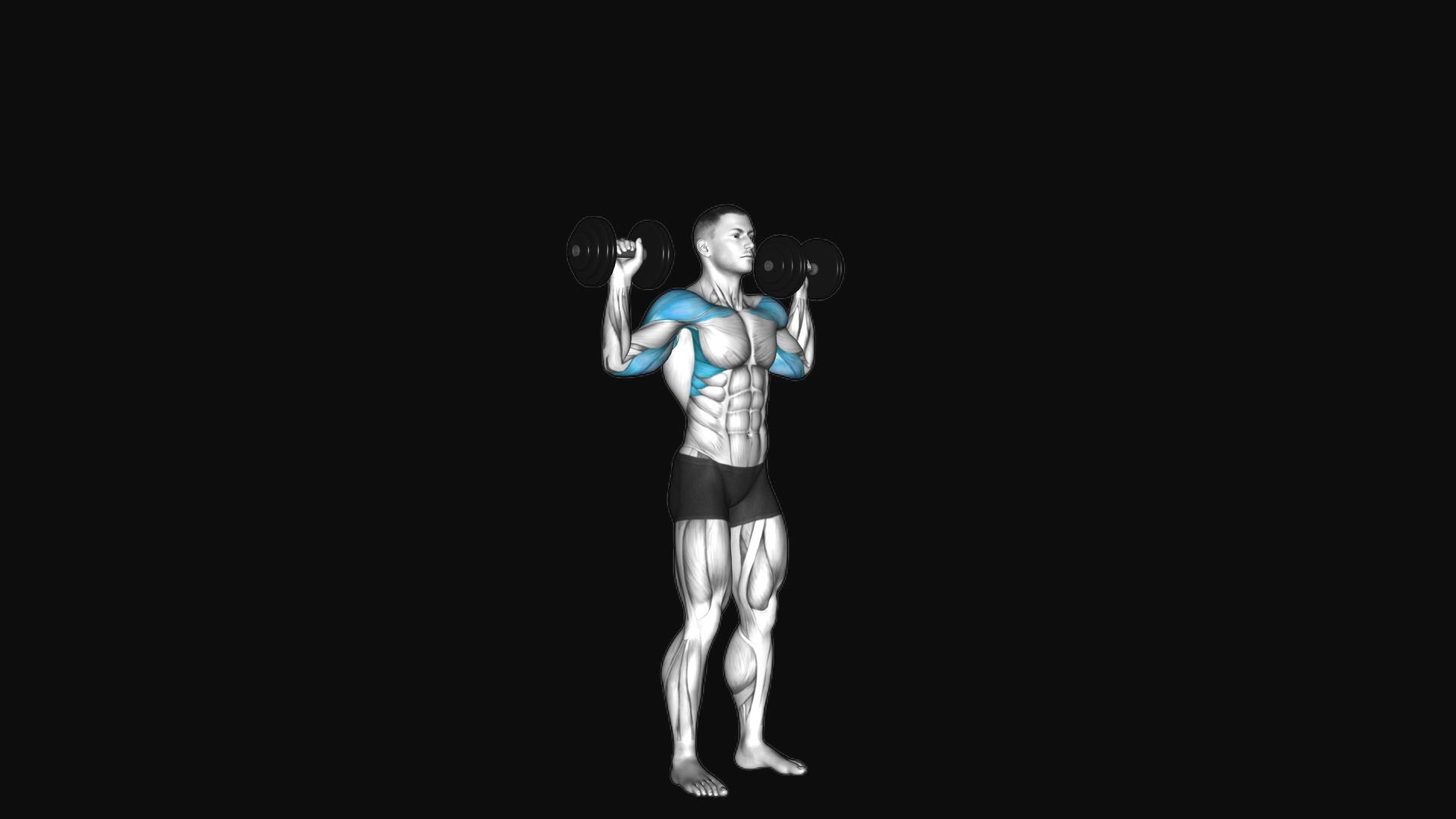
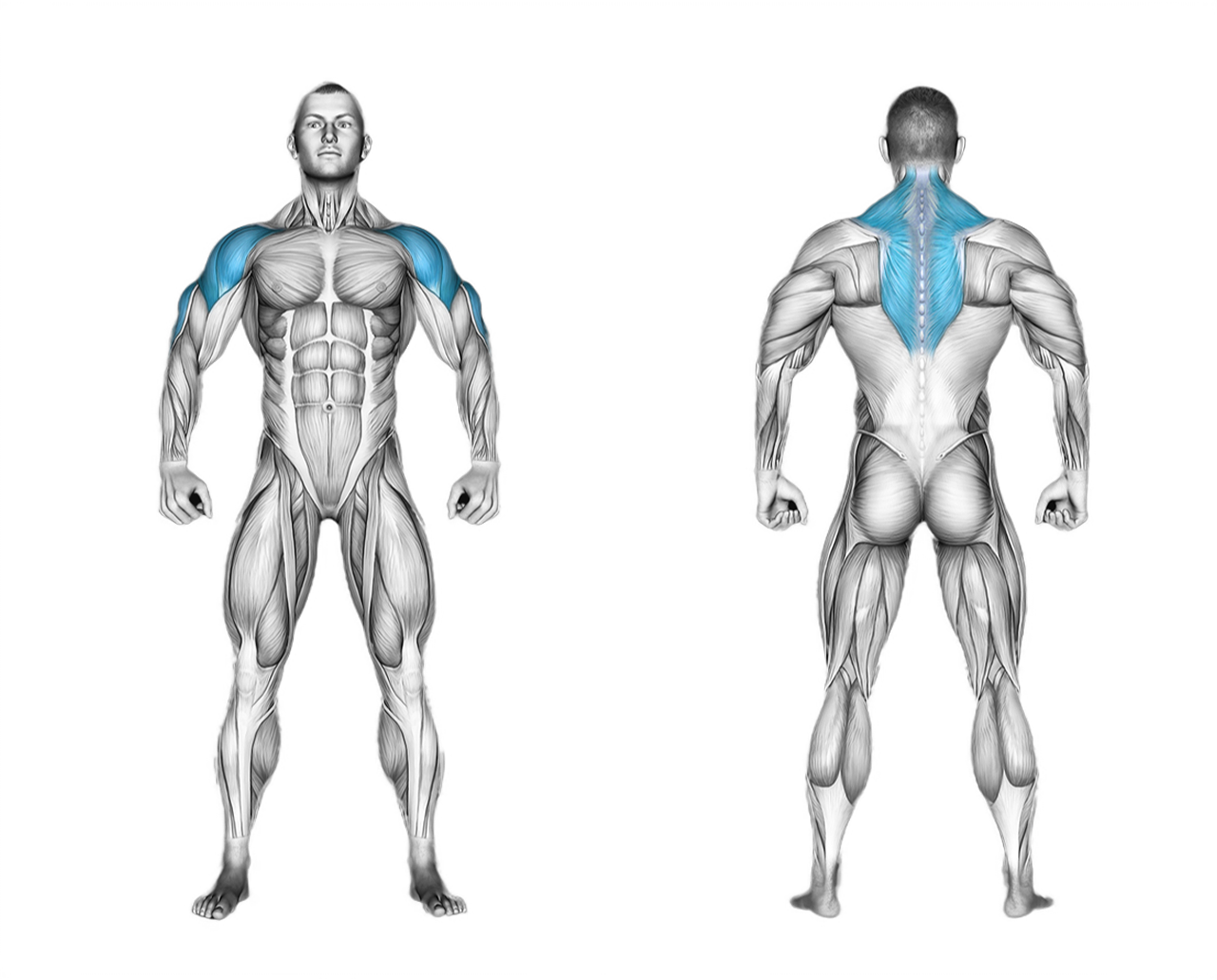
The dumbbell seated shoulder press is a foundational compound strength movement that develops the anterior and lateral deltoids along with the triceps. It suits lifters of all experience levels and typically serves as a primary lift in shoulder or push-day workouts.
How to do it
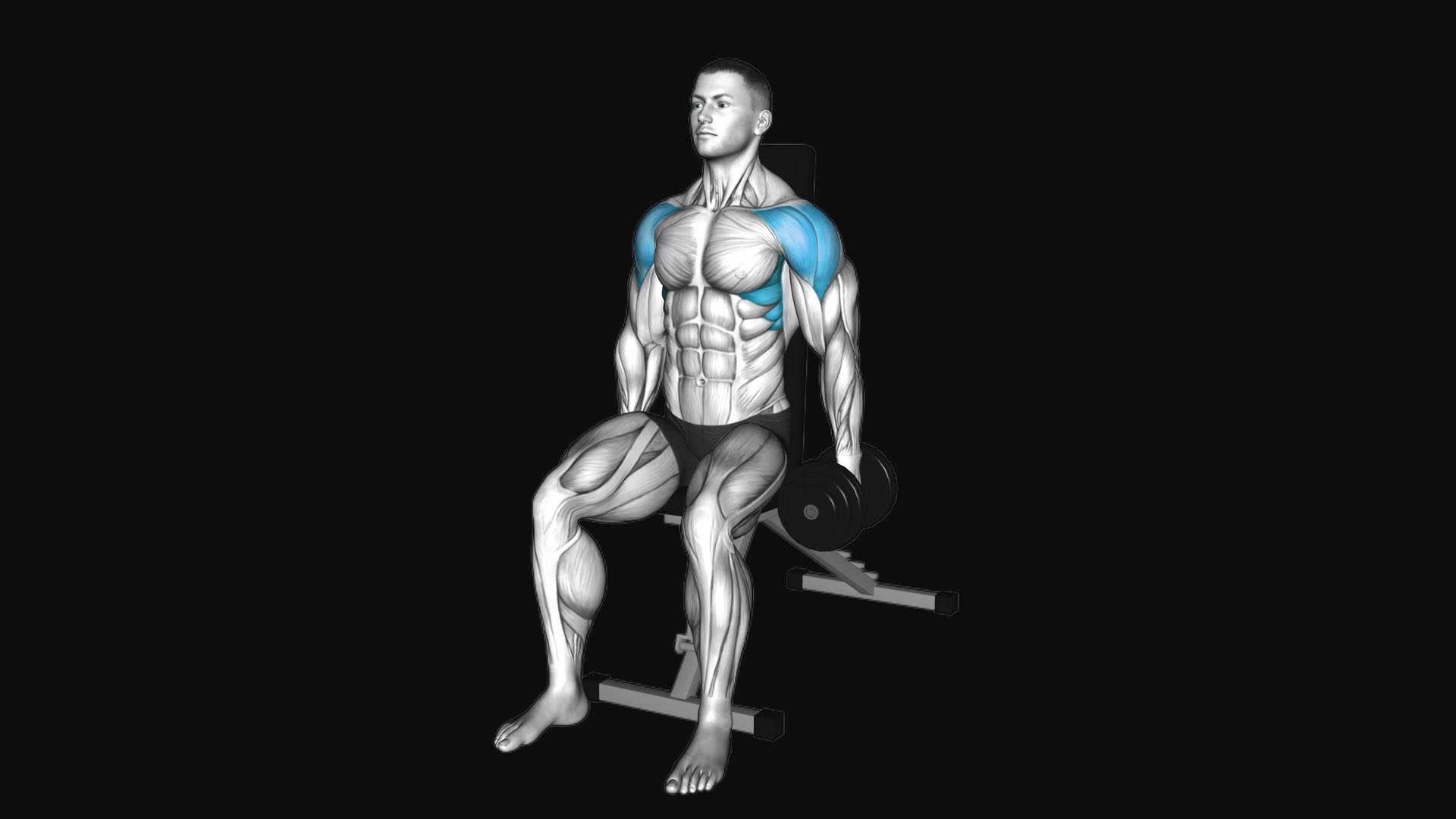
- Sit on a bench with back support, holding a dumbbell in each hand at shoulder height.
- Your palms should face forward and your elbows out to the sides.
- Plant your feet firmly on the ground and keep your back straight against the bench.
- Inhale and brace your core. Exhale as you press the dumbbells up, extending your arms fully.
- Keep your movements controlled, and ensure the dumbbells are directly above your head at the top of the lift.
- Avoid locking your elbows when your arms are fully extended.
- Slowly lower the dumbbells back to shoulder height.
Common mistakes
- Excessively arching your lower back off the bench shifts tension onto the upper chest and strains the lumbar spine.
- Flaring your elbows completely out to the sides places unnecessary shear stress on the rotator cuff tendons.
- Banging the dumbbells together at the top removes mechanical tension from the deltoids and compromises stability.
- Stopping the descent too early above shoulder level cuts the active range of motion and limits muscle hypertrophy.
Tips
- Set the bench angle to a steep incline around 75 to 80 degrees instead of completely vertical to accommodate natural shoulder joint mechanics.
- Keep your elbows tucked slightly forward in the scapular plane, roughly 30 to 45 degrees relative to your torso.
- Maintain a soft bend in your elbows at the top of the movement to sustain continuous tension on the deltoids without joint lockout.
Sets and reps
For muscle hypertrophy, perform 3 to 4 sets of 8 to 12 repetitions resting 90 to 120 seconds between sets. For shoulder endurance, aim for 3 sets of 12 to 15 reps with 60 seconds of rest.
Muscles worked
Your coach guides every set
Turn on the coach in Gloox: it asks how you feel, picks the weight from your history and cues technique and rest. Rate each set and the next one is tuned to you.

On a computer? Point your phone's camera here to get the app.
Questions
Is the seated press safer for the lower back than a standing press?
Yes, seated support against the bench minimizes pelvic tilting and significantly reduces shear stress on the lumbar spine. If back pain occurs, discontinue the lift and consult a medical specialist.
Which part of the shoulder does this exercise target most?
The exercise primarily overloads the anterior (front) deltoid while heavily involving the lateral (side) deltoid and triceps for stability and lockout.