
Shoulders · Dumbbells
Dumbbell Front Raise
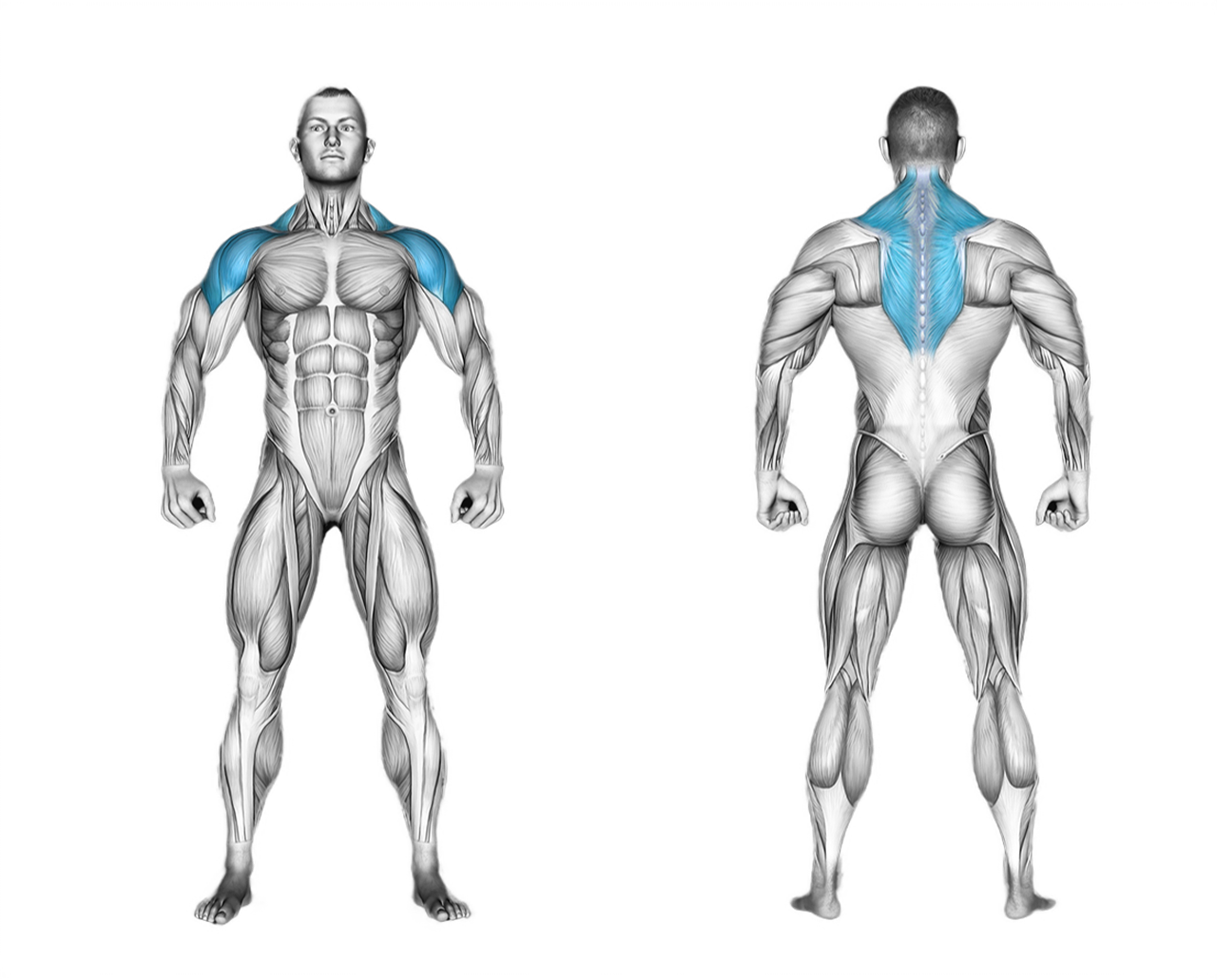
The dumbbell front raise is an isolation exercise that targets the anterior head of the deltoids. It suits lifters of all experience levels and fits best toward the middle or end of a shoulder or push-focused workout.
How to do it
- Stand with your feet shoulder-width apart, holding a dumbbell in each hand in front of your thighs, palms facing your body.
- Keep your back straight and your core engaged.
- Inhale and keep your arms straight. Exhale as you lift the dumbbells in front of you, up to shoulder height.
- Keep your movements controlled, focusing on using your shoulder muscles.
- Avoid swinging the weights or using momentum to lift them.
- Slowly lower the dumbbells back to the starting position.
Common mistakes
- Swinging the torso to generate momentum shifts tension away from the front delts and places unnecessary strain on the lower back.
- Lifting the dumbbells significantly above shoulder level engages the upper traps and increases the risk of shoulder impingement.
- Completely locking out the elbows places excessive joint stress on the elbows rather than keeping tension on the shoulders.
Tips
- Maintain a slight, fixed bend in your elbows throughout the entire range of motion.
- Pause for a brief second at the top of each repetition to maximize peak contraction of the delts.
- Use a neutral grip with your palms facing inward if a pronated grip causes front shoulder discomfort.
Sets and reps
Aim for 3 to 4 sets of 10 to 15 reps with 60 to 90 seconds of rest between sets to focus on muscle hypertrophy. Because this is an isolation movement, prioritize a strict, controlled tempo over lifting heavy weights.
Muscles worked
Your coach guides every set
Turn on the coach in Gloox: it asks how you feel, picks the weight from your history and cues technique and rest. Rate each set and the next one is tuned to you.

On a computer? Point your phone's camera here to get the app.
Questions
Is the dumbbell front raise necessary if my routine already includes bench presses and overhead presses?
Pressing exercises heavily involve the anterior deltoids, but front raises provide direct isolation to address specific strength or aesthetic weak points.
What should you do if you experience pain or clicking in the shoulder during the lift?
Stop the exercise immediately, reduce the load, or switch to a neutral grip; if the discomfort persists, consult a qualified healthcare professional.
Similar exercises
Dumbbell Arnold PressDumbbells
Dumbbell Shoulder PressDumbbells
Dumbbell Seated Shoulder PressDumbbells
Dumbbell Standing Overhead PressDumbbells
Dumbbell Lateral RaiseDumbbells
Dumbbell Seated Lateral RaiseDumbbells
Dumbbell Standing Lateral RaiseDumbbells
Dumbbell Standing Slight Bend Arm Lateral RaiseDumbbells