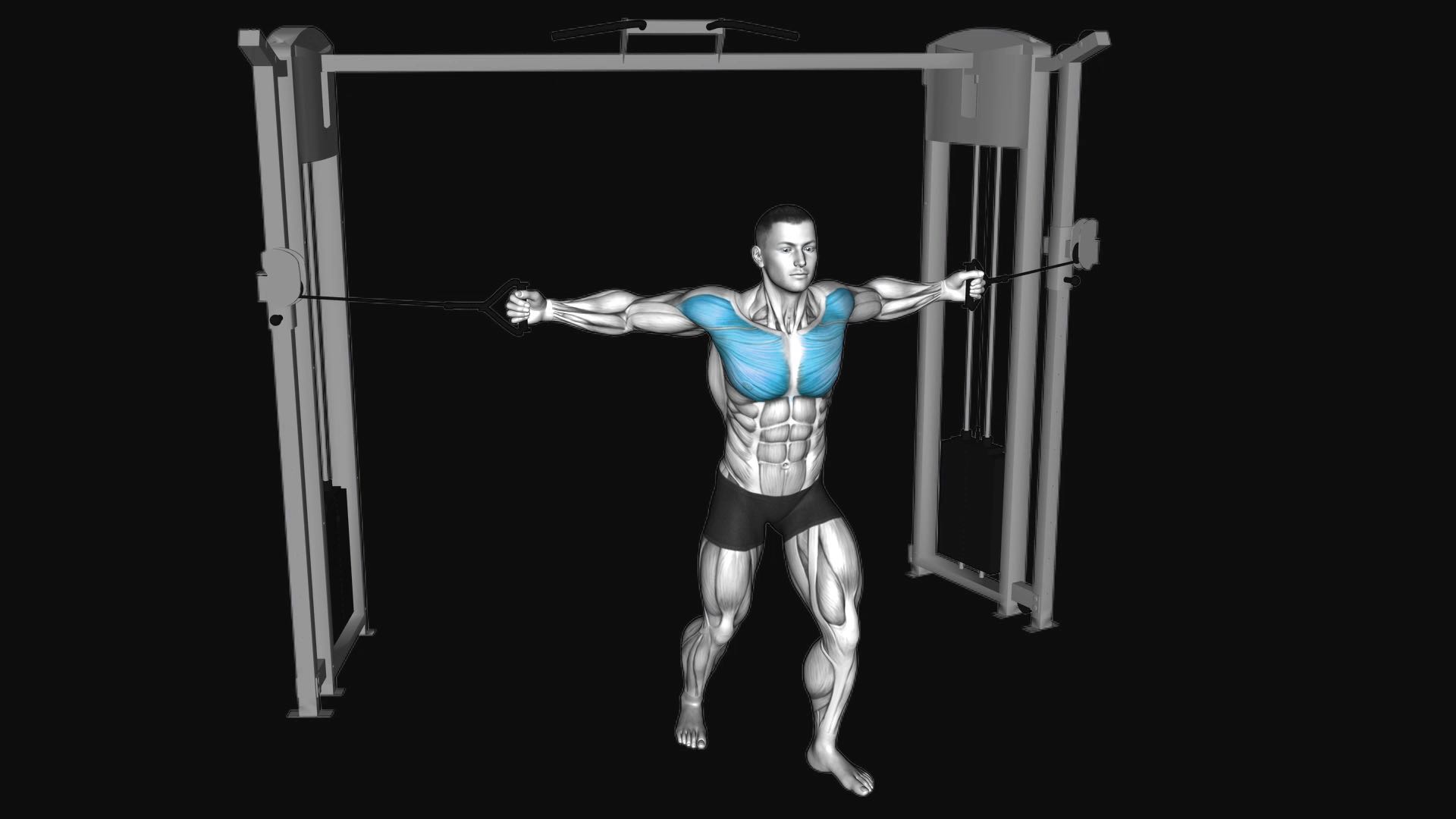
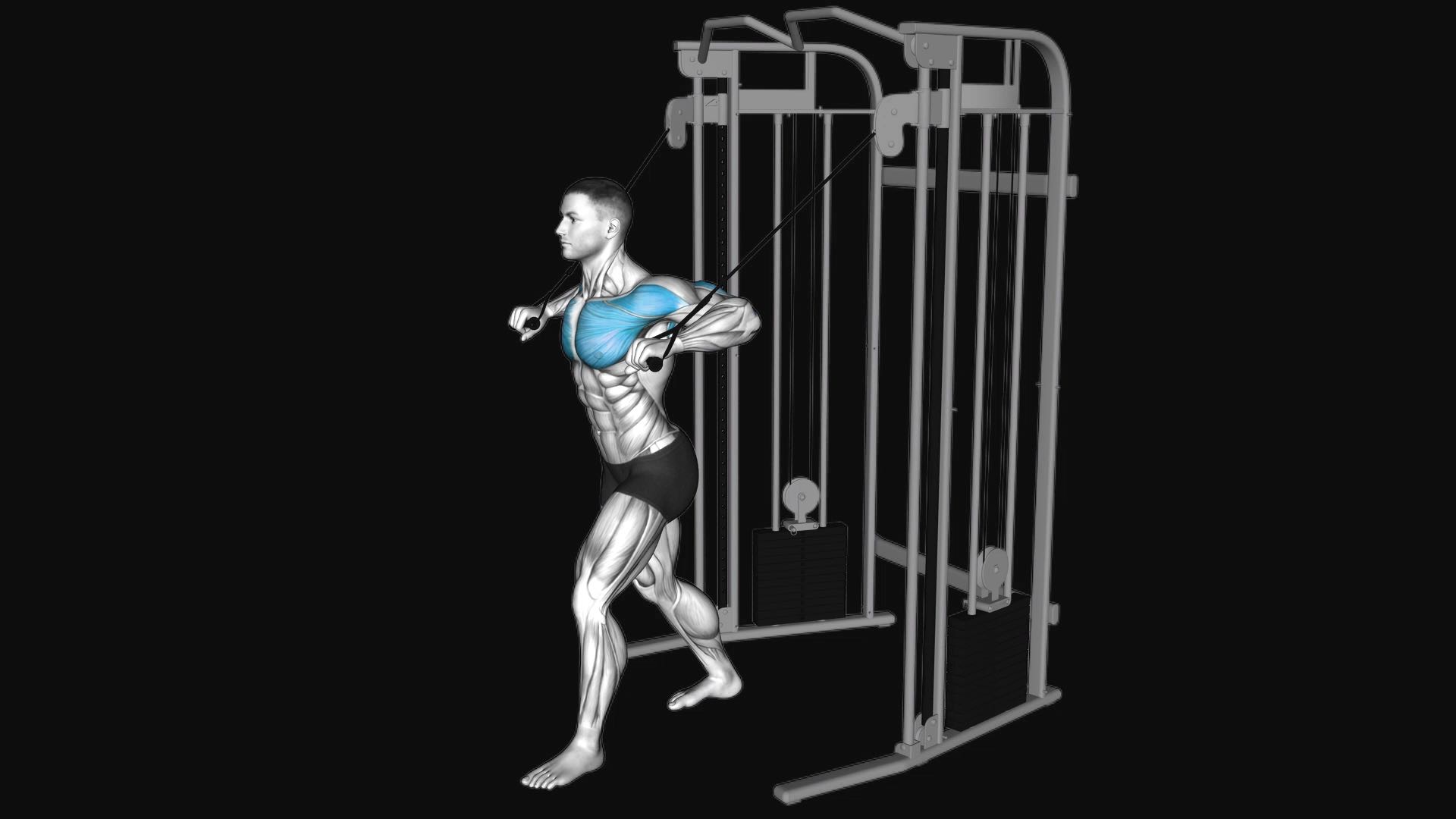
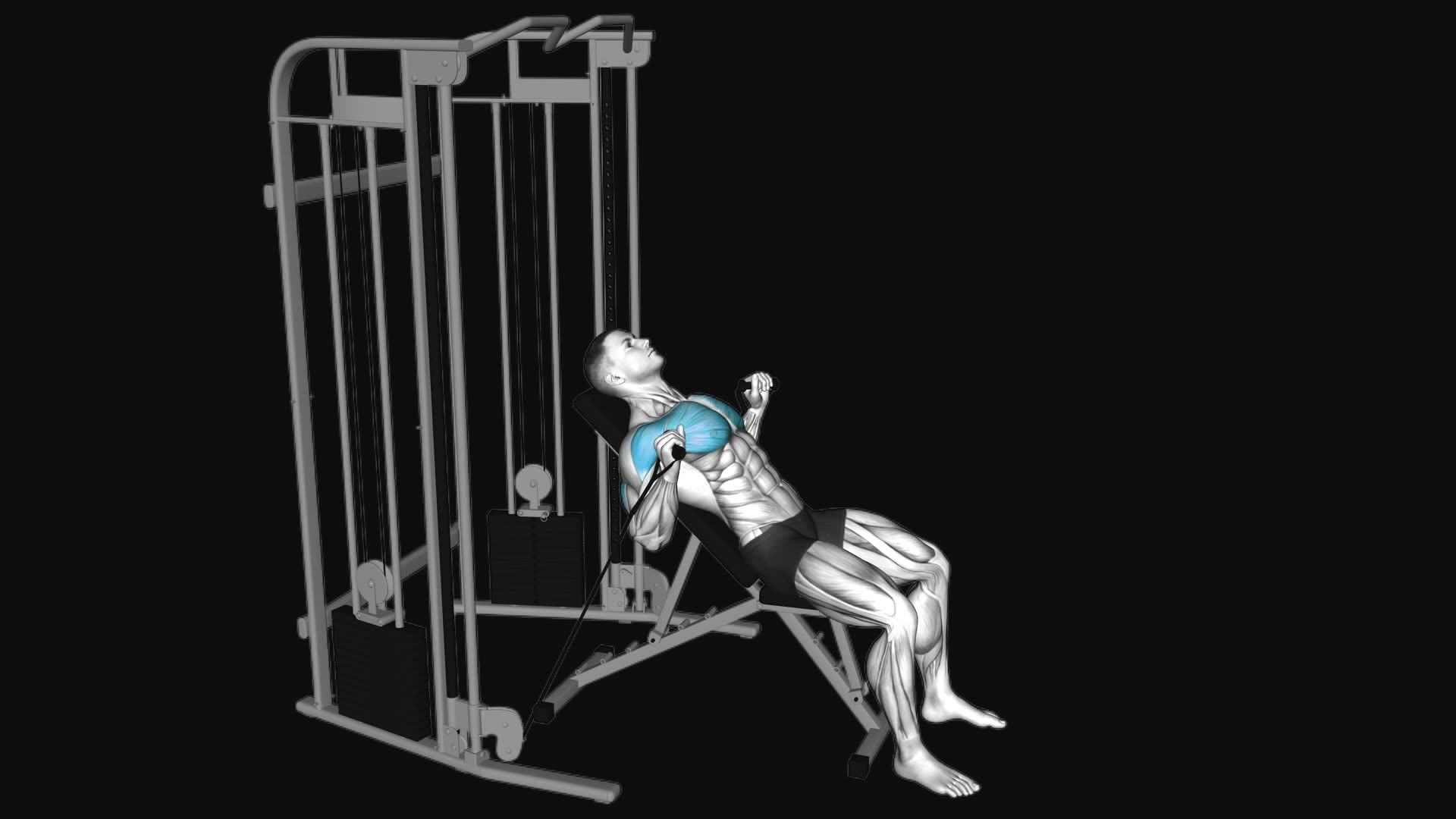
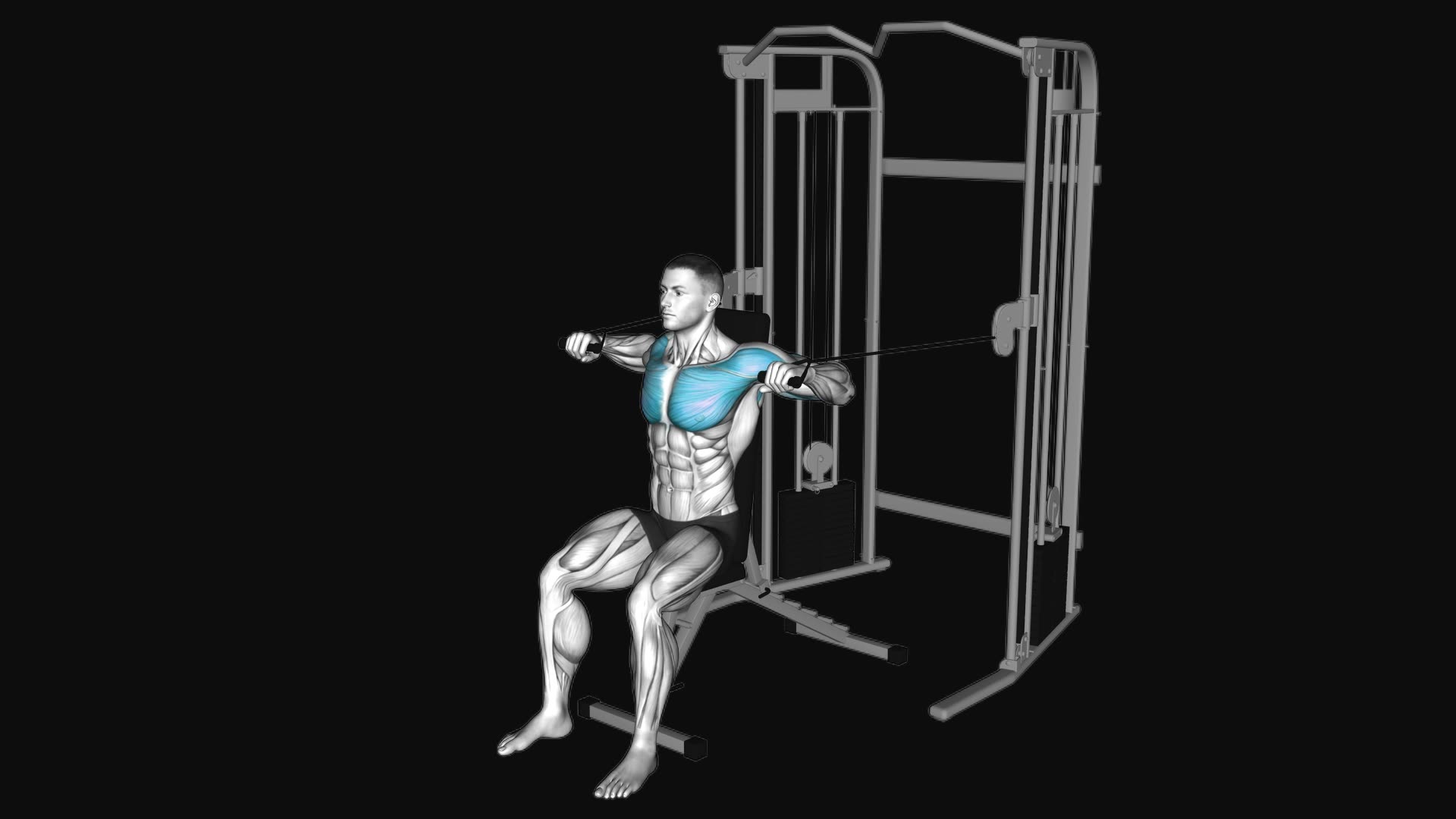
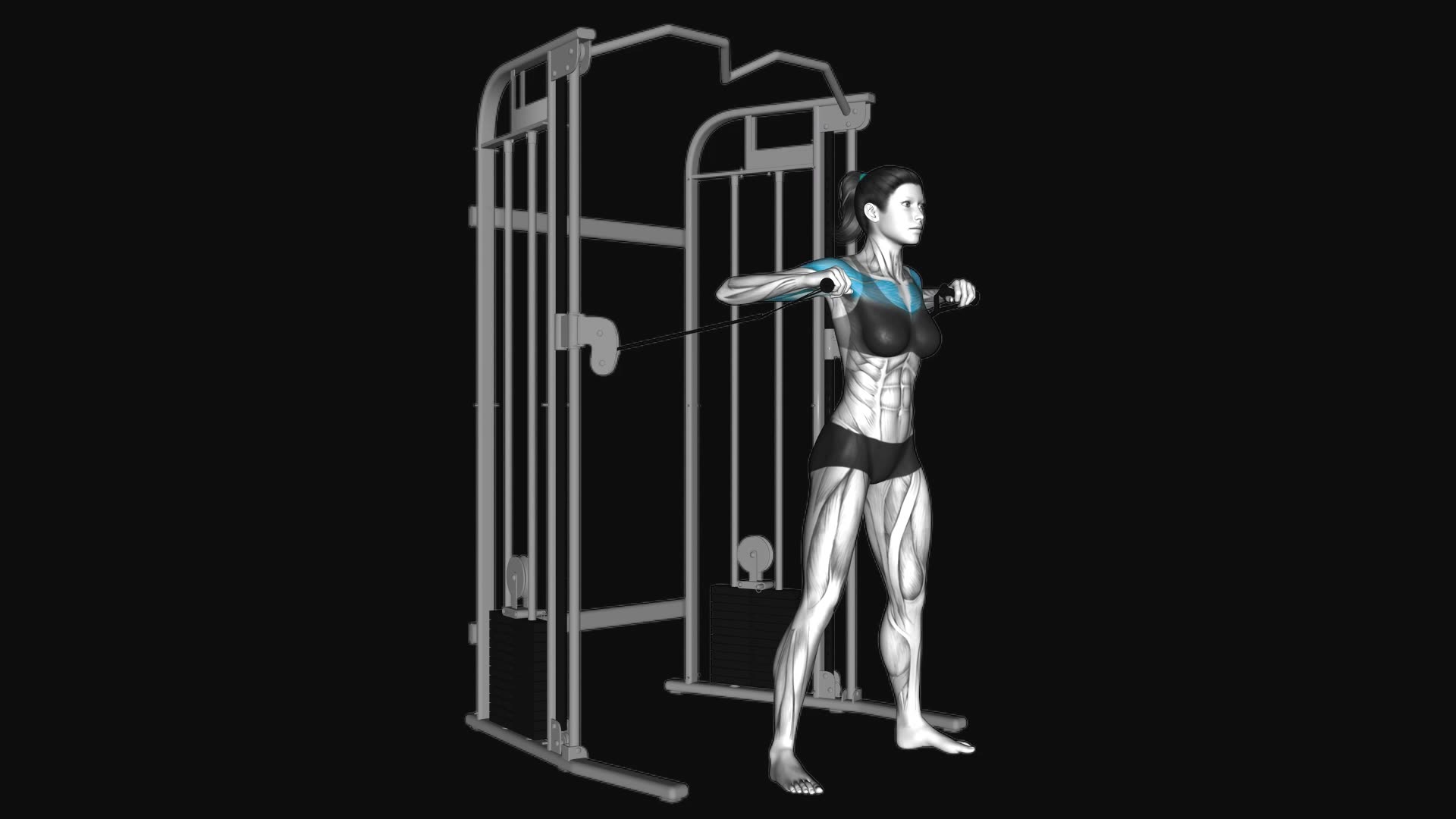
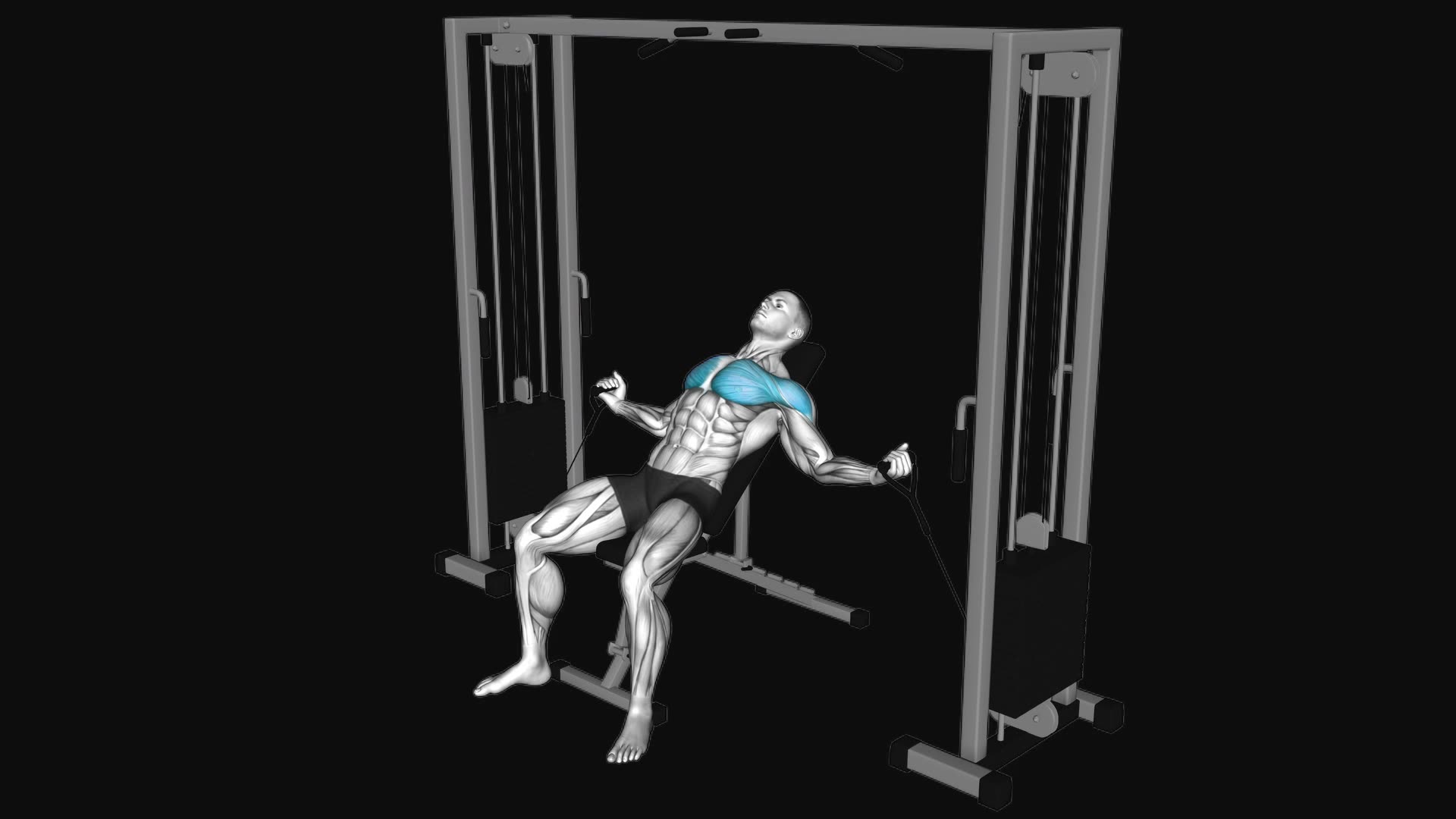
Chest · Cable machine
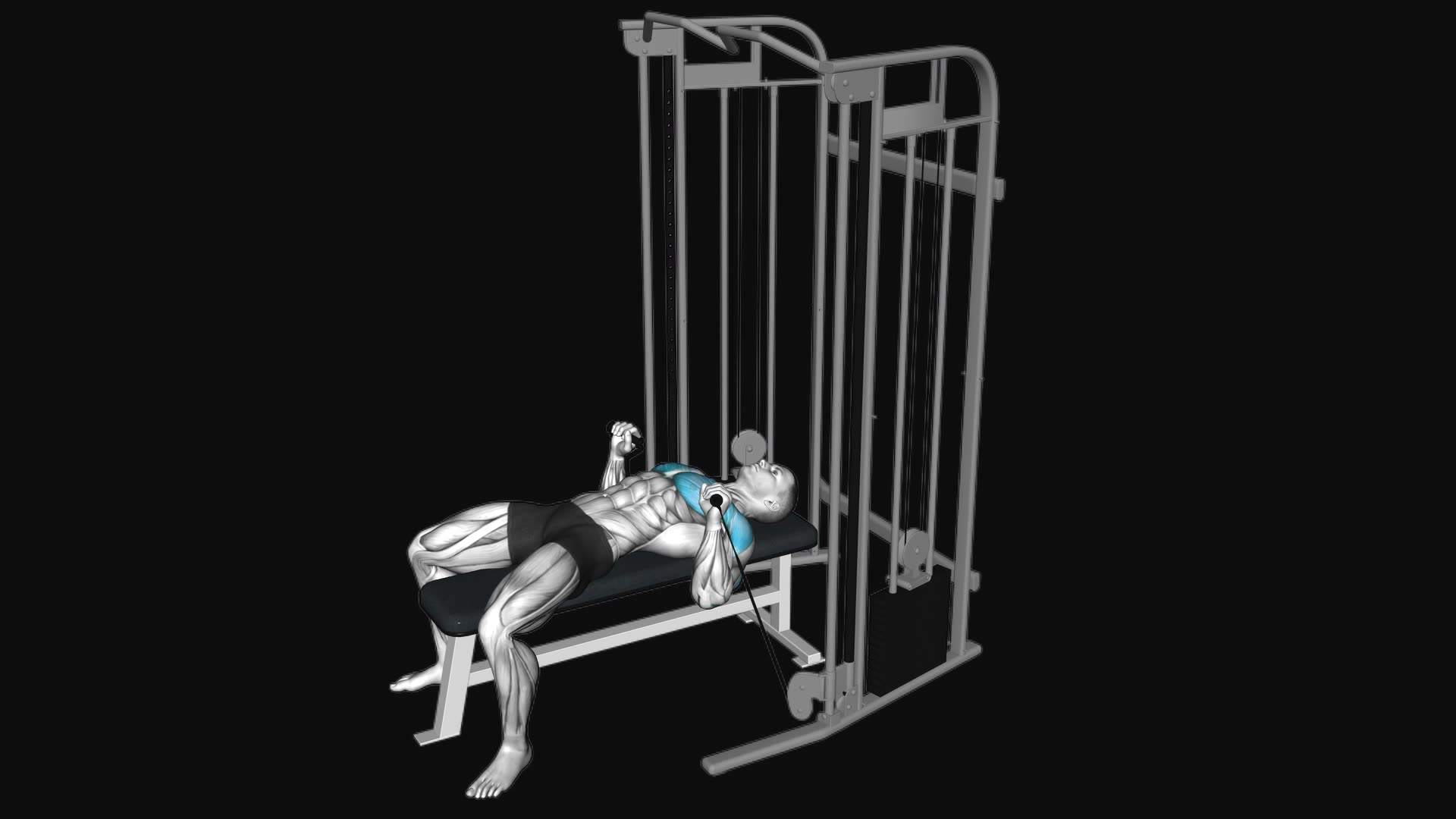
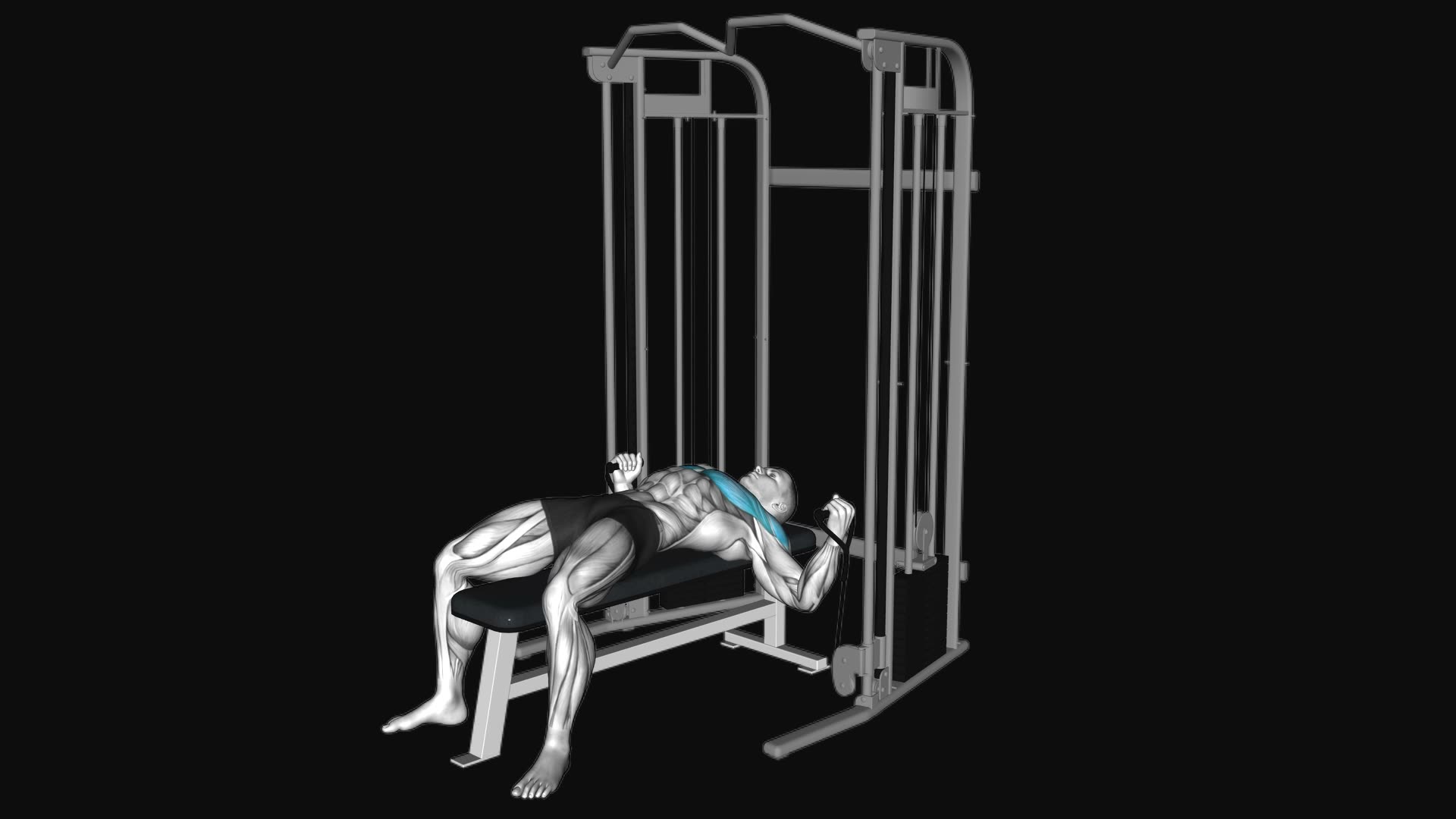
Cable Lying Fly
The cable lying fly is an isolation exercise that targets the pectoral muscles using continuous resistance provided by the pulleys. It suits lifters of all experience levels and fits best toward the middle or end of a chest workout to maximize hypertrophy without fatiguing the triceps.
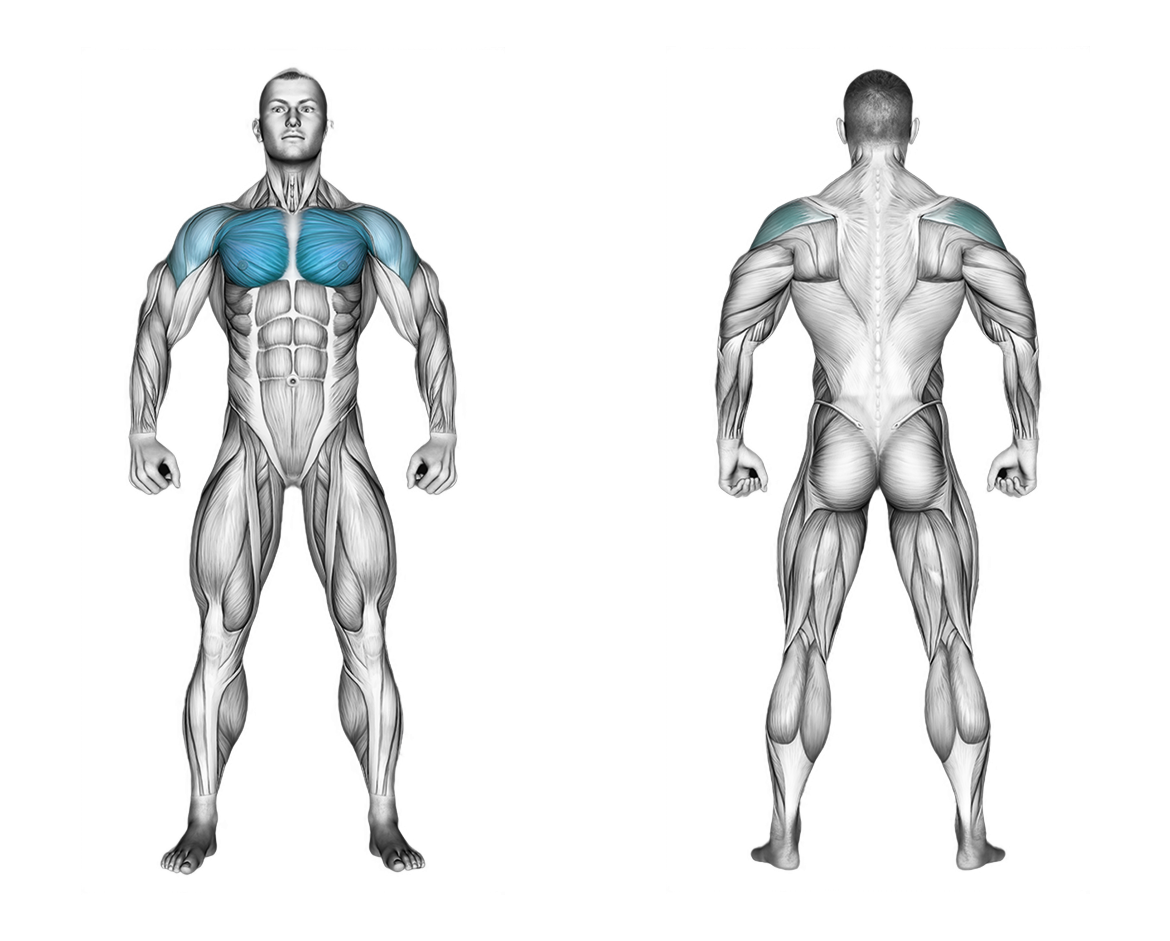
- Muscles
- Chest
- Equipment
- Cable machine
- Type
- Strength
- Animation
- Men and women
How to do it
- Lie on a flat bench positioned between two low cable pulleys.
- Grab the cable handles and extend your arms above your chest with a slight bend in your elbows.
- Lower the handles out to your sides in an arc motion until you feel a stretch in your chest.
- Bring the handles back together above your chest.
Common mistakes
- Bending and extending the elbows excessively turns the fly into a press, diminishing chest isolation.
- Lowering the arms too far below the bench level places excessive strain on the anterior shoulder capsules.
- Allowing the shoulders to roll forward off the bench reduces tension on the pecs and increases joint stress.
Tips
- Maintain a fixed, slight bend in your elbows throughout the entire movement to protect the joint.
- Focus on bringing your inner biceps together at the peak of the contraction rather than just touching your hands.
- Control the eccentric phase and pause briefly in the stretched position without letting the weights jerk.
Sets and reps
Perform 3–4 sets of 10–15 reps with 60–90 seconds of rest to target muscular hypertrophy and metabolic stress.
Muscles worked
Your coach guides every set
Turn on the coach in Gloox: it asks how you feel, picks the weight from your history and cues technique and rest. Rate each set and the next one is tuned to you.

On a computer? Point your phone's camera here to get the app.
Questions
Why choose the cable lying fly over a dumbbell fly?
Cables maintain constant tension on the chest muscles through the entire range of motion, unlike dumbbells, which lose resistance at the top.
What should you do if you feel pain in the front of your shoulder?
Stop the exercise, limit the depth of the stretch on subsequent attempts, and consult a specialist if pain persists.