Chest · Cable machine
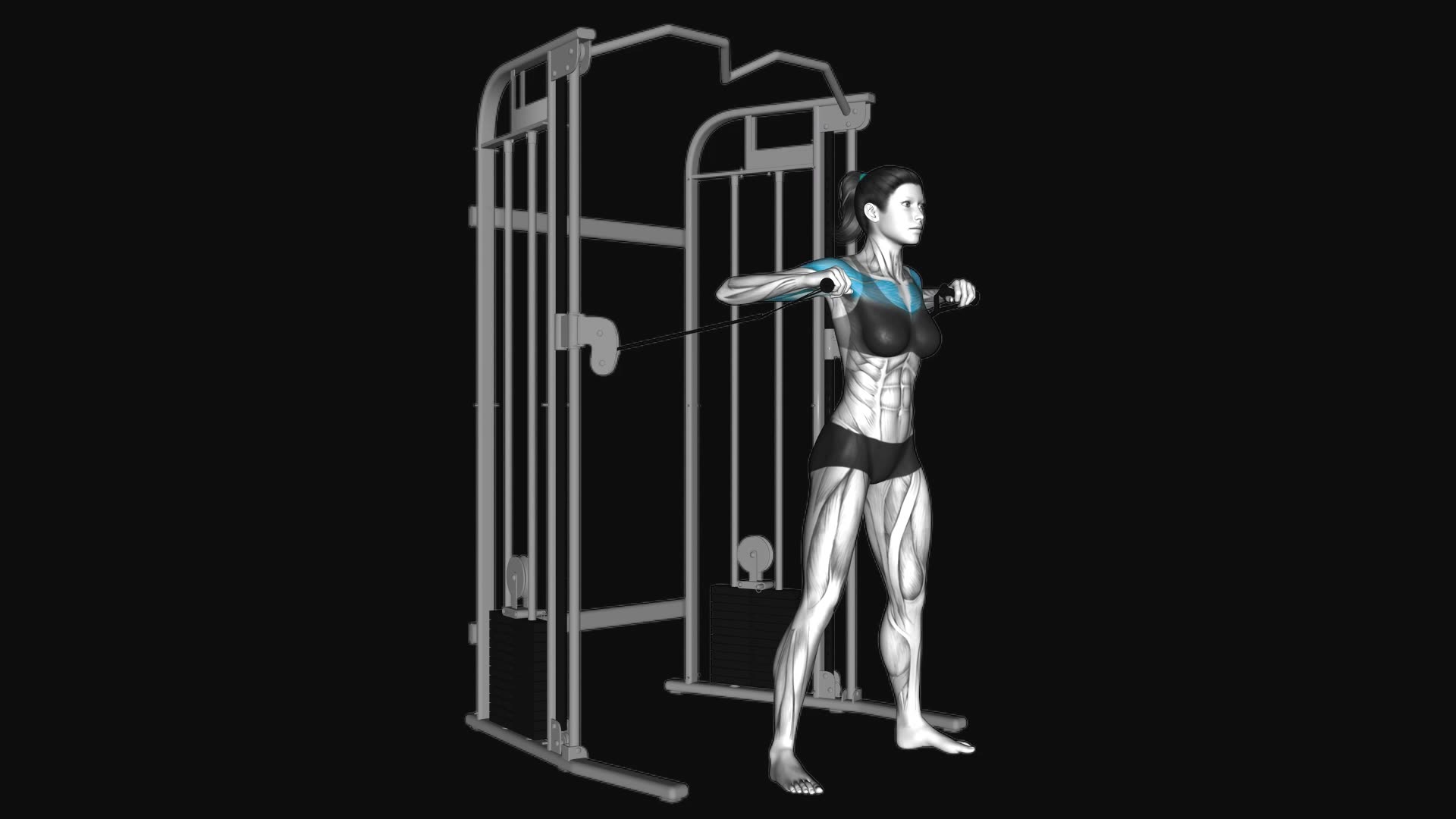
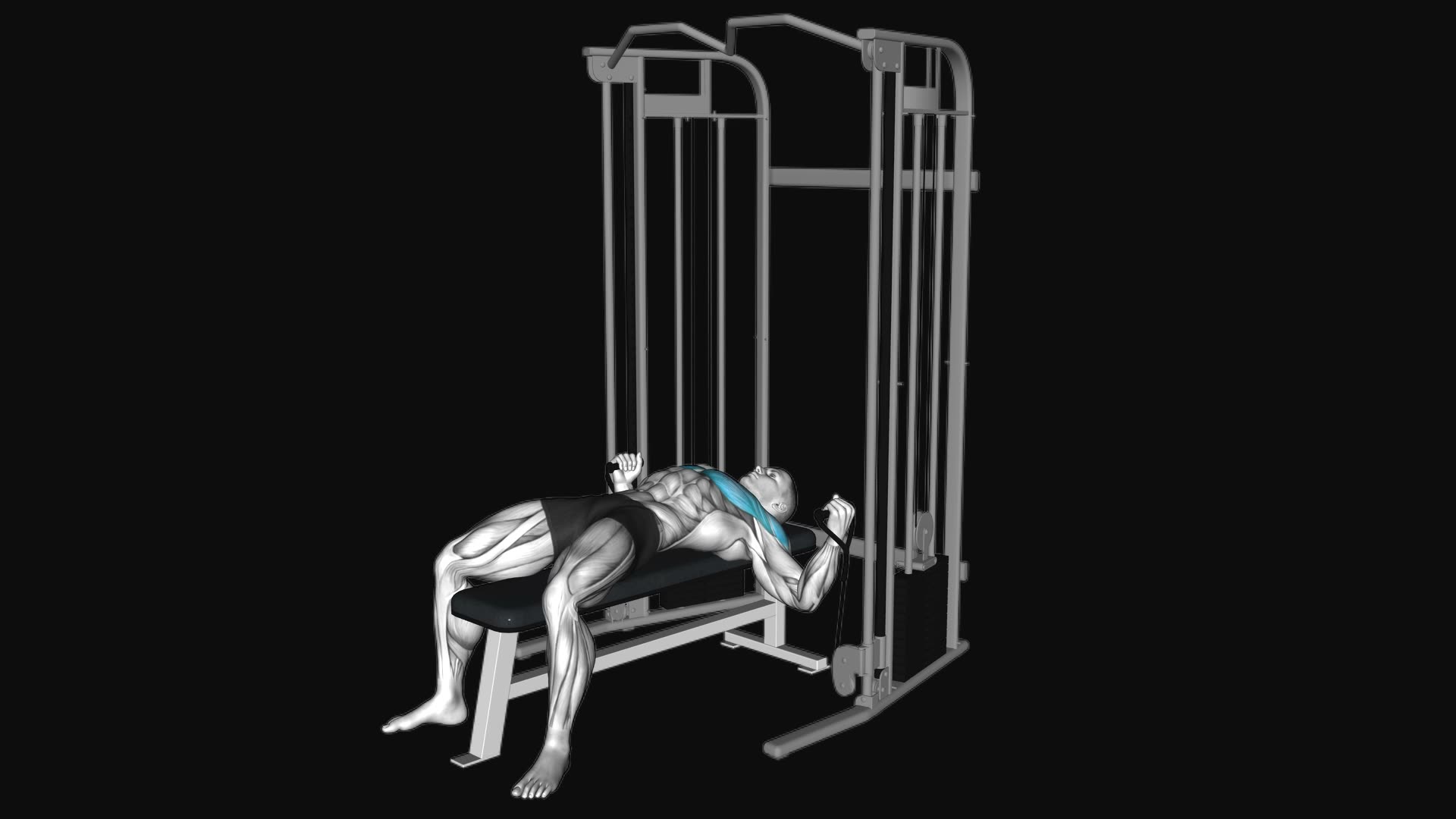
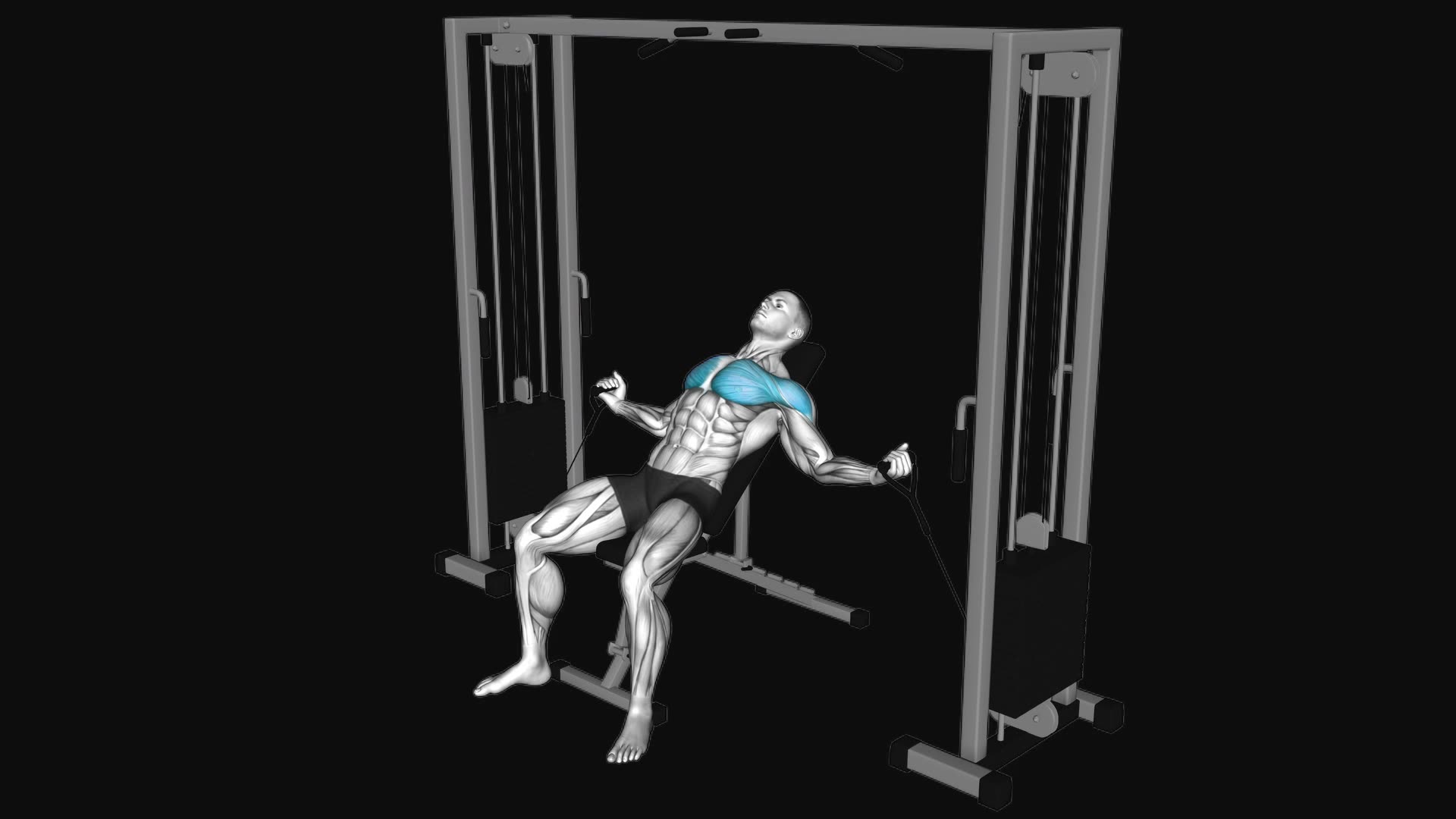
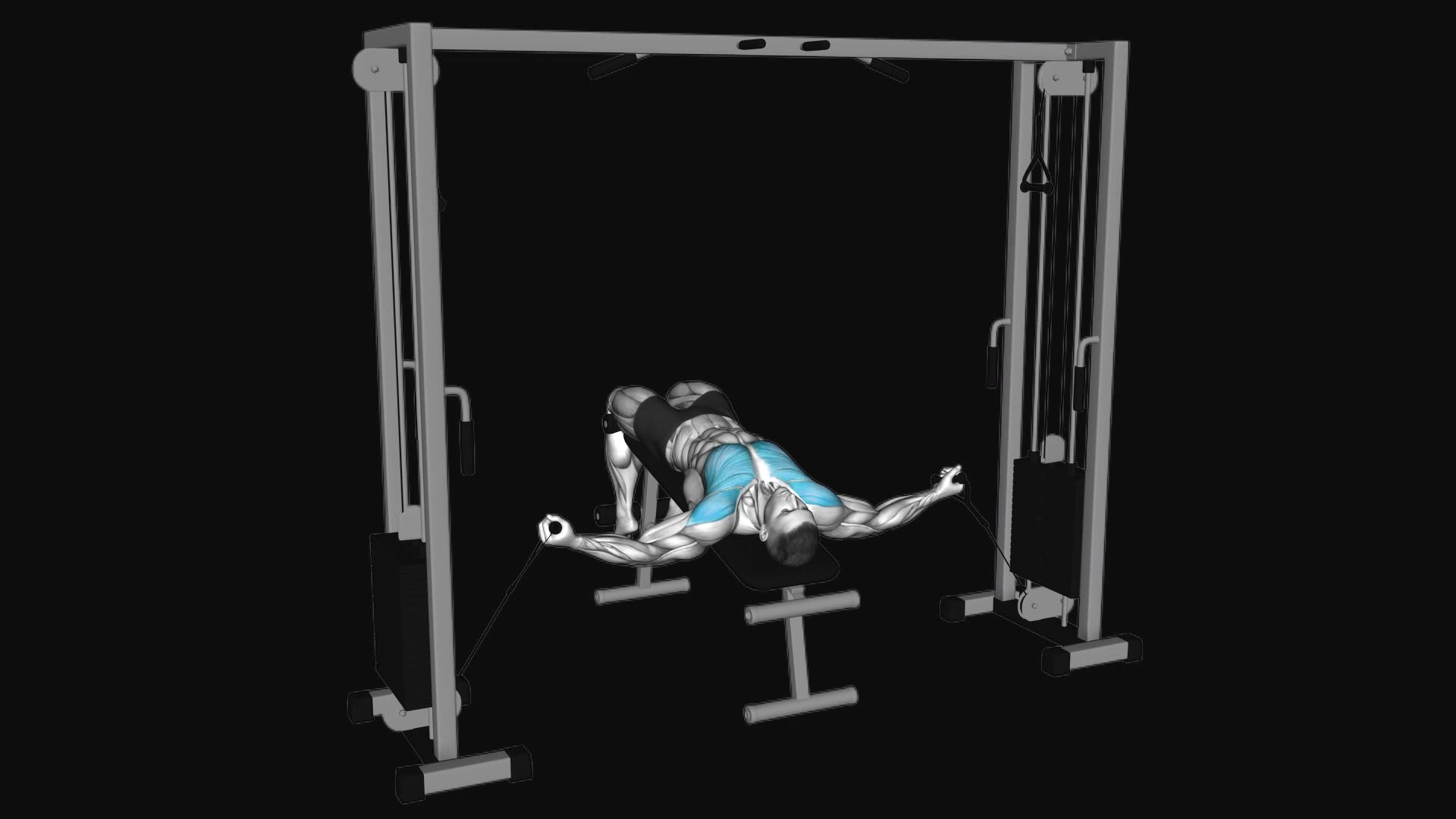
Cable Bench Press
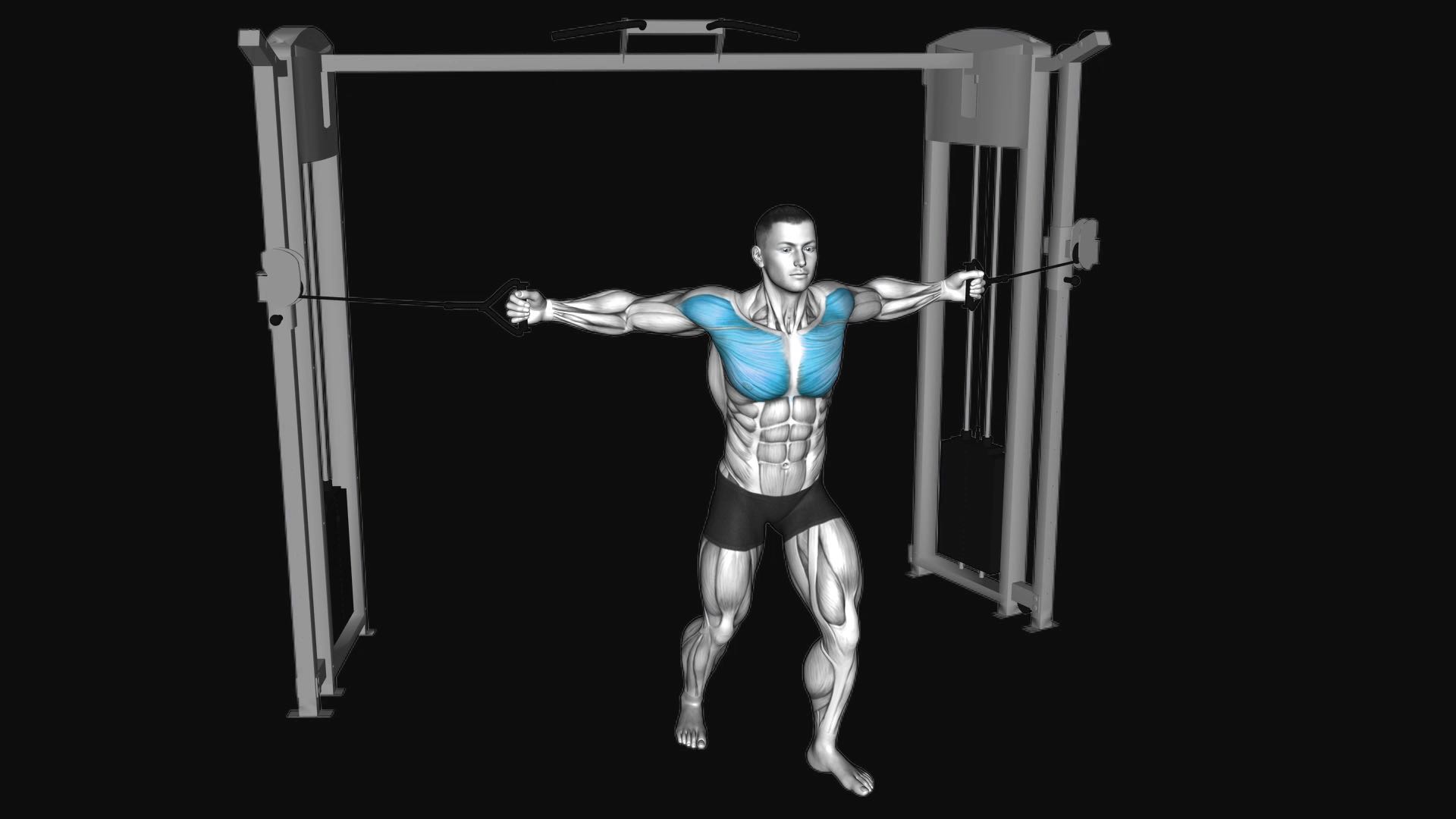
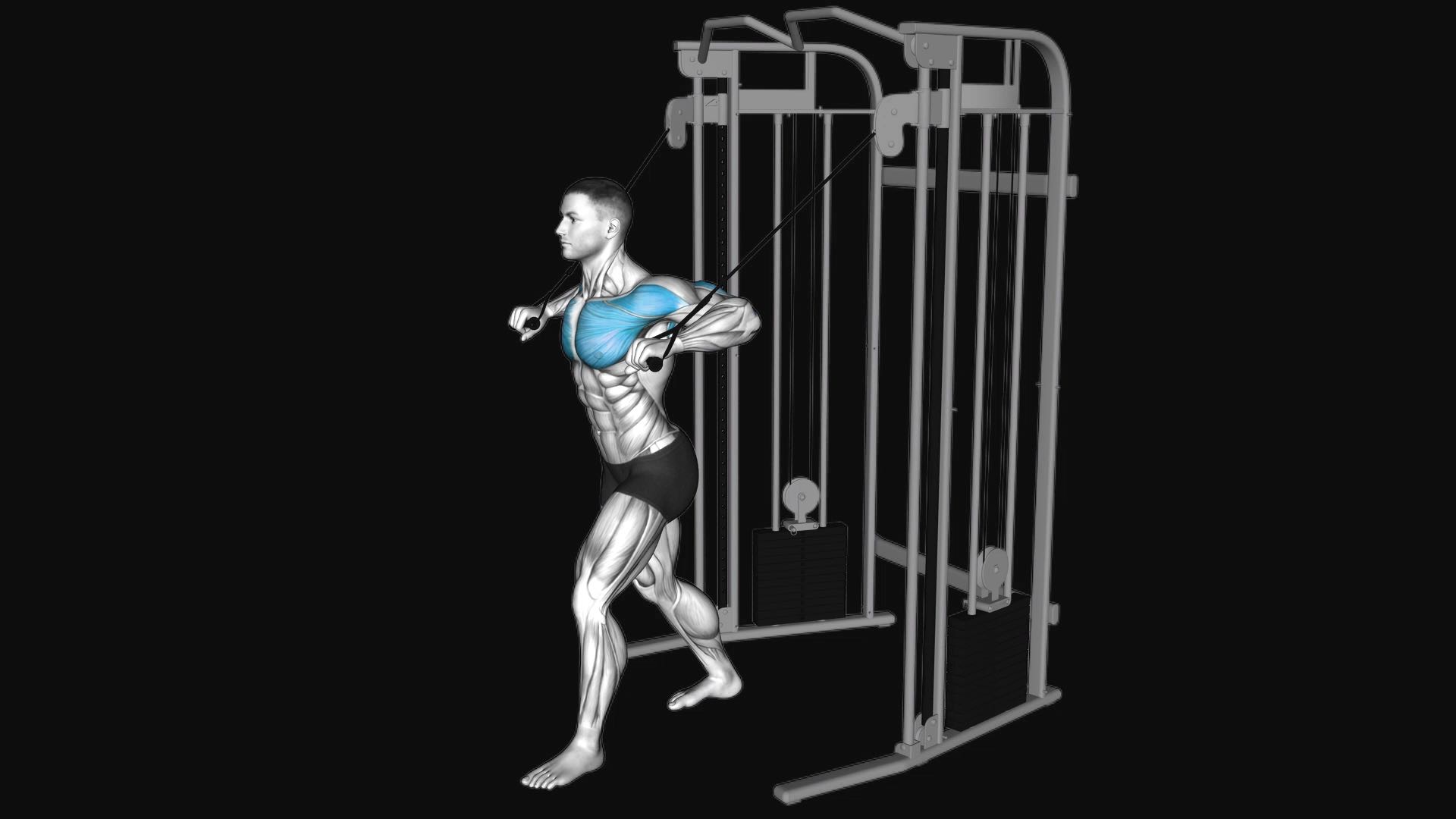
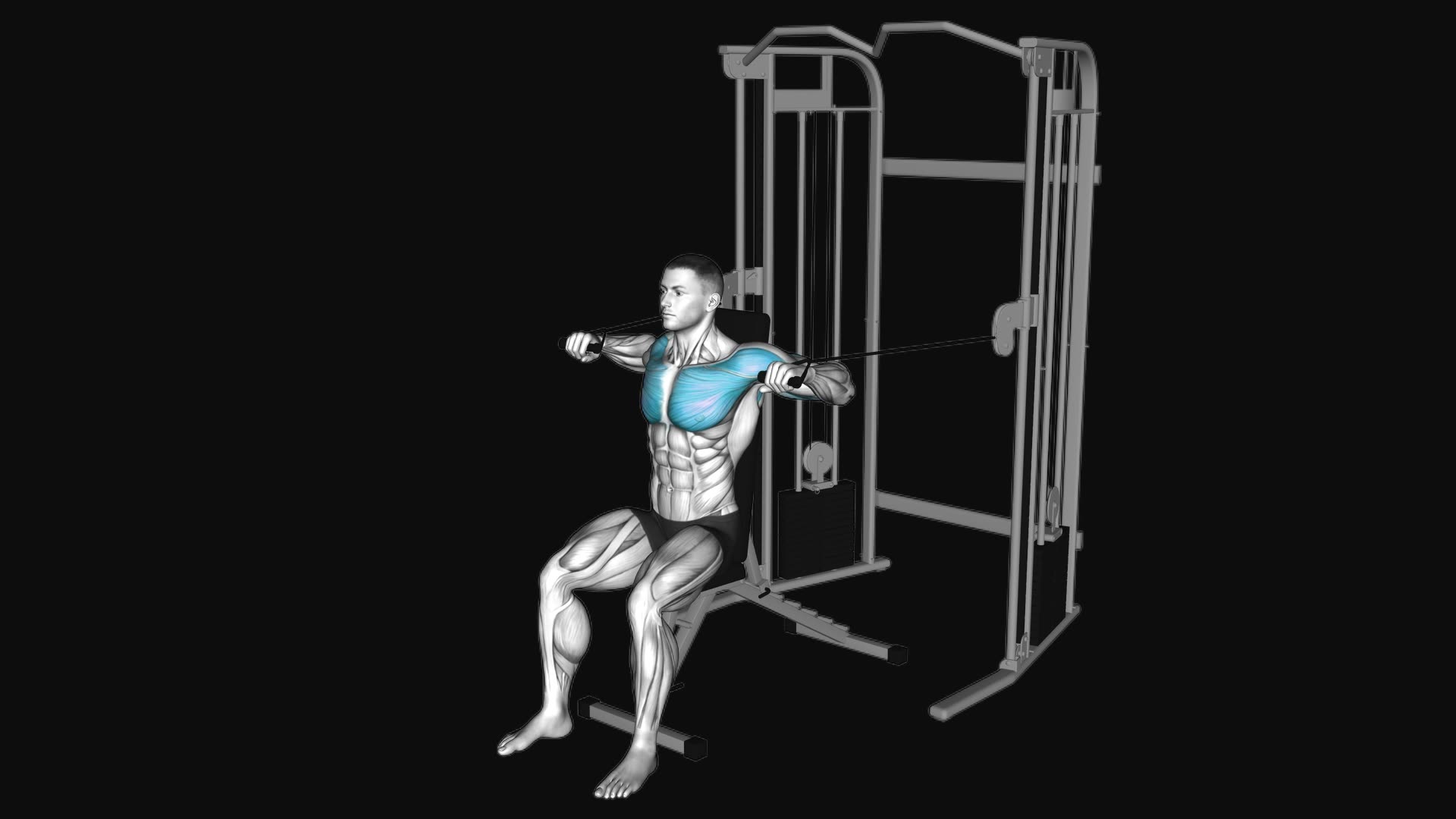
The cable bench press is a chest-focused compound movement that delivers continuous tension throughout the entire range of motion thanks to the line of cable resistance. It suits lifters of all experience levels and works best as a main or accessory pressing movement in an upper-body routine.
- Muscles
- Chest
- Equipment
- Cable machine
- Type
- Strength
- Animation
- Men
How to do it
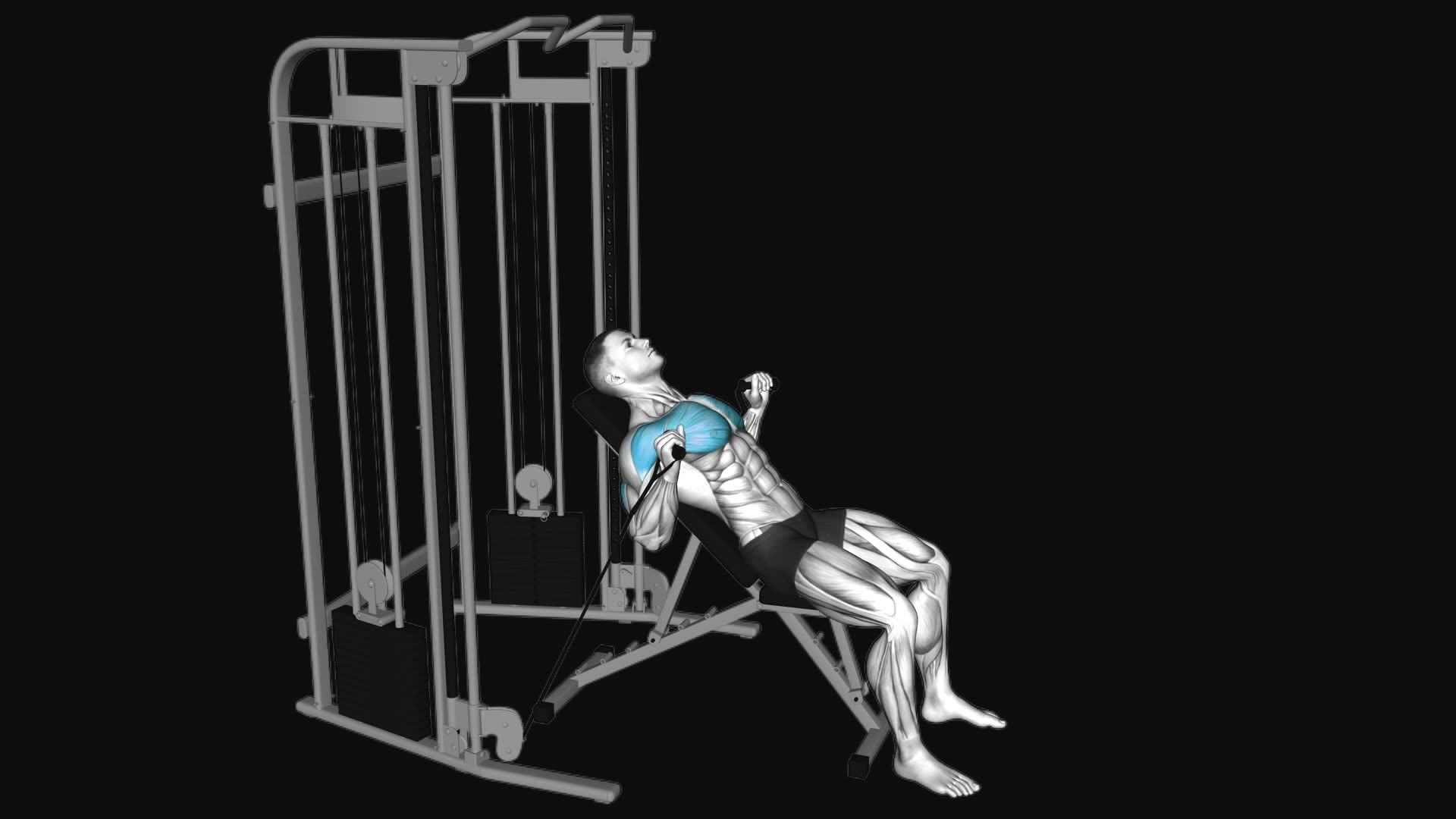
- Set a bench between two cable machines at chest height.
- Lie back on the bench and grab the cable handles.
- Position your hands at chest level with elbows bent.
- Press the handles forward and together until your arms are fully extended.
- Return to the starting position with control.
Common mistakes
- Flaring your elbows out excessively wide, which places unnecessary shear stress on the shoulder joints.
- Allowing the cable weight to pull your hands back abruptly at the bottom of the rep, risking strain to the pectoral tendons.
- Failing to center the bench between the two cable stacks, resulting in uneven loading across each side.
- Losing scapular retraction and letting the shoulders roll forward at full extension, which takes tension off the chest.
Tips
- Keep your shoulder blades pinched and firmly pressed into the bench through every repetition.
- Press your hands slightly inward toward the midline at lockout to maximize contraction of the inner pecs.
- Set the pulleys so the cables align directly with your forearms in the bottom position.
Sets and reps
For muscle growth, aim for 3 to 4 sets of 8 to 12 repetitions with 60 to 90 seconds of rest between sets. For endurance, perform 2 to 3 sets of 15 to 20 reps with roughly 45 to 60 seconds of rest.
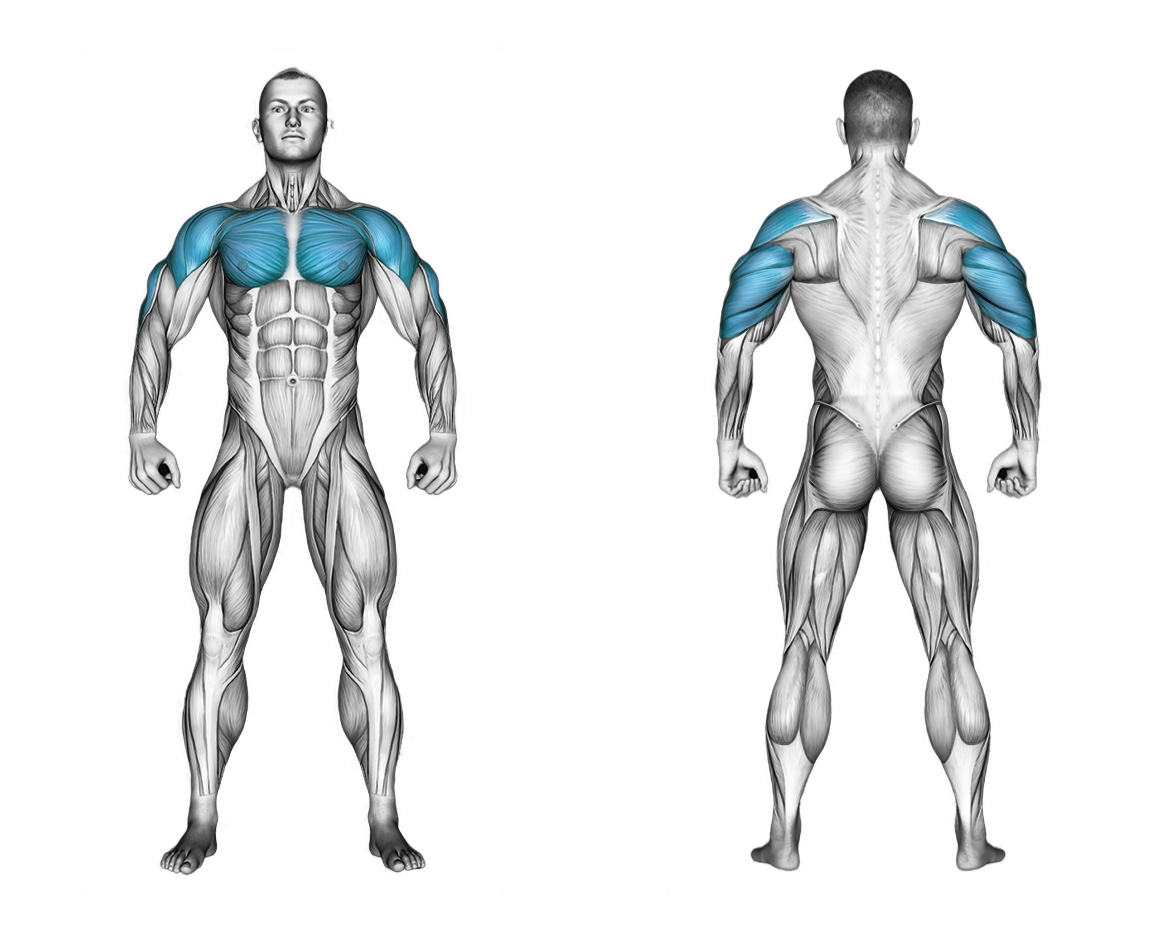
Muscles worked
Your coach guides every set
Turn on the coach in Gloox: it asks how you feel, picks the weight from your history and cues technique and rest. Rate each set and the next one is tuned to you.

On a computer? Point your phone's camera here to get the app.
Questions
What muscles does the cable bench press work?
It primarily targets the sternal and clavicular heads of the pectoralis major, with secondary assistance from the anterior deltoids and triceps brachii.
Can this exercise completely replace the barbell bench press?
While it provides superior continuous tension and joint-friendly angles, it allows less absolute load than a barbell, making it an excellent complement rather than a complete substitute for raw strength work.