Chest · Cable machine
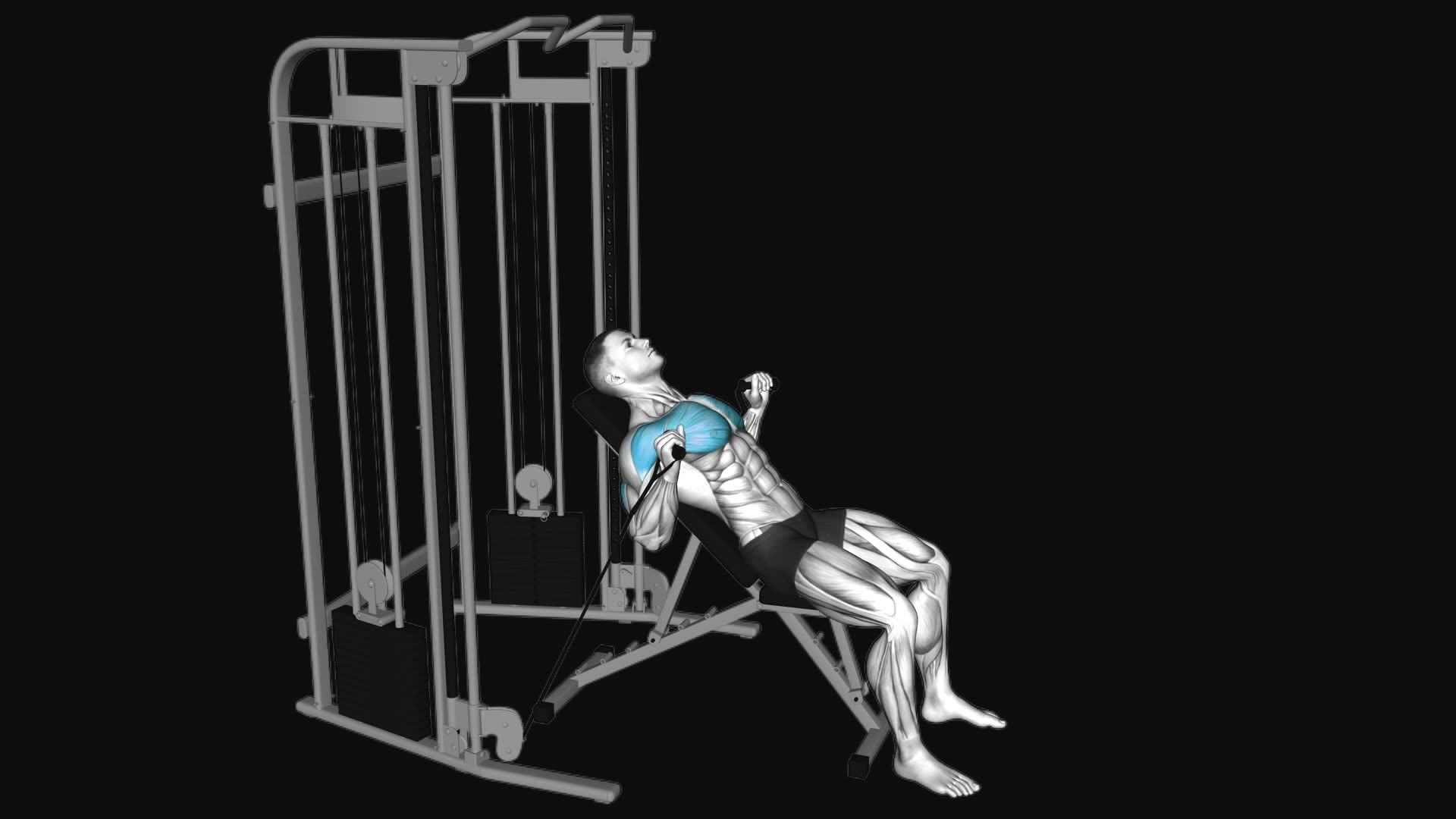
Cable Incline Fly
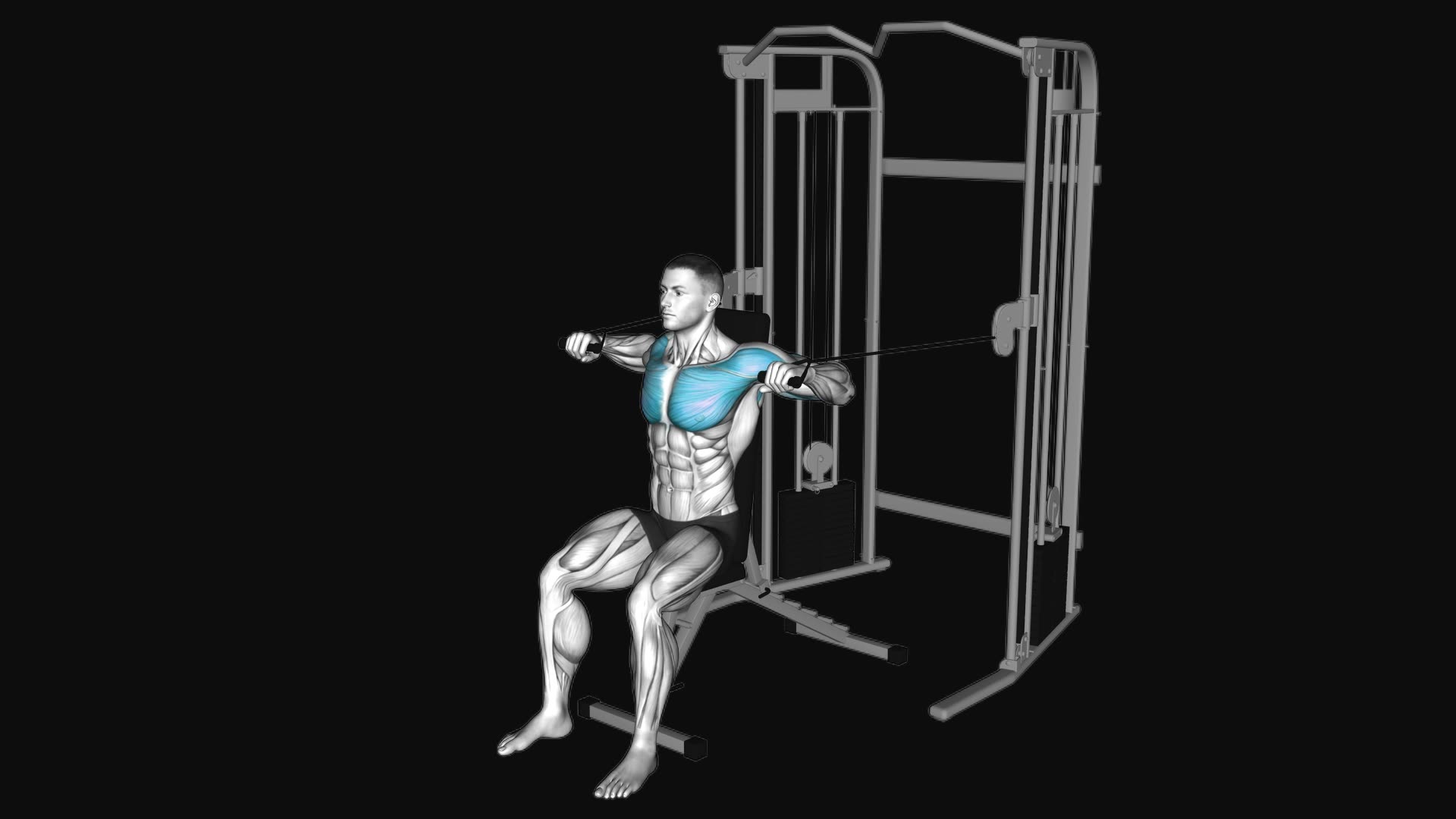
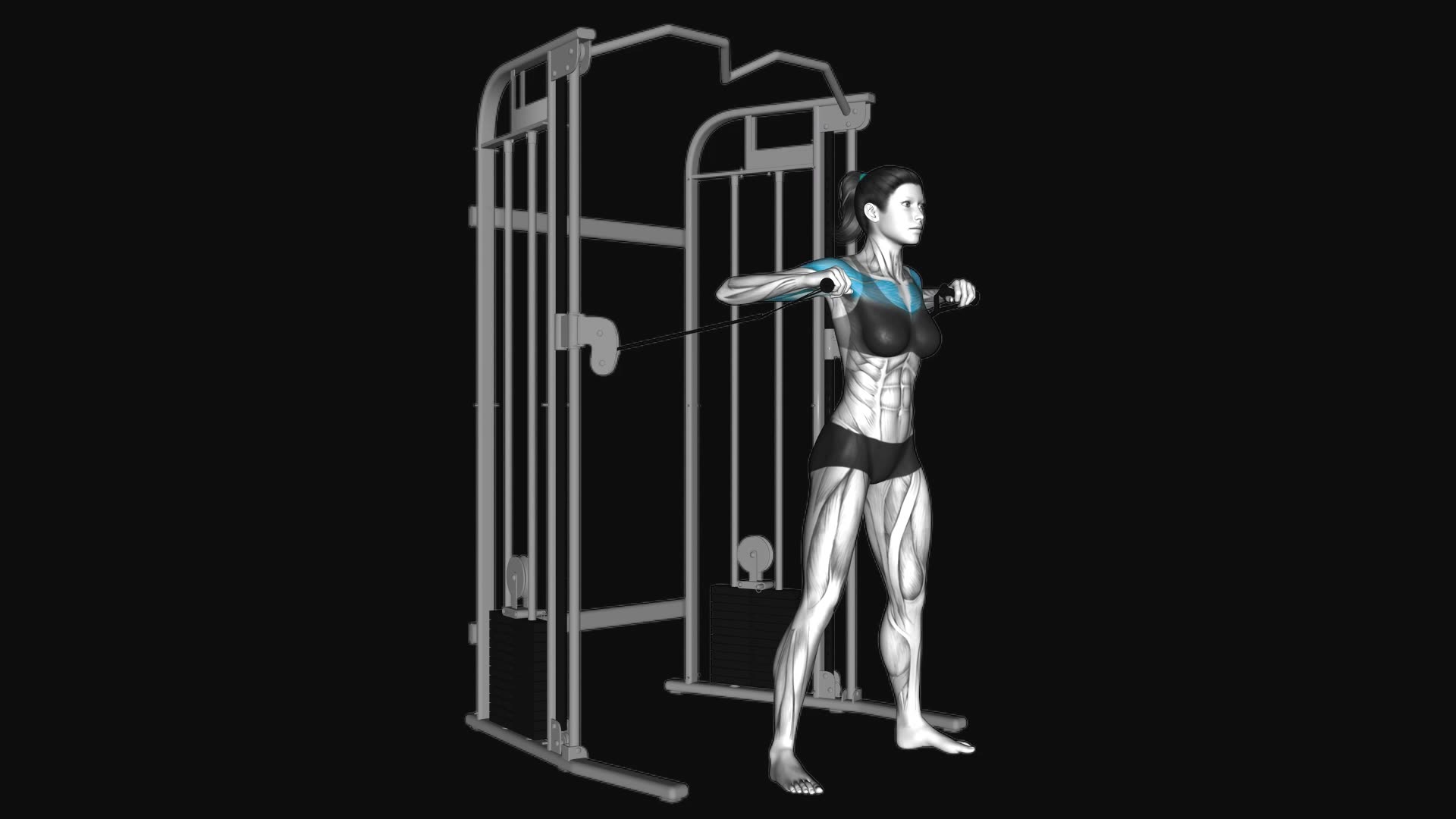
The cable incline fly is an isolation movement designed to emphasize the upper pectoral muscles using the continuous tension of a cable machine. It fits best into the middle or end of a chest workout to fully fatigue the muscle fibers after heavier compound presses.
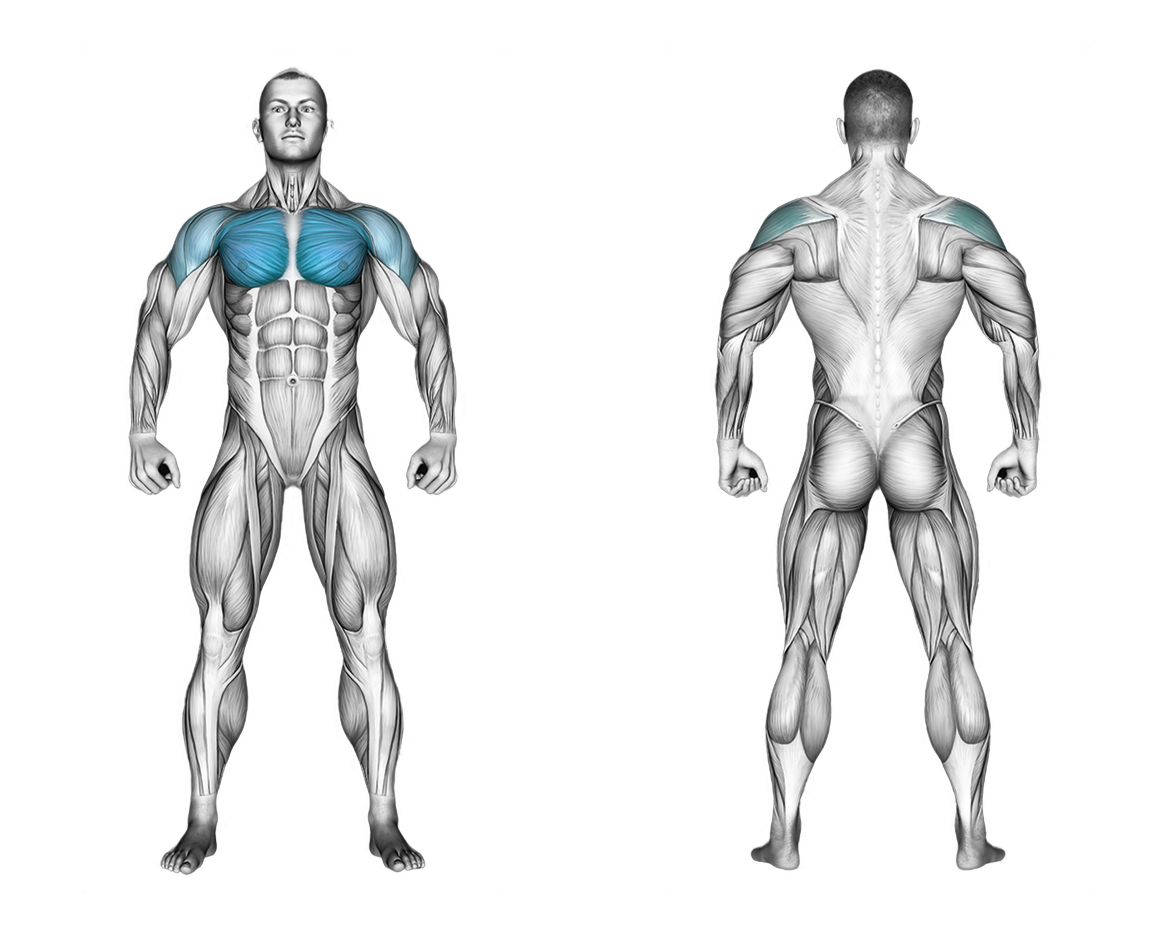
- Muscles
- Chest
- Equipment
- Cable machine
- Type
- Strength
- Animation
- Men and women
How to do it
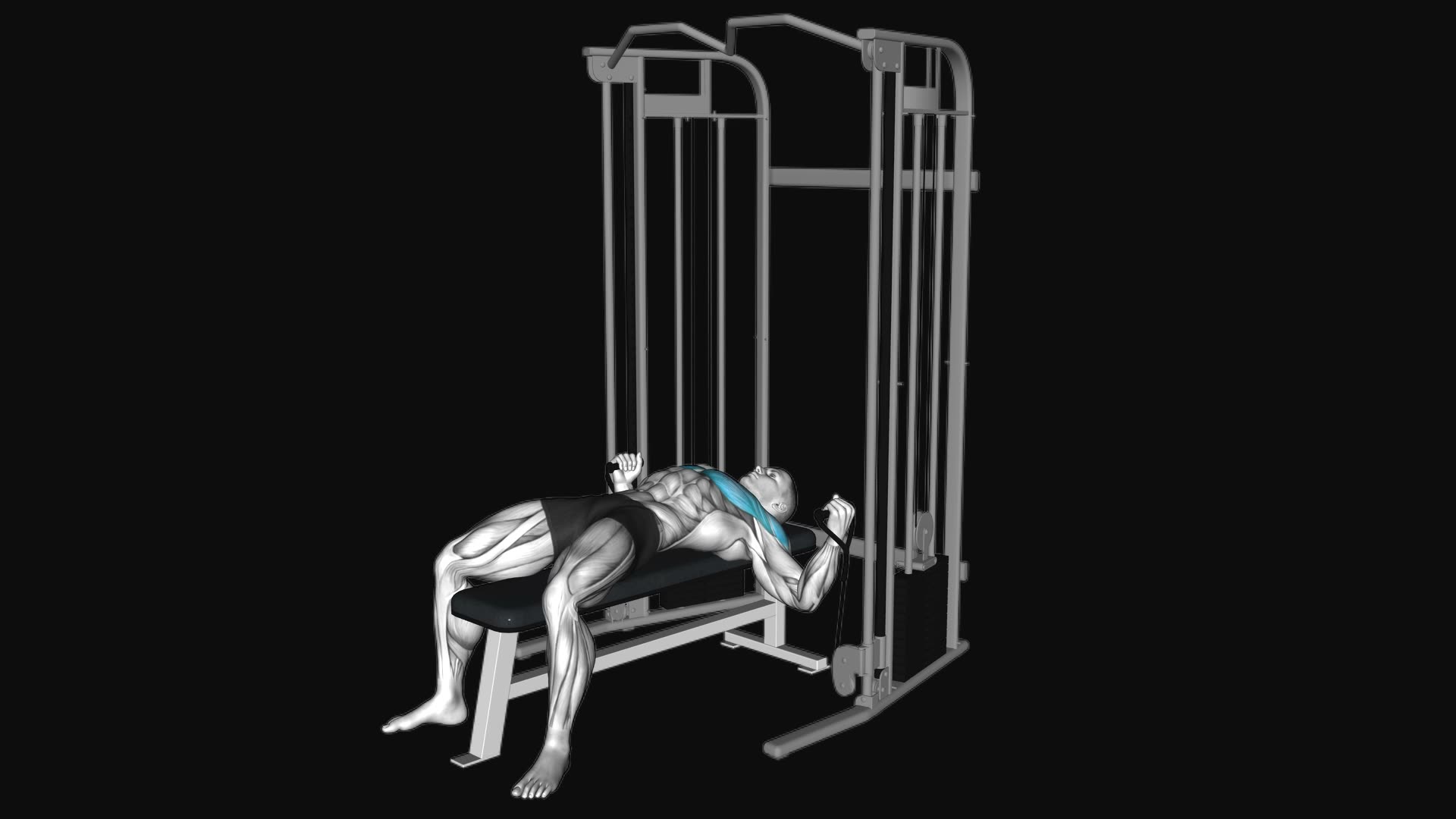
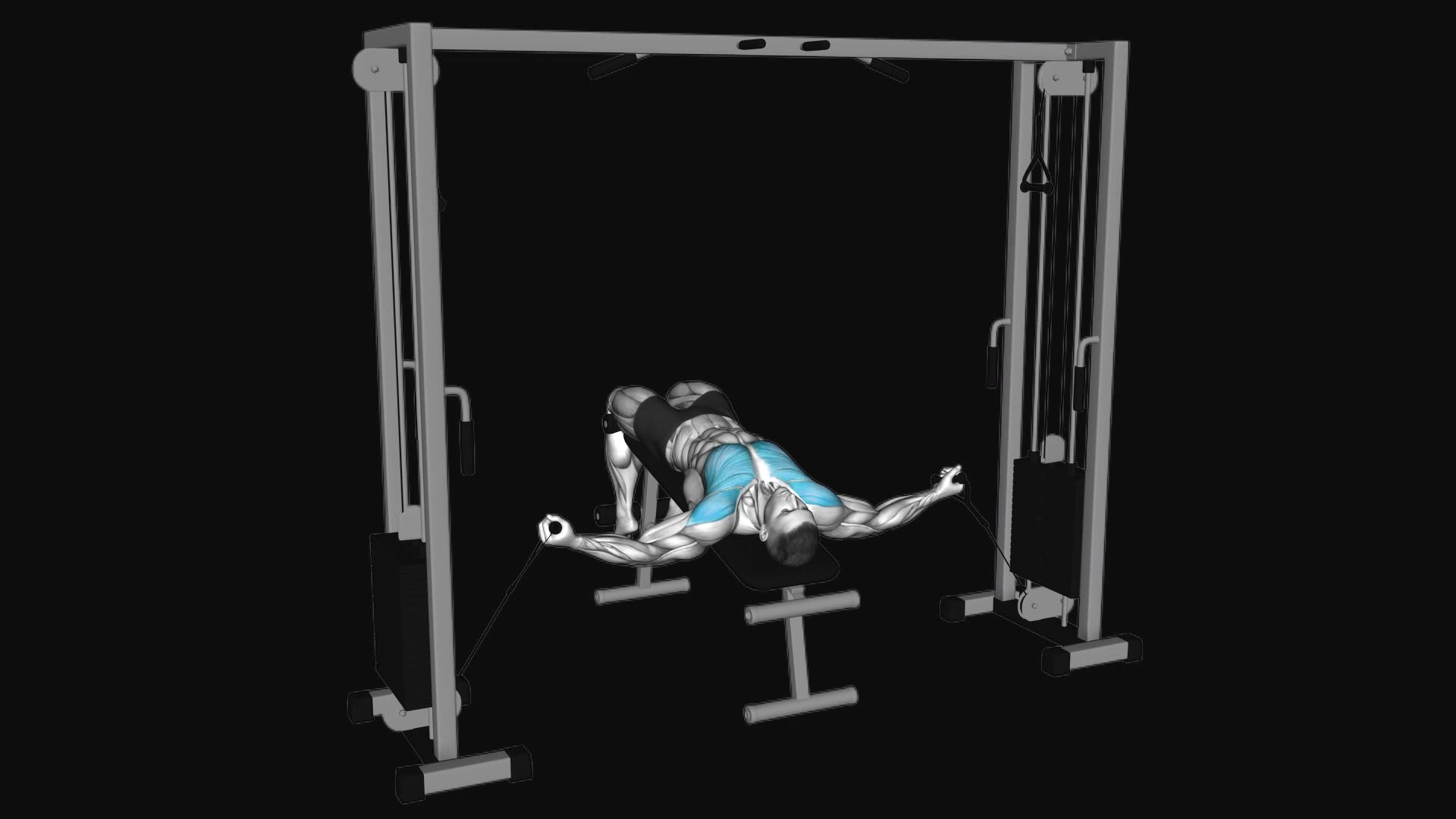
- Set an incline bench between two low cable pulleys.
- Lie back on the bench and grab the cable handles.
- Start with arms extended above your chest, slight bend in elbows.
- Lower the handles out to your sides in an arc motion.
- Bring the handles back together above your chest, squeezing your upper chest.
Common mistakes
- Bending the elbows too much turns the fly into a press, which significantly reduces targeted tension on the chest.
- Setting the bench at too steep an angle shifts the workload away from the upper chest and onto the front deltoids.
- Lowering the arms too far past the torso overstretches the shoulder joint and increases the risk of injury.
- Using momentum to swing the handles together eliminates the continuous resistance provided by the cables.
Tips
- Set your bench angle between 30 and 45 degrees to target the clavicular head of the pectorals effectively.
- Maintain a fixed, slight bend in the elbows throughout both the eccentric and concentric phases.
- Pause for a brief second at peak contraction and focus on squeezing the upper chest together.
Sets and reps
Perform 3 to 4 sets of 10 to 15 controlled repetitions with 60 to 90 seconds of rest between sets to optimize muscular hypertrophy and time under tension.
Muscles worked
Your coach guides every set
Turn on the coach in Gloox: it asks how you feel, picks the weight from your history and cues technique and rest. Rate each set and the next one is tuned to you.

On a computer? Point your phone's camera here to get the app.
Questions
What makes cable incline flyes better than dumbbell incline flyes?
Cables maintain constant tension across the entire range of motion, especially at the top of the movement where dumbbells lose resistance.
What should you do if you feel pain in the front of your shoulders?
Reduce the stretch depth and lighten the weight, and if the pain continues, stop the movement and consult a healthcare professional.