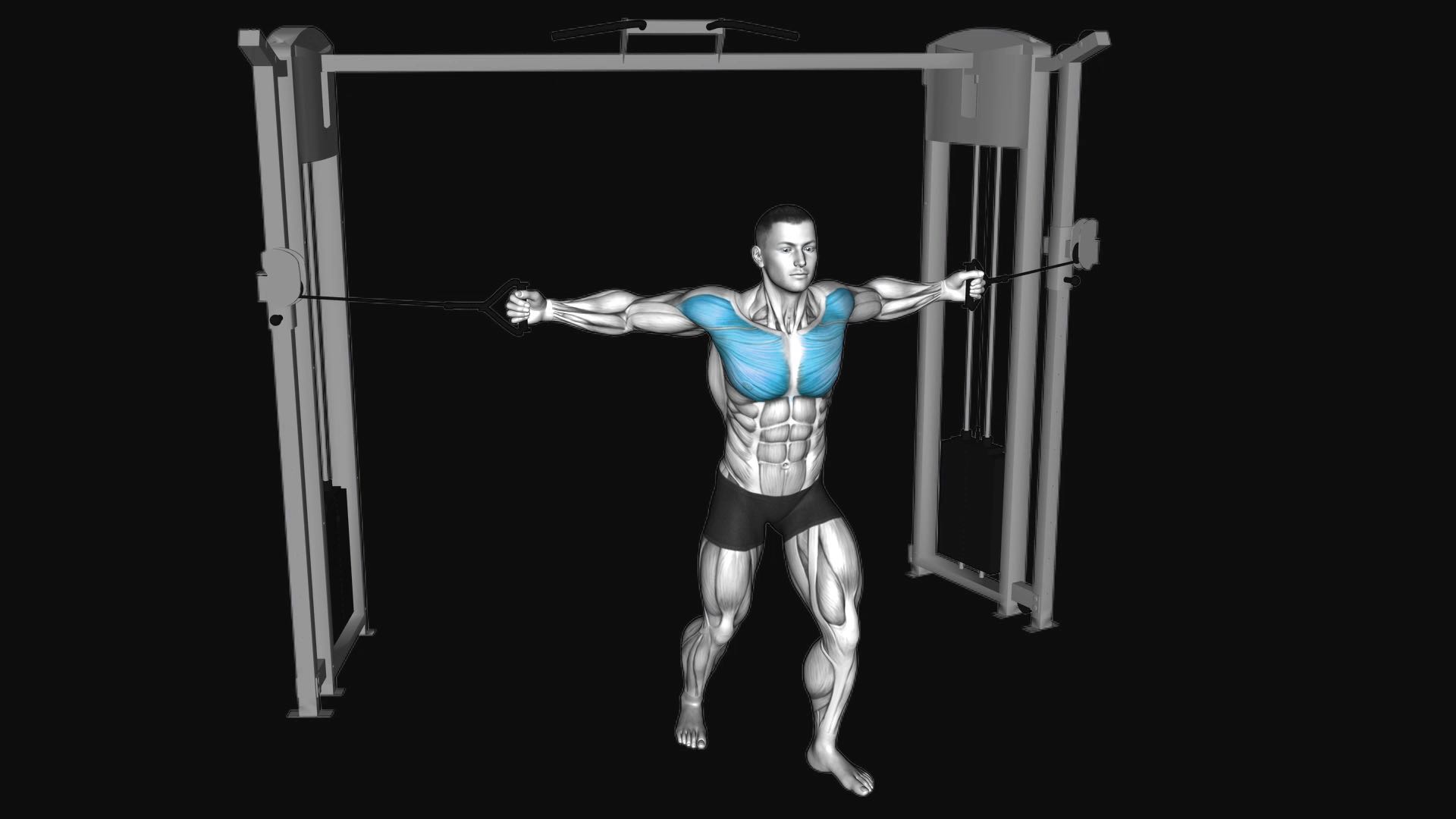
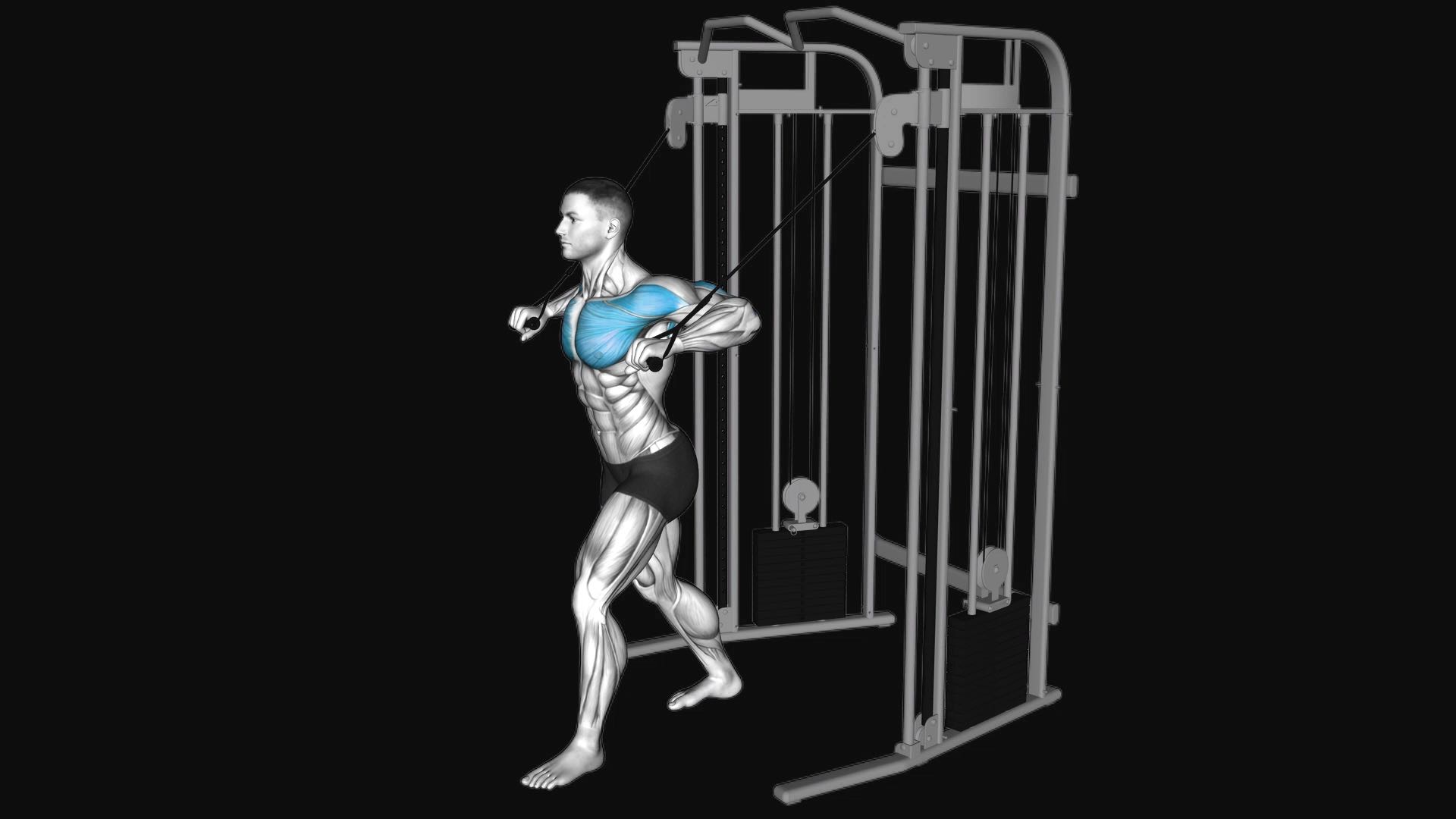
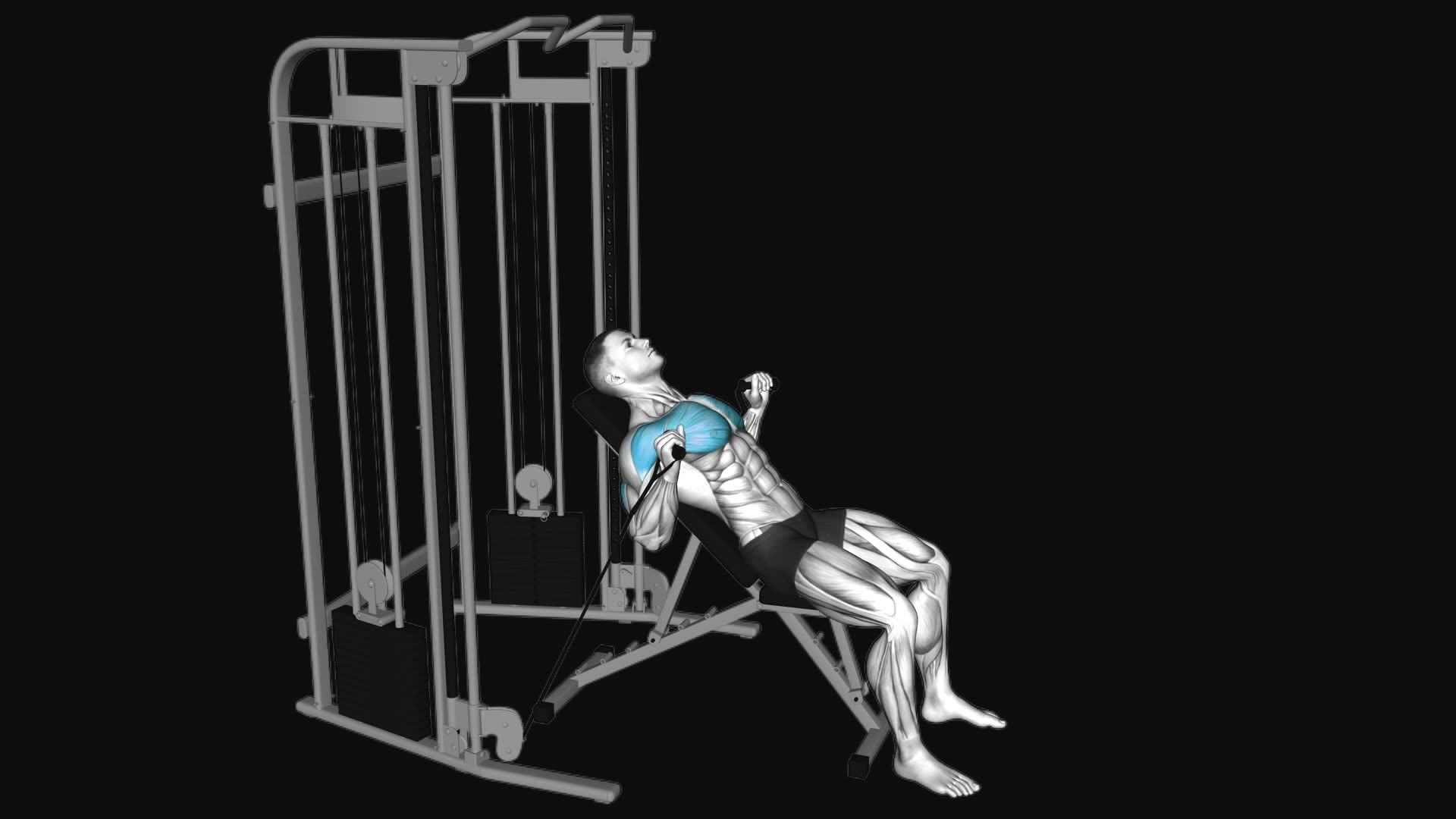
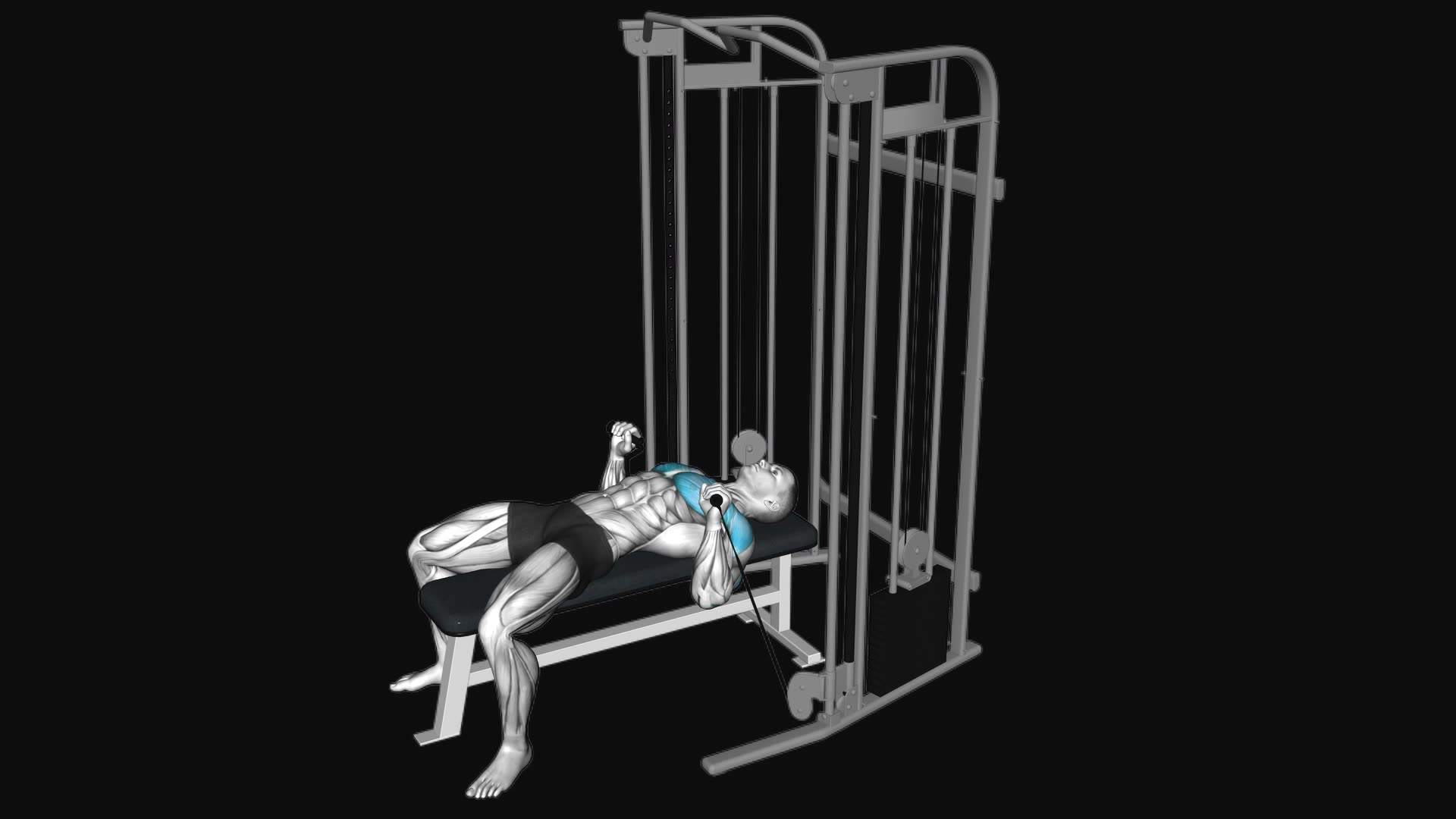
Chest · Cable machine
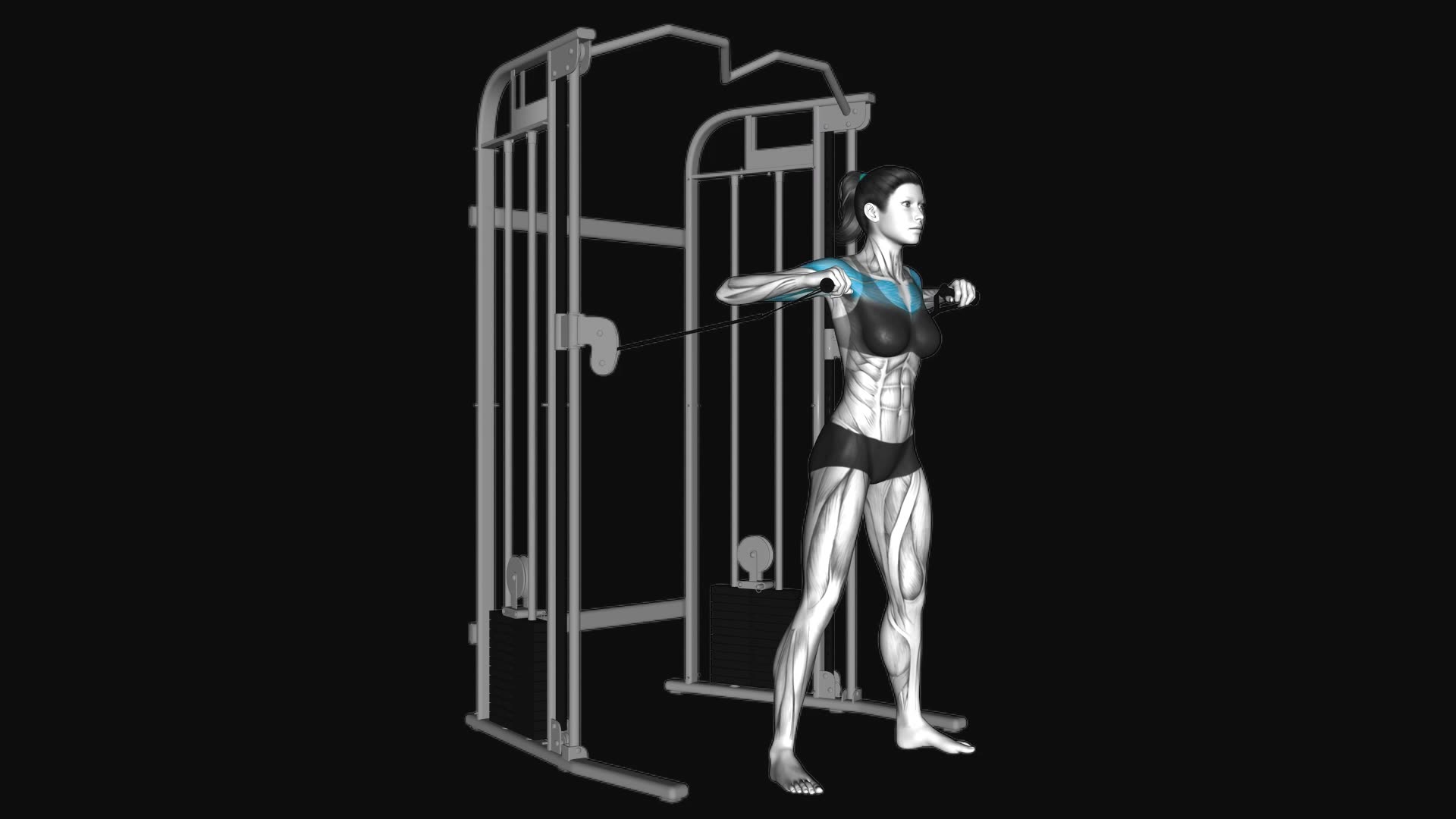
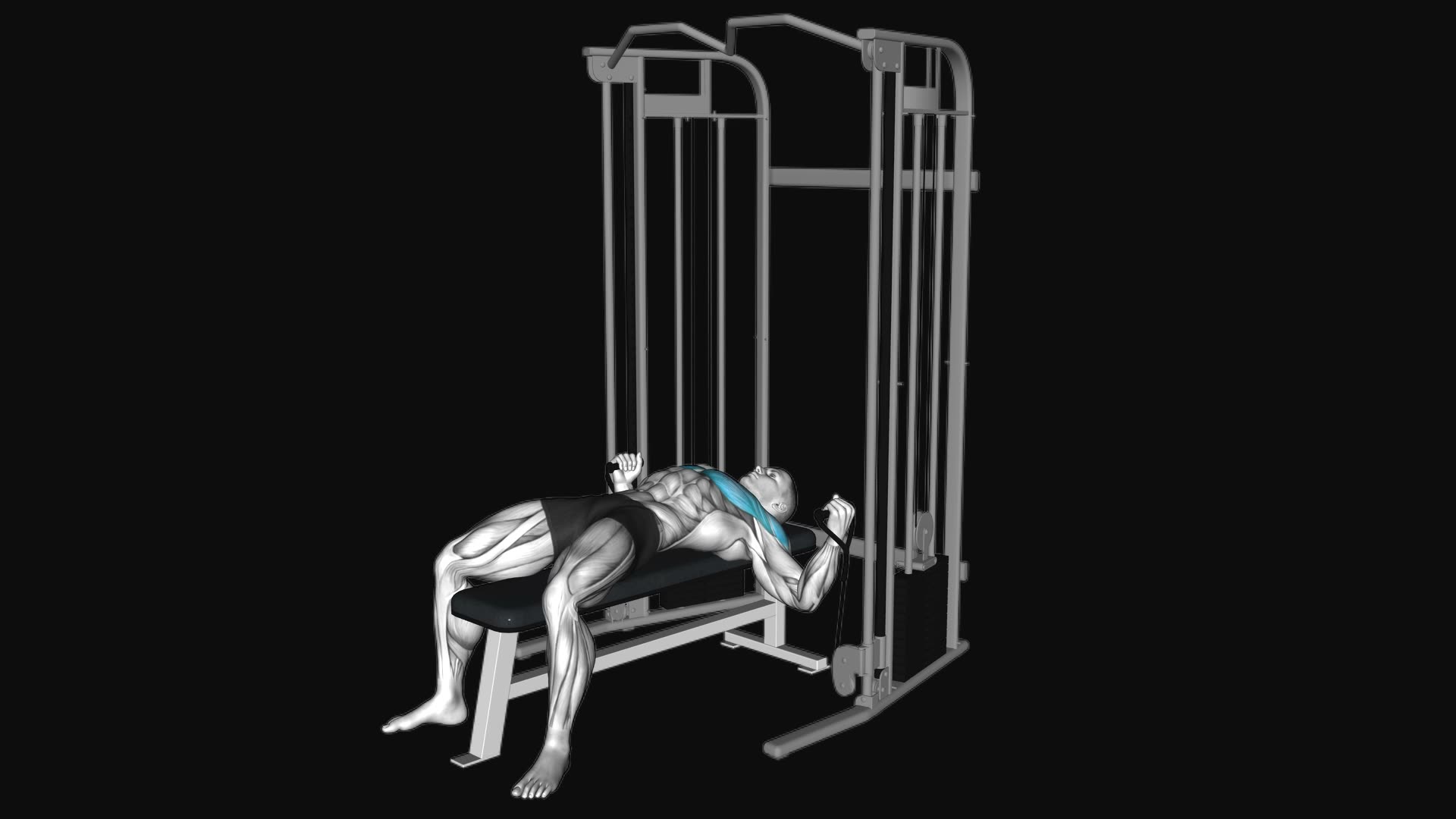
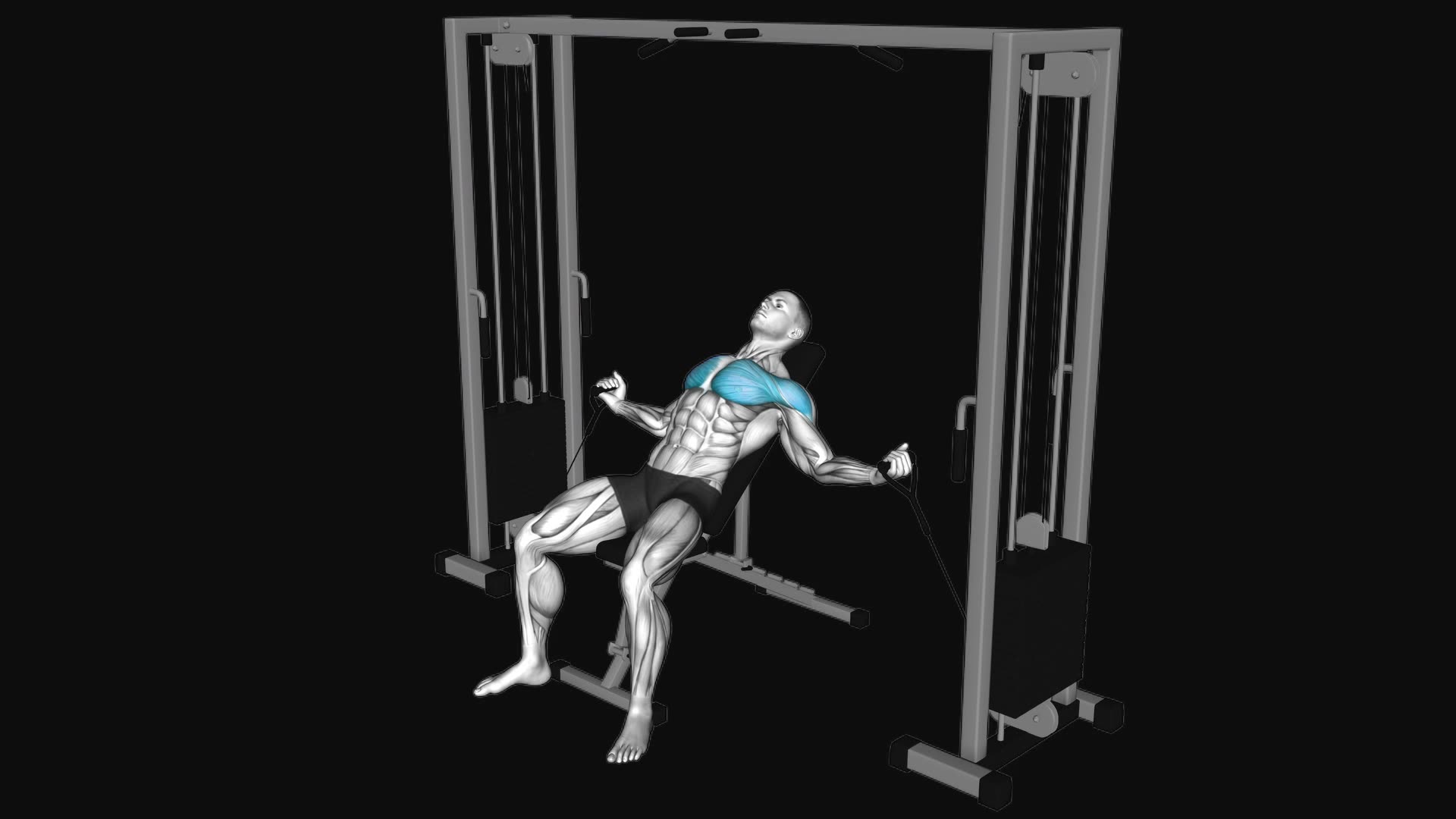
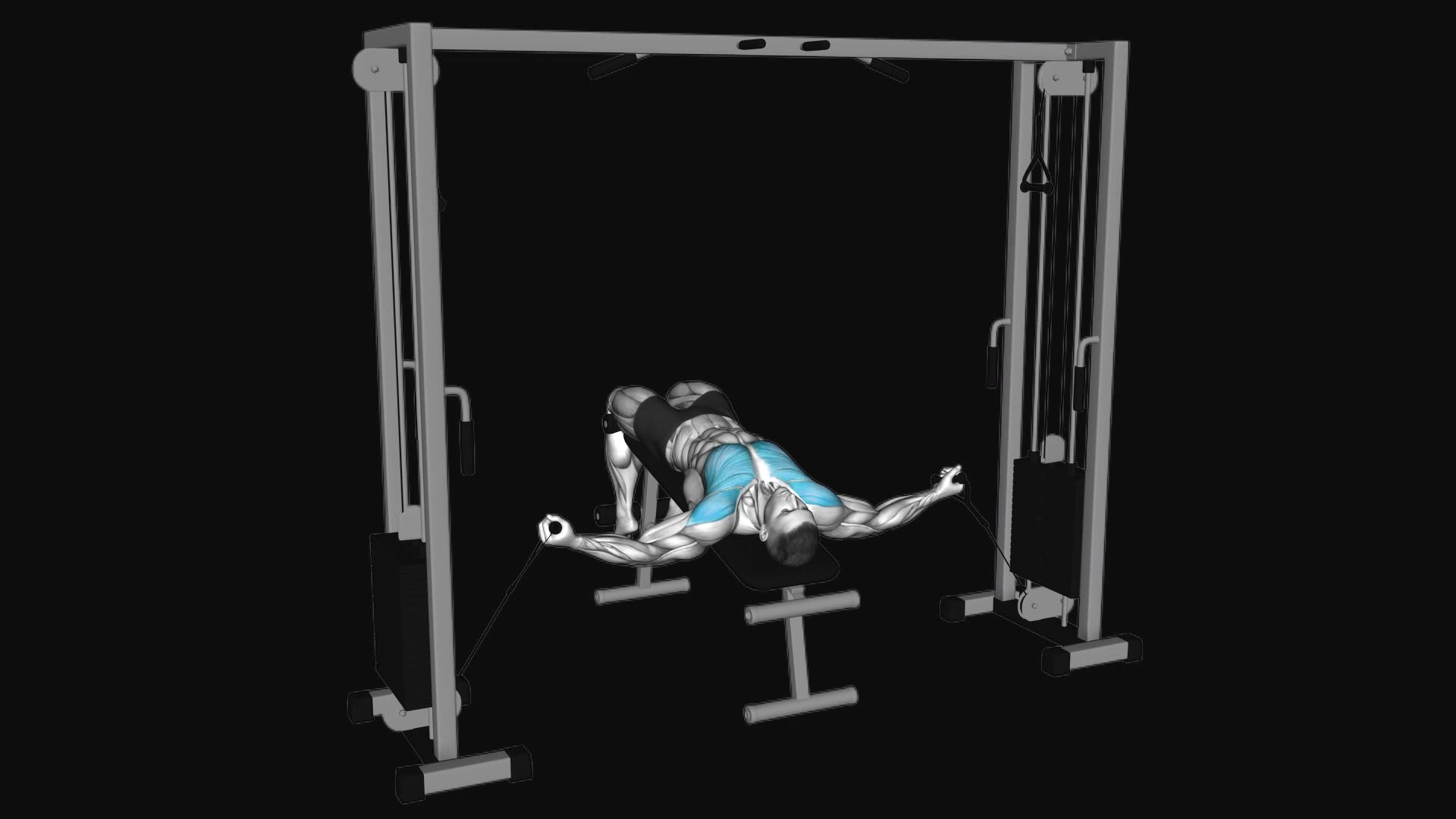
Cable Seated Chest Press
The cable seated chest press is a machine-based pressing movement designed to target the pectoralis major with continuous tension throughout the entire range of motion. It suits lifters of all experience levels and fits well as a secondary or finishing exercise in a chest workout to accumulate volume without spinal loading.
- Muscles
- Chest
- Equipment
- Cable machine
- Type
- Strength
- Animation
- Men and women
How to do it
- Sit on a bench positioned between two cable pulleys set at chest height.
- Grab the cable handles and position them at chest level with elbows bent.
- Press the handles forward and together until your arms are fully extended.
- Squeeze your chest at the center.
- Return to the starting position with control.
Common mistakes
- Allowing the shoulders and scapulae to round forward off the backrest, which shifts the stress onto the anterior deltoids.
- Flaring the elbows high in line with the shoulders, which places unnecessary strain on the rotator cuff.
- Letting the weight pull the handles back rapidly without controlling the eccentric phase of the repetition.
- Hard-locking the elbows at full extension, which takes the tension off the pecs and stresses the joints.
Tips
- Keep the shoulder blades pinned back and down against the pad throughout every rep.
- Bring the handles slightly closer together at full extension to achieve a strong peak contraction across the chest.
- Adjust the seat and pulley heights so the cables travel along a flat line level with your mid-chest.
Sets and reps
Perform 3 to 4 sets of 8 to 12 repetitions with 60 to 90 seconds of rest to target muscle hypertrophy. For metabolic conditioning or as a pump-focused burnout, do 3 sets of 15 to 20 reps with 45 seconds of rest.
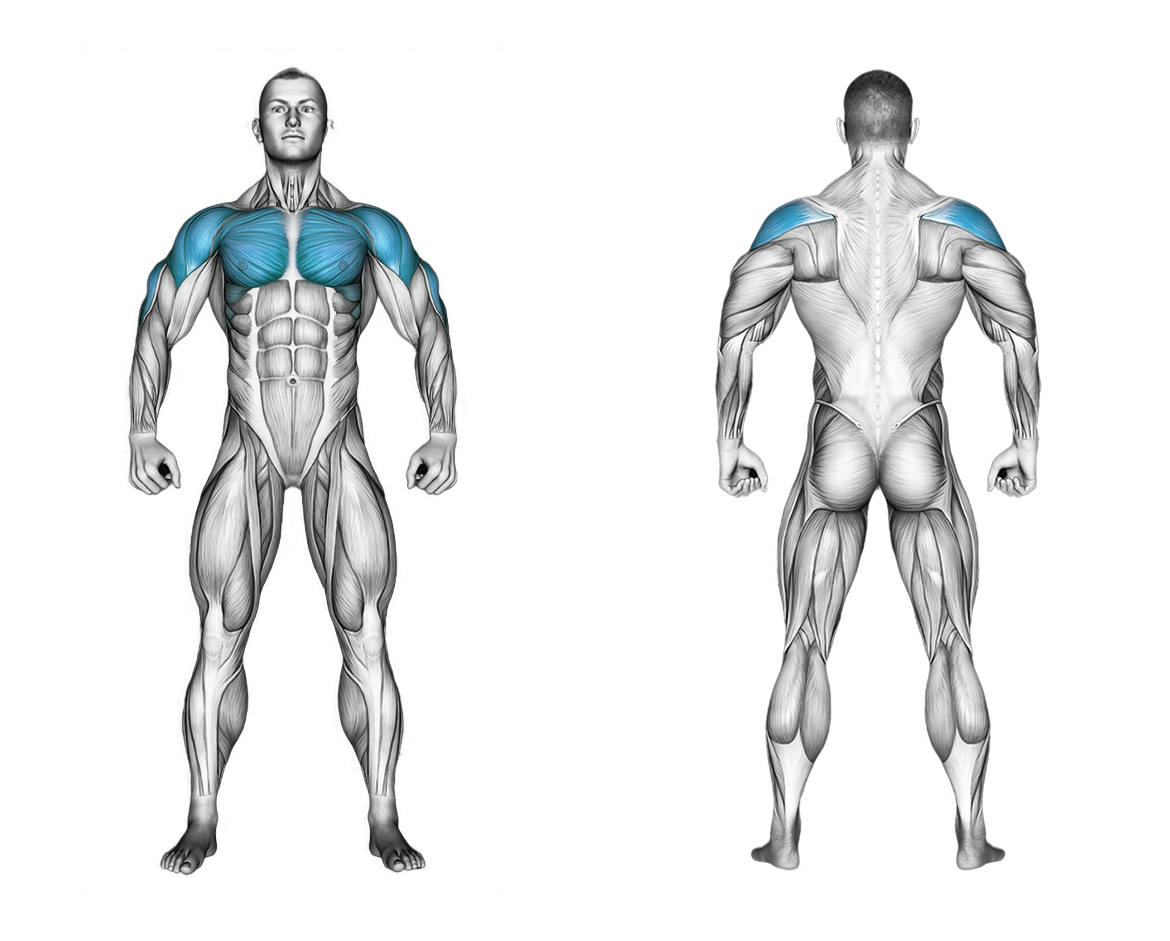
Muscles worked
Your coach guides every set
Turn on the coach in Gloox: it asks how you feel, picks the weight from your history and cues technique and rest. Rate each set and the next one is tuned to you.

On a computer? Point your phone's camera here to get the app.
Questions
How does the cable seated chest press differ from a dumbbell bench press?
Cables maintain constant tension even when your hands meet at the finish line, whereas dumbbells lose most pectoral tension at the top of the press due to gravity.
Is this exercise safe for the lower back?
Yes, sitting with back support prevents arching and eliminates axial spinal compression, making it a joint-friendly option.