
Shoulders · Resistance bands
Band Bent over Rear Lateral Raise
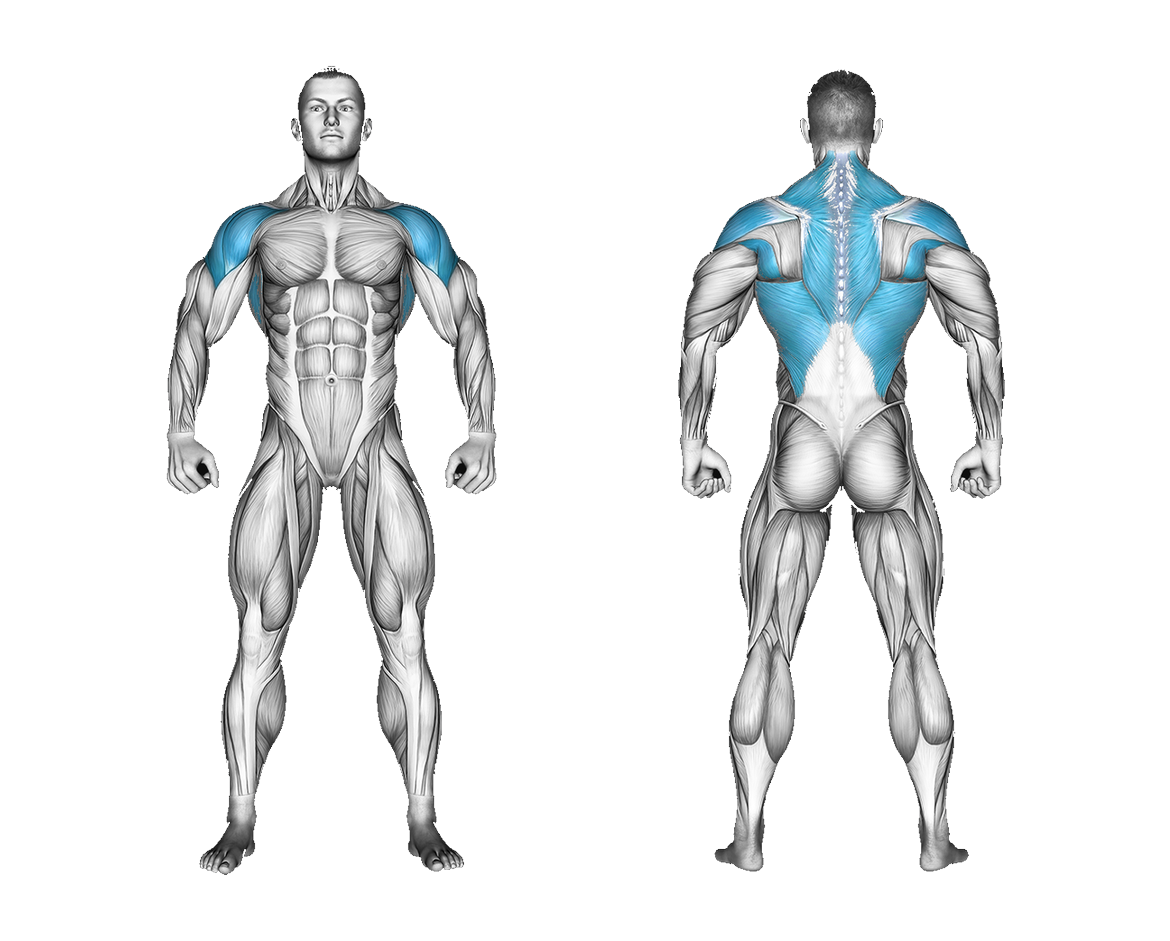
The band bent over rear lateral raise is an isolation movement targeting the posterior deltoids, rhomboids, and middle trapezius. It suits lifters of all fitness levels and typically fits toward the end of an upper-body or shoulder session to reinforce posture.
- Equipment
- Resistance bands
- Type
- Strength
- Animation
- Men and women
How to do it
- Stand on the middle of the band with your feet hip-width apart and cross the band in front of you, taking the left handle in your right hand and the right handle in your left hand.
- Hinge at your hips with a flat back until your torso is nearly parallel to the floor, arms hanging down with a slight bend in the elbows.
- Brace your core and inhale.
- As you exhale, raise both arms out to the sides until they reach shoulder level, squeezing your shoulder blades together.
- Pause briefly at the top.
- Inhale and slowly lower your arms back to the starting position, keeping your back flat.
Common mistakes
- Rounding the lower back places unnecessary stress on the spine instead of stabilizing the torso.
- Swinging the torso to lift the arms relies on momentum and takes tension off the rear deltoids.
- Raising the hands significantly higher than shoulder height shifts the workload to the upper traps.
- Locking out the elbows completely exposes the joints to excessive strain under elastic resistance.
Tips
- Maintain a consistent, slight bend in your elbows throughout the entire range of motion.
- Keep your gaze focused on the floor slightly in front of your feet to preserve a neutral neck position.
- Pause for a brief second at the top of the raise to maximize peak tension on the rear delts.
Sets and reps
Perform 3 to 4 sets of 15 to 20 controlled repetitions with 60 to 90 seconds of rest between sets. Prioritize a controlled tempo and a full squeeze over heavy band tension.
Muscles worked
Your coach guides every set
Turn on the coach in Gloox: it asks how you feel, picks the weight from your history and cues technique and rest. Rate each set and the next one is tuned to you.

On a computer? Point your phone's camera here to get the app.
Questions
What should you do if your lower back fatigues quickly in the bent-over stance?
You can perform the exercise seated on the edge of a chair with the band anchored under your feet; stop immediately and consult a specialist if you feel persistent pain.
How does this compare to using dumbbells for the same movement?
The resistance band increases tension toward the top of the range, creating maximum muscle demand exactly where dumbbells tend to rely on momentum.
Similar exercises
Resistance Band Bent over Reverse FlyResistance bands
Resistance Band Sitting Bent over Reverse Fly on a ChairResistance bands
Band Reverse FlyResistance bands
Band Upright Row (Under Two feet)Resistance bands
Resistance Band Pull ApartResistance bands
Resistance Band Supinated Grip Pull ApartResistance bands
Band Bent over Rear Lateral Raise (Version 2)Resistance bands
Band Pull ApartResistance bands