
Back · Resistance bands
Resistance Band Lying Hyperextension Abduction
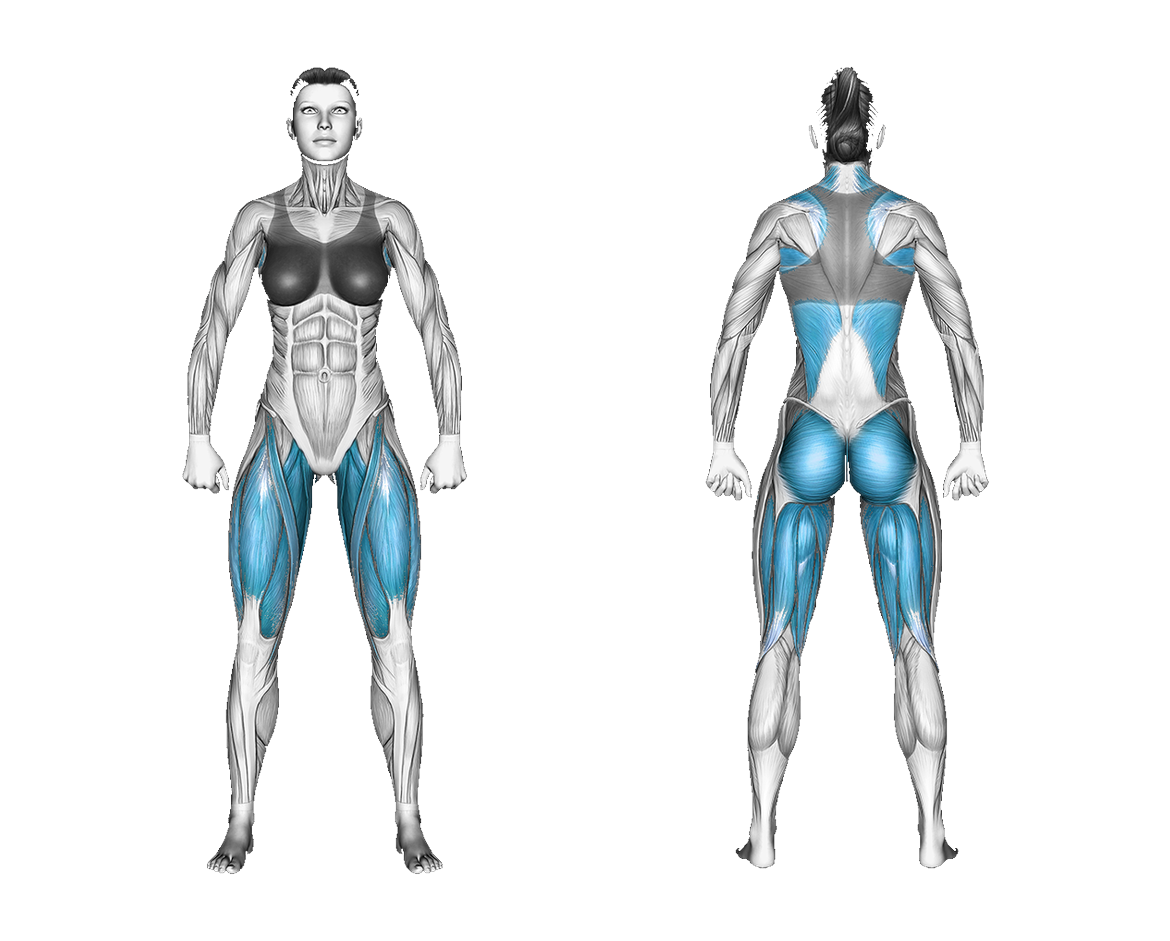
The resistance band lying hyperextension abduction is a posterior-chain exercise combining trunk extension with banded hip abduction. It targets the erector spinae, gluteus maximus, and gluteus medius, serving as an effective warm-up activation or a high-rep finisher for both gym and home workouts.
- Equipment
- Resistance bands
- Type
- Strength
- Animation
- Women
How to do it
- Loop the band around your ankles and lie face down on the floor with your legs extended and your hands under your forehead or along your sides.
- Inhale and brace your core and glutes.
- As you exhale, lift your chest and both legs off the floor at the same time.
- Holding this raised position, spread your legs apart against the band, then bring them back together.
- Inhale and slowly lower your chest and legs back to the floor.
Common mistakes
- Jerking the upper body off the floor hyper-extends the lumbar spine and places unnecessary stress on the lower back.
- Craning the neck upward creates unwanted tension in the cervical vertebrae instead of keeping the spine neutral.
- Bending the knees during the abduction phase shortens the lever arm and diminishes glute engagement.
- Allowing the band to snap the legs back together skips the eccentric contraction and reduces muscular control.
Tips
- Keep your eyes focused straight down at the floor throughout the movement to protect your neck.
- Brace your core and squeeze your glutes firmly before lifting your chest and thighs off the mat.
- Hold the abduction for a full one-second pause at maximum width to maximize tension in the outer hips.
Sets and reps
Aim for 3 to 4 sets of 12 to 15 controlled repetitions, taking 45 to 60 seconds of rest between sets.
Muscles worked
Your coach guides every set
Turn on the coach in Gloox: it asks how you feel, picks the weight from your history and cues technique and rest. Rate each set and the next one is tuned to you.

On a computer? Point your phone's camera here to get the app.
Questions
Is this exercise safe if I have lower back concerns?
When performed with moderate elevation and core bracing, it safely strengthens the postural muscles. If you experience sharp pain or discomfort, stop immediately and consult a healthcare specialist.
Where should the resistance band be placed?
Placing the band around your ankles offers the greatest resistance due to the longer lever arm. If that causes excessive fatigue or form breakdown, move the band up just above your knees.
Similar exercises
Band Narrow Grip High RowResistance bands
Resistance Band Floor HyperextensionResistance bands
Resistance Band Standing Archer Alternate Arm RowResistance bands
Resistance Band Shoulder AdductionResistance bands
Resistance Band Bent over Row (Version 2)Resistance bands
Band Bent over RowResistance bands
Resistance Band Renegade RowResistance bands
Resistance Band One Arm Bent over RowResistance bands