
Abs · Bodyweight
Knee-to-Elbow Crunch
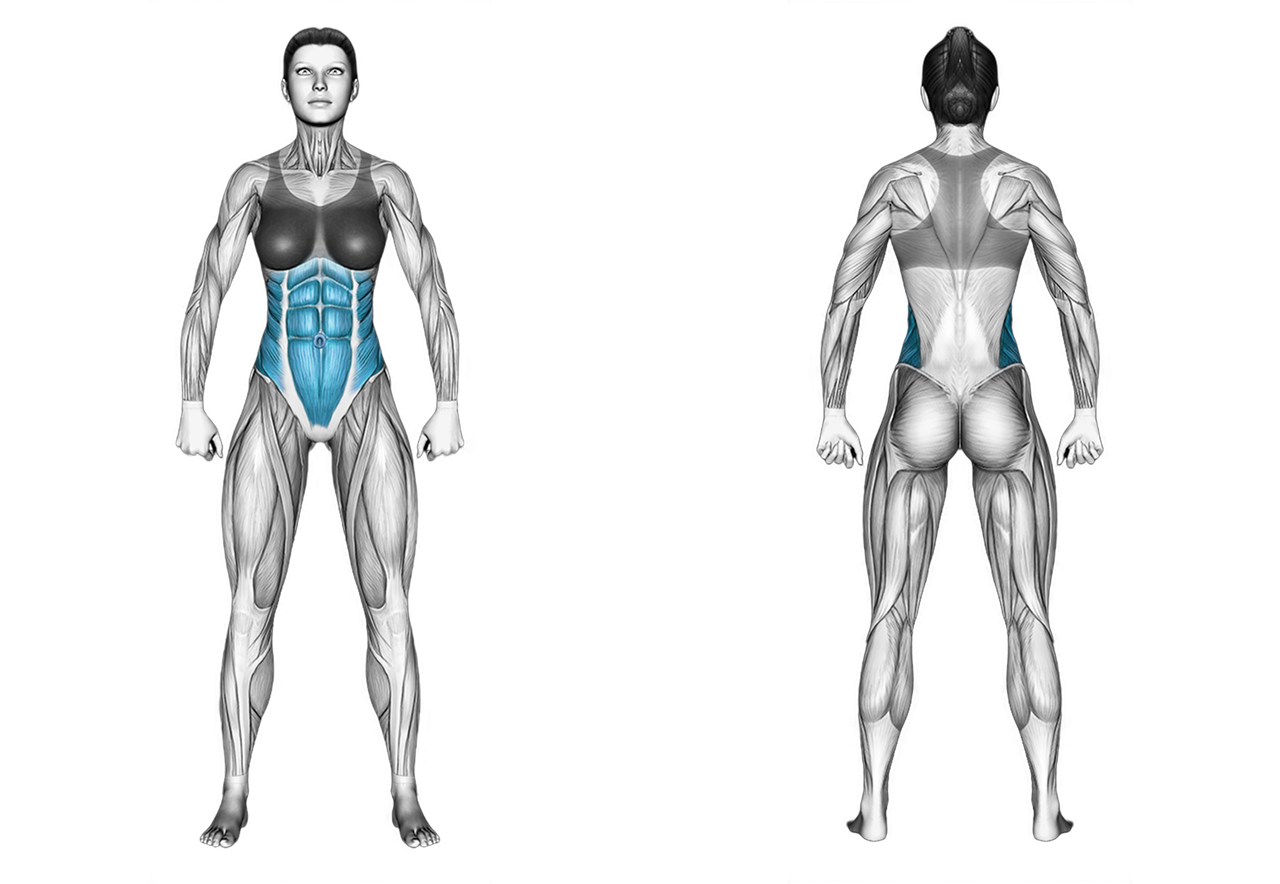
The knee-to-elbow crunch is a bodyweight core movement that combines spinal flexion with torso rotation. It targets the rectus abdominis and obliques, making it suitable for all fitness levels as a finisher or part of a dedicated abdominal circuit.
- Muscles
- Abs
- Equipment
- Bodyweight
- Type
- Strength
- Animation
- Women
How to do it
- Lie on your back with hands behind your head and knees bent.
- Lift your shoulder blades off the ground and bring one knee toward your chest.
- Simultaneously twist your torso to bring the opposite elbow toward the raised knee.
- Return to the starting position, then repeat with the other knee and elbow.
- Alternate sides while maintaining core engagement.
Common mistakes
- Pulling on your neck strains the cervical spine rather than engaging the abdominal muscles.
- Using momentum to swing your torso reduces continuous tension on the target muscles and lowers exercise efficiency.
- Arching your lower back off the floor shifts stress onto the lumbar spine and disengages the deep core.
Tips
- Keep your fingertips lightly touching your temples or behind your ears rather than interlacing your fingers.
- Focus on rotating your shoulder and ribcage toward the opposite knee rather than simply flapping your elbow inward.
- Exhale fully at the peak contraction as your elbow and knee come close together.
Sets and reps
Perform 3 to 4 sets of 15 to 20 repetitions per side, resting 45 to 60 seconds between sets to build abdominal endurance.
Muscles worked
Your coach guides every set
Turn on the coach in Gloox: it asks how you feel, picks the weight from your history and cues technique and rest. Rate each set and the next one is tuned to you.

On a computer? Point your phone's camera here to get the app.
Questions
Is this exercise safe if you have lower back pain?
Repeated flexion and twisting can irritate lumbar issues, so stop the movement and consult a specialist if you feel pain.
How does this differ from the bicycle crunch?
Unlike the bicycle crunch where both legs stay elevated in continuous motion, this variation typically allows the non-working foot to reset on the floor, reducing hip flexor involvement.







