Legs · Cable machine
Cable Hip Adduction
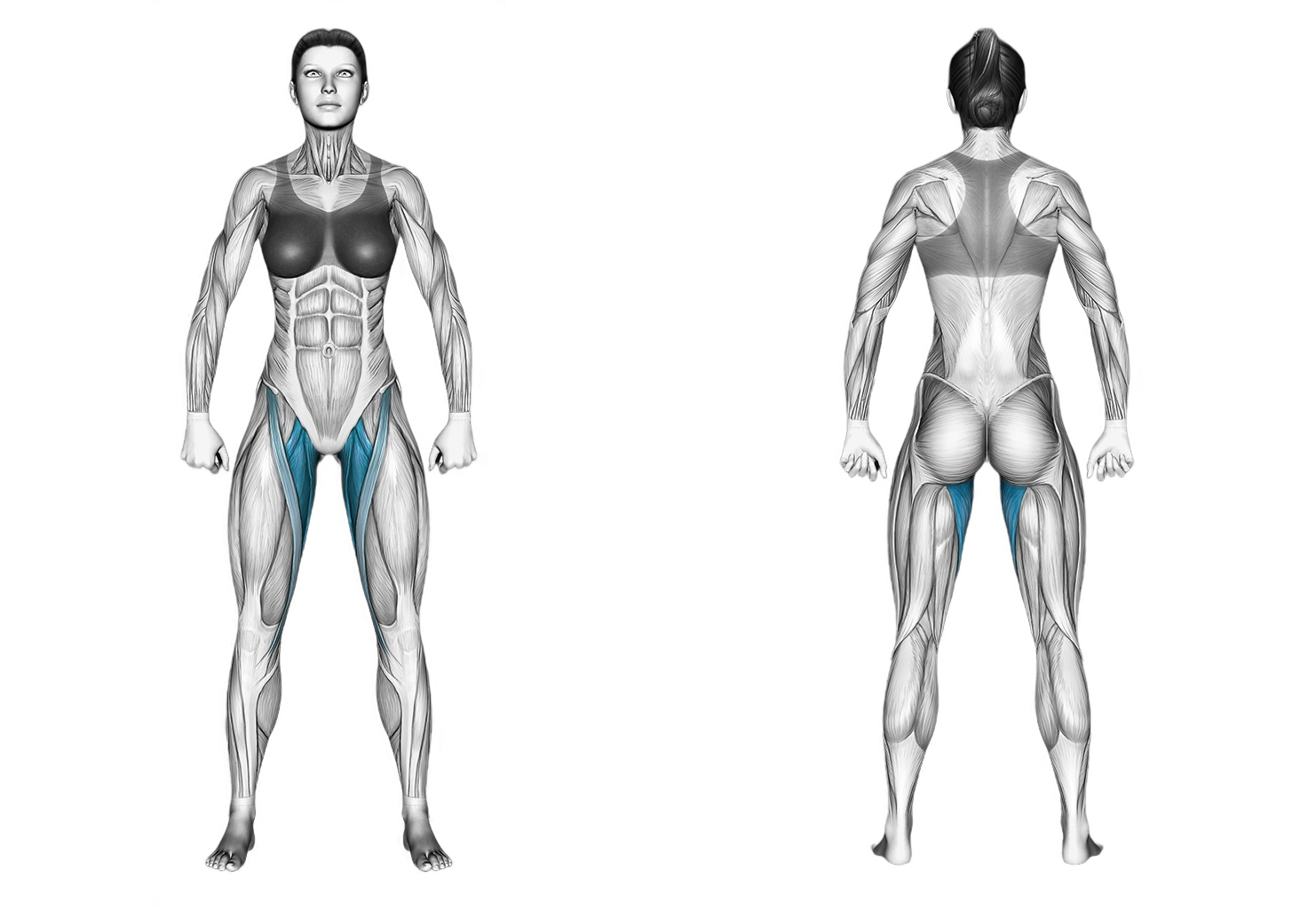
Cable hip adduction is an isolation exercise that targets the adductor muscles of the inner thigh under constant cable tension. It strengthens hip stabilizers, helps prevent groin strains in dynamic sports, and fits well toward the end of a lower-body workout.
- Muscles
- Legs
- Equipment
- Cable machine
- Type
- Strength
- Animation
- Women
How to do it
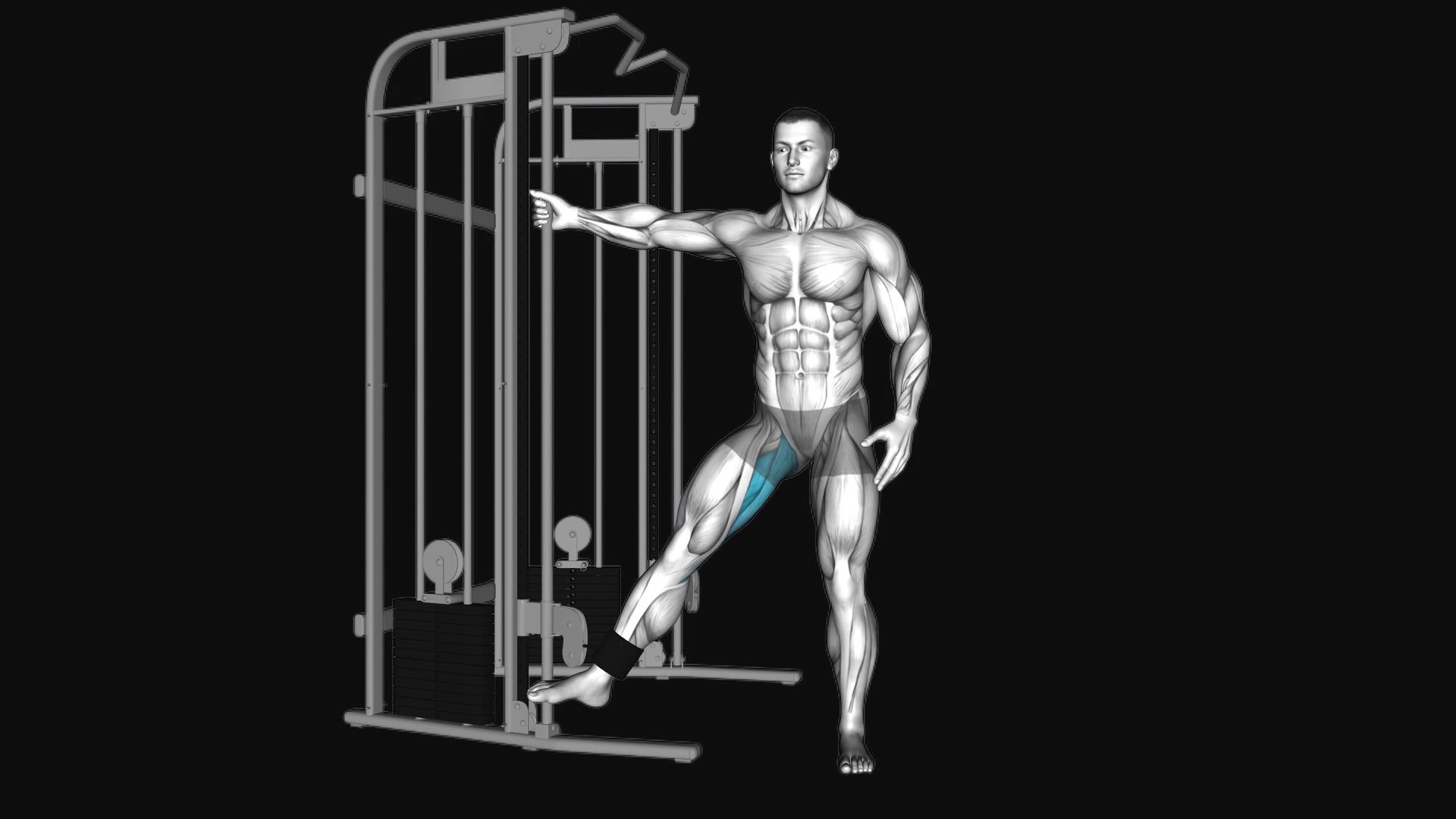
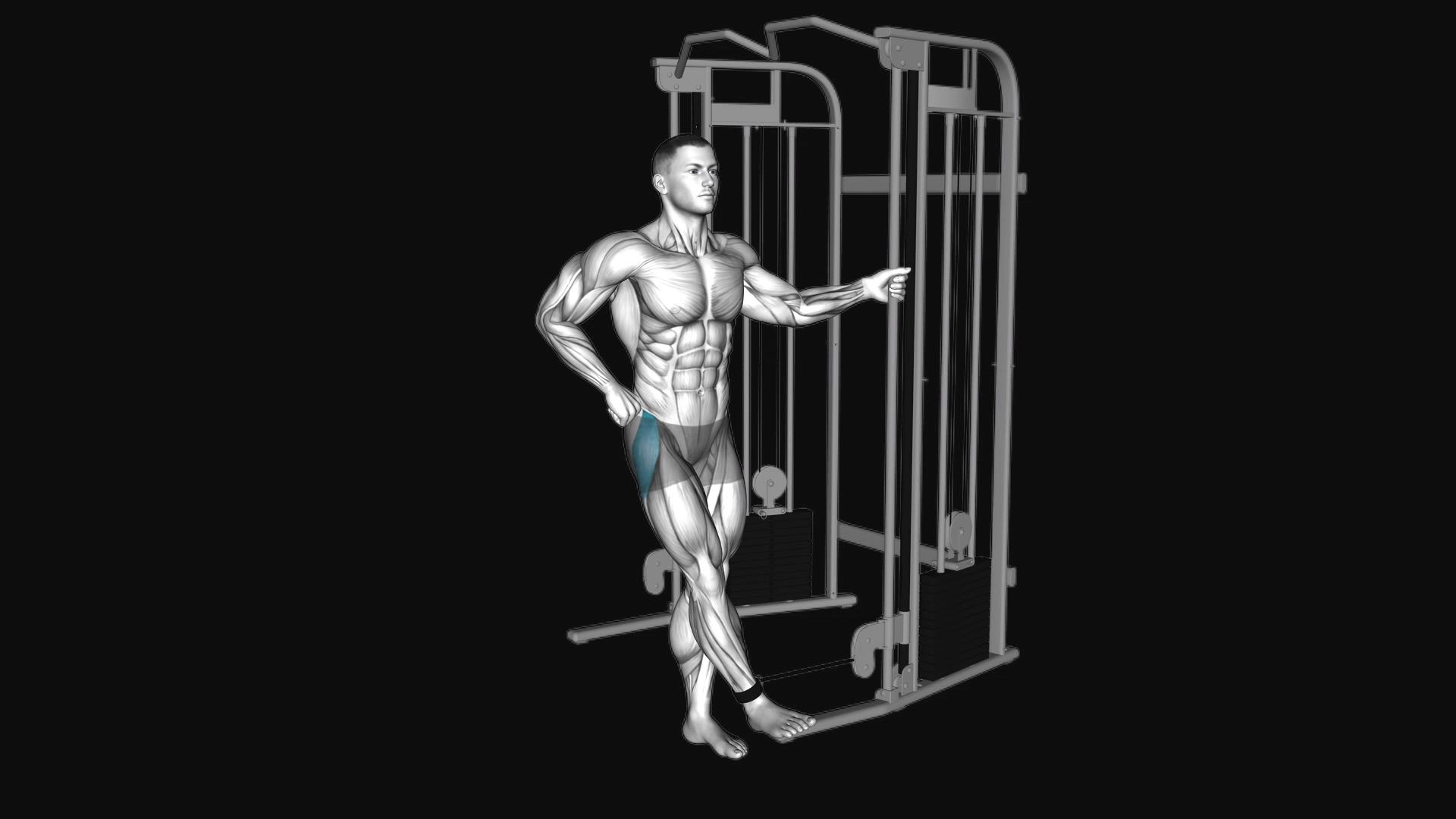
- Attach an ankle cuff to the low pulley.
- Stand sideways to the machine with the cuff on your inner leg.
- Hold onto the machine for support.
- Keeping your leg straight, pull it across your body past your standing leg.
- Pause briefly, then return to the starting position with control.
- Keep your torso upright throughout.
Common mistakes
- Swinging the torso to create momentum shifts tension away from the adductors and strains the lower back.
- Bending the working knee too much turns the movement into a kick rather than a targeted hip adduction.
- Allowing the weight stack to pull the leg back rapidly eliminates eccentric tension and risks pulling a groin muscle.
Tips
- Keep a slight bend in your standing leg to create a stable base of support throughout the set.
- Keep the toes of your working foot pointed forward or slightly inward to keep focus directly on the inner thigh.
- Hold the machine frame firmly to prevent your pelvis from twisting as you cross your leg.
Sets and reps
Perform 3 to 4 sets of 12 to 20 controlled reps with 45 to 60 seconds of rest, as inner-thigh isolation responds best to moderate resistance and higher volume.
Muscles worked
Your coach guides every set
Turn on the coach in Gloox: it asks how you feel, picks the weight from your history and cues technique and rest. Rate each set and the next one is tuned to you.

On a computer? Point your phone's camera here to get the app.
Questions
What muscles does cable hip adduction target?
It primarily works the adductor longus, adductor brevis, adductor magnus, and gracilis along the inner thigh.
How can this exercise be replaced without a cable machine?
You can substitute it with resistance band adductions anchored low to a sturdy post or by using a seated hip adductor machine.