
Abs · Bodyweight
Bent knee Lying Twist
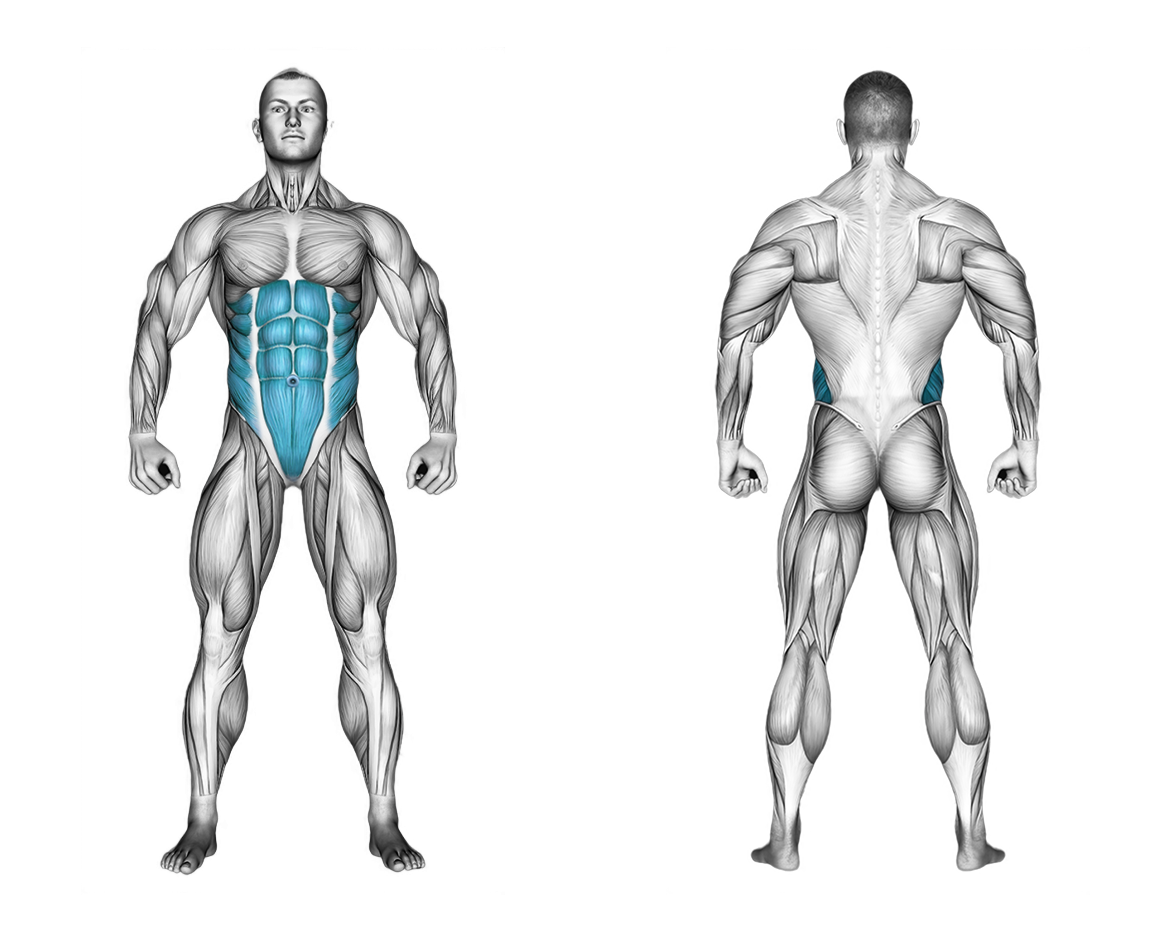
The bent knee lying twist is a rotational bodyweight exercise that targets the obliques, rectus abdominis, and deep core stabilizers. It is suitable for lifters of all experience levels and fits well into the core block at the end of a workout or during a mobility warm-up.
- Muscles
- Abs
- Equipment
- Bodyweight
- Type
- Strength
- Animation
- Men and women
How to do it
- Lie flat on your back with your knees bent and feet flat on the ground.
- Extend your arms out to the sides for stability.
- Lift your feet off the ground, keeping your knees bent.
- Lower your knees to one side, keeping your shoulders on the ground.
- Return to center, then lower to the opposite side.
Common mistakes
- Allowing the opposite shoulder to lift off the floor during the twist, which reduces core engagement and twists the upper spine excessively.
- Dropping the legs quickly using momentum, which compromises control and increases the risk of lower back strain.
- Resting the thighs completely on the floor at the bottom of the movement, which removes tension from the working abdominal muscles.
Tips
- Press your arms and shoulder blades firmly into the floor throughout the movement to maintain a stable upper body anchor.
- Keep your knees bent at roughly a 90-degree angle to maintain consistent leverage and core activation.
- Exhale as you pull your knees back toward the center to maximize the contraction of your obliques.
Sets and reps
Perform 3 to 4 sets of 10 to 15 controlled repetitions per side, resting 45 to 60 seconds between sets to build core endurance and stability.
Muscles worked
Your coach guides every set
Turn on the coach in Gloox: it asks how you feel, picks the weight from your history and cues technique and rest. Rate each set and the next one is tuned to you.

On a computer? Point your phone's camera here to get the app.
Questions
Is this exercise safe for people with lower back sensitivity?
It is generally gentle when performed slowly within a comfortable range of motion, but you should stop and consult a specialist if you experience sharp pain or discomfort.
How can this exercise be progressed without added weights?
You can increase the difficulty by partially or fully straightening your legs, which lengthens the lever arm and significantly increases the demand on your abdominal muscles.







