
Shoulders · Resistance bands
Band Lateral Raise
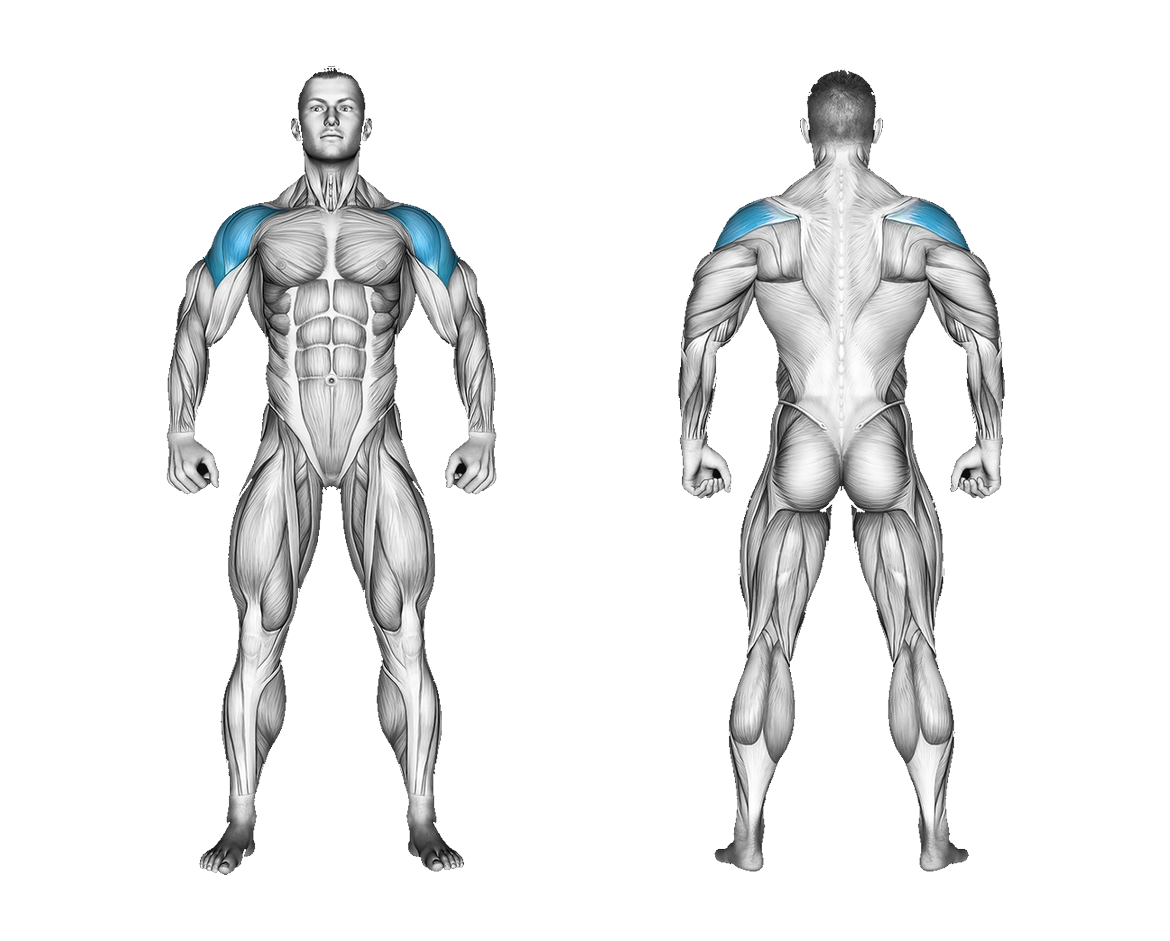
The band lateral raise is an isolation movement designed to build the lateral deltoids for shoulder width and stability. It suits lifters of all experience levels and works best as an accessory exercise in the middle or toward the end of an upper-body workout.
- Muscles
- Shoulders
- Equipment
- Resistance bands
- Type
- Strength
- Animation
- Men and women
How to do it
- Stand on the middle of the band with both feet hip-width apart, holding a handle in each hand at your sides.
- Keep your back straight, core braced, and a slight bend in your elbows.
- Inhale, then as you exhale, raise both arms out to the sides until your hands reach shoulder height.
- Pause briefly at the top, keeping your shoulders down away from your ears.
- Inhale and slowly lower your arms back to your sides.
Common mistakes
- Shrugging the shoulders upward shifts tension away from the side delts into the upper trapezius.
- Using torso momentum to swing the arms up robs the target muscles of continuous tension.
- Locking out the elbows entirely places unnecessary shear stress on the elbow joints.
Tips
- Adjust the resistance level by widening or narrowing your foot stance on the band.
- Lead the movement with your elbows to keep the focus squarely on the side deltoids.
- Control the eccentric phase over two seconds rather than letting the band snap your arms down.
Sets and reps
Perform 3 to 4 sets of 12 to 20 reps with 45 to 60 seconds of rest between sets to stimulate shoulder hypertrophy. Higher rep ranges of 20 to 25 work well when training for muscular endurance.
Muscles worked
Your coach guides every set
Turn on the coach in Gloox: it asks how you feel, picks the weight from your history and cues technique and rest. Rate each set and the next one is tuned to you.

On a computer? Point your phone's camera here to get the app.
Questions
How does using a band compare to using dumbbells for lateral raises?
Resistance bands provide progressive tension that peaks at the top, delivering a strong contraction while minimizing joint strain at the bottom of the movement.
What should you do if you feel shoulder pain or impingement during the raise?
Stop the exercise immediately and try bringing your arms slightly forward into the scapular plane. If the discomfort persists, consult a qualified healthcare professional.
Similar exercises
Resistance Band 90 Degrees External RotationResistance bands
Resistance Band Standing 90 Degrees Shoulder External RotationResistance bands
Resistance Band Standing Shoulder External RotationResistance bands
Resistance Band Standing Around the WorldResistance bands
Band Bent Over Rear Deltoid KickbackResistance bands
Resistance Band Lying Shoulder AbductionResistance bands
Resistance Band Single Arm Lateral RaiseResistance bands
Resistance Band Standing Single Arm Lateral Shoulder RaiseResistance bands