Abs · Bodyweight
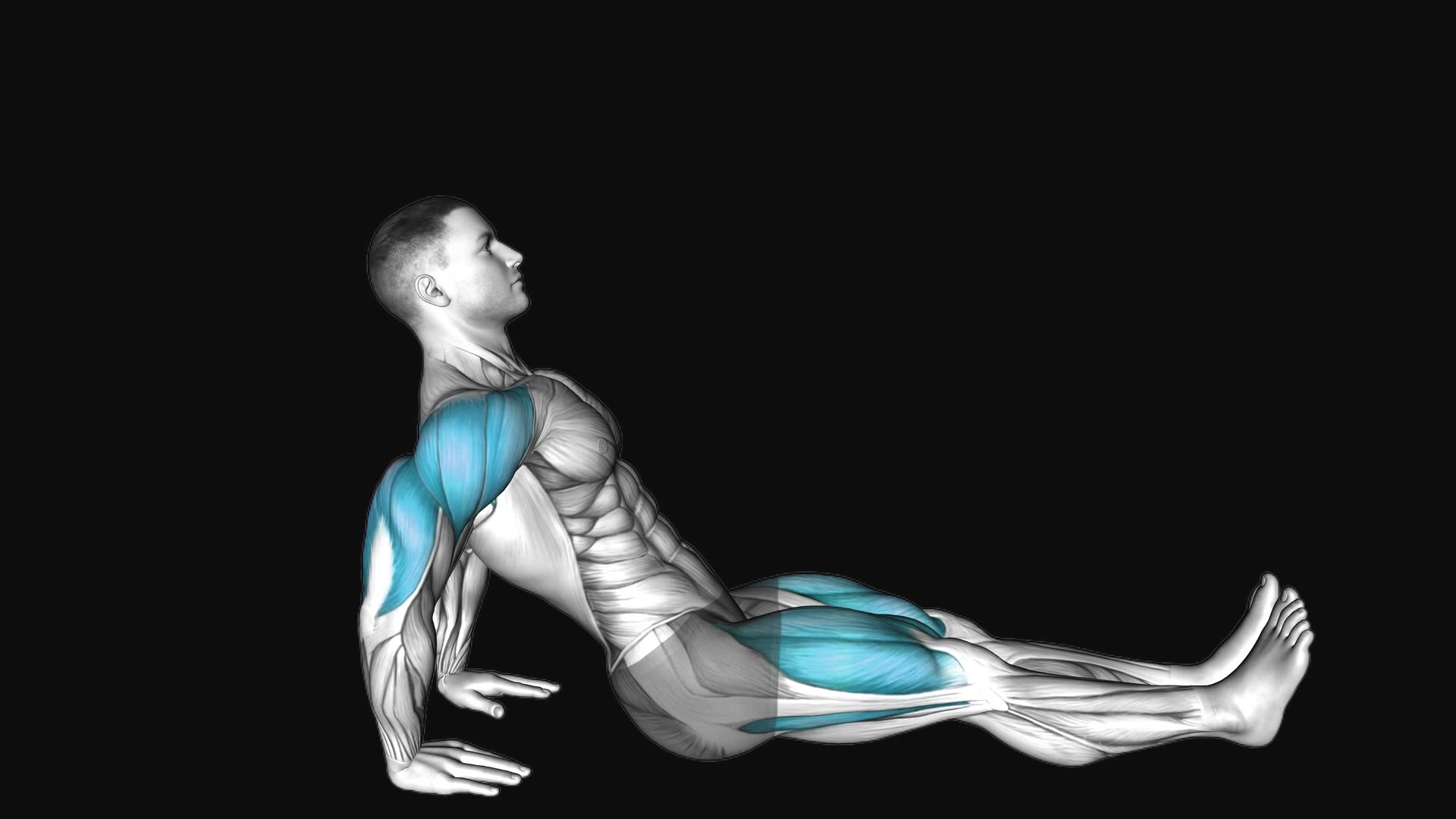
Reverse Plank on Elbows
The reverse plank on elbows is an isometric bodyweight exercise that strengthens the posterior chain, including the lower back, glutes, hamstrings, and core stabilizers. It promotes thoracic extension and shoulder mobility, making it a valuable addition to warm-up routines, core circuits, or workout finishers.
- Equipment
- Bodyweight
- Type
- Cardio / timed
- Animation
- Men and women
How to do it
- Sit on the ground with your legs extended in front of you.
- Place your forearms on the ground behind you, elbows directly under your shoulders.
- Press through your forearms and heels to lift your hips off the ground until your body forms a straight line from head to heels.
- Hold this position, keeping your core engaged.
Common mistakes
- Sagging hips reduce activation in the glutes and place unnecessary mechanical stress on the lower back.
- Collapsing into the shoulders crowds the neck and prevents proper engagement of the upper back.
- Hyperextending the neck by dropping the head backward disrupts spinal alignment and risks cervical strain.
- Bending the knees shifts tension away from the hamstrings and reduces the challenge to the posterior chain.
Tips
- Actively drive the elbows and forearms into the floor to keep the chest elevated and proud.
- Firmly squeeze the glutes and dig the heels into the ground to maintain a rigid, straight line from head to heels.
- Keep the gaze directed forward and slightly upward to ensure the cervical spine remains neutral throughout the hold.
Sets and reps
Aim for 3 to 4 sets holding the position for 20 to 45 seconds, resting 45 to 60 seconds between efforts. Terminate each hold as soon as pelvic alignment starts to fail rather than forcing extra time.
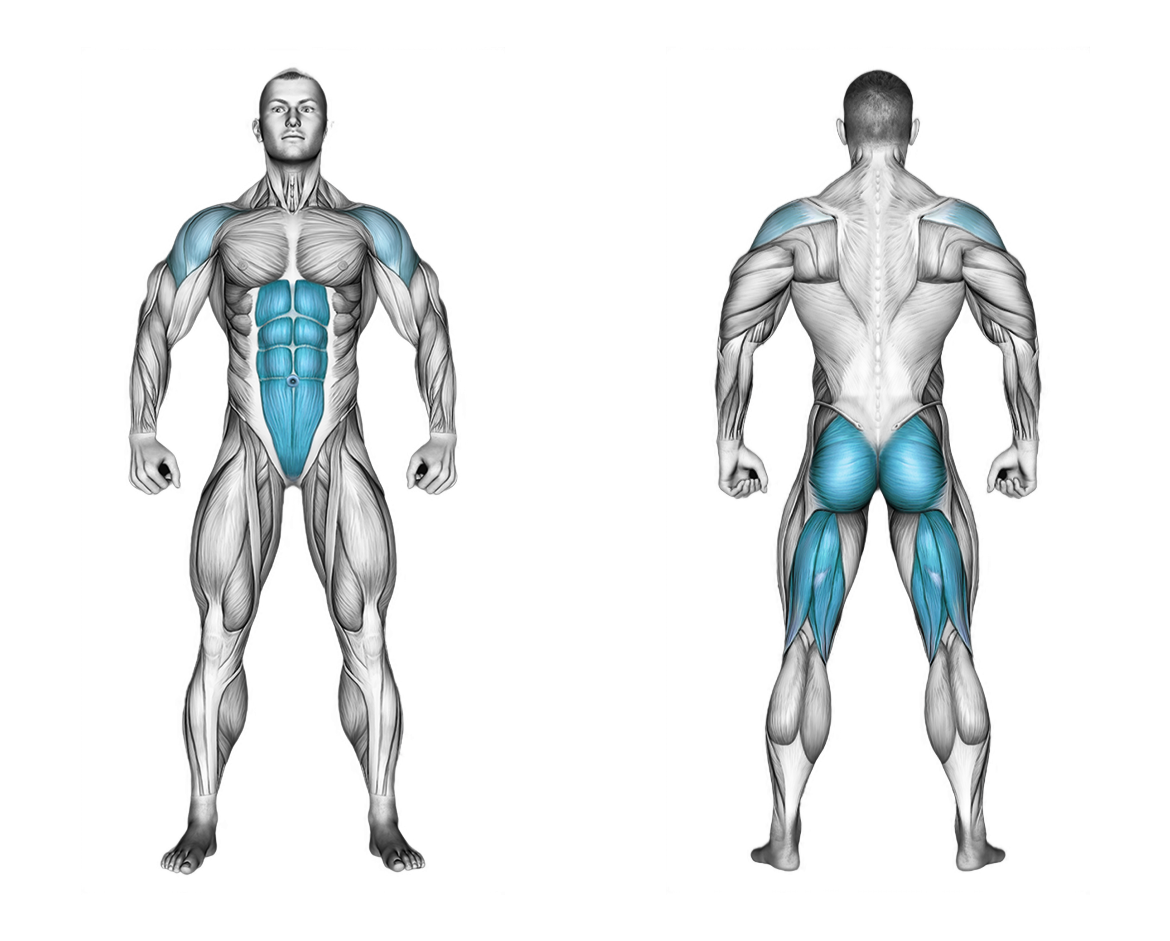
Muscles worked
Your coach guides every set
Turn on the coach in Gloox: it asks how you feel, picks the weight from your history and cues technique and rest. Rate each set and the next one is tuned to you.

On a computer? Point your phone's camera here to get the app.
Questions
Which muscles work the most in a reverse plank on elbows?
The primary drivers are the glutes, hamstrings, and spinal erectors, with the abdominal wall, posterior shoulders, and lats acting as key stabilizers.
How does this version differ from a reverse plank on straight arms?
Resting on the elbows removes wrist extension demands, making it friendlier on sensitive wrists while requiring greater shoulder extension mobility.