
Legs · Resistance bands
Resistance Band Assisted Nordic Hamstring Curl
The resistance band assisted Nordic hamstring curl is a scaled movement designed to build eccentric and concentric strength in the hamstrings with controlled assistance. It is suitable for lifters and athletes looking to bulletproof their knees and prevent hamstring strains, fitting best early in a lower-body session.
- Muscles
- Legs
- Equipment
- Resistance bands
- Type
- Strength
- Animation
- Men
How to do it
- Anchor the loop band to a sturdy point high behind you and place the band across your chest, under your armpits.
- Kneel on a pad with your ankles secured under a heavy object or held by a partner, body upright from knees to head.
- Inhale and slowly lower your torso forward in one straight line, resisting with your hamstrings while the band supports part of your weight.
- Go as low as you can control, catching yourself with your hands if needed.
- As you exhale, pull with your hamstrings and use the band's assistance to return to the upright starting position.
Common mistakes
- Bending at the hips during the descent, which turns the movement into a hip hinge and takes tension off the hamstrings.
- Using a band that provides too little assistance, leading to an uncontrolled drop that overstresses the knee connective tissue.
- Hyperextending the lower back instead of bracing the core to keep a rigid, straight line from knees to head.
Tips
- Place a thick foam pad or folded mat beneath your knees to eliminate uncomfortable joint pressure.
- Actively squeeze your glutes and brace your abs throughout the repetition to keep your hips locked in full extension.
- Progress over time by switching to lighter resistance bands to gradually handle more of your own body weight.
Sets and reps
Perform 3 to 4 sets of 5 to 8 slow, controlled reps with 2 to 3 minutes of rest between sets. Given the high eccentric strain placed on the hamstrings, prioritize movement quality over high repetition ranges.
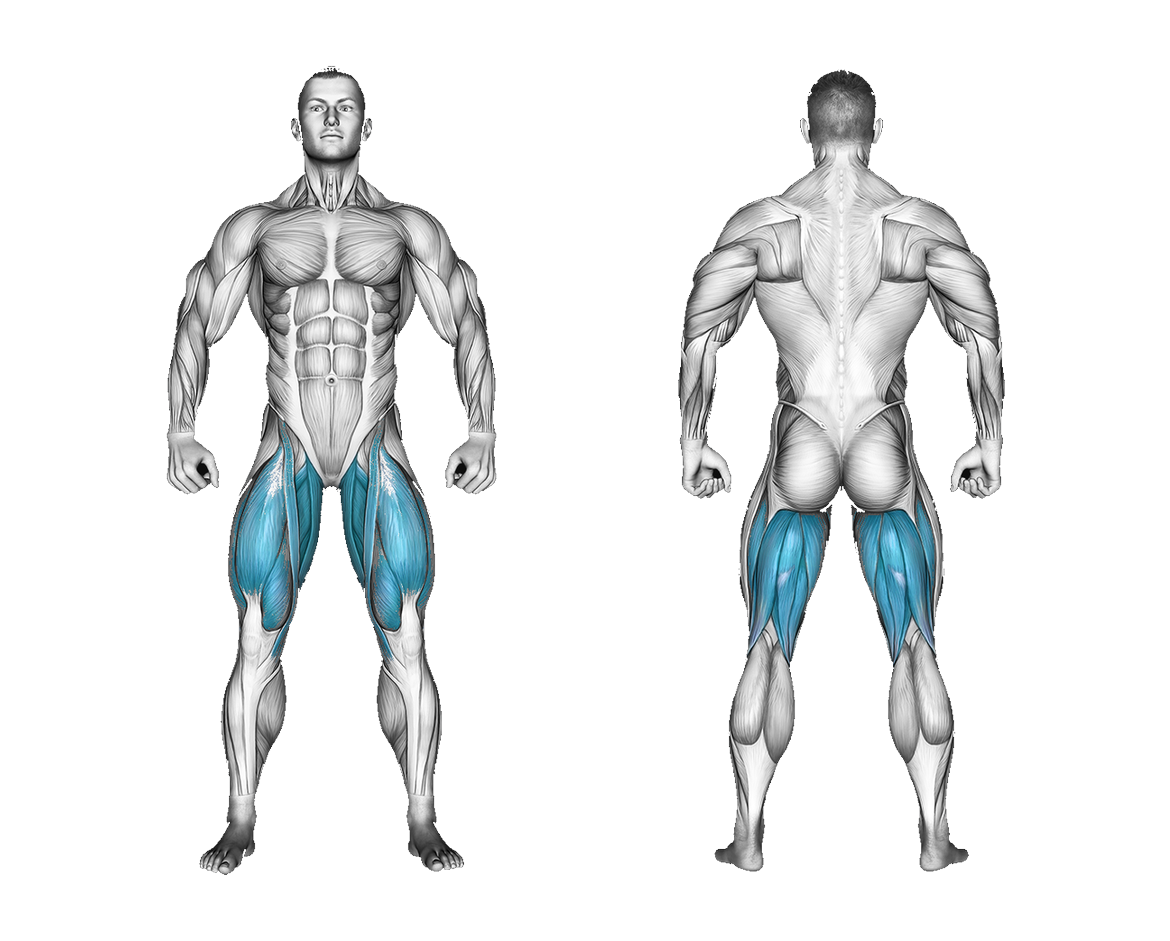
Muscles worked
Your coach guides every set
Turn on the coach in Gloox: it asks how you feel, picks the weight from your history and cues technique and rest. Rate each set and the next one is tuned to you.

On a computer? Point your phone's camera here to get the app.
Questions
What should I do if I feel sharp discomfort behind my knees?
Stop the movement immediately, as sharp pain can indicate tendon overload rather than normal muscular work. If the irritation persists, consult a qualified physical therapist.
Can I perform this exercise at home without a partner?
Yes, provided you have a high, sturdy anchor point for the resistance band and can securely wedge your heels under a heavy sofa or a dedicated doorway strap.
Similar exercises
Band Hip AdductionResistance bands
Resistance Band Standing Single Leg Knee ExtensionResistance bands
Resistance Band Sitting Knee Extension on a ChairResistance bands
Band Seated Leg ExtensionResistance bands
Band Lying Leg CurlResistance bands
Resistance Band Leg CurlResistance bands
Band Standing Leg CurlResistance bands
Resistance Band Lying Single Leg CurlResistance bands