
Abs · Bodyweight
Hip Roll Plank
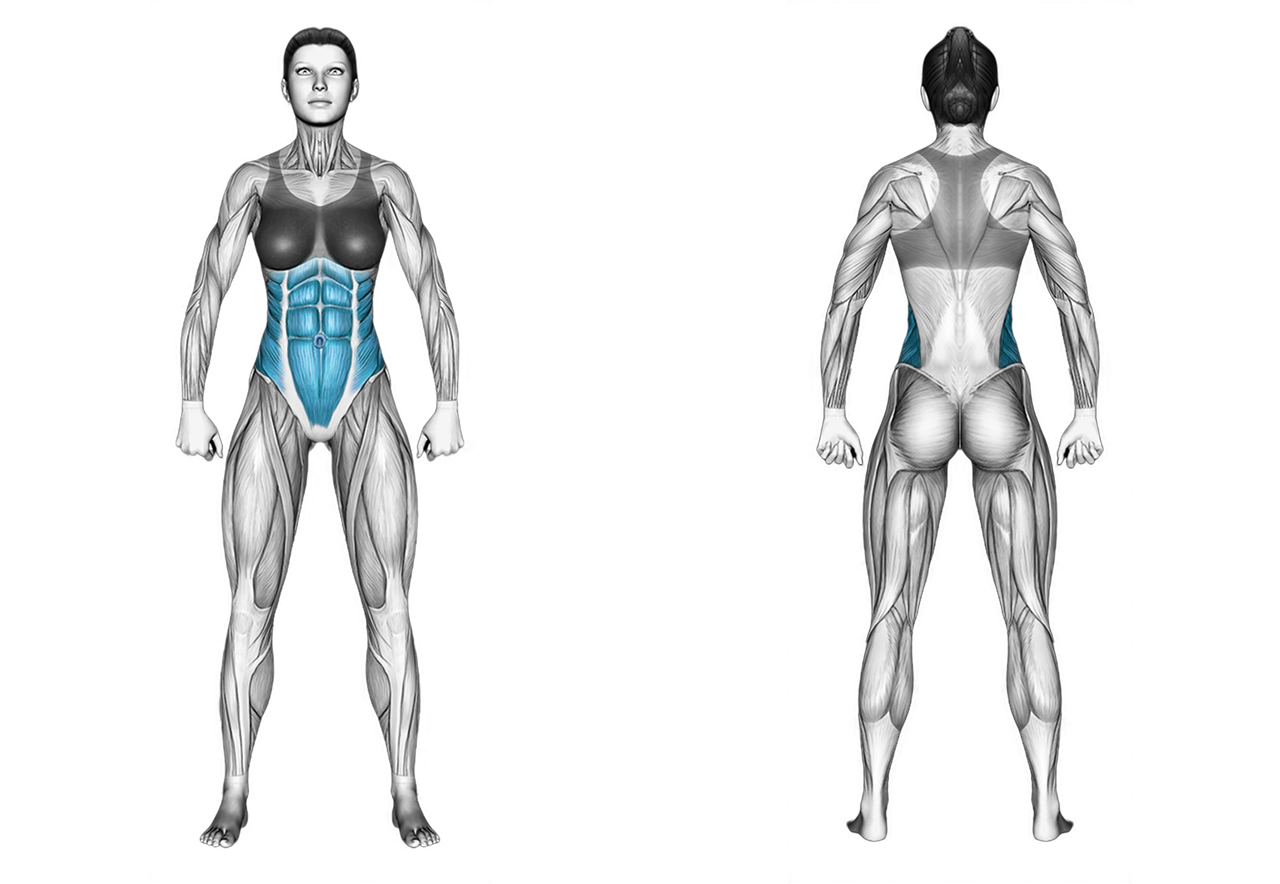
The hip roll plank is a dynamic core exercise that combines a forearm plank with transverse rotation of the pelvis. It targets the obliques, rectus abdominis, and deep stabilizing muscles, making it a great addition to a core workout or a general warm-up.
- Muscles
- Abs
- Equipment
- Bodyweight
- Type
- Cardio / timed
- Animation
- Women
How to do it
- Start in a standard plank position with your forearms on the ground.
- Keep your body in a straight line from head to heels.
- Slowly rotate your hips to one side, allowing your body to roll slightly.
- Return to center, then rotate to the other side.
- Maintain core engagement and avoid letting your hips sag throughout the movement.
Common mistakes
- Dropping the hips too low to the floor causes hyperextension in the lower back and reduces core engagement.
- Shifting the elbows or moving the upper body disrupts shoulder stability and places unnecessary strain on the joints.
- Rushing the rotations relies on momentum rather than controlled muscular contraction.
- Piking the hips upward between repetitions removes continuous tension from the abdominal wall.
Tips
- Keep the elbows aligned directly under the shoulders to maintain a stable upper-body base.
- Rotate the hips only as far as your core control allows, without forcing contact with the floor.
- Exhale as you rotate to the side to maximize the contraction of the oblique muscles.
Sets and reps
Perform 3 to 4 sets of 12 to 20 total rotations (or 30 to 45 seconds of continuous work) for core endurance. Rest for 45 to 60 seconds between sets.
Muscles worked
Your coach guides every set
Turn on the coach in Gloox: it asks how you feel, picks the weight from your history and cues technique and rest. Rate each set and the next one is tuned to you.

On a computer? Point your phone's camera here to get the app.
Questions
Which muscles work the most in a hip roll plank?
The primary dynamic movers are the internal and external obliques, while the rectus abdominis, transverse abdominis, and shoulder stabilizers work isometrically.
Is the hip roll plank safe if you have lower back issues?
Rotational forces in a plank can place shear stress on the lumbar spine; if you feel pain, stop immediately and consult a specialist.







