
Back · Dumbbells
Dumbbell Incline Row
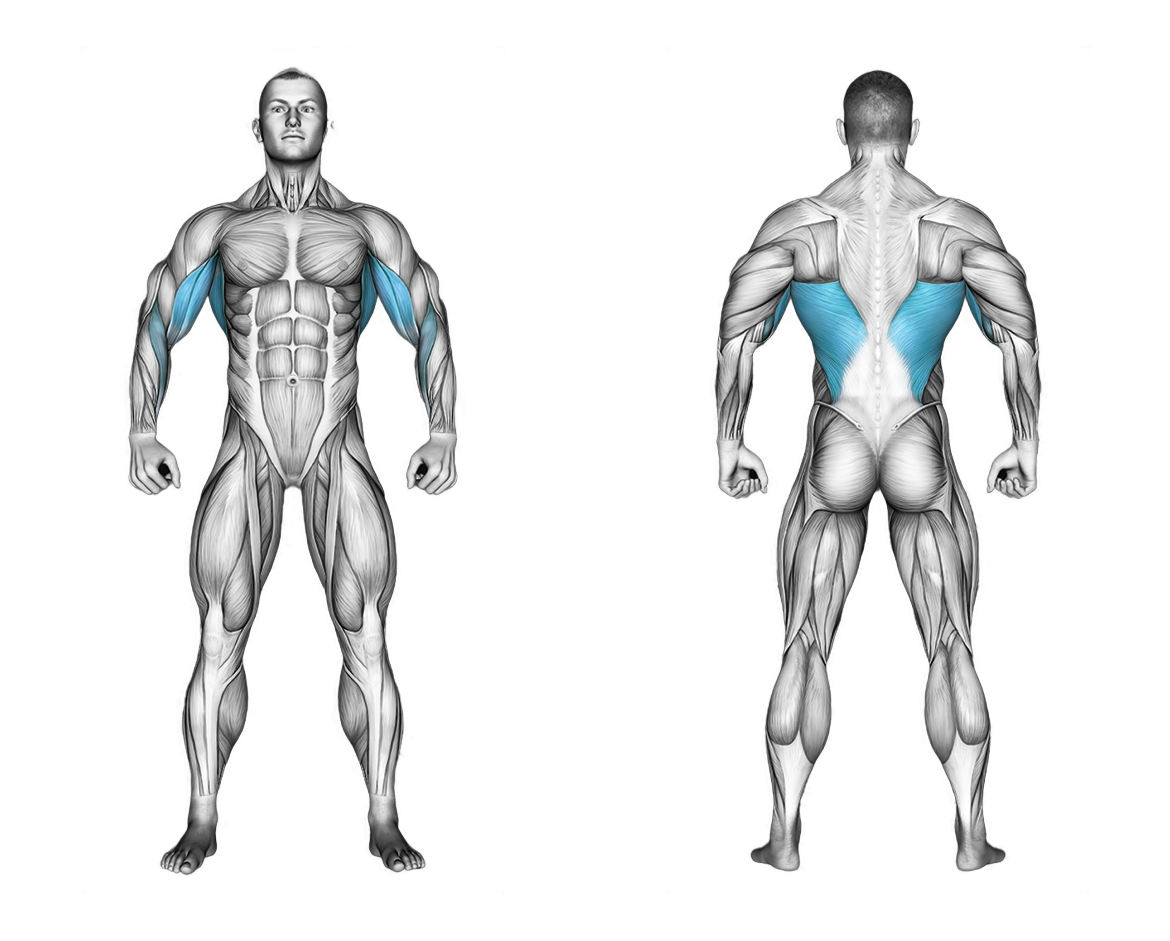
The chest-supported dumbbell incline row is a multi-joint pulling exercise that targets the latissimus dorsi, rhomboids, middle traps, and rear deltoids. By eliminating torso momentum and lower back fatigue, it serves as a strict hypertrophy movement ideally placed in the middle of a back or upper-body workout.
How to do it
- Lie chest-down on an incline bench set at 30-45 degrees with a dumbbell in each hand.
- Let the dumbbells hang at arm's length below you.
- Pull the dumbbells up towards your hips by driving your elbows back.
- Squeeze your shoulder blades together at the top.
- Lower the dumbbells back down with control.
Common mistakes
- Lifting your chest off the bench uses momentum and shifts tension away from the upper back into the lumbar spine.
- Pulling the dumbbells toward your chest rather than your hips overemphasizes the biceps and forces the shoulders into an awkward, impinged position.
- Dropping the weights quickly on the eccentric phase removes productive time under tension and stresses the shoulder joint capsule.
Tips
- Drive your elbows up and back toward your hips rather than straight toward the ceiling to maximize lat engagement.
- Pause for a deliberate second at the top of each repetition to squeeze your shoulder blades fully together.
- Maintain a neutral cervical spine by keeping your gaze directed slightly ahead of the bench floor rather than craning your neck.
Sets and reps
For muscle growth, aim for 3 to 4 sets of 8 to 12 reps with 60 to 90 seconds of rest between sets. If training for muscular endurance, use lighter dumbbells for 2 to 3 sets of 15 to 20 reps with 45 to 60 seconds of rest.
Muscles worked
Your coach guides every set
Turn on the coach in Gloox: it asks how you feel, picks the weight from your history and cues technique and rest. Rate each set and the next one is tuned to you.

On a computer? Point your phone's camera here to get the app.
Questions
Is the dumbbell incline row safe for people with lower back issues?
Yes, supporting your chest on the incline bench completely removes spinal shear stress, making it an excellent alternative to standing bent-over rows. If you experience any pain, stop immediately and consult a healthcare professional.
What bench angle is best for this exercise?
A 30 to 45-degree angle works best for most lifters, as lower angles place more emphasis on the lats, while a steeper incline shifts the work to the rear delts and upper traps.
Similar exercises
Dumbbell Bent Over Reverse RowDumbbells
Dumbbell Lying Neutral Grip Row on RackDumbbells
Dumbbell RowDumbbells
Dumbbell Bent-Over RowDumbbells
Dumbbell Palm Rotational Bent Over RowDumbbells
Dumbbell One Arm Bent over RowDumbbells
Dumbbell Hammer Grip Incline Bench Two Arm RowDumbbells
Dumbbell Incline ShrugDumbbells