
Back · Dumbbells
Dumbbell One Arm Bent over Row
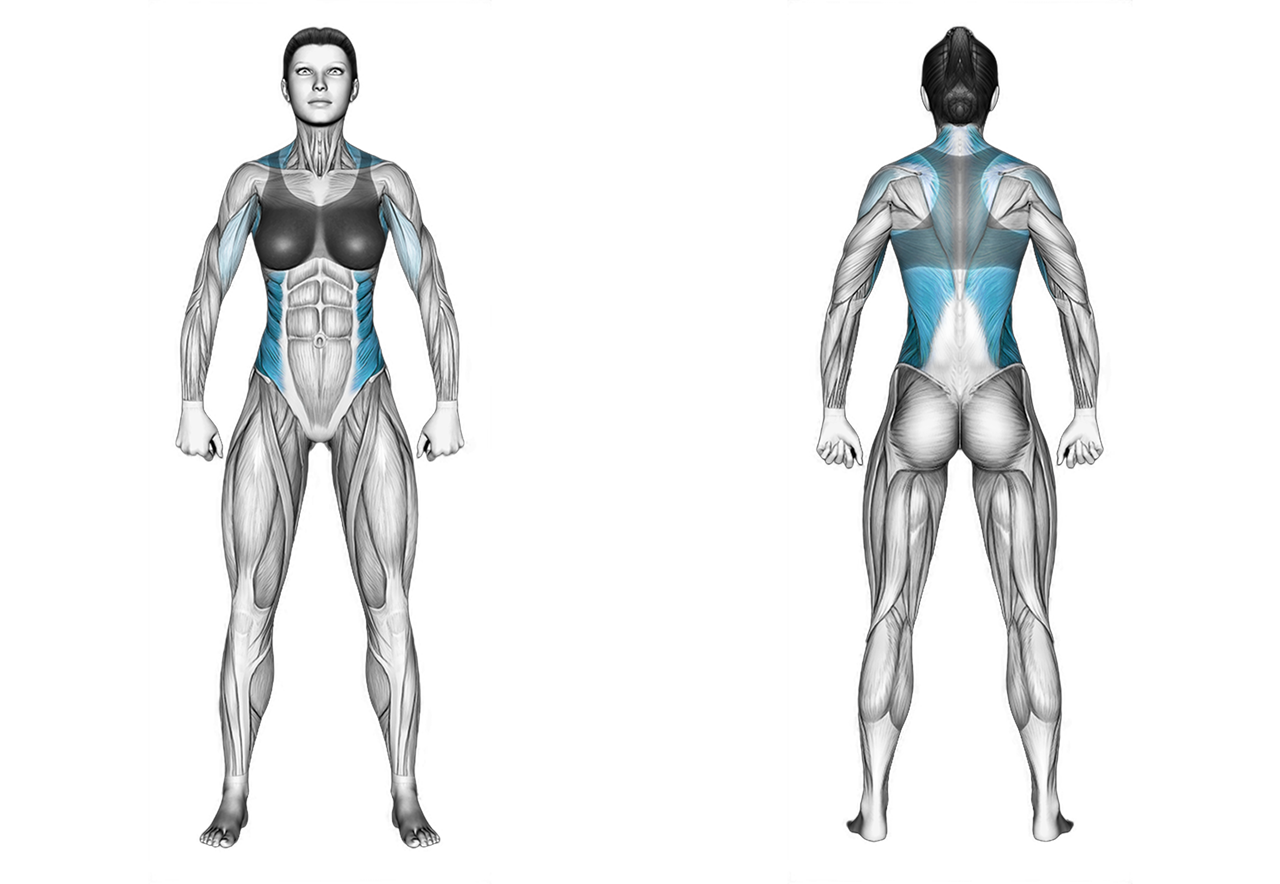
The dumbbell one-arm bent-over row is a unilateral compound exercise designed to build the latissimus dorsi, rhomboids, and rear deltoids. It suits lifters of all levels looking to fix muscular imbalances and typically fits into the early or middle portion of a back workout.
How to do it
- Place your right knee and right hand on a flat bench for support, keeping your back parallel to the floor.
- Plant your left foot firmly on the ground, and hold a dumbbell in your left hand with your arm extended.
- Keep your spine straight and your core engaged.
- Inhale and brace your core. Exhale as you lift the dumbbell towards your waist, keeping your elbow close to your body.
- Squeeze your shoulder blade towards your spine at the top of the movement.
- Keep your head in line with your spine, avoiding any neck strain.
- Slowly lower the dumbbell back to the starting position, controlling the movement.
Common mistakes
- Twisting the torso at the top of the movement shifts tension away from the back muscles and introduces unnecessary rotational stress to the lower back.
- Pulling the weight using mostly the arm rather than initiating with the scapula and elbow severely limits lat recruitment.
- Rounding the lower or upper back while leaning over places excessive strain on the spinal column.
- Dropping the dumbbell quickly without a controlled negative phase reduces time under tension and risks straining the shoulder.
Tips
- Pull the dumbbell in a subtle arc toward your hip rather than straight up to maximize lat engagement.
- Keep your shoulders and hips squared to the bench through the entire set to ensure strict form.
- Pause for a brief second at the top of each rep to emphasize the peak contraction of your back muscles.
Sets and reps
For muscle growth, perform 3 to 4 sets of 8 to 12 reps per arm, resting 60 to 90 seconds between sides. For strength development, use 3 to 4 sets of 6 to 8 heavier reps with up to 2 minutes of rest.
Muscles worked
Your coach guides every set
Turn on the coach in Gloox: it asks how you feel, picks the weight from your history and cues technique and rest. Rate each set and the next one is tuned to you.

On a computer? Point your phone's camera here to get the app.
Questions
Is this exercise safe for individuals with lower back discomfort?
The three-point support on the bench removes direct spinal loading, making it safer for the lower back than free-standing barbell rows. If you feel sharp back pain, stop the exercise and consult a medical specialist.
How can you do this exercise at home without a workout bench?
You can support your non-working hand on a sturdy chair, the side of a couch, or rest your elbow against your front knee in a staggered stance.
Similar exercises
Dumbbell Bent Over Reverse RowDumbbells
Dumbbell Incline RowDumbbells
Dumbbell Lying Neutral Grip Row on RackDumbbells
Dumbbell RowDumbbells
Dumbbell Bent-Over RowDumbbells
Dumbbell Palm Rotational Bent Over RowDumbbells
Dumbbell Hammer Grip Incline Bench Two Arm RowDumbbells
Dumbbell Incline ShrugDumbbells